ChartMogul Releases Comprehensive PLG Labs Presentation Series Highlighting Modern SaaS Growth Complexities

Navigating the intricacies of modern software-as-a-service (SaaS) development often requires confronting operational realities that extend far beyond traditional venture capital backing and enterprise sales teams. For many ambitious businesses building opinionated products without rooms full of enterprise account executives or six-figure contracts, growth is achieved through tactical precision rather than massive capital injections. Recognizing the need to address these granular challenges, ChartMogul Chief Revenue Officer Sara Archer spearheaded the launch of the Product-Led Growth (PLG) Lab series. The initiative was designed specifically to tackle the messy, unglamorous aspects of scaling software companies—ranging from broken automation workflows and flawed activation paths to designing equitable compensation plans for hybrid go-to-market motions.
The Genesis and Evolution of the PLG Labs Tour
The PLG Labs series was conceived to provide founders, operators, and revenue leaders with an intimate forum to debate and dissect the operational bottlenecks of modern software growth. Rather than relying on high-level keynote speeches that gloss over execution details, the organizers structured the meetups to focus intensely on real-world friction points.
The inaugural event of the series kicked off in San Francisco during the prominent Stripe Sessions conference week. Brenna Loury, Chief Revenue Officer of productivity software company Doist, delivered a candid keynote addressing the multifaceted challenges of moving up-market while maintaining a product-led foundation. The discussion resonated deeply with attendees, sparking debates that extended well past the scheduled session times and onto a rooftop networking reception where participants continued their conversations over refreshments.
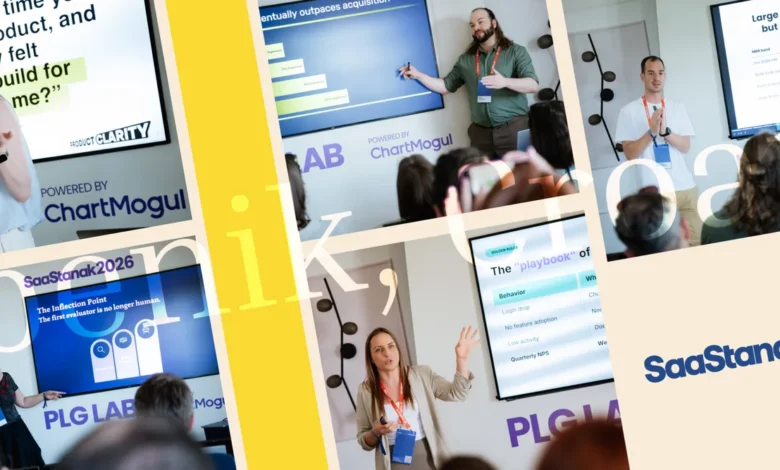
Following the successful North American debut, the PLG Lab series transitioned to the international stage along the Croatian coast. In strategic partnership with the established SaaStanak conference, the team hosted two consecutive afternoons of deep-dive content overlooking the Mediterranean Sea. Despite coinciding with a regional heat wave, the sessions drew standing-room-only crowds. Participants exhibited high levels of engagement, contributing sharp questions, sharing proprietary insights from their respective organizations, and establishing cross-border professional connections.
Due to the density of operator-level knowledge shared across these international gatherings, ChartMogul elected to package the complete curriculum into a public repository. By making the presentation decks, key takeaways, and analytical frameworks available online, the organization ensured that the insights reached a global audience of SaaS professionals unable to attend the live events.
Architectural Scaling: Moving Beyond Simple Sales Execution
Among the core presentations released in the series is "The Expansion Engine: Architecting a Scalable PLG Stack for Automated Upsells," presented by Tom (surname omitted in source). Traditionally, customer expansion within SaaS models has been treated primarily as a sales execution problem—revolving around the timing of an outreach email, the phrasing of a pitch, or the structure of a promotional offer.
However, the session’s data-driven framework reframed expansion as fundamentally an infrastructure challenge. When organizations route accurate product usage data into automated workflows, upsell opportunities cease to be manual guesses. Instead, they transform into timely, contextually relevant touchpoints that scale efficiently alongside the user base. Analysts note that as Customer Acquisition Costs (CAC) continue to rise across the tech sector, optimizing automated expansion infrastructure has become a primary lever for protecting net revenue retention (NRR) without proportionally expanding sales headcount.
Balancing Automation with Human Feedback Loops
Addressing the limitations of lifecycle marketing, another highlighted presentation titled "When Automations Guess Wrong: Behavior Shows What Happened. Users Tell You Why" tackles the widespread issue of generic user engagement. Led by Aleksandra, the session serves as a diagnostic tool for companies whose behavioral triggers and lifecycle emails are technically operational yet fail to resonate on a personal level.
The core premise of the presentation emphasizes that quantitative telemetry—tracking clicks, page views, and feature usage—explains user behavior objectively, but qualitative feedback provides the subjective context required for product iteration. For businesses experiencing high churn during the onboarding phase, relying exclusively on behavioral metrics often leads to misdirected product interventions. The session underscores the necessity of pairing automated data collection with direct user communication to determine the precise catalysts for user adoption and friction.
Navigating the Transition to AI-Native Business Models
The rapid evolution of artificial intelligence prompted one of the most forward-looking sessions in the series: "From Traditional SaaS to AI-Native in 5 Days: 3 Companies That Did It." This presentation addresses the industry-wide pressure to integrate artificial intelligence into existing software architectures without resorting to superficial marketing gimmicks.
Rather than treating "AI-native" as an abstract corporate strategy, the framework breaks the transition down into a systematic product exercise. It advises teams to isolate the single most valuable user outcome, systematically remove surrounding operational friction, preserve the specific interaction that fosters user trust, and construct the product experience backward from that foundational moment. The presentation provides actionable internal prompts for product teams, challenging them to evaluate which tasks their software can automate before a user undergoes a learning curve, which decisions an AI agent should execute by default, and what manual actions must remain intact to ensure the user retains a sense of ownership over the final output.
Re-evaluating Customer Lifetime Value Across Thousands of Cohorts
A standout contribution from ChartMogul’s internal insights team, "LTV Has a Blind Spot: Findings from 3,700 SaaS Businesses Over 6 Years," provides empirical analysis drawn from a massive longitudinal dataset. Customer Lifetime Value (LTV) has long served as a foundational metric for determining capital allocation, payback periods, and market segment investments.
However, the presentation reveals structural vulnerabilities within standard LTV calculation models when applied across diverse business models and macroeconomic cycles. The findings indicate that while LTV remains a vital directional metric, leadership teams must cross-reference theoretical projections against actual customer behavior to avoid premature scaling in unprofitable segments. This analysis arrives at a critical juncture for venture-backed startups navigating tighter capital markets, where accurate unit economics are paramount.
Optimizing Onboarding and the Concept of People-Led Growth
Focusing on the critical initial interactions between a user and a software product, Paulina’s presentation—"People-Led Growth: Fixing Your Product’s First Impression and Path to Activation"—challenges the conventional "set-and-forget" approach to user onboarding.
The presented framework urges product and growth teams to audit their initial user experience regularly by adopting the perspective of a first-time user. By identifying precisely where trust deteriorates or momentum stalls, companies can isolate and remediate micro-barriers that prevent users from achieving their initial "aha" moment. The concept bridges the gap between pure self-serve product-led growth and the high-touch engagement required to secure long-term account retention.
Preparing Software
for Autonomous AI Discovery
Looking toward the next technological horizon, the session titled "Invisible PLG" introduces a diagnostic model for software companies operating in an era increasingly dominated by autonomous systems. The presentation poses a critical operational question: Could an AI agent independently discover, evaluate, test, price, and integrate your product without human intervention?
Industry analysts suggest that as enterprise procurement increasingly involves software agents evaluating APIs and software utilities autonomously, traditional marketing strategies targeting human buyers risk becoming obsolete. If a product lacks the machine-readable architecture required for automated evaluation, it risks exclusion from the digital discovery pipelines that will govern future enterprise software procurement.
Scaling from $1M to $20M ARR and Hybrid Go-To-Market Mechanics
Scaling a business through the critical growth phase from $1 million to $20 million in Annual Recurring Revenue (ARR) rarely relies on a single tactical breakthrough. The workshop presentation "From $1M–$20M ARR: Growth Levers and New Signals for Success" synthesizes this transition into a multidisciplinary operational challenge. Success during this phase requires compounding improvements across Average Revenue Per Account (ARPA), net retention, expansion efficiency, and executive focus, supported by rigorous leadership standards.
Complementing this growth stage analysis, the session "Where PLG Meets Sales: Building a Hybrid Growth Engine in Practice" addresses the structural friction that occurs when companies attempt to combine self-serve funnels with traditional enterprise sales teams. Rather than treating a hybrid motion as a simple operational add-on, the presentation outlines systemic solutions for account routing, ownership delineation, incentive design, and establishing clear product boundaries to accommodate buyers who require vastly different purchasing journeys.
Closing the Launch-to-Adoption Gap
Concluding the series lineup, Natalija’s presentation—"The Launch to Adoption Gap: Why Fast Shipping Doesn’t Equal Product Growth"—identifies a pervasive modern software ailment: products are frequently deployed faster than user bases can absorb, understand, and integrate them.
The framework redefines product marketing from a traditional cadence of feature announcements into a deliberate discipline focused on driving adoption. In an economic environment where development teams release updates continuously, competitive advantage shifts toward organizations capable of prioritizing user attention, targeting specific cohorts with contextual relevance, and translating product releases into sustained behavioral modification.
Broader Implications for the SaaS Industry
The comprehensive release of the PLG Labs curriculum underscores a broader maturation phase within the software industry. Observers note that the era of relying solely on rapid user acquisition and expansive marketing budgets has largely concluded, replaced by an imperative for rigorous data architecture, refined feedback loops, and sophisticated hybrid go-to-market execution. As software development becomes increasingly technical and operationally complex, initiatives like ChartMogul’s PLG Labs provide essential frameworks for navigating the multifaceted realities of modern business growth.