The Conversion Map: A Strategic Framework for Optimizing Digital Growth and Scaling Marketing Performance


In the contemporary digital marketing landscape, organizations are inundated with an overwhelming array of channels, platforms, and tactical methodologies. With the proliferation of social media, search engine optimization (SEO), paid acquisition, and content syndication, the average marketing department often attempts to manage a dozen or more simultaneous initiatives. This fragmentation frequently leads to a dilution of focus, resulting in a loss of the clarity and conviction necessary to drive sustainable business outcomes. To counteract this volatility, industry leaders are increasingly returning to the fundamental economic equation of digital marketing: New Signups equal Traffic multiplied by Conversion Rate.
Deconstructing the Marketing Equation
The core objective of any digital marketing strategy is essentially twofold: attracting qualified prospects to a digital storefront and maximizing the percentage of those visitors who complete a desired action, such as a purchase or a subscription. By isolating these two variables—traffic volume and conversion rate—marketers can systematically categorize every channel and tactic into a structured framework. This process, often referred to as a "Conversion Map," allows businesses to diagnose performance bottlenecks and allocate resources with precision rather than guesswork.
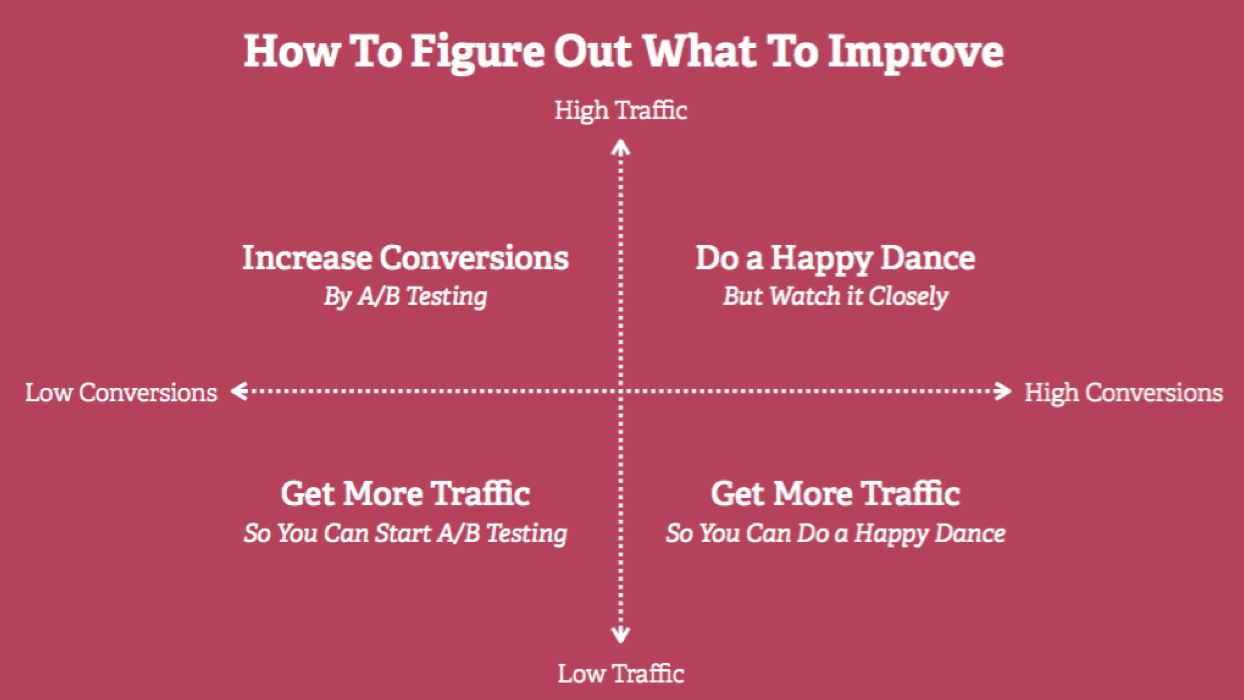
The framework operates on a four-quadrant matrix. By mapping marketing initiatives along the axes of traffic and conversion rate, organizations can identify which strategies should be scaled, which require optimization, and which should be abandoned in favor of higher-yield activities. This approach shifts the burden of proof from speculative testing to data-driven decision-making, emphasizing the principle that the most effective growth strategy is to identify existing success and amplify it.
Chronology and Evolution of Conversion Strategies
The transition from "spray-and-pray" marketing to structured conversion optimization has evolved alongside the maturation of the Software-as-a-Service (SaaS) industry. In the early 2010s, many startups focused exclusively on top-of-funnel traffic acquisition, often at the expense of unit economics. The shift toward a more balanced approach—prioritizing conversion efficiency—gained momentum as customer acquisition costs (CAC) began to climb across major platforms like Google AdWords and Facebook.
Between 2014 and 2017, industry data indicated that companies that adopted a formal testing cadence were 30% more likely to achieve their annual growth targets than those relying on intuitive shifts. This period marked a transition where firms like KISSmetrics and HubSpot pioneered the integration of deep-funnel analytics with content marketing, proving that high-quality, relevant content could serve as a sustainable, low-cost acquisition engine. The realization that content marketing is a long-term capital investment—rather than a short-term promotional tactic—transformed how modern marketing teams build their "digital continents," grouping smaller islands of content into dominant market authorities over time.

Categorizing Performance: The Four-Quadrant Analysis
To operationalize the conversion map, marketing teams must systematically evaluate every asset against the two primary variables.
1. High Traffic, Low Conversion: The Optimization Goldmine
This quadrant represents the most immediate opportunity for growth. When a page receives significant volume but fails to convert, the issue typically lies in the user experience, messaging, or the friction within the conversion path. Because the sample size is statistically significant, these pages are ideal for A/B testing. By experimenting with headlines, call-to-action buttons, or value propositions, marketers can unlock latent revenue without the need to acquire a single additional visitor.
2. Low Traffic, High Conversion: The Scalability Challenge
Pages in this quadrant often contain highly specific, tactical, or technical information that resonates deeply with a niche audience but lacks broader reach. These assets represent "proof of concept." The goal here is to expand the reach of these pages through organic search distribution, social amplification, or paid promotion. However, as traffic increases, teams must monitor the conversion rate closely; it is common for the conversion rate to decline as the audience becomes less qualified or less intentional.

3. Low Traffic, Low Conversion: The Strategic Pivot
This category is the graveyard of ineffective marketing tactics. It includes legacy content that no longer serves a purpose or experimental campaigns that failed to gain traction. For early-stage companies, this is a common starting point. The objective is to pivot toward content marketing and SEO to build brand authority. If an initiative remains in this quadrant for an extended period despite optimization, it should be deprecated to free up resources for more productive channels.
4. High Traffic, High Conversion: The Sustainable Foundation
This is the optimal state for any marketing asset. These "cash cows" serve as the financial engine of the marketing department. The primary responsibility here is maintenance and monitoring. While these assets do not require radical overhauls, they must be protected from decay. Regular audits ensure that links remain active, information stays relevant, and the user experience remains aligned with current technical standards.
Supporting Data and Industry Perspectives
Market analysis consistently demonstrates that the most successful digital organizations prioritize the optimization of existing traffic before seeking new acquisition channels. Data from 2017 research into SaaS growth patterns revealed that for every dollar spent on conversion optimization, the average firm saw a return on investment significantly higher than the equivalent spend on top-of-funnel paid search.

Industry experts suggest that the most critical error marketers make is the obsession with "newness." By constantly chasing the latest social media trend or advertising platform, teams neglect the conversion pathways that are already established. A representative statement from a senior growth analyst at the time noted: "The biggest barrier to scaling is the inability to distinguish between an traffic problem and a conversion problem. If you have traffic and no sales, buying more traffic is simply buying more failure."
Broader Implications and Long-Term Strategy
The implementation of a conversion map is not a one-time exercise; it is an ongoing process that demands organizational discipline. The transition from a tactical mindset to a strategic one is essential for firms aiming to reach the next level of market penetration.
The long-term implication of this framework is the reduction of reliance on volatile external traffic sources. By building a robust library of high-converting, high-traffic content, companies can effectively lower their cost per acquisition. For example, some firms have reported achieving customer acquisition costs through content marketing at roughly 10% of the cost of competitive bidding on Google Adwords.

Ultimately, growth is rarely the result of a single "Hail Mary" campaign or a singular, brilliant marketing idea. It is the product of a deliberate, iterative process. By moving through the quadrants—optimizing high-traffic areas, scaling high-conversion niches, and ruthlessly discarding what fails—marketers can build a resilient, scalable engine that drives consistent growth. The "happy dance" of the marketer—achieving high traffic and high conversion simultaneously—is not a matter of luck, but a byproduct of systematic, data-informed execution. As the digital economy continues to mature, the competitive advantage will lie not with those who have the largest marketing budget, but with those who possess the most clarity regarding their conversion funnel.