The Myth of the Cheap FIRE Practitioner: Debunking the Austerity Narrative in Early Retirement

The popular cultural perception of the Financial Independence, Retire Early (FIRE) movement is often reduced to a caricature: an individual surviving on a restrictive diet of rice and beans, obsessively clipping coupons, and operating a vehicle that predates the millennium. Critics frequently argue that these practitioners are needlessly depriving themselves of life’s pleasures, prioritizing a spreadsheet over a fulfilling existence. However, a rigorous examination of the financial realities and behavioral patterns of the FIRE community suggests that this stereotype is not only outdated but fundamentally inaccurate. In practice, the transition to financial independence often masks a high-consumption lifestyle, characterized by significant opportunity costs and the prioritization of personal time over traditional corporate wealth accumulation.
The Evolution of the FIRE Narrative
The FIRE movement emerged in the early 2010s, gaining significant momentum through personal finance blogs and online forums. The core philosophy centers on a high savings rate—often exceeding 50% of annual income—during a 10-to-20-year "accumulation phase." This phase requires rigorous discipline, which often manifests as extreme frugality. Practitioners frequently recount experiences of working long hours to leverage employer-provided benefits, such as subsidized cafeteria meals or office amenities, to shave costs from their monthly budgets.
However, once the individual crosses the threshold of financial independence, the behavioral incentives shift. The "cheap" habits formed during the accumulation years often persist as a psychological comfort, but the actual expenditure profiles of retired individuals tell a different story. The transition from a professional career to early retirement is not a shift toward poverty, but a shift toward a lifestyle where capital is deployed into experiences, family, and time-saving services, rather than corporate survival tactics.
Quantifying the Opportunity Cost of Freedom
The primary financial metric that contradicts the "cheap" narrative is the staggering opportunity cost of early retirement. When a high-earning professional chooses to exit the workforce, they are not merely saving money; they are effectively paying an annual premium for their freedom.
For an individual who earned a base salary of $250,000 with potential performance bonuses reaching up to $500,000, the act of retiring represents an annual financial loss of three-quarters of a million dollars in potential compensation. Over a 14-year period, this equates to millions of dollars in forgone earnings. In this context, the decision to maintain a modest lifestyle—such as driving an older vehicle—is not an act of poverty, but a conscious choice to remain financially solvent while forfeiting a high-income trajectory.

Furthermore, the loss of corporate-subsidized benefits significantly alters the budget. The shift from employer-sponsored healthcare to unsubsidized private insurance often results in an immediate increase in annual expenses, frequently costing a family of four upwards of $36,000 annually. Choosing to retire early is, by definition, an expensive decision that requires the individual to self-fund essential services that were previously mitigated by corporate overhead.
Beyond the Basics: Analyzing Discretionary Spending
While the base costs of living are easily tracked, the "hidden" spending within the FIRE community is often found in lifestyle-enhancing choices. Data from various financial audits of retired households reveal that spending patterns shift heavily toward two primary categories: real estate and education.
The Real Estate Premium
Many individuals who achieve financial independence choose to upgrade their living conditions. In many cases, the housing costs of a retired professional are significantly higher than their early-career benchmarks. This includes the acquisition of larger properties, often selected for location, school districts, or long-term family utility rather than immediate financial necessity. The incremental costs—property taxes, maintenance, and insurance—can easily exceed $50,000 annually. This expenditure is a luxury, contradicting the notion that the FIRE community lives in a state of austerity.
The Educational Investment
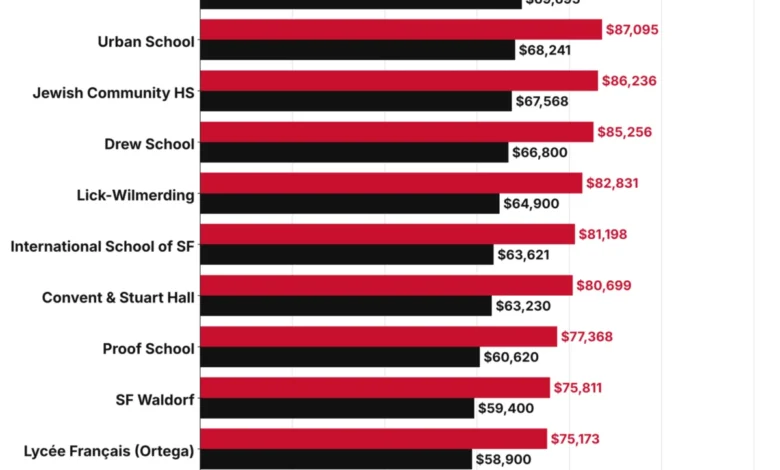
The investment in children’s education serves as a major indicator of non-frugal spending. With private school tuition for two children often exceeding $90,000 annually, these households are investing heavily in intangible assets. While some critics argue that public schooling is a viable and "cheaper" alternative, many FIRE practitioners opt for private, language-immersion, or specialized institutions. This decision is rarely based on survival, but on the prioritization of long-term developmental outcomes, highlighting a willingness to spend significant capital on family-centric goals.
The Impact of Time-Saving Services
The modern FIRE practitioner frequently utilizes the "on-demand" economy to preserve their most valuable asset: time. As seen in the rise of food delivery services and outsourced household tasks, the focus has shifted from "doing it yourself" to "buying back time." For those who have already spent a decade or more working 60-hour weeks, the marginal cost of a food delivery fee is viewed as a necessary investment in mental health and family time. This behavior is antithetical to the stereotype of the coupon-clipper, as it actively prioritizes convenience over cost-minimization.
Fact-Based Analysis of the "Cheap" Misconception
The persistence of the "cheap" stereotype can be attributed to a failure to distinguish between "frugality" and "value-based spending." Frugality, in the context of the FIRE movement, is a tool used to reach independence. Once that independence is achieved, the individual moves toward value-based spending—spending heavily on what matters to them (e.g., family, education, time) and spending nothing on what they do not value (e.g., high-end status symbols, unnecessary luxury vehicles, or first-class air travel).
When analyzing a hypothetical budget of a retired professional, the annual expenditure can reach $420,000 or more when factoring in both discretionary costs and forgone salary. This reality positions the FIRE community as high-net-worth consumers rather than minimalist survivors.
The Broader Economic Implications
The shift in the FIRE narrative has broader implications for economic planning. As more professionals aim for early retirement, the labor market faces a contraction of highly experienced human capital. Corporations are forced to adjust compensation models to retain talent, as the "golden handcuffs" of salary are no longer sufficient to guarantee loyalty. Meanwhile, the consumer economy sees a redirection of capital; instead of corporate-funded perks, the wealth is dispersed into real estate markets, private education, and service-oriented sectors.
Conclusion: A Redefinition of Success
The "cheap" FIRE practitioner is a relic of the movement’s early, instructional phase. Today, the cohort of individuals who have successfully exited the traditional workforce are among the most active participants in the economy, albeit in ways that prioritize personal agency. The choice to drive an older vehicle is not a symptom of financial distress, but a calculated decision to redirect capital toward more meaningful, albeit expensive, life pillars.
As the movement matures, the focus has moved away from mere accumulation toward the optimization of life satisfaction. By shedding the "one more year" syndrome—the psychological trap of staying in a job for an extra year of safety—practitioners are demonstrating a level of financial confidence that is anything but cheap. They are, in effect, the ultimate spenders: they spend their most precious, non-renewable resource—time—to live life on their own terms. The narrative that FIRE equals austerity is fundamentally broken; in reality, it is a testament to the high price of true independence.