Google faces a historic reckoning as its market dominance in artificial intelligence and search comes under intense investor scrutiny


The technology sector is witnessing a seismic shift as Alphabet Inc., the parent company of Google, navigates one of the most challenging periods in its two-decade history as a public entity. Following a recent quarterly earnings report that triggered a 12% decline in share price, analysts and shareholders alike are questioning whether the search giant has squandered its foundational advantages in the burgeoning field of generative artificial intelligence. With capital expenditure reaching record levels and a clear, albeit narrowing, path to commercial dominance, Google finds itself at a crossroads that tests its corporate culture, its strategic agility, and its core business model.
A Chronology of Strategic Drift
The current crisis stems from a disconnect between Google’s historical leadership in AI research and its recent commercial performance. In 2017, Google researchers published the seminal paper "Attention Is All You Need," which introduced the Transformer architecture—the underlying technology that powers modern large language models like ChatGPT. Despite this "ten-mile head start," the company has struggled to translate its internal breakthroughs into a dominant consumer-facing product.
By 2023, the rapid ascent of OpenAI, supported by Microsoft, and the emergence of competitors like Anthropic, forced Google into a reactive posture. The company accelerated the development of its Gemini model suite, merging its DeepMind and Google Brain units in a bid to streamline its research efforts. However, the market’s recent reaction to the company’s Q3 2026 earnings indicates a growing sentiment that these efforts have yet to yield the expected competitive moat. The stock’s sharp pullback reflects institutional investor concern regarding the efficiency of the company’s massive capital deployment.
The Cost of Innovation: Analyzing CAPEX and Cash Flow
Alphabet’s financial filings reveal an unprecedented level of spending. The company has committed to approximately $200 billion in capital expenditures (CAPEX), a figure that exceeds the annual GDP of several developed nations. This spending is primarily directed toward the massive acquisition of H100 and B200 GPUs, the construction of data centers, and the development of proprietary Tensor Processing Units (TPUs).
While this expenditure is necessary to support the immense computational requirements of generative AI, the return on investment has been slow to materialize. During the most recent quarter, the company reported a free cash flow deficit of $9 billion, an anomaly for a firm that has historically generated vast, consistent surpluses. Financial analysts note that while Google possesses the deepest pockets in the industry, the sheer scale of the investment—when viewed against its current market positioning—suggests an urgent need for improved capital allocation efficiency. The "trust fund" dynamic, where the firm utilizes its search monopoly profits to subsidize experimental ventures, is being tested as shareholders demand evidence that these funds are not merely being burned in a race to match rivals.
Competitive Landscape and the "Rest and Vest" Critique
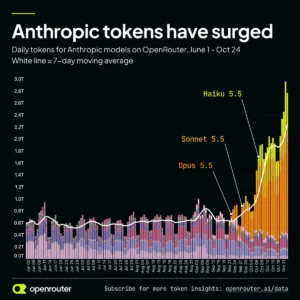
The competitive environment has shifted from one dominated by legacy search metrics to a landscape where developer ecosystem adoption is the primary indicator of success. Currently, platforms such as Claude (Anthropic) and OpenAI’s GPT-4 series have seen significant traction among enterprise developers and coding professionals. Google’s Gemini, while technically capable, has struggled to achieve the same level of ubiquity in the developer community.

Inside the company, internal culture has also come under the microscope. Industry observers and former employees have noted a prevalence of "rest and vest" behaviors, a term popularized in the Silicon Valley ecosystem to describe high-compensation roles that lack intense output requirements. This culture, which may have been sustainable during the "peacetime" era of Google’s monopoly, is being challenged as the company enters what many executives now describe as a "wartime" footing. The pressure to consolidate teams, increase in-office attendance, and pivot toward high-impact deliverables is indicative of a broader institutional attempt to recapture the startup-like hunger that characterized the firm’s early years.
The Publisher Conflict and Search Integrity
Beyond the financial and technical challenges, Google is facing a public relations and legal crisis regarding the core of its search business. The introduction of "AI Overviews" has fundamentally changed the relationship between Google and the open web. By summarizing content directly on the search results page, Google effectively disintermediates the creators who provide the raw data upon which its models are trained.
This shift has drawn criticism from publishers and small business owners who argue that Google’s evolution from a search engine into an answer engine threatens the viability of the digital ecosystem. The potential for legal challenges and regulatory scrutiny regarding antitrust concerns adds another layer of complexity. If Google’s primary revenue engine—search advertising—is eroded by the very AI tools meant to secure its future, the company risks a cannibalization of its most profitable assets.
Strategic Implications and Future Outlook
The path forward for Google requires a dual approach: maintaining the integrity of its search dominance while effectively scaling its AI infrastructure to reach parity, or superiority, against its primary rivals. The involvement of institutional investors, such as Berkshire Hathaway, suggests a belief in the company’s long-term utility, even if the short-term valuation remains volatile.
For the company’s leadership, the imperative is clear: optimize operations to ensure that capital expenditure leads to demonstrable product differentiation. The current market skepticism is not necessarily a death knell for Google, but it is a demand for a recalibration. The company’s vast resources, including its control of Android, Chrome, and the YouTube ecosystem, provide a distribution network that no competitor can easily replicate. However, distribution alone is insufficient if the underlying AI experience does not provide unique, high-value utility to the end user.
The ongoing "AI race" is unlikely to be won by the company with the largest budget alone, but by the entity that can best integrate AI into the daily workflows of billions of users. As the company continues its transformation, the focus will remain on whether it can overcome the inertia of its own success. The outcome of this struggle will not only define the future of Alphabet but will also serve as a case study in how dominant tech monopolies handle the threat of disruptive, paradigm-shifting innovation. Whether Google can shed its reputation for bureaucratic sluggishness to reclaim its status as an agile, first-mover innovator remains the central question for its stakeholders in the coming fiscal years.