The Silent Burden of the Primary Provider: When Financial Anxiety Overshadows Family Milestones


The tension between long-term financial planning and the immediate needs of a family unit often manifests in silent, high-stakes decision-making. A recent case study involving an unexpected venture capital (VC) liquidity requirement illustrates the complex psychological and economic pressures faced by primary breadwinners. When a $25,000 capital call—an unanticipated legal demand for committed funds—coincided with plans for a family excursion to Las Vegas, the intersection of personal finance and familial obligation created a crucible of stress that serves as a cautionary tale for high-net-worth households.
The Chronology of a Financial Conflict
The conflict began approximately nine days prior to a holiday weekend. The subject, a professional accustomed to stringent financial forecasting, had initially proposed a family trip to Las Vegas. His spouse, acting on this suggestion, spent several days curating a comprehensive itinerary, including logistics for a party of four, accommodation at the Palazzo, and bookings for high-demand entertainment such as the Blue Man Group and Cirque du Soleil.
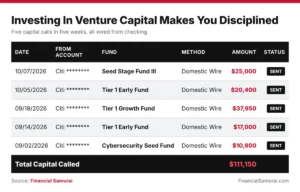
However, in the interim between the initial suggestion and the final booking, the household was hit with a $25,000 capital call from a venture fund. In the private equity and venture capital space, capital calls are mandatory, non-negotiable obligations that require investors to provide previously committed funds on short notice. When this obligation emerged, the household’s liquidity profile shifted abruptly. The total projected cost of the vacation—ranging between $6,000 and $7,000—suddenly appeared as a potential risk to the family’s medium-term stability.
The resulting hesitation from the provider, who had previously been the architect of the trip, created a momentary rift. For the spouse, the request to "think about it" appeared as a withdrawal of commitment after she had invested significant labor into the logistics. The provider’s internal struggle—balancing the duty to his family’s quality of life against the duty to his investment obligations—remained uncommunicated, leading to a period of silent friction.
Economic Context: The Reality of Capital Calls
Capital calls are a standard feature of alternative asset investing. Unlike stocks or bonds, which can be liquidated on a public exchange, private market investments often function on a "drawdown" basis. Investors commit to a total amount, and the fund manager (General Partner) requests that capital as deals are sourced or operational expenses arise.
In this instance, the provider had estimated a 30% capital call rate within a 12-month period. Instead, he experienced a 46% draw within six months. This discrepancy highlights the volatility inherent in private market commitments. Data from the Institutional Limited Partners Association (ILPA) suggests that while institutional investors have rigorous stress-testing models for such scenarios, individual high-net-worth investors often underestimate the "velocity of capital," or the speed at which funds are pulled from their accounts.

This rapid depletion of liquid cash can trigger a "scarcity mindset," a psychological phenomenon where an individual’s cognitive bandwidth is consumed by immediate financial shortfalls, often leading to suboptimal decision-making in other areas of life, such as interpersonal communication.
The Anatomy of a Behavioral Misstep
The culmination of this stress occurred during the trip itself. A combination of sleep deprivation—following a late-night poker session that resulted in a $350 loss—and lingering anxiety over the capital call, manifested in a moment of interpersonal conflict at a Red Rocks vista point. The provider, seeking to capture high-quality images for his professional newsletter, attempted to direct his spouse on photography techniques.
The interaction, which included critiques regarding framing and angles, was perceived by the spouse as overly demanding. This incident serves as a classic example of "displacement," where the frustration generated by external economic forces is misdirected toward the closest available outlet: one’s partner. Analysis of the event suggests that the provider’s hyper-focus on professional branding and optimization—traits that likely contributed to his success in finance—became a liability when applied to a family vacation.
The Broader Implications for Households
The psychological burden of the primary provider is a well-documented, yet under-discussed, variable in family stability. When a provider carries the weight of "financial protection" alone, they often adopt a defensive posture. In this case, the provider had developed a habit of extreme saving, a defense mechanism rooted in a past negative experience with professional rejection.
This behavioral pattern, while protective, can lead to:
- The Over-Optimization Trap: The tendency to manage every dollar to the point of diminishing returns, where the emotional cost of "saving" exceeds the monetary value.
- Silent Stewardship: The refusal to communicate financial stress, which forces the non-earning partner to interpret irritability as a personal failing rather than a systemic, external pressure.
- Loss of Presence: The inability to enjoy "green" portfolio returns (the trip, the family time) due to "red" position anxieties (the capital call).
Strategic Adjustments and Future Mitigation
To reconcile these pressures, the provider identified three strategic shifts necessary for long-term household harmony:
- Institutionalizing the Buffer: Maintaining a six-month cash buffer in highly liquid, interest-bearing vehicles like money market funds. This "emotional capital" acts as a shock absorber against unforeseen capital calls or market volatility.
- Abandoning Micro-Optimization: Recognizing that the marginal utility of saving $1,000 on a vacation pales in comparison to the value of familial cohesion and parental presence.
- Transparent Communication: Acknowledging that silence is the primary enemy of the household. Proactive disclosure—stating, "I am currently managing high levels of professional stress,"—allows the partner to understand the context of the provider’s behavior, effectively neutralizing the ambiguity that leads to conflict.
Conclusion
The event in Las Vegas underscores that financial wealth does not exempt a household from the pressures of financial management. For those who function as primary providers, the challenge is not merely the accumulation of capital, but the management of the emotional states that accompany it. By transitioning from a mindset of solitary "hard mode" endurance to one of shared communication and adequate liquidity buffers, high-net-worth individuals can protect both their balance sheets and their personal relationships. The incident demonstrates that while capital calls are a function of the market, the quality of a family’s experience remains a choice that must be prioritized above all other fiduciary obligations.