Why Apple is Finally Bringing Touchscreens to the MacBook Pro and What It Means for the Industry

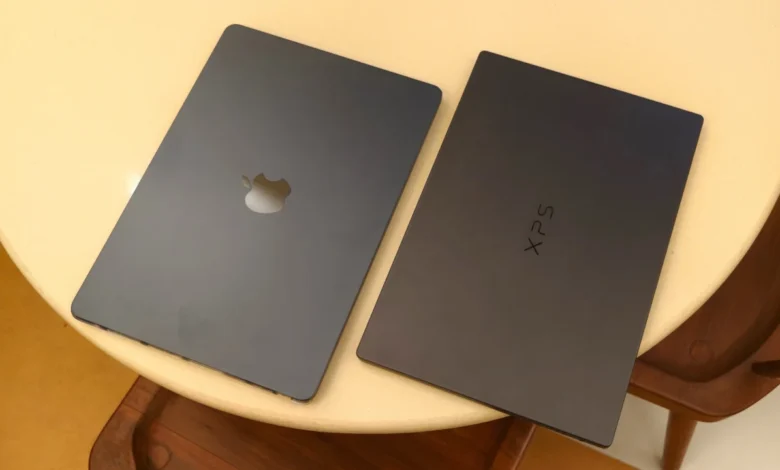
For over a decade, the computing industry has operated under a distinct dividing line regarding human-computer interaction. While Windows-based original equipment manufacturers rapidly adopted multi-touch displays, transforming traditional laptops into hybrid environments, Apple maintained a steadfast refusal to integrate touchscreens into its MacBook lineup. Co-founder Steve Jobs famously dismissed the concept of vertical touchscreens as ergonomically disastrous, arguing that the human arm would fatigue quickly from reaching across a keyboard. However, shifting consumer habits, advancements in display technology, and evolving professional workflows have forced a monumental strategic reevaluation in Cupertino. Industry reports indicate that Apple is actively preparing to launch its first touchscreen MacBook Pro, featuring an advanced OLED panel and a revised software interface designed to bridge the gap between traditional macOS navigation and intuitive touch input.
The Evolution of Laptop Ergonomics and the Windows Precedent
The modern shift toward touch-enabled portable computing began earnestly in the early 2010s, accelerated by the maturation of capacitive touch panels and mobile operating systems. Manufacturers such as Dell, HP, Lenovo, and ASUS integrated touch capabilities across their product tiers, ranging from budget consumer machines to high-end workstations. For many users, reaching out to tap a link, scroll through a dense document, or select a specific image became an unconscious, frictionless habit.

In competitive reviews of hardware like the Dell XPS series, critics frequently highlight sharp, responsive OLED touch panels as valuable secondary input methods. More specialized devices, such as the ASUS Zenbook Duo, have pushed these boundaries further by incorporating dual touchscreens and stylus compatibility, fundamentally altering creative workflows for digital artists and video editors. These implementations demonstrated that touch input, when executed thoughtfully, does not replace the traditional keyboard and trackpad; rather, it supplements them, offering spatial versatility that mouse cursors cannot always replicate efficiently.
Apple’s Historical Resistance and the Rationale for Change
Apple’s reluctance to introduce touch-enabled Macs was rooted in both hardware design philosophy and ecosystem segmentation. For years, the company positioned the iPad and the Mac as two distinct product categories serving entirely different user intents. The iPad was designed for touch, mobility, and direct consumption, while the Mac relied on precision, multitasking, and deep file management via keyboard and mouse. Bringing touch to the Mac, Apple executives argued, would cannibalize iPad sales and create a compromised ergonomic experience.
Yet, market dynamics have shifted. The widespread adoption of Apple Silicon—specifically the M-series chips—has unified the underlying architecture of Apple’s hardware ecosystem. Because iPads and Macs now run on fundamentally similar silicon foundations, the technical barrier to merging these input paradigms has effectively vanished. Furthermore, enterprise users and creative professionals who routinely switch between iOS devices and macOS have increasingly vocalized a desire for unified interaction models. By stubbornly refusing to adapt, Apple risked alienating users who had grown accustomed to touch convenience on corporate Windows machines and personal tablets alike.

Technical Expectations: OLED Displays and Adapted Interfaces
According to supply chain analysts and industry insiders, including Bloomberg’s Mark Gurman, Apple’s upcoming touchscreen MacBook Pro will not merely be a conventional laptop with a sensitive glass panel slapped onto it. The engineering challenge requires solving both hardware integration and software adaptation.
The centerpiece of this upcoming device is expected to be a high-end OLED display, a technology Apple has slowly integrated into its iPad Pro and iPhone lines. OLED panels offer superior contrast ratios, deeper blacks, and higher energy efficiency compared to traditional LCD screens. Crucially, OLED manufacturing advancements allow for integrated touch sensors within the display stack without significantly increasing thickness or weight.
On the software front, the primary design hurdle for macOS is target sizing. Traditional desktop operating systems utilize tiny close buttons, precise drop-down menus, and dense file trees optimized for the pixel-point accuracy of a mouse cursor or trackpad. Touching these elements with a human finger often leads to input errors. To resolve this, Apple is reportedly developing adaptive interface elements within macOS. When a user relies on the trackpad, the interface remains tightly packed and precise. The moment a finger approaches or touches the screen, specific UI elements—such as the Dock, menu bars, and active window controls—are expected to dynamically expand to accommodate touch targets.

Recent Software Indicators and Testing Grounds
While Apple has kept official details under wraps, clues regarding its software readiness have appeared in recent iterations of macOS. Features such as the expanded Sidecar functionality, which allows an iPad touchscreen to seamlessly control a Mac desktop environment with natural tapping, scrolling, and dragging gestures, have provided developers with a preview of how touch logic translates to desktop architecture.
These software integrations suggest that the underlying frameworks of macOS are already being conditioned to interpret touch events reliably. By testing these interactions through peripheral devices first, Apple can refine gesture recognition algorithms without risking a flawed launch on unreleased proprietary hardware.
Potential Market Implications and Industry Reactions

The introduction of a touchscreen MacBook Pro represents a watershed moment for the personal computer market. As high-end Windows laptops command significant market share through versatile form factors, Apple’s entry into this segment will likely legitimize touch-enabled professional laptops for a conservative segment of enterprise and creative buyers who previously dismissed Windows alternatives.
Industry analysts predict that this move will place renewed pressure on competitors to elevate display quality, particularly regarding the transition to OLED panels in professional-grade machines. However, challenges remain. Ergonomic concerns regarding arm fatigue during extended use are valid; industry consensus suggests that touch should remain an auxiliary input method for laptops rather than a primary mode of interaction. If Apple successfully maintains the rigorous productivity standards of macOS while introducing seamless, unobtrusive touch capabilities, the company may redefine user expectations for what a professional notebook can achieve.