ChartMogul Unveils Comprehensive Insights and Presentations from the Global Product-Led Growth Lab Series

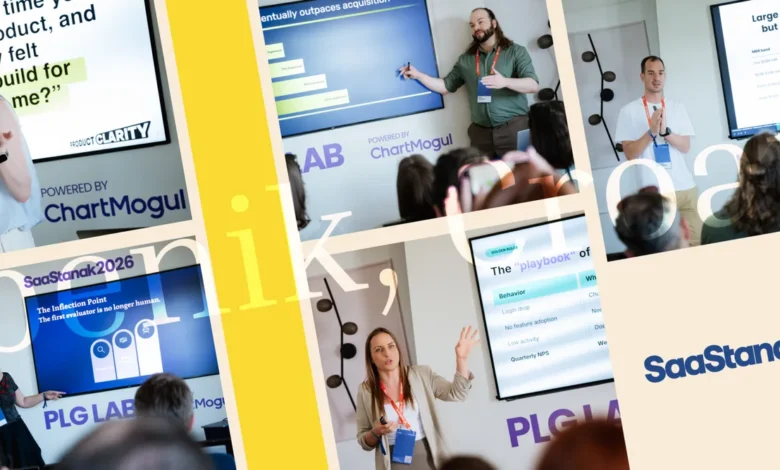
The modern software-as-a-service (SaaS) landscape has evolved significantly from the traditional top-down enterprise sales model. Today, the vast majority of ambitious SaaS businesses are built on the foundation of smart, opinionated products rather than massive pools of venture capital, rooms full of enterprise account executives, or rigid six-figure contracts. Despite the widespread adoption of product-led growth (PLG) strategies, founders and operators frequently find themselves navigating the intricate complexities of activation paths, hybrid go-to-market (GTM) motions, and automated infrastructure. Recognizing this operational reality, ChartMogul Chief Revenue Officer Sara Archer established the Product-Led Growth Lab series, an intimate, city-based meetup initiative designed to address the messy, practical challenges of scaling modern software companies without shying away from technical friction.
The inaugural meetup of this series commenced in San Francisco during the bustling week of Stripe Sessions. The event featured candid discussions led by industry figures such as Brenna Loury, Chief Revenue Officer of Doist, who detailed the complex operational hurdles of moving upmarket within a strictly product-led business model. Attendees engaged in deep debates regarding activation mechanics, hybrid compensation plans, and data workflows, continuing their conversations over refreshments on a sunlit rooftop. This strong initial engagement validated the core premise of the PLG Lab series: that operators are hungry for raw, tactical discussions rather than high-level theoretical overviews.
Following the success in San Francisco, the initiative expanded internationally to the Croatian coast in partnership with SaaStanak. Overlooking the Mediterranean Sea, the series hosted two afternoons of intensive PLG programming. Despite occurring during a regional heat wave, the sessions consistently drew standing-room-only crowds. Participants demonstrated high levels of engagement, posing sharp operational questions, sharing real-time observations from their respective companies, and forging valuable cross-border connections. Because the volume of operator-level knowledge shared during these international sessions was exceptionally high, ChartMogul moved to compile, synthesize, and publish the core presentations, slide decks, and tactical takeaways for the broader global SaaS community.
Architecting Scalable PLG Stacks for Automated Expansion
A central theme across multiple presentations was the mechanical shift required to drive revenue expansion within product-led organizations. Historically, account expansion has been treated primarily as a sales execution problem—relying on human intuition to identify the right moment, draft the right email, and pitch the right cross-grade offer. However, presentations such as "The Expansion Engine: Architecting a Scalable PLG Stack for Automated Upsells" framed expansion as an infrastructure challenge.
When organizations successfully pipe behavioral and transactional data into automated workflows, revenue expansion becomes timely, contextually relevant, and mathematically scalable. Without robust data architecture, automated triggers frequently misfire. In companion sessions addressing lifecycle automation failures, experts emphasized that behavioral data merely reveals what a user did within an application, whereas direct qualitative user feedback explains why the action occurred. Relying solely on technical automation without incorporating human context often results in generic communication that fails to resonate with the customer’s actual workflow needs.
The Rapid Transition to AI-Native Software Architecture
The integration of artificial intelligence into software-as-a-service models dominated a significant portion of the lab discussions, most notably in a session examining how traditional SaaS platforms transformed into AI-native applications in compressed timeframes. This operational shift moved the concept of "AI-native" away from vague corporate strategy and reframed it as a disciplined product exercise.
Effective AI integration requires product teams to identify a singular, high-value user outcome, aggressively remove surrounding friction, preserve the specific moments that establish user trust, and construct the product experience backward from the desired result. Analytical frameworks presented during the workshops provided teams with concrete prompts to evaluate their product roadmaps: determining what software can accomplish before a user undergoes formal training, deciding which software functions should be automated by default, and identifying which manual actions must be retained to ensure users maintain a sense of ownership over the final output.
Re-Evaluating Long-Term Value and the Reality of Hybrid GTM Motions
Data presented by ChartMogul’s internal insights team—spanning an extensive analysis of 3,700 SaaS businesses over a six-year period—revealed critical blind spots in traditional Customer Lifetime Value (LTV) calculations. While LTV remains a vital metric for evaluating customer acquisition cost (CAC), payback periods, and segment-specific investments, the research demonstrated that standard formulas frequently break down when confronted with modern usage patterns. Operators were urged to cross-reference theoretical LTV projections against empirical customer behavior to avoid strategic misallocation of capital.
Furthermore, the dialogue surrounding hybrid go-to-market motions challenged the simplistic notion that self-serve funnels can simply be bolted onto existing enterprise sales teams. Building a cohesive hybrid growth engine requires solving complex systemic and procedural challenges. Organizations must deliberately design account-routing rules, establish clear revenue ownership boundaries, construct incentive-aligned compensation plans, and define distinct product swimlanes to serve diverse buyer personas effectively. Natalija’s presentation on the launch-to-adoption gap highlighted a pervasive industry phenomenon: software products are frequently shipping faster than target users can psychologically and operationally absorb them. Consequently, modern product marketing must evolve from merely announcing feature releases to systematically engineering user adoption and behavior change.
Broader Industry Implications and the Future of PLG
The comprehensive findings emerging from the Product-Led Growth Lab series signal a fundamental maturation of the software industry. Product-led growth is no longer defined merely by the deliberate removal of human sales representatives from the initial customer acquisition journey. Instead, sustainable PLG requires sophisticated data architecture, robust feedback loops, refined onboarding psychology, thoughtful hybrid GTM design, agile launch systems, and infrastructure legible to autonomous software agents.
As software evaluation increasingly incorporates autonomous systems and AI agents capable of discovering, testing, and integrating products independently, product teams face a new diagnostic challenge: ensuring their software remains visible not only to human buyers, but also to the machine-learning algorithms shaping software procurement. Ultimately, the insights gathered from San Francisco to the Mediterranean coast underscore that modern product-led growth is becoming simultaneously more technical, more operational, and deeply grounded in the human realities of user adoption.
Related posts: