The integration of Large Language Models into enterprise environments has reached a critical inflection point as businesses move away from simple chatbot interactions toward active operational management. Recent advancements in the Model Context Protocol (MCP) have enabled platforms like Process Street to bridge the gap between static standard operating procedures (SOPs) and dynamic AI execution. By connecting Claude, Anthropic’s flagship AI assistant, to a structured workflow system via an MCP server, organizations are transforming SOPs from passive documentation into active, automated, and audited business processes.
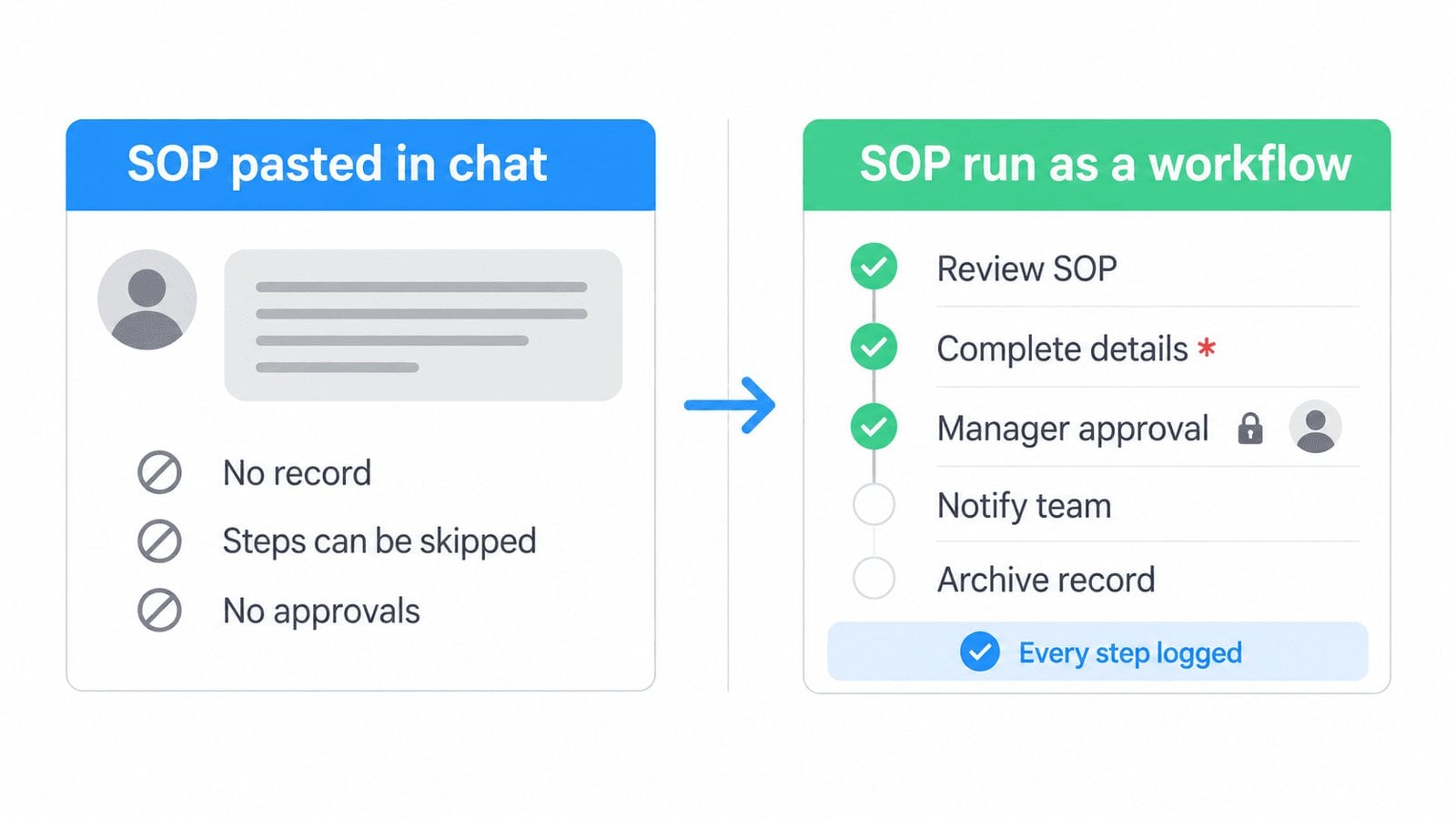
Historically, the reliance on pasting SOP text into chat windows has yielded suboptimal results. When an AI receives instructions in a chat interface, it operates in a vacuum, lacking the ability to enforce step-by-step compliance or maintain an immutable audit trail. This method frequently results in "hallucinated" process adherence, where the AI may skip mandatory checkpoints or fail to secure required human approvals. The shift toward MCP-enabled workflows ensures that the procedure is governed by a robust backend system, allowing the AI to act as a coordinator rather than a document reader.
The evolution of AI-managed workflows
Standard operating procedures have long been the backbone of corporate stability, governing everything from vendor onboarding and financial month-end closures to complex employee offboarding protocols. However, the manual execution of these processes is often prone to human error and inefficiency. The current industry transition toward "headless process management"—where the process layer resides independently of the interface—represents a significant maturation of AI utility.
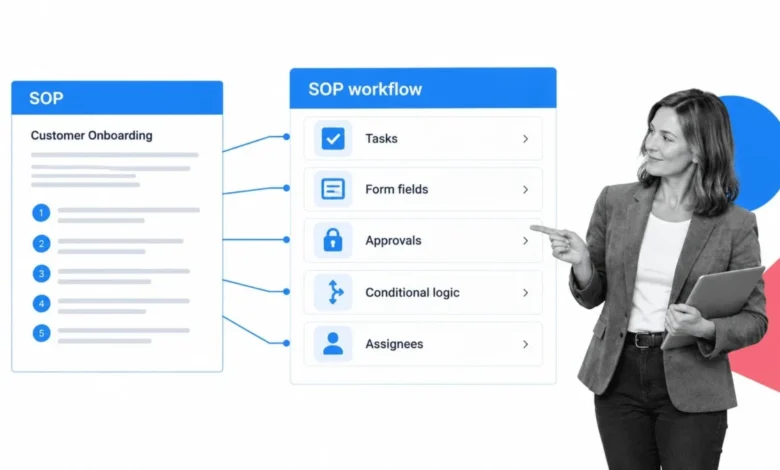
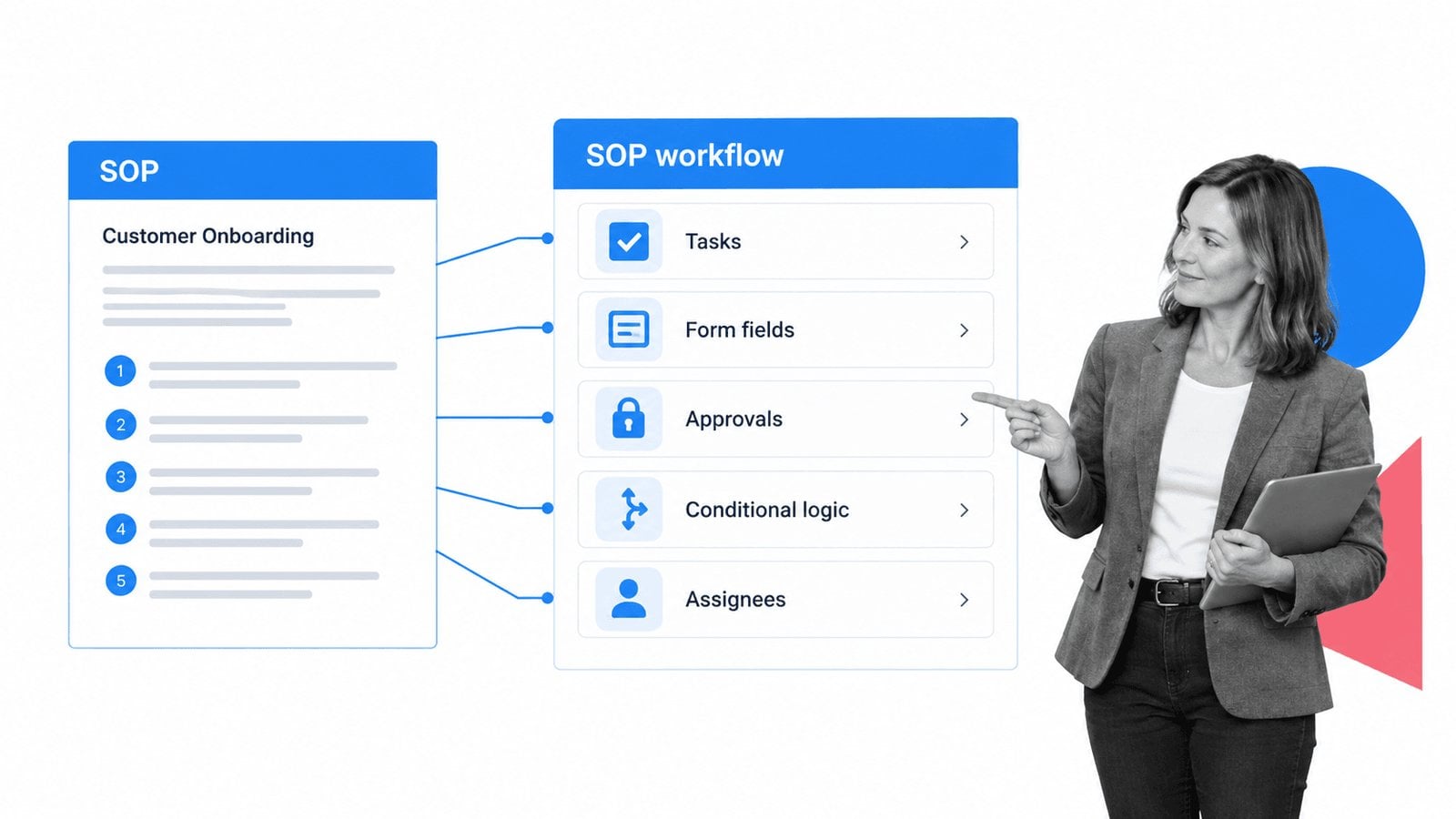
By utilizing an MCP server, businesses can now allow Claude to interface directly with their internal process architecture. The MCP acts as a secure translator, exposing specific tools—such as task initiation, data entry, and status reporting—to the AI. This allows for a repeatable, data-driven approach to operations where every action taken by the AI is recorded against a live, version-controlled workflow.
Chronology of the MCP integration
The development of the Model Context Protocol, spearheaded by the industry-wide push for standardized AI tool connectivity, gained significant momentum in late 2026. This period marked the transition from proprietary, siloed integrations toward an open-standard ecosystem.
- Q3 2026: Anthropic and leading workflow automation platforms began piloting MCP to resolve the "AI-in-a-bubble" problem.
- November 2026: The official release of the Process Street MCP server provided the necessary infrastructure for enterprises to link Claude directly to their SOP libraries.
- December 2026: Widespread adoption of "Agentic Workflows" began, with early-adopter organizations reporting a 30% reduction in time spent on administrative "chasing" of incomplete tasks.
Supporting data and operational implications
Internal data from early implementations suggests that the primary bottleneck in enterprise operations is not the execution of the work itself, but the coordination, status tracking, and manual follow-ups associated with multi-step processes. According to industry reports, teams utilizing AI-orchestrated workflows see a marked improvement in compliance metrics. Specifically, when Claude manages the assignment of tasks and the tracking of approvals, the "cycle time"—the duration from the initiation of a process to its final sign-off—decreases significantly.
The implications for organizational auditability are profound. When an SOP is run within a structured workflow, the system automatically logs who performed which action, the exact timestamp of that action, and the specific data inputs provided. This creates a transparent, forensic trail that is entirely absent in informal chat-based workflows.
Institutional safeguards and the human-in-the-loop requirement
A common misconception regarding AI-driven SOPs is that the technology replaces human oversight. On the contrary, the current architecture mandates that the AI operates within the confines of established permissions. Claude acts as a delegate that performs the "busywork"—such as filling in repetitive form fields, identifying bottlenecks, and summarizing progress—while reserving critical judgment for human stakeholders.
For instance, in a vendor onboarding scenario, Claude can initiate the process, populate the necessary data fields, and flag the task for a security review. However, the final approval to proceed remains the sole purview of the designated human authority. This "human-in-the-loop" requirement is not merely a safety precaution but a functional necessity, ensuring that AI-led processes align with corporate governance and legal requirements.
Expanding the ecosystem: Beyond Claude
The versatility of the MCP framework allows organizations to standardize their processes regardless of the specific AI interface. While Claude offers advanced reasoning capabilities, the underlying SOP remains a constant. Because the logic is stored within the process management system rather than the chat history, teams can leverage the same SOPs through ChatGPT, Gemini, or specialized coding assistants like Cursor. This cross-platform interoperability ensures that an organization’s operational "source of truth" remains consistent, even as the underlying AI technology evolves.
Analysis of operational impact
The shift toward AI-managed SOPs is indicative of a broader trend toward the professionalization of AI agents. Organizations that have successfully deployed these systems highlight three key benefits:
- Consistency: Every run of a workflow follows the exact same logic defined in the published version of the SOP, eliminating the variability associated with human memory or interpretation.
- Accountability: By assigning specific tasks to individuals within the workflow, the system creates clear ownership, which can be tracked and reported by the AI at any time.
- Scalability: As business requirements change, updating a single, centralized workflow automatically updates the procedure for every future run, regardless of which AI agent is managing it.
Best practices for implementation
For organizations looking to transition from static documentation to active AI-managed workflows, a phased approach is recommended.
First, identify a recurring process that is well-documented but prone to delays, such as monthly financial reporting or IT access requests. Map this process into a workflow structure that includes clear trigger points, task assignments, and mandatory approval steps. Once the workflow is established, connect the MCP server to an AI interface.
Initial engagement with the AI should be restricted to simple tasks—such as checking the status of current runs or summarizing pending bottlenecks. As trust in the system grows, teams can move to more complex automation, such as allowing the AI to initiate new runs based on external triggers or data inputs.
Future outlook
As the industry moves into 2027, the role of AI in operations will likely expand from simple coordination to predictive management. Future iterations of these systems will likely be capable of identifying potential bottlenecks before they occur, based on historical data patterns.
However, the fundamental requirement for success remains the quality of the underlying process. AI is not a panacea for broken operations; it is a force multiplier for well-defined ones. Organizations that prioritize the structure of their SOPs today will be best positioned to leverage the full capabilities of AI-driven operational management tomorrow. By maintaining a clear separation between the "what" (the process) and the "how" (the AI assistant), businesses can ensure that their operations remain both agile and compliant in an increasingly automated landscape.
The convergence of MCP and workflow management systems marks the end of the experimental phase of AI integration. It signals the beginning of an era where operational excellence is achieved through the marriage of rigorous procedural discipline and the unparalleled efficiency of intelligent, agentic systems. Through this, the standard operating procedure is no longer just a manual on a shelf, but a living, breathing component of the enterprise architecture.