A comprehensive analysis of 9.6 million Instagram posts by Buffer has unveiled the optimal times for content creators, marketers, and businesses to achieve maximum engagement in 2026. The study, which forms part of Buffer’s broader State of Social Engagement 2026 report, pinpoints Thursday at 9 a.m., Wednesday at 12 p.m., and Wednesday at 6 p.m. as the top three slots for posting on the popular social media platform. These findings underscore the continued importance of strategic timing in an increasingly competitive digital landscape.
Navigating Instagram’s Evolving Landscape
The battle for audience attention on Instagram is fiercer than ever. With an escalating number of brands and creators investing heavily in the platform, and audiences dedicating more time to the app, the fight for prime feed real estate has intensified. In this environment, the precise moment a post goes live can significantly influence its visibility and interaction levels. While content quality remains paramount, posting at opportune moments can mean the difference between a viral hit and content lost in the digital "dead zone."
This phenomenon is directly tied to the Instagram algorithm, which heavily prioritizes engagement. Likes, comments, shares, and reposts serve as potent signals to the algorithm, indicating that content is valuable and warrants broader distribution. By timing posts to coincide with peak audience activity, creators can generate early momentum, signaling to the algorithm that their content deserves to be surfaced to a wider audience. This data-driven approach is increasingly critical for anyone looking to build a robust online presence.
Methodology Behind the Insights: A Deep Dive into 9.6 Million Posts
Buffer’s 2026 report is built upon a robust dataset, analyzing 9.6 million Instagram posts from over 200,000 accounts between January 2024 and December 2025. This extensive data pool allowed for the identification of consistent patterns in user engagement across various days and times. To ensure the applicability of these findings across diverse geographical regions, Buffer’s data scientists normalized the times, meaning that the recommended posting slots apply universally to any local timezone. Whether a user is in Eastern Standard Time (EST), Pacific Standard Time (PST), or Indian Standard Time (IST), the suggested times are directly relevant to their local clock.
![Best Time to Post on Instagram: 2026 Data from 9.6M Posts [Updated July 2026]](https://storage.ghost.io/c/6d/21/6d217297-aa70-41fe-b68d-e29e411dd3ed/content/images/2026/01/best-time-to-post-on-instagram-2026.png)
The study primarily focused on median engagement rates. This approach helps to mitigate the skewing effect of outlier posts or exceptionally large accounts, making the advice pertinent for creators and businesses of all sizes, from nascent profiles to established brands. Understanding when an audience is most receptive to interacting with content is a cornerstone of effective social media strategy.
The Algorithmic Imperative: Why Timing Still Reigns
The evolution of Instagram’s algorithm has consistently reshaped how content performs. While the days of a purely chronological feed are long gone, recency continues to play a role in initial reach. When a post goes live during active scrolling periods, it gains immediate exposure, fostering the crucial early engagement that the algorithm seeks. Adam Mosseri, Head of Instagram, has repeatedly emphasized the platform’s focus on user relevance and engagement. In 2026, the number one ranking signal for Instagram’s algorithm is "sends per reach"—how often users directly message a post or Reel to a friend. This metric highlights the platform’s desire to promote content that sparks genuine connection and sharing, rather than passive consumption.
Therefore, timing posts for when audiences are most likely to engage—not just view—becomes a strategic advantage. Evening hours, for instance, often align with periods of downtime when users are more likely to interact deeply with content, share it with friends, or save it for later, all actions valued by the current algorithm.
Key Findings for 2026: Peak Engagement Windows Identified
The Buffer study unequivocally points to Wednesday and Thursday as the days yielding the highest engagement rates. Specifically, the top three global times are:
- Thursday at 9 a.m.
- Wednesday at 12 p.m.
- Wednesday at 6 p.m.
These findings align with broader industry trends that have consistently shown midweek and afternoon-to-evening windows as prime engagement periods. The analysis also reveals a general pattern of evening hours (6 p.m. to 11 p.m.) consistently outperforming morning slots across most days, with one notable exception on Thursday mornings.
![Best Time to Post on Instagram: 2026 Data from 9.6M Posts [Updated July 2026]](https://storage.ghost.io/c/6d/21/6d217297-aa70-41fe-b68d-e29e411dd3ed/content/images/2026/01/best-time-to-post-instagram-2026-heatmap.png)
This trend is often attributed to user demographics and behavior. A significant portion of Instagram’s user base, particularly those aged 25 to 34 (according to Statista), are likely to check the app in the evenings as they unwind from work or daily responsibilities. Midday spikes, such as the one observed on Wednesdays around noon, can be linked to lunch breaks or brief periods of downtime during the workday when users scroll through their feeds.
Weekday Dynamics: A Detailed Breakdown of Engagement
The data offers nuanced insights into engagement patterns throughout the week:
-
Monday: Evening Re-engagement
The best time to post on Monday is 7 p.m., followed closely by 6 p.m. and 8 p.m. As users transition back into their workweek routines, Monday evenings provide a strong window for catching up on feeds after the workday concludes. This suggests a pattern of users settling into more relaxed content consumption. -
Tuesday: Mid-Afternoon to Evening Build-up
Tuesday’s top slot is 7 p.m., with 3 p.m. and 5 p.m. also showing strong performance. Ranking as the third strongest day overall, Tuesday offers a broader window of high engagement extending from mid-afternoon into the early evening, signaling a gradual increase in user activity as the week progresses. -
Wednesday: The Midweek Powerhouse
Wednesday emerges as the highest-performing day. Optimal times include 12 p.m., 6 p.m., and 8 a.m. The midday spike at noon is particularly noteworthy, aligning perfectly with the ubiquitous "lunch break scroll." This, combined with strong early morning and evening engagement, makes Wednesday a versatile day for reaching active audiences. -
Thursday: The Morning Anomaly and End-of-Week Planning
Thursday presents the most counterintuitive pattern, with morning hours significantly outperforming evenings. The prime time is 9 a.m., followed by 8 a.m. and 7 a.m. This "Thursday 9 a.m. anomaly" might be linked to users engaging with content while planning their upcoming weekend, or as part of a mid-morning work break, making it a unique window for brands and creators.![Best Time to Post on Instagram: 2026 Data from 9.6M Posts [Updated July 2026]](https://storage.ghost.io/c/6d/21/6d217297-aa70-41fe-b68d-e29e411dd3ed/content/images/2026/01/best-day-to-post-instagram-2026-.png)
-
Friday: Waning Engagement
Friday marks a decline in engagement, ranking as one of the two weakest days. While 10 p.m., 9 p.m., and 6 a.m. show comparatively better performance, any Friday slot should be viewed as a "hold-the-line" day rather than a peak opportunity. Users often disengage from social media as they transition into weekend activities.
Weekend Challenges: Navigating Lower Engagement
The weekend typically presents the lowest engagement rates, a pattern consistent across various social media platforms as users often spend more time offline.
-
Saturday: The Lowest Point
Saturday shares the lowest engagement with Friday. The best times are late evening: 9 p.m., 10 p.m., and 8 p.m. It is advisable to reserve high-stakes content for midweek and use Saturday evenings for lighter, less critical posts. -
Sunday: Evening Recovery
Sunday evenings offer a modest recovery for weekend engagement, with 9 p.m., 10 p.m., and 8 p.m. being the strongest slots. Audiences tend to return to the app as they wind down before the start of the new week, making it the most viable weekend posting window.
Optimal Posting Times at a Glance (Local Time)
- Wednesday: 12 p.m., 6 p.m., 8 a.m. (Highest Engagement)
- Thursday: 9 a.m., 8 a.m., 7 a.m. (Highest Engagement)
- Tuesday: 7 p.m., 3 p.m., 5 p.m. (High Engagement)
- Monday: 7 p.m., 6 p.m., 8 p.m. (Moderate Engagement)
- Sunday: 9 p.m., 10 p.m., 8 p.m. (Moderate Engagement)
- Friday: 10 p.m., 9 p.m., 6 a.m. (Low Engagement)
- Saturday: 9 p.m., 10 p.m., 8 p.m. (Low Engagement)
(Source: Buffer’s State of Social Engagement 2026 report, analyzing 9.6 million Instagram posts from Jan 2024 to Dec 2025. Times apply to your local timezone.)
![Best Time to Post on Instagram: 2026 Data from 9.6M Posts [Updated July 2026]](https://storage.ghost.io/c/6d/21/6d217297-aa70-41fe-b68d-e29e411dd3ed/content/images/2026/05/image-6.png)
Content Type Specifics: Reels, Carousels, and Stories
While the overall peak windows largely apply across all content formats, understanding user behavior for each type can refine posting strategies:
-
Reels: Entertainment in the Evenings
The best time to post Instagram Reels aligns with the overall evening peak: between 6 p.m. and 11 p.m., particularly on Wednesdays and Thursdays. Reels are designed for entertainment, and users are most receptive to engaging with entertaining, short-form video content during their leisure hours after work. The high value placed on "sends per reach" for Reels further emphasizes that these moments of downtime are when users are most likely to share content with friends. -
Carousels: Deeper Dives During Downtime
Instagram Carousels, which encourage users to swipe through multiple images or videos, perform best during the same midweek windows: Wednesday at 12 p.m., Wednesday at 6 p.m., and Thursday at 9 a.m. This suggests that users engage with longer-form, multi-slide content when they have more dedicated time, such as during a lunch break or in the early evening. -
Stories: The Power of Daily Consistency
For Instagram Stories, consistency trumps specific timing. Given their 24-hour lifespan, the recommendation is to post one to two Stories daily. Head of Instagram Adam Mosseri has consistently advocated for a regular Story cadence to maintain top-of-mind awareness with followers. Stories often serve as a casual, immediate way for audiences to connect with friends, family, and favorite creators, making frequent, timely updates more valuable than perfectly timed, infrequent posts.
Worst Times to Post: Avoiding the ‘Dead Zones’
Just as there are optimal times, there are also periods to avoid. The Buffer analysis highlights that the worst times to post on Instagram are generally between 1 a.m. and 5 a.m. on any day. This overnight window consistently yields the lowest engagement as most audiences are asleep. Additionally, Friday and Saturday are the weakest days overall, with significantly lower engagement across all time slots. Specific periods like Friday lunchtime and Saturday morning should be particularly avoided if maximum engagement is the goal. These patterns reflect predictable human behavior, where individuals are either sleeping, commuting, or actively disengaging from screens during leisure time.
![Best Time to Post on Instagram: 2026 Data from 9.6M Posts [Updated July 2026]](https://storage.ghost.io/c/6d/21/6d217297-aa70-41fe-b68d-e29e411dd3ed/content/images/2026/05/image-7.png)
Strategic Implementation: Leveraging Data for Growth
For businesses, creators, and social media managers, translating this global data into actionable strategy involves two key steps:
- Utilizing Global Insights: The Buffer data provides a robust foundation for initial scheduling, offering a strong starting point for maximizing reach and engagement. Tools like Buffer can automate the scheduling process, allowing users to pre-set these recommended posting times effortlessly.
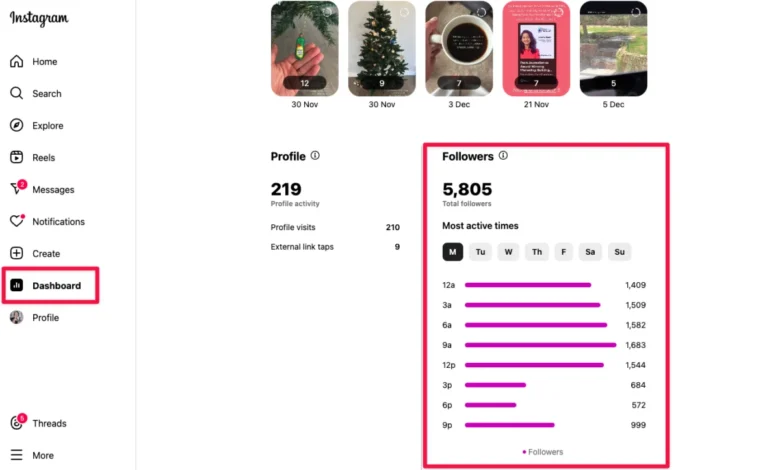
- Personalized Optimization with Instagram Insights: While global data is invaluable, every audience is unique. Instagram’s native analytics tool, Instagram Insights (available for professional Creator or Business accounts), provides granular data on when your specific followers are most active. This personalized information is crucial for fine-tuning a posting schedule. By cross-referencing Buffer’s general findings with individual audience insights, creators can develop a highly optimized posting strategy. It’s important to note that Instagram Insights shows when followers are active, not necessarily when they engage most. Therefore, experimentation remains key.
Beyond Timing: A Holistic Approach to Instagram Success
While timing plays a significant role, it is merely one component of a successful Instagram marketing strategy. High-performing content is the result of a multifaceted approach:
- High-Quality Content: Visually appealing and valuable content is fundamental.
- Strategic Hashtags: Researching and using relevant hashtags increases discoverability.
- Clear Calls to Action (CTAs): Encouraging specific actions like commenting, sharing, or visiting a link drives engagement.
- Authenticity and Relatability: Content that resonates personally with the audience fosters deeper connection.
- Consistent Posting: Regular presence builds audience expectation and algorithmic favor. Buffer’s research suggests 3-5 feed posts per week, coupled with 1-2 daily Stories, as a sweet spot for optimal reach without over-saturating followers.
- Community Engagement: Actively responding to comments and messages, and engaging with other accounts, builds a loyal community.
- Diverse Content Formats: Utilizing Reels, Carousels, and Stories strategically caters to different consumption habits.
Conclusion: The Future of Instagram Engagement
The Buffer State of Social Engagement 2026 report offers crucial insights for navigating the dynamic world of Instagram. By understanding and leveraging the optimal posting times—predominantly midweek evenings, with a notable Thursday morning exception—creators and businesses can significantly enhance their content’s reach and engagement. However, the true recipe for Instagram success remains a blend of data-driven timing, compelling content, consistent effort, and genuine community interaction. As the platform continues to evolve, adaptability and a willingness to analyze personal performance data will be key to sustained growth and influence.