Leading with Purpose: Why Navigating Economic Uncertainty Requires a Shift from Survival to Significance

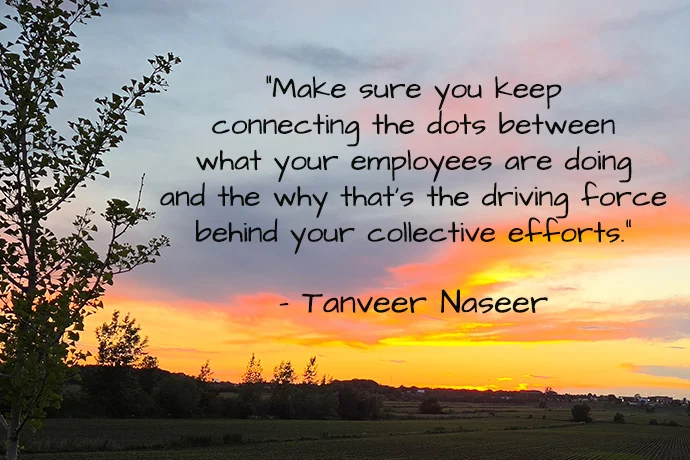
The global corporate landscape is currently grappling with a convergence of pressures, ranging from volatile interest rates and shifting trade alliances to the rapid integration of generative artificial intelligence. In response to these "polycrisis" conditions, a growing number of organizations have begun to adopt a defensive posture, prioritizing immediate liquidity and operational resilience over long-term exploratory ventures. Recent industry benchmarks from consultancy giants such as KPMG and McKinsey & Company indicate a measurable contraction in innovation pipelines, as firms scale back R&D budgets to protect their core viability. However, management experts and economic analysts warn that this period of retrenchment creates a "meaning gap" that can inadvertently erode the very resilience companies seek to build. To counteract this, leadership must bridge the disconnect between daily operational tasks and the organization’s overarching vision, transforming survival-based strategies into purpose-driven mandates.
The Strategic Shift Toward Defensive Operations
As 2024 progresses, the "KPMG CEO Outlook" report highlights that a significant majority of executives feel pressured to deliver short-term results at the expense of long-term strategic pivots. This trend is mirrored in McKinsey’s research, which suggests that during economic downturns, companies often narrow their innovation focus to "safe" bets—incremental improvements to existing products rather than disruptive new ventures. While this provides a temporary buffer against market volatility, it often results in a decoupled workforce. When employees perceive their roles solely through the lens of cost-cutting or risk mitigation, engagement levels typically plummet, leading to a phenomenon often described by HR analysts as "discretionary effort fatigue."
The challenge for modern leadership is to maintain fiscal discipline without sacrificing the "organizational why." Data suggests that the companies that emerge strongest from periods of uncertainty are those that treat purpose not as a luxury for prosperous times, but as a fundamental tool for navigation during crises.
The Quantifiable Impact of Purpose-Driven Leadership
The move toward purpose-driven management is supported by robust empirical data rather than mere sentiment. Research into high-performing organizations reveals that companies with a strong, clearly communicated sense of purpose outperform their peers across nearly every key metric. According to recent studies on corporate culture:
- Employee Retention: Purpose-driven companies experience 40% higher levels of workforce retention. In an era where the "War for Talent" remains fierce despite economic headwinds, the ability to retain institutional knowledge is a significant competitive advantage.
- Innovation Rates: Organizations that align their innovation goals with a broader social or industry mission report 30% higher levels of internal innovation. Purpose acts as a filter, helping teams identify which problems are worth solving.
- Market Leadership: Companies that consistently articulate their "why" tend to occupy the first or second positions in their respective market segments. This is attributed to higher brand loyalty and a more motivated workforce that is willing to go beyond the minimum requirements of their job descriptions.
For leaders, these statistics represent a "game-changer." While competitors are focused on contraction, purpose-driven organizations utilize their mission to unlock "discretionary effort"—the level of productivity an employee gives beyond what is required—which becomes the primary engine for growth when market conditions eventually stabilize.
A Chronology of Corporate Purpose: From Shareholder to Stakeholder
To understand the current emphasis on purpose, it is necessary to examine the evolution of corporate philosophy over the last several decades.
- The Era of Shareholder Primacy (1970s–1990s): Influenced by the Chicago School of Economics, the dominant view was that a corporation’s only social responsibility was to increase its profits. Purpose was defined strictly in financial terms.
- The Rise of Corporate Social Responsibility (2000s): Companies began to adopt CSR initiatives, though these were often siloed departments disconnected from the core business strategy.
- The Stakeholder Capitalism Pivot (2019): The Business Roundtable, an association of CEOs from America’s leading companies, issued a landmark statement redefining the purpose of a corporation to include a commitment to all stakeholders—customers, employees, suppliers, and communities, alongside shareholders.
- The Resilience Era (2020–Present): The COVID-19 pandemic and subsequent geopolitical instability forced a realization that purpose is a stabilizer. Organizations found that employees were more resilient when they understood how their work contributed to societal stability or customer well-being during a crisis.
Three Pillars of Daily Purpose Integration
Management analysts suggest that leading with purpose is not achieved through annual manifestos or all-hands meetings alone. Instead, it is a daily discipline. Experts identify three primary actions that leaders can take to reinforce the connection between effort and impact.
1. The Implementation of "Purpose Moments"
Neuroscience suggests that storytelling is one of the most effective ways to build organizational alignment. By incorporating "purpose moments" into weekly briefings, leaders can highlight specific instances where an employee’s work directly benefited a stakeholder. This moves the concept of "purpose" from an abstract corporate value to a tangible, repeatable action. For instance, rather than celebrating a 5% increase in efficiency, a leader might highlight how that efficiency allowed a client to receive a critical service faster, thereby solving a real-world problem.
2. Real-Time Recognition of Impact
The traditional annual performance review is increasingly viewed as an inadequate tool for fostering engagement in a fast-paced environment. Purpose-driven leadership requires immediate recognition. When an employee’s effort aligns with the organizational mission, identifying that alignment immediately reinforces the "why." This creates a positive feedback loop; the employee feels a greater sense of meaning, which in turn fuels their motivation to sustain high performance during stressful periods.
3. Bridging the "Vantage Point" Gap
There is often a significant disparity between the information available to senior executives and that available to front-line staff. While leaders operate from a high vantage point with a view of long-term strategy, employees are often focused on the granular details of day-to-day operations. In uncertain times, this lack of clarity can lead to anxiety. Leaders must act as "meaning translators," consistently connecting the dots between mundane tasks and the larger strategic objective. This ensures that even in a climate of ambiguity, the workforce understands the direction of the "collective why."
Stakeholder Reactions and Industry Perspectives
The shift toward leading with purpose has drawn varied reactions from across the corporate spectrum.
Human Resources Executives: Many HR leaders argue that purpose is the most effective antidote to "quiet quitting." By providing employees with a sense of agency and significance, companies can maintain high morale even when financial bonuses or raises are constrained by economic conditions.
Middle Management: This group often reports the highest levels of stress, as they are tasked with implementing high-level purpose while meeting strict operational KPIs. Analysts suggest that for purpose to be successful, middle managers must be empowered with the tools to recognize and reward purpose-driven behavior, rather than being judged solely on output volume.
Investors: Historically skeptical of "soft" metrics, the investment community is increasingly looking at Environmental, Social, and Governance (ESG) scores and "Culture Audits" as indicators of long-term viability. Investors now recognize that a company without a clear purpose is more susceptible to turnover and reputational risk.
Analysis of Long-Term Implications
The long-term implications of purpose-driven leadership extend beyond internal culture; they influence the broader economic ecosystem. When organizations prioritize purpose, they contribute to a more stable and engaged society. Conversely, a purely defensive, profit-only approach during times of uncertainty can lead to a "hollowing out" of corporate culture, making firms brittle and slow to adapt when the market recovers.
Furthermore, as the workforce becomes increasingly dominated by Millennials and Gen Z—demographics that statistically prioritize meaningful work over high pay—the "purpose mandate" will become a baseline requirement for any organization wishing to remain relevant. Organizations that fail to bridge the gap between daily efforts and overarching vision may find themselves facing a terminal talent drain.
Conclusion: Leadership in the New Normal
The success of purpose-driven organizations is not derived from grand proclamations or marketing campaigns. It is the result of a deliberate, daily effort by leaders to ensure that every member of the team understands the significance of their contribution. In an era defined by uncertainty, the ability to unlock a greater level of engagement and commitment is the ultimate competitive advantage. While the path to success may be clouded by economic and geopolitical factors, a clear organizational purpose acts as a compass, ensuring that the collective efforts of the workforce remain focused on what truly matters. Leaders who embrace this shift from survival to significance will not only preserve their organizations but will likely lead them to new heights of innovation and market influence.