The Internal Mirror Overcoming Self-Deception as a Barrier to Effective Leadership and Authentic Connection

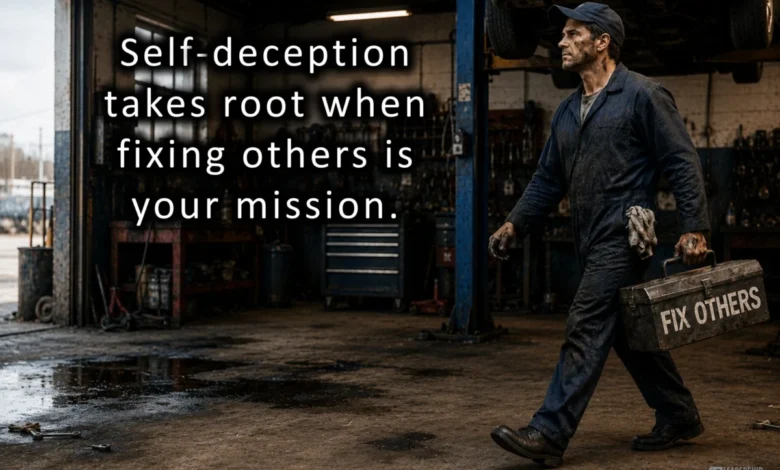
The prevailing paradigm in modern management often emphasizes the "fixer" mentality, where leaders perceive their primary value as the ability to identify and correct the deficiencies of their subordinates. However, emerging research into organizational psychology suggests that this outward focus frequently serves as a sophisticated mechanism for self-deception. When a leader’s mission is centered on fixing others, they often inadvertently cultivate a culture of shallow relationships and stagnant personal growth. This phenomenon, characterized by the redirection of critical analysis away from the self and toward the collective, creates a "wall of self-deception" that limits both individual potential and organizational efficacy.
The Core Conflict: Fixing Others vs. Developing the Self
At the heart of the self-deception trap is the psychological satisfaction derived from diagnosing the problems of others. For many in positions of authority, the act of "working on others" provides a sense of purpose and a feeling of superiority. This mindset, while appearing helpful on the surface, often masks a deeper avoidance of personal accountability. Experts in organizational behavior note that the joy found in correcting others is frequently a distraction from the uncomfortable reality that leadership influence requires deep, authentic connection—a state that cannot be achieved without significant self-reflection and vulnerability.
Self-deception takes root when a leader views their team members as projects rather than people. This objectification leads to what researchers call "shallow relationships." In these environments, communication is transactional, and trust is replaced by compliance. While a leader may feel they are making progress by "fixing" a direct report’s behavior, the lack of genuine connection ensures that any improvements are temporary and superficial. True influence, by contrast, is rooted in the leader’s willingness to examine their own contributions to systemic problems.
Historical Context and the Evolution of Leadership Theory
The concept of self-deception in management is not a new observation, but its prominence has grown as leadership theories have evolved over the past century. During the industrial era of the early 20th century, the "Taylorism" model of scientific management viewed workers as components of a machine. In this context, "fixing" people was a technical requirement, much like repairing a gear. However, as the global economy shifted toward knowledge work and services, the limitations of this mechanistic approach became evident.
By the 1970s and 80s, the "Human Relations" movement began to emphasize the importance of psychological health in the workplace. This era introduced the idea that a leader’s internal state directly impacts the performance of the team. More recently, the work of institutions like the Arbinger Institute has popularized the notion of "the box"—a psychological state where leaders see others as obstacles or vehicles rather than human beings. This historical trajectory shows a clear move away from external control and toward internal awareness as the primary driver of leadership success.
Supporting Data: The Self-Awareness Gap
Empirical evidence highlights a staggering disconnect between perceived and actual self-awareness among leaders. According to research conducted by organizational psychologist Tasha Eurich, while approximately 95% of people believe they are self-aware, only about 10% to 15% actually meet the criteria for true self-awareness. This "self-awareness gap" is the breeding ground for self-deception.

Data from multi-rater (360-degree) feedback assessments further illustrate this point. Studies consistently show that high-level executives are often the least self-aware members of an organization. As individuals rise in the hierarchy, they receive less candid feedback, and their "blind spots" begin to expand. This lack of external correction allows the "fixing others" narrative to flourish, as the leader becomes increasingly insulated from the consequences of their own behaviors.
Furthermore, a study of over 5,000 professionals found that leaders who lack self-awareness are more likely to experience high turnover rates within their teams and report lower levels of job satisfaction. Conversely, leaders who prioritize self-development over the "fixing" of others see a 20% increase in team productivity and a significant rise in employee engagement scores.
The Anatomy of Self-Deception: Recognizing the Signs
The transition from a connected leader to a self-deceived one is often subtle. Organizational consultants identify several key indicators that a leader has fallen into the trap of self-deception:
- Chronic Blame: When things go wrong, the self-deceived leader immediately looks for who is at fault rather than asking how their own instructions or lack of support contributed to the failure.
- Defensiveness Regarding Feedback: Instead of viewing criticism as data for growth, the leader views it as a personal attack or a sign of incompetence on the part of the person providing the feedback.
- The "Fixer" Identity: The leader takes pride in being the person who has all the answers, which prevents others from developing their own problem-solving skills.
- Isolation from Reality: The leader surrounds themselves with "yes-men" who reinforce their existing biases, creating an echo chamber that masks the need for personal change.
- Transactional Connection: Relationships are viewed through the lens of utility. People are valued only for what they can do for the leader or the organization, leading to a lack of empathy.
Industry Responses and Expert Perspectives
The corporate world is beginning to respond to the crisis of self-deception with new training and development initiatives. Many Fortune 500 companies have moved away from traditional "skills-based" leadership training in favor of "mindset-based" coaching.
"The toughest thing for a leader to realize is that they are often the bottleneck in their own organization," says Sarah Jenkins, a senior executive coach at a leading global consultancy. "Isolation is easy because, in a vacuum, you are always right. But leadership doesn’t happen in a vacuum; it happens in the messy, demanding reality of human relationships. The most effective leaders we work with are those who have stopped asking ‘What is wrong with them?’ and started asking ‘What is it like to be led by me?’"
HR directors are also noting that the "fixer" mentality is a primary driver of the "Great Resignation" and subsequent "Quiet Quitting" trends. Employees in the modern workforce are increasingly resistant to being "fixed" by supervisors who refuse to acknowledge their own shortcomings. This has led to a surge in demand for "vulnerability-based leadership" programs, which encourage managers to admit mistakes and seek input from their teams.
Analysis of Broader Implications and Potential Impact
The implications of self-deception extend far beyond individual performance; they impact the very fabric of organizational culture. When a leader is trapped in self-deception, the organization becomes rigid. Innovation is stifled because employees are afraid to make mistakes that might be "fixed" with disciplinary action or public criticism.

Moreover, the wall of self-deception creates a "potential ceiling." An organization can only grow as far as its leader’s self-awareness allows. If a leader refuses to change, the organization’s processes, culture, and strategy remain frozen in that leader’s limited perspective. This can lead to a loss of competitive advantage, as more agile and self-aware organizations are better able to adapt to changing market conditions.
From a societal perspective, the prevalence of self-deception in leadership contributes to a general erosion of trust in institutions. When leaders are seen as hypocritical—demanding excellence and change from others while remaining stagnant themselves—the legitimacy of their authority is undermined.
Strategic Questions for Leadership Clarity
To break through the wall of self-deception, leaders must engage in a disciplined practice of self-inquiry. Based on the principles of reflective leadership, there are three critical questions every leader should regularly ask themselves:
- What is it like to work for me? This question forces the leader to step outside their own perspective and consider the emotional and professional impact of their management style on their team.
- What am I doing—or failing to do—that is contributing to the problems I see in others? This shifts the focus from external blame to internal accountability. It acknowledges that leadership is a reciprocal relationship.
- What would I change about my own behavior if I were my own boss? This creates a psychological distance that allows the leader to view their actions more objectively.
Conclusion: The Path Forward
The journey from self-deception to authentic connection is arduous. It requires a fundamental shift in identity from being the "person with the answers" to being the "person with the questions." It involves embracing the messiness of relationships and accepting that personal growth is a prerequisite for professional influence.
As the business landscape continues to become more complex and human-centric, the ability to overcome self-deception will become the defining characteristic of successful leadership. Leaders who choose to work on themselves first will find that the "problems" they once saw in others often begin to resolve themselves. The wall of self-deception may limit potential, but the mirror of self-awareness expands it, creating a path toward genuine connection, sustained growth, and lasting impact.