NVIDIA Unveils Open-Source Medical Physics Simulation Framework to Accelerate Healthcare Robotics Innovation

The intricate dance between a healthcare robot and the complex, unpredictable human body presents a formidable challenge for developers. Before these advanced machines can reliably assist in clinical settings, they must grapple with the inherent variability of anatomy, the subtle flex and slip of surgical instruments, the imperfections of medical imaging, and the rare, emergent scenarios that are impossible to predict or schedule. This need for vast, diverse datasets has long been a significant bottleneck, hindering the progress and widespread adoption of robotics in healthcare. Addressing this critical gap, NVIDIA today announced the NVIDIA Medical Physics Simulation framework, a new open-source, GPU-accelerated capability integrated within NVIDIA Isaac for Healthcare. This powerful tool aims to revolutionize how medical robotics are developed by enabling robust in silico testing, training, and evaluation, ultimately accelerating the delivery of life-saving innovations to patients worldwide.
The NVIDIA Medical Physics Simulation framework represents a significant leap forward in creating realistic virtual environments for medical robotics. It allows developers to meticulously model the interactions between anatomical structures and medical devices, generate challenging edge cases that are difficult or impossible to capture in real-world testing, and train or validate robot behaviors without the prohibitive cost and time associated with extensive hardware-based experimentation. By bringing together detailed anatomical models, the nuanced behavior of medical instruments, realistic sensor simulation, and advanced robot learning techniques, the framework empowers development teams to build reusable simulation environments. This eliminates the need for costly and time-consuming custom scene creation for each new workflow, thereby streamlining the development process and expediting the market entry of cutting-edge medical technologies.
A cornerstone of this new offering is its open-source nature, a critical factor in the highly regulated and transparent healthcare industry. This open approach allows healthcare robotics developers to thoroughly inspect the framework’s underlying code, adapt it to the specific requirements of their unique devices and workflows, and build upon a robust, GPU-accelerated foundation that seamlessly integrates with the broader NVIDIA technology ecosystem. Transparency in healthcare is paramount, and open models and accessible model weights are essential for reproducibility of results, rigorous performance evaluation across diverse anatomies and scenarios, identification of system limitations, and the generation of compelling evidence required for regulatory review. This commitment to openness fosters collaboration and accelerates the pace of responsible innovation within the medical robotics community.
A Virtual Proving Ground for Medical Robots: Bridging the Experience Gap
For the burgeoning field of physical AI, particularly within healthcare, real-world experience is synonymous with data in motion. Developers must equip robots with the ability to perform flawlessly even when faced with anatomical variations, unpredictable device performance, fluctuating environmental conditions, or unexpected policy failures. The NVIDIA Medical Physics Simulation framework directly addresses this by providing a comprehensive suite of tools to simulate these critical factors.
The framework facilitates the simulation of anatomical structures, device contact dynamics, friction, and various sensor inputs. Developers can then rigorously test robotic interactions and environments to assess performance under a wide spectrum of changing conditions. Powered by NVIDIA CUDA and built upon the sophisticated simulation and generative AI technologies within NVIDIA Isaac for Healthcare – including NVIDIA Warp, Newton, and Cosmos – the framework is engineered for massive scalability. It can concurrently run hundreds of parallel simulation environments, enabling teams to explore a far greater number of scenarios and identify potential failure modes much earlier in the development lifecycle. This shift transforms simulation from a bespoke, resource-intensive engineering project into a scalable, reusable infrastructure. The impact on training efficiency is profound; benchmarks indicate that by running 8,192 robot-training environments in parallel with GPU-native simulation, training times can be drastically reduced from over five hours to under two minutes.
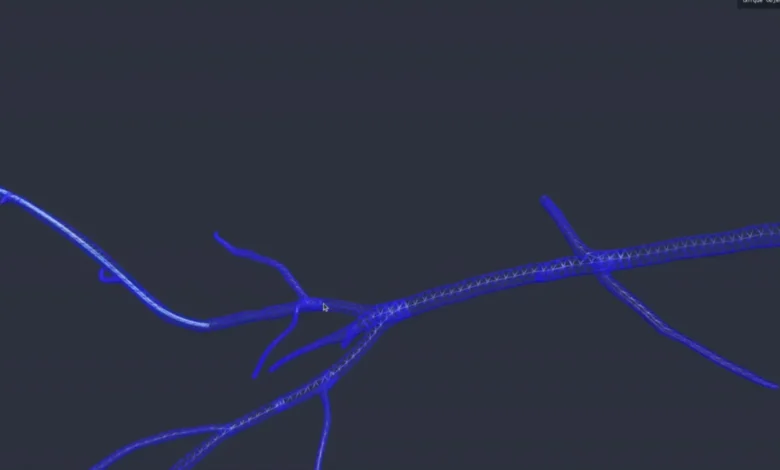
A key capability of the Medical Physics Simulation framework is its ability to connect complex anatomical models, such as vascular networks, with the dynamic behavior of flexible instruments like catheters and guidewires. Coupled with simulated medical imaging modalities, like X-ray, and advanced reinforcement learning algorithms, this creates a powerful testing ground. The framework is designed with extensibility in mind, allowing for integration beyond these initial examples to encompass a wider array of devices, anatomies, sensors, and various sub-domains within healthcare robotics.
The framework ingeniously combines classical physics simulation with generative AI-powered physics simulation. Classical simulation excels at modeling known physical laws governing device contact, friction, and motion. Complementing this, NVIDIA Cosmos-H Dreams, a real-time generative AI physics simulation capability integrated within Medical Physics Simulation, leverages procedural data to learn and model visual scene dynamics. This dual approach offers developers an unprecedentedly rich and nuanced method for building and rigorously testing healthcare robotics systems in virtual environments before committing to the expense and complexity of physical prototypes and laboratory testing.
An Ecosystem Forging the Future of Medical Robotics
The transformative potential of simulation-driven development is already being recognized and applied by leading organizations in the medical robotics sector to tackle specific surgical challenges.
CMR Surgical, a global surgical robotics company, and Cambridge Consultants, a part of Capgemini, are leveraging Cosmos-H-Dreams to implicitly learn interaction physics for soft-tissue surgical procedures. This enables them to generate patient-specific simulations, thereby enhancing surgical planning and training. CMR Surgical has further bolstered this ecosystem by contributing nearly 500 hours of anonymized clinical data from its Versius Surgical Robotic System to the Open-H Embodiment open dataset. This valuable contribution benefits the development of robotic procedures including cholecystectomy (gallbladder removal), prostatectomy (prostate removal), hernia repair, and hysterectomy (uterus removal).
Chris Fryer, Chief Technology Officer at CMR Surgical, commented on the significance of this collaborative approach, stating, "Open source models allow us to build on shared knowledge, accelerating responsible innovation and, ultimately, gives us the potential to deliver more consistent care and better outcomes for patients worldwide."
Johnson & Johnson MedTech is employing NVIDIA Isaac for Healthcare’s Medical Physics Simulation, alongside a Cosmos-based foundation model, to construct digital twins of its endoluminal MONARCH platform used in urology. This initiative focuses on modeling complex anatomical structures and simulating challenging kidney-stone scenarios, paving the way for enhanced device development and clinical application.
XCath is utilizing the Medical Physics Simulation framework to accelerate the training of endovascular autonomy policies, a critical component for autonomous navigation within blood vessels. Inner Logic is similarly harnessing the power of NVIDIA Medical Physical Simulation to accelerate the evolution of medical technology. Their work involves generating synthetic data for validating device mechanics and producing in silico evidence that supports regulatory pathways.
Medtronic Structural Heart is actively exploring the application of Medical Physics Simulation, particularly in conjunction with simulated X-ray sensing, to generate crucial data for advancing catheter navigation research. This exploration highlights the framework’s versatility across diverse interventional cardiology procedures.
A New Pillar in the Isaac for Healthcare Stack
The NVIDIA Medical Physics Simulation framework is designed as a modular capability within the broader NVIDIA Isaac for Healthcare ecosystem. This integration allows it to be utilized independently for specific simulation tasks or in conjunction with other powerful tools, such as digital twin pipelines, medical sensor simulation, the NVIDIA Isaac Lab open robot-learning framework, and NVIDIA’s extensive library of open models and policies. This modularity provides developers with unparalleled flexibility and a comprehensive suite of tools to address their unique development needs.
The framework’s introduction marks a significant milestone in the ongoing effort to bridge the gap between virtual simulation and real-world clinical application for medical robotics. By democratizing access to sophisticated simulation tools and fostering an open, collaborative ecosystem, NVIDIA is empowering the next generation of healthcare innovators to develop safer, more effective, and more accessible robotic solutions.
Developers are encouraged to explore the open-source NVIDIA Medical Physics Simulation framework, review the available reference workflows, and begin building sophisticated simulation environments tailored to their specific devices, anatomies, and healthcare robotics applications. This initiative promises to accelerate the pace of innovation, reduce development costs, and ultimately contribute to improved patient care and outcomes on a global scale. The ongoing development and adoption of such advanced simulation tools are poised to redefine the future of healthcare, making robotic assistance a more ubiquitous and reliable component of modern medicine.