The Block Protocol Emerges as an Open Standard to Revolutionize Web Content Interoperability

The digital landscape of content creation is undergoing a significant transformation with the introduction of the Block Protocol, an ambitious initiative aiming to standardize the fundamental building blocks of web content. This open, free, and non-proprietary protocol seeks to dismantle the existing silos of proprietary block systems prevalent in modern web editors, blogging tools, and content management systems, ushering in an era where digital content components are universally interchangeable and reusable across the internet.
The Evolution of Web Content Creation and the Rise of Blocks
For decades, creating content for the web was a complex endeavor, often requiring direct manipulation of HTML code or reliance on basic WYSIWYG (What You See Is What You Get) editors. These early tools offered limited flexibility, making it challenging for non-technical users to design dynamic and engaging layouts. The proliferation of content management systems (CMS) like WordPress, Drupal, and Joomla, alongside specialized blogging platforms such as Medium and Squarespace, began to democratize web publishing, but a new paradigm was needed to truly empower content creators.
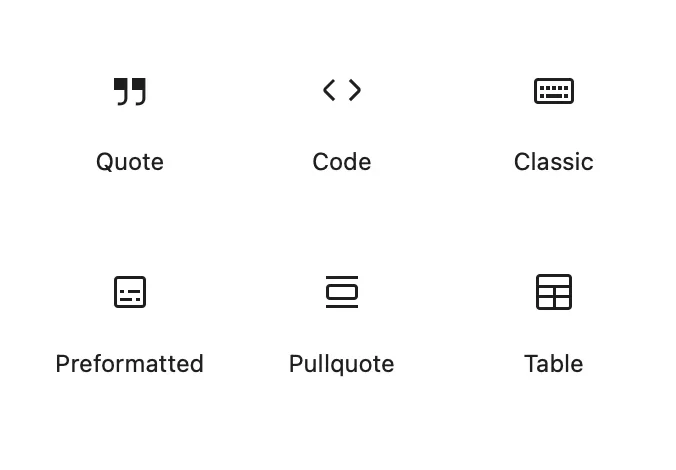
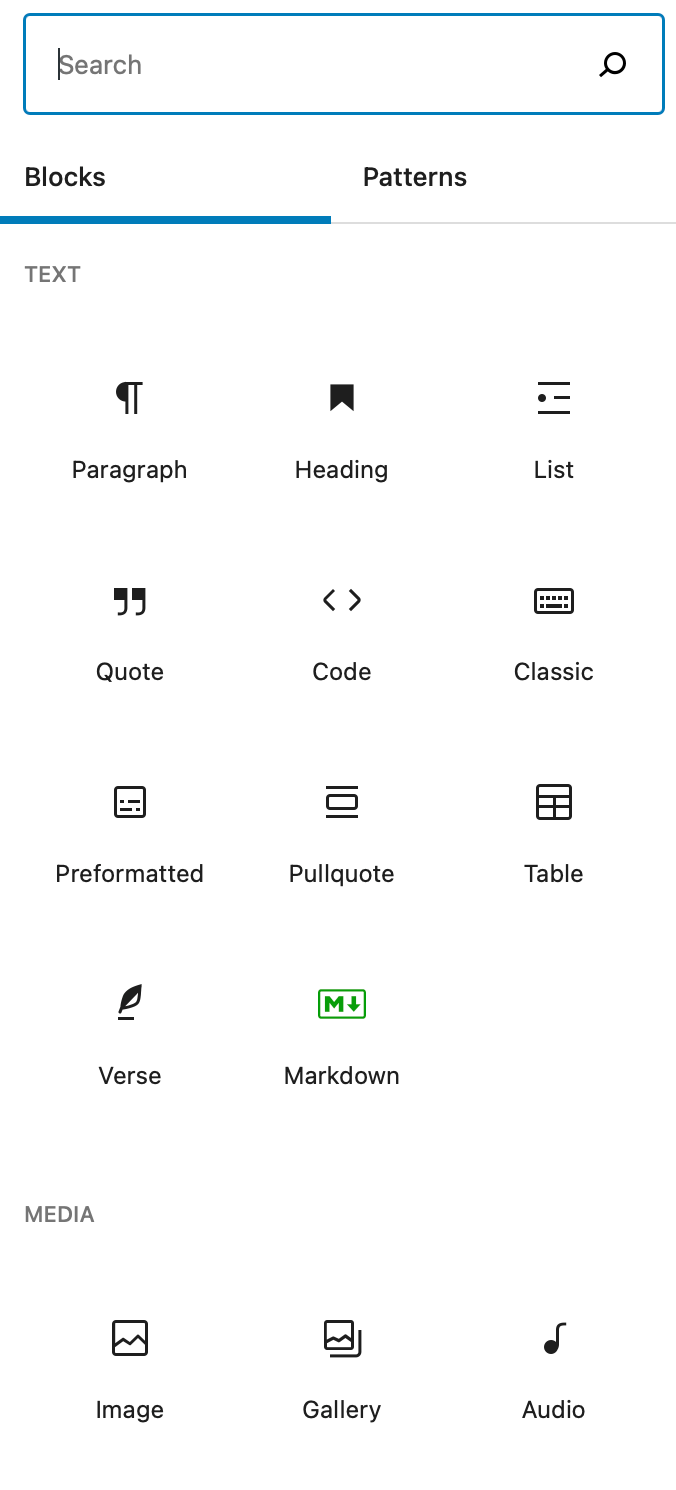
This paradigm arrived in the form of "blocks" – discrete, modular units of content that can be easily inserted, rearranged, and customized within an editor interface. WordPress, for instance, dramatically shifted its editing experience with the introduction of Gutenberg in late 2018, a block-based editor that treats every piece of content—from paragraphs and images to headings and embeddable media—as an individual block. This modular approach provides immense flexibility, allowing users to construct intricate page layouts without writing a single line of code. Data from W3Techs consistently shows WordPress powering over 40% of all websites, making its adoption of blocks a significant indicator of this trend’s widespread acceptance. Other prominent platforms like Notion, Medium, Squarespace, and even increasingly enterprise-level CMS solutions have similarly adopted block-centric philosophies, recognizing the intuitive nature and power it grants to content creators. The ubiquitous "plus" button or the simple "/" command to invoke a list of available blocks has become a de facto standard in many modern editors, signaling a broad user acceptance of this modular design principle across various digital interfaces.
The Pervasive Problem of Proprietary Ecosystems
Despite the widespread adoption of block-based editing, a significant drawback has emerged: the lack of standardization and interoperability. Each platform, whether it’s WordPress, Notion, or a custom CMS, develops and implements its own proprietary block system. This means that a "calendar block" or a "Kanban board block" created for one platform cannot be seamlessly transferred or used in another. Developers wishing to offer a rich suite of content components must re-code every block from scratch for each specific environment, a resource-intensive and often redundant undertaking.
This fragmentation leads to several critical limitations. For developers, it stifles innovation and creates significant barriers to entry. Imagine an independent developer creating an innovative interactive chart block. To reach a broad audience, they would theoretically need to develop separate versions for WordPress’s Gutenberg API, Notion’s proprietary component system, Ghost’s editor, Drupal’s Paragraphs module, and various note-taking applications, each adhering to that platform’s unique block API. This fragmentation restricts the diversity and sophistication of available blocks, as most developers simply lack the resources to maintain multiple versions across disparate ecosystems. The economic incentive for individual companies to maintain proprietary systems, thereby fostering vendor lock-in, inadvertently limits the overall growth and richness of the digital content ecosystem.
End-users, too, bear the brunt of this non-standardization. They are confined to the specific set of blocks offered by their chosen platform, regardless of how basic or incomplete they might be. A user might admire a sophisticated gallery block on a WordPress site but find their preferred note-taking app only offers a rudimentary image embed. The inability to share, migrate, or reuse blocks across different applications means users are often locked into the features and capabilities that a single development team had the time and resources to implement. This not only limits creative expression but also hinders productivity and workflow efficiency, forcing users to adapt their content creation process to the constraints of their tools rather than the other way around. The current scenario is analogous to having distinct, incompatible file formats for every word processor in the early days of computing, preventing seamless document exchange and fostering unnecessary friction.
Introducing the Block Protocol: An Open Solution for a Connected Web
To address these pervasive issues, the creators have unveiled the Block Protocol, an ambitious initiative designed to establish an open, free, and non-proprietary standard for web content blocks. The core premise is elegantly simple: if all embedding applications and all blocks adhere to a common protocol, then any block can be used interchangeably within any application that supports it. This vision promises to unlock a new era of interoperability, where content components are truly universal, fostering an ecosystem far more dynamic and user-centric than what currently exists.
The Block Protocol is not a new content management system or a proprietary framework; it is precisely what its name suggests: a protocol. Much like HTTP governs web communication, HTML defines document structure, CSS styles presentation, or RSS standardizes content syndication, the Block Protocol aims to define a universal language for how blocks are structured, rendered, and interact within an embedding application. By providing a clear, open specification, it enables developers to create blocks once, confident that they will function across a multitude of platforms—from personal blogs and sophisticated enterprise CMSs to collaborative note-taking apps and interactive learning environments. This fundamental shift promises to drastically reduce development effort, foster a vibrant ecosystem of block innovation, and ultimately empower users with unprecedented choice and flexibility. The proponents emphasize that this is a collaborative effort, much like the development of other foundational web standards by bodies such as the W3C.
Technical Foundations and Early Development Timeline
As of its early announcement in early 2022, the Block Protocol is in its nascent stages, with a very early draft (version 0.1) already released and publicly available at blockprotocol.org. This initial release includes foundational elements, simple sample blocks, and a basic editor capable of hosting these protocol-compliant components. This early public release underscores the creators’ commitment to an open development process, actively inviting early feedback and collaborative input from the wider developer community to shape its evolution.
A cornerstone of the protocol’s design is its commitment to open standards and open-source principles. All sample code, specifications, and documentation related to the Block Protocol are explicitly stated to be 100% free and open-source. This commitment is crucial for fostering broad adoption and ensuring the protocol evolves in a transparent and community-driven manner. By removing proprietary barriers, the Block Protocol seeks to democratize access to sophisticated content components, making advanced functionalities accessible to a wider range of developers and platforms, regardless of their size or resources. The stated goal is to cultivate a thriving open-source community dedicated to building an extensive, high-quality library of blocks that can be freely used, improved upon, and extended by anyone, ensuring its longevity and relevance.
The development timeline, as inferred from the early public release, suggests an agile and iterative approach. Version 0.1 serves as a proof-of-concept and a basis for discussion, with subsequent versions expected to incorporate community feedback, address technical challenges, and expand the protocol’s capabilities. This early engagement strategy mirrors successful open-source projects that have grown into foundational technologies, relying on the collective intelligence and contributions of a global community.
Transformative Potential for Developers and Innovators
The implications of a widely adopted Block Protocol are profound for the developer community. For application developers—those building blogging tools, CMSs, or note-taking apps—the protocol represents a significant reduction in development overhead. Instead of dedicating valuable engineering resources to building and maintaining a vast library of native blocks, they can simply implement the Block Protocol once. This single integration would immediately grant their application access to a rich and ever-expanding universe of external, protocol-compliant blocks. This efficiency allows app developers to focus on their core product features, differentiating themselves through user experience, performance, or specialized functionalities, rather than constantly reinventing the wheel of basic content components.
For block developers, the protocol unlocks a global market for their creations. An individual or team can now develop a highly specialized or beautifully designed block—be it a dynamic data visualization, an interactive quiz, a complex project management component, or a unique multimedia player—and have it work across any Block Protocol-enabled platform. This drastically expands the potential audience for their work, incentivizing greater creativity and investment in block development. It paves the way for a potential "block marketplace" or open repository, where developers can contribute, share, and even monetize their blocks, fostering an entirely new segment of the web development economy. This shift could lead to an explosion of innovative content components, far beyond what any single proprietary ecosystem could produce, democratizing access to advanced web functionalities.

Enhanced Experience for End-Users: Choice, Consistency, and Richness
The ultimate beneficiaries of the Block Protocol will be the end-users. Imagine a world where the sophisticated Kanban board block you use in your team’s project management app can be seamlessly embedded into your personal blog, your university research notes, or a client proposal within a custom CMS. This level of interoperability means:
- Unprecedented Choice: Users will no longer be limited by the built-in blocks of a single platform. They will gain access to a vast, community-driven library of blocks, enabling them to select the perfect tool for every content need, fostering greater creative freedom.
- Consistent User Experience: As blocks become standardized, their core functionality and interaction patterns could become more consistent across different applications, reducing the learning curve when switching between tools and improving overall usability.
- Richer Content Experiences: The ability to embed highly specialized and interactive blocks anywhere means web pages can evolve beyond static text and images. From real-time data visualizations to complex interactive simulations, the web will become a more dynamic, engaging, and informative medium.
- Improved Accessibility: With a unified protocol, developers can build accessibility features into blocks once, knowing they will translate across platforms, leading to a more inclusive web for all users, including those with disabilities.
This user-centric vision transforms content creation from a constrained exercise into an expansive, creative endeavor, where the tools adapt to the user’s needs, not vice-versa. It empowers individuals and organizations to create more compelling and functional web content without being limited by the specific features of their chosen platform.
The Semantic Web Vision: Structured Data and Machine Readability
Perhaps one of the most transformative aspects of the Block Protocol, and a key differentiator from mere visual components, is its emphasis on structured, machine-readable data. The protocol allows blocks to be "typed," meaning they can carry an underlying data schema that precisely describes the information they contain. For instance, an "event block" wouldn’t just be a visual representation of an event; it would contain structured data defining its date, time, location, attendees, and description, all conforming to a standardized schema.
This capability is revolutionary for several reasons:
- Beyond Screen Scraping: Currently, extracting specific data from web pages often requires complex "screen scraping" techniques or reliance on proprietary APIs, which can be brittle and prone to breakage. With structured blocks, data becomes inherently machine-readable and parsable at its source. A calendar application, for example, could instantly and reliably understand and import event details from any web page containing a Block Protocol-compliant event block, without any custom integration or manual data entry.
- Democratization of Data: This moves beyond the current paradigm where complex datasets are often published as static, disconnected files (e.g., "download the dataset in .XLS format"). Instead, this data can be natively embedded within web pages, automatically discoverable, interpretable, and consumable by other applications and services. This fosters a more open and dynamic data ecosystem across the web, making information more readily available for analysis and reuse.
- Fueling the Semantic Web: This aligns perfectly with the long-held vision of the Semantic Web, where data is not just human-readable but also machine-understandable. By embedding structured data directly into content blocks, the Block Protocol contributes significantly to building a web where information is more interconnected and intelligent, enabling advanced AI applications, improved search capabilities, novel data aggregations, and automated workflows.
The potential for such structured data is immense, ranging from scientific data visualizations that can be analyzed by research tools, to product specifications that can be directly consumed by e-commerce platforms, to educational content that can be dynamically adapted by learning management systems. This feature alone could fundamentally reshape how data is published and consumed online, moving towards a more efficient and intelligent web.
A Call for Community and Collaboration: Shaping the Future of the Web
Recognizing the monumental task of establishing a new web standard, the creators of the Block Protocol have deliberately gone public at a very early stage of development (version 0.1). This proactive approach is a direct appeal to the wider web development community for collaboration, feedback, and active participation.
Building a truly universal protocol requires diverse perspectives and extensive testing. The current draft, while functional, is acknowledged by its creators as simple and in need of significant iteration. They emphasize that the success of the Block Protocol hinges on broad adoption and continuous refinement driven by an active open-source community. Developers, designers, content creators, and platform providers are all invited to engage:

- For Editor Developers: Integrate the protocol to offer a richer, more diverse block experience to users with minimal effort, enhancing their platform’s value proposition.
- For Custom Data Type Developers: Adopt the protocol to make specialized data embeddable and machine-readable across the web, increasing its utility and discoverability.
- For the Broader Community: Provide feedback on the protocol’s design, contribute to the open-source codebase, and develop innovative blocks that expand the shared library of components.
The vision is clear: by fostering an open, collaborative environment, the Block Protocol aims to evolve into a robust, widely adopted web standard. This collective effort promises to enhance the utility, flexibility, and semantic richness of the open web for everyone.
Challenges and the Path Forward
While the vision for the Block Protocol is compelling, its path to becoming a ubiquitous web standard is not without significant challenges. The primary hurdle will be achieving widespread adoption, particularly convincing major content platform providers to embrace and integrate the protocol. Many established players have substantial investments in their proprietary block ecosystems and may be hesitant to shift towards an open standard that could potentially reduce their competitive advantage or perceived control over their user base. The "not invented here" syndrome could also pose a barrier.
Furthermore, the protocol will need to address complex technical issues such as ensuring security across diverse embedding environments, managing versioning and backward compatibility as it evolves, maintaining optimal performance, and handling complex data synchronization. Establishing a robust governance model that is truly open, transparent, and community-driven will be critical to maintaining trust and ensuring the protocol serves the best interests of the entire web ecosystem rather than any single entity. Despite these challenges, the inherent benefits of interoperability, reduced development friction, and the powerful potential for a more semantically rich web offer a strong incentive for collective action.
The Block Protocol represents a pivotal moment in the ongoing evolution of web content. By striving to create a universal language for content components, it seeks to liberate content creation from proprietary confines, empower developers, enrich user experiences, and lay crucial groundwork for a more intelligent, interconnected, and open web. The success of this ambitious endeavor will ultimately depend on the collective will and collaborative spirit of the global web community, transforming a fragmented landscape into a unified, dynamic digital canvas.