Mastering the Remote Job Market: Data-Driven Strategies for Success in a Competitive Landscape

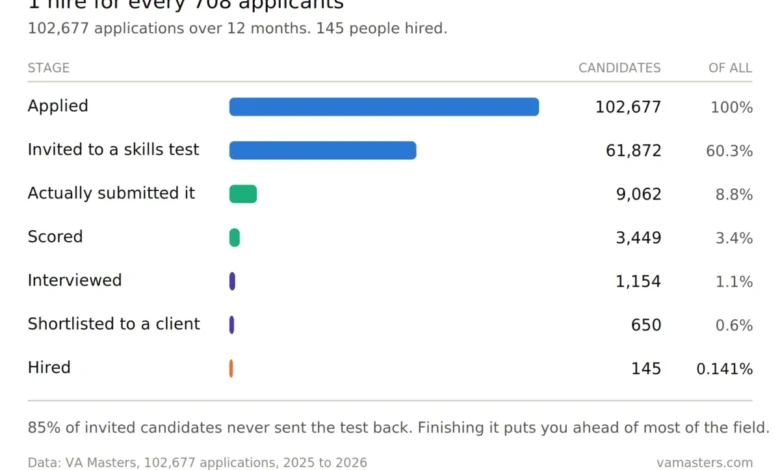
In an increasingly competitive global job market, the pursuit of remote employment has become a central focus for millions. A recent comprehensive analysis of over 100,000 remote job applications by VA Masters, a recruitment agency specializing in virtual assistants, offers unprecedented insights from the employer’s perspective, revealing critical patterns that distinguish successful candidates from the vast majority. Alon Pearl, Founder and CEO of VA Masters, spearheaded this study, which processed a staggering 102,677 applications over the past year, ultimately resulting in just 145 hires – an arduous 1-in-708 success rate. This rigorous examination peels back the layers of conventional job-seeking wisdom, presenting a data-backed roadmap for navigating the remote hiring funnel.
The Evolving Landscape of Remote Work and Heightened Competition
The trajectory of remote work has undergone a dramatic acceleration, particularly in the wake of the global health crisis. What was once a niche perk has transformed into a mainstream expectation, fundamentally reshaping how businesses operate and how individuals seek employment. Prior to 2020, remote work was growing steadily but was largely concentrated in specific sectors like tech. The pandemic, however, forced a rapid, widespread adoption across nearly all industries, proving its viability and, in many cases, its efficiency.
This paradigm shift has led to an explosion in the number of remote job postings, attracting an equally massive surge in applicants. Major job boards frequently report millions of monthly searches for remote roles, and companies that offer flexible work arrangements often see application volumes dwarfing those for traditional in-office positions. This influx of candidates, while offering employers a broader talent pool, also creates significant challenges in identifying the truly qualified individuals. The sheer volume of applications can overwhelm hiring teams, necessitating highly efficient, often automated, screening processes. It is within this hyper-competitive environment that the insights from VA Masters become particularly salient, offering a rare glimpse into the actual mechanisms of remote hiring success.

Dissecting the Hiring Funnel: Key Determinants of Remote Job Success
The VA Masters study provides five core takeaways that challenge common assumptions and underscore the often-overlooked factors influencing hiring decisions. These findings move beyond the superficial appeal of a polished resume, delving into the behavioral and performance indicators that genuinely resonate with recruiters.
1. The Critical Role of Responsiveness: Speed as a Signal of Engagement
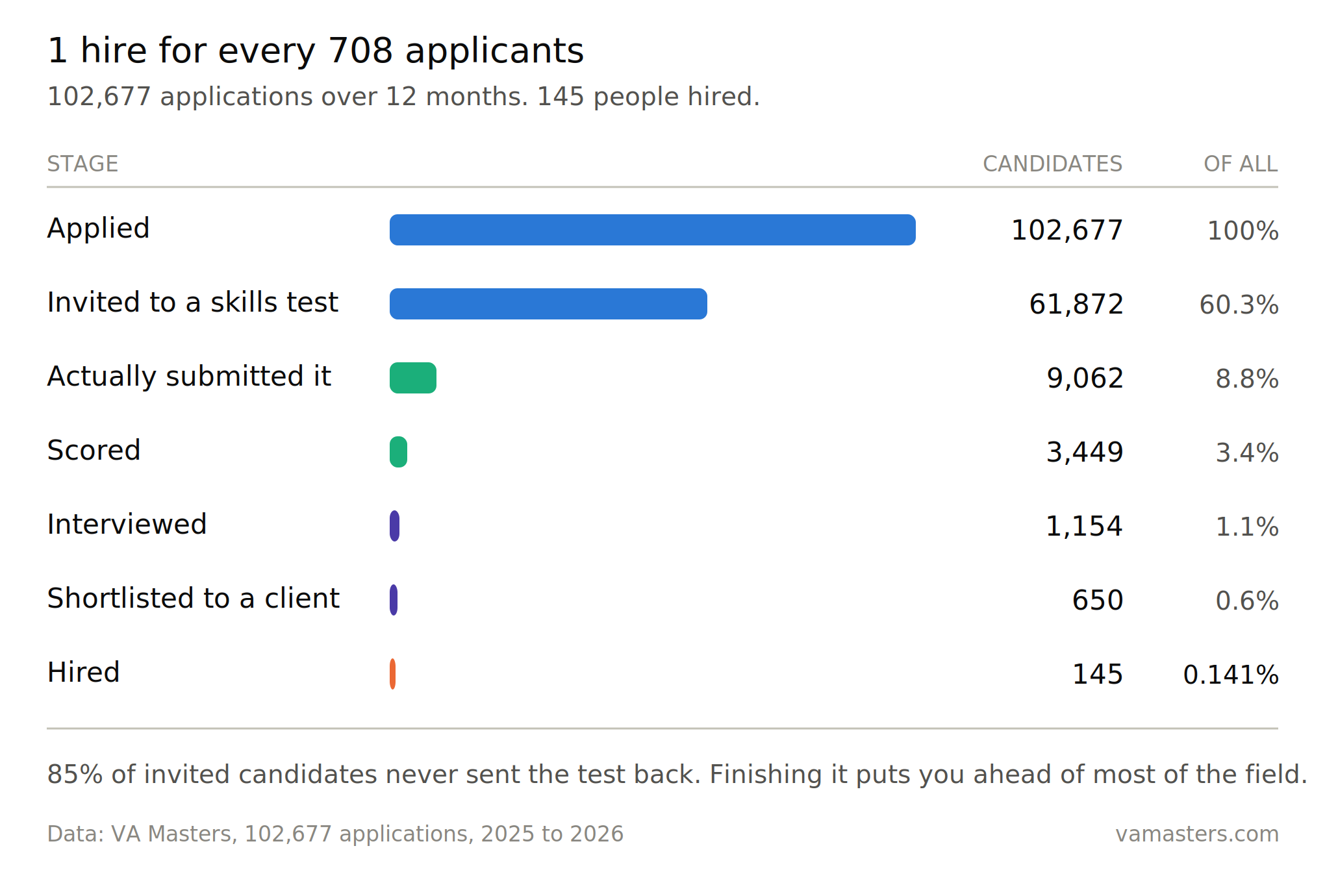
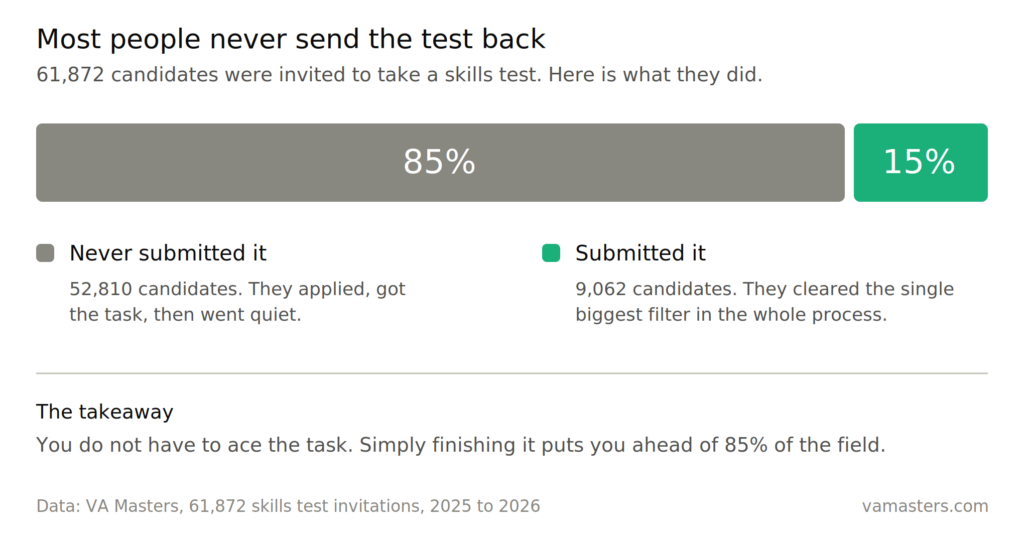
One of the most striking revelations from the VA Masters analysis concerns the significance of response speed. When candidates were invited to take a skills test – a crucial step in the evaluation process – an astounding 85% simply disappeared, never submitting the requested assessment. This "ghosting" phenomenon highlights a fundamental disconnect between initial interest and sustained engagement.
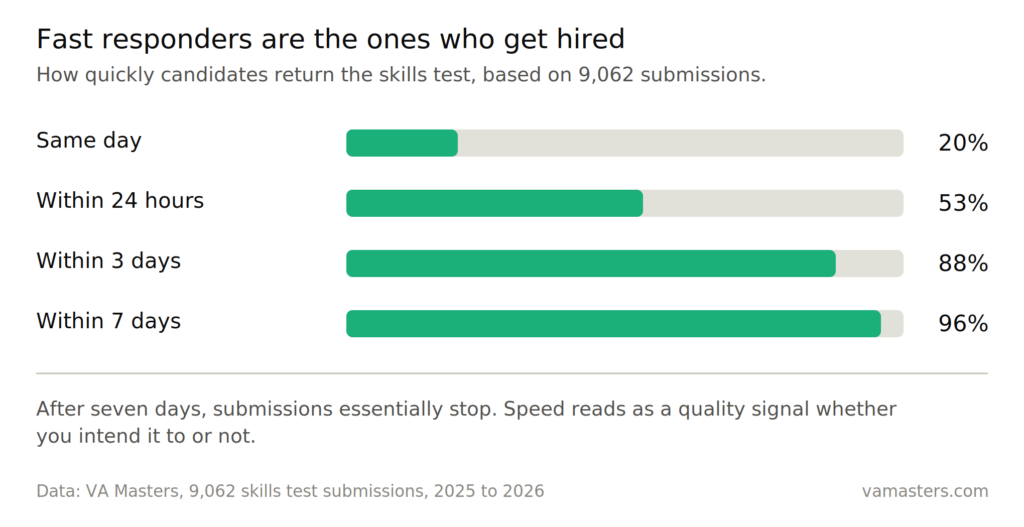
Among the 15% who did proceed, timing proved to be a powerful indicator. More than half (53%) completed and returned the test within 24 hours, and nearly all successful submissions (96%) occurred within a week. Beyond seven days, the submission rate effectively flatlined. This data suggests that promptness is not merely a courtesy but a strong signal of a candidate’s commitment, organizational skills, and genuine interest in the role. In a remote setting, where independent work and proactive communication are paramount, a candidate’s ability to respond swiftly and efficiently to tasks is highly valued. Recruiters interpret this speed as an intrinsic quality – a proxy for reliability and self-motivation, essential traits for remote employees who often work with minimal direct supervision. HR experts widely concur that a quick, yet thoughtful, response demonstrates strong time management and a clear understanding of the urgency often associated with business operations.
2. Follow-Through Over Flash: Why Completing the Task Outweighs a Stellar Resume
The 85% drop-off rate at the skills test stage reveals a profound truth: merely completing the application process is a significant differentiator. Alon Pearl emphasizes that "finishing the thing puts you in front of most of your competition. Not finishing it brilliantly. Finishing it at all." This insight challenges the conventional wisdom that a meticulously crafted resume is the ultimate gatekeeper to employment. While a well-presented CV can open the door, it is the subsequent demonstration of follow-through and commitment that truly propels a candidate forward.
For remote roles, where physical presence is absent, employers rely heavily on tangible evidence of a candidate’s ability to execute tasks and adhere to deadlines. A skills test serves as a direct, real-world simulation of the job’s demands. Therefore, the act of completing this task, even if imperfectly, signals a candidate’s dedication and reliability – qualities that are often more valuable in a remote context than a long list of past accomplishments. Industry analysts note that this emphasis on demonstrable follow-through is a growing trend, especially as remote work continues to mature and employers seek to mitigate risks associated with hiring individuals they may never meet in person.
3. The Power of Performance: Demonstrated Competence Trumps Past Experience
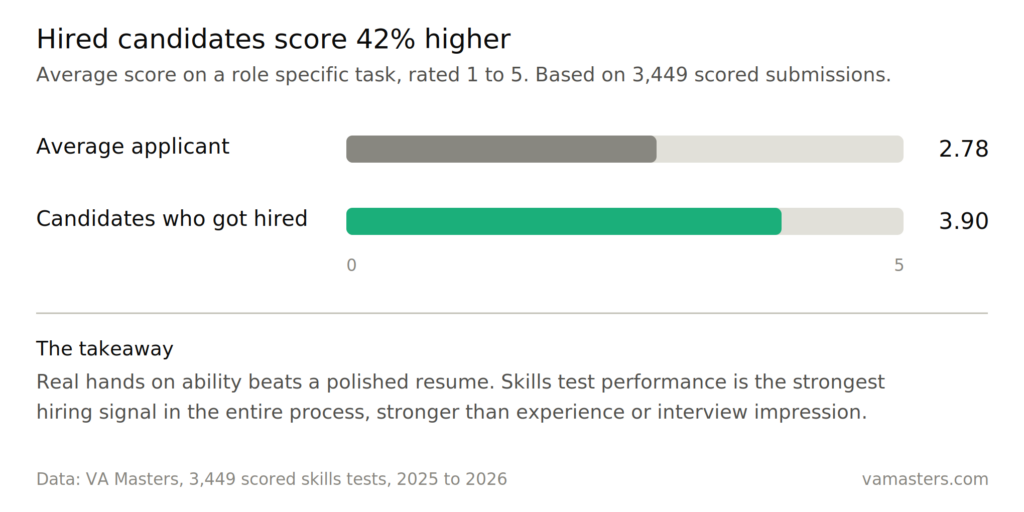
The study unequivocally demonstrates that "what you can do beats what you’ve done." VA Masters scored every skills test on a 1-to-5 scale, with these assessments designed to mirror actual job responsibilities. The gap in performance between the average applicant and those ultimately hired was stark: successful candidates averaged a score of 3.90, approximately 42% higher than the general applicant average of 2.78.
This performance metric emerged as the single strongest predictor of hiring success, surpassing traditional indicators like years of experience, resume polish, or even interview performance. This finding offers particularly good news for early-career professionals or those transitioning into new fields. It underscores a shift towards competence-based hiring, where a candidate’s proven ability to perform specific tasks in real-time holds more weight than their historical career path. For instance, a bookkeeping candidate might reconcile a complex account, a designer might create a graphic based on a brief, or an automation specialist might build a functional workflow. This direct assessment eliminates the possibility of embellishment and provides a clear, objective measure of capability, fostering a meritocracy where skill is paramount.
4. The Specialist Advantage: Niche Expertise Outperforms Generalist Ambiguity
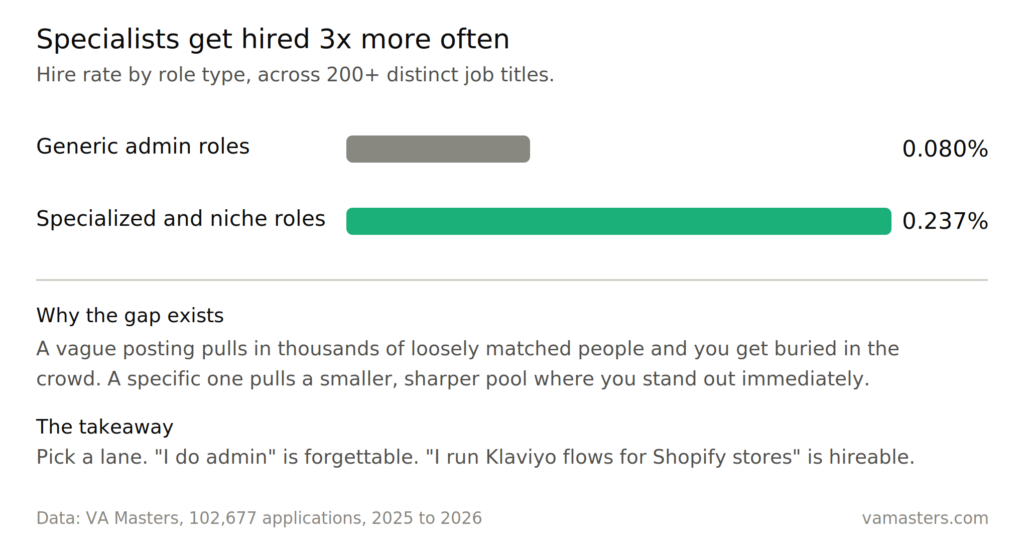
Counter-intuitively, generalized roles like "administrative assistant" proved to be the hardest to land. The study found that generic admin postings had a significantly lower hire rate (0.08%) compared to specialized roles, which boasted a three times higher success rate (0.24%). This phenomenon highlights the inherent challenge of standing out in a crowded field when one’s skills are broadly defined.
When a job description is vague, it attracts a massive pool of loosely qualified applicants, making it incredibly difficult for any single candidate to differentiate themselves. Conversely, a posting for a specific skill set or niche expertise – such as "Klaviyo email flows for Shopify stores" or "CRM specialist for real estate" – attracts a smaller, more targeted group of candidates. If a job seeker possesses those specific skills, they immediately become a highly visible and valuable prospect. This insight encourages job seekers to identify and cultivate specialized skills, focusing on a particular tool, industry, or type of work where they can genuinely excel and offer clear, tangible value. The implication for job seekers is clear: defining a niche not only reduces competition but also significantly enhances one’s perceived value to a potential employer.
5. Dispelling Myths and Leveraging Timing: Age and Application Strategy
The VA Masters study also addressed two important, yet often misunderstood, factors: age and application timing.
Age as an Asset, Not a Barrier: There’s a persistent myth that remote work is predominantly a young person’s game. However, the data strongly refutes this. The median age of successful hires was 29, identical to the median age of all applicants. Candidates in their forties and fifties were hired at the same rate as those in their twenties. This finding is a powerful affirmation that experience, maturity, and a proven track record can be significant assets in the remote job market, especially for specialized roles that benefit from deeper industry knowledge and problem-solving capabilities. The filter remains skill and follow-through, not chronological age.
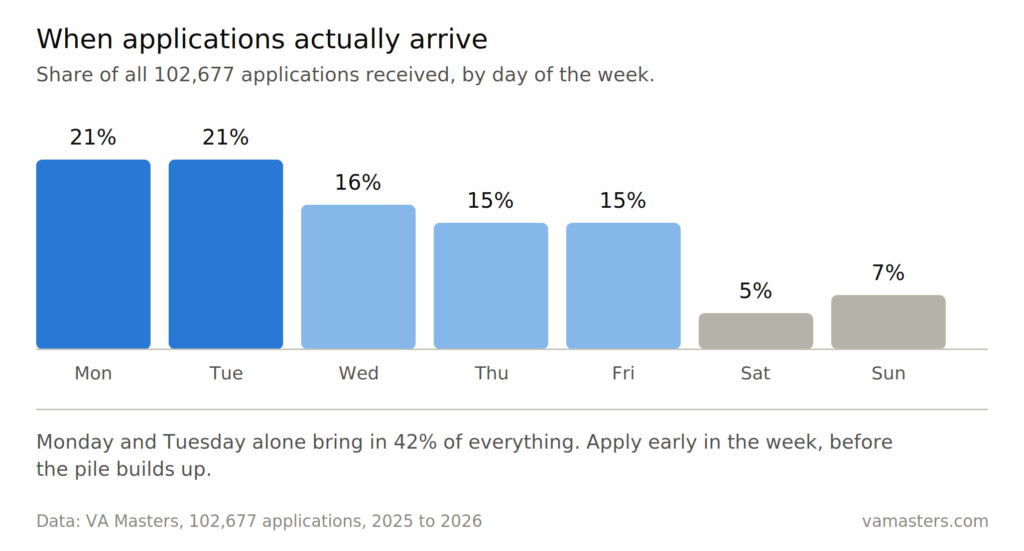
Strategic Timing for Applications: While seemingly minor, the timing of an application can provide a "tiny edge." The study revealed that applications are not evenly distributed throughout the week; Mondays and Tuesdays alone account for approximately 42% of all submissions, while weekends register barely any activity. Applying early in the week, ideally on a Monday morning when recruiters are fresh and the application queue is still manageable, can increase visibility before the sheer volume of later submissions creates an overwhelming backlog. In a highly competitive environment with 1-in-708 odds, every small advantage counts.
Implications for Job Seekers and Employers
These findings carry significant implications for both sides of the remote hiring equation.
For Job Seekers:
The message is clear: shift focus from merely applying to actively demonstrating capability and commitment. Prioritize promptness in all communications, meticulously complete all requested tasks, and invest in developing verifiable, niche skills. Rather than casting a wide net with a generic resume, target specific roles where your specialized expertise can shine. Strategic timing for applications, though a minor factor, can also provide a crucial boost.
For Employers and Recruiters:
The data validates the efficacy of skills-based assessments as superior predictors of job performance. It encourages recruiters to prioritize demonstrable competence over resume credentials, helping them identify high-potential candidates who might otherwise be overlooked. Furthermore, understanding applicant behavior, such as the high drop-off rate at the skills test stage, can inform strategies for optimizing the hiring funnel and candidate engagement.
Agency vs. Independent Path: A Strategic Choice
Alon Pearl also addresses a common dilemma: whether to seek remote work independently or through a recruitment agency. Both paths offer distinct advantages. Working independently grants total control over clients, rates, and projects, appealing to those who thrive on autonomy and can manage the associated hustle of client acquisition and administrative tasks. Conversely, working through an agency, such as VA Masters, means navigating a rigorous vetting process but then benefits from a steady flow of pre-qualified opportunities, administrative support, and reduced client-finding efforts. This path suits individuals who prefer to focus on the work itself rather than the sales and business development aspects.
Crucially, Pearl emphasizes that regardless of the chosen path, the core principles for success remain constant: speed, follow-through, demonstrated skill, a specific niche, and strategic timing. The filter for competence and commitment remains, even if the entity running that filter changes.
Conclusion
The remote job market, while brimming with opportunity, is undeniably challenging. The VA Masters study provides a rare, data-driven look from the employer’s perspective, demystifying the hiring process and revealing the true determinants of success. The odds of landing a remote job may appear daunting at 1 in 708, but for those who understand and apply these insights – prioritizing promptness, demonstrating tangible skills, specializing in a niche, and leveraging strategic timing – the path to remote employment becomes significantly more navigable. In an era where remote work is increasingly the norm, these actionable strategies empower job seekers to move beyond conventional approaches and truly stand out in a crowded digital landscape.
Author Bio
Alon Pearl is the Founder and CEO of VA Masters, a recruitment agency that sources, vets, and places Filipino virtual assistants with businesses across the US, UK, Canada, Australia, and Europe. Over the past year his team has processed more than 100,000 applications and placed virtual assistants across industries including e-commerce, real estate, healthcare, and digital marketing. He writes about remote hiring, the global talent market, and what actually separates the candidates who get hired from the ones who don’t. You can learn more at vamasters.com.
Join Virtual Vocations
Joining Virtual Vocations grants you access to our hand-picked remote jobs database. Learn how our service works, browse job leads by location and career category, or search hundreds of hand-screened remote jobs to find legitimate work-at-home job leads that match your skills and background. Register for free or contact us for more information on our service guarantee.
Check out our menu of Career Services provided by our team of certified professionals, including resume and career coaching services for remote jobseekers. Resume assessments and writing, LinkedIn profile enhancement, and cover letter writing are available to maximize the success of your remote job applications. Discounts on all services available to subscription members, become one now.