The Surprising Benefits of Office Gossip and How Healthy Teams Navigate Toxic Leadership

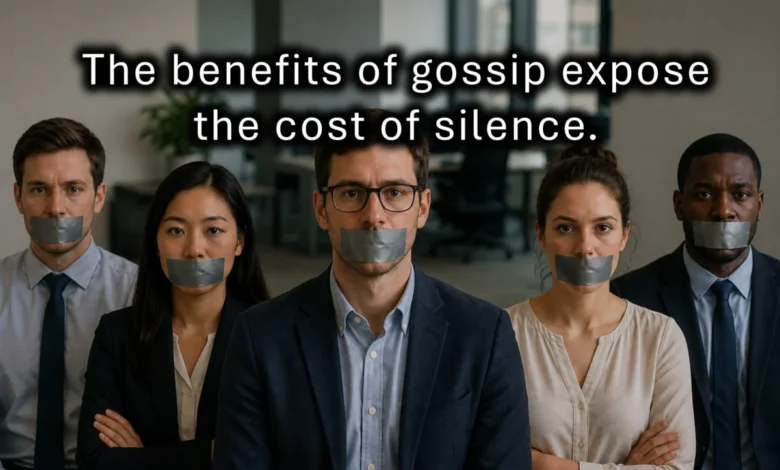
The traditional corporate handbook often classifies workplace gossip as a purely destructive force, a toxic byproduct of low morale that managers should strive to eliminate. However, a growing body of organizational psychology and recent insights from leadership experts suggest that the reality of informal communication is far more nuanced. Robert Sutton, a professor of Management Science and Engineering at Stanford University and a prominent voice on workplace dynamics, recently sparked a significant conversation on the topic. His provocative advice—“Go ahead, gossip about your a**hole boss. And make it nasty”—challenges the conventional wisdom that silence is a virtue in the face of poor leadership.
While malicious rumors intended to harm peers remain a liability, "pro-social" gossip—the informal exchange of information about the behavior of those in power—serves as a vital survival mechanism for employees. When teams are subjected to incompetent or toxic management, gossip acts as a pressure valve, a tool for reality testing, and a foundation for collective resilience. Understanding the distinction between harmful backbiting and functional gossip is essential for both employees navigating difficult environments and leaders seeking to build healthier organizations.
The Functional Role of Gossip in Hostile Environments
In a perfectly transparent organization, gossip would arguably be redundant. However, few workplaces achieve such an ideal. When leadership is opaque, erratic, or abusive, communication gaps are inevitably filled by informal dialogue. Research into workplace dynamics indicates that teams who gossip about "lousy leaders" often exhibit unexpected strengths. Rather than spiraling into dysfunction, these groups frequently show lower levels of individual stress, higher internal trust, and a more robust shared understanding of their operational reality.
The benefits of this type of communication are not found in the act of attacking the leader itself, but in the protection of the team. When a manager’s actions are confusing or contradictory, employees naturally seek to make sense of the situation. A simple question like, “Did that meeting feel wrong to you?” serves as a critical check on reality. It prevents the psychological phenomenon of gaslighting, where an individual begins to doubt their own perceptions of a leader’s incompetence or unfairness. By validating each other’s experiences, team members reduce the isolation that often accompanies workplace bullying or mismanagement.
A Chronology of Workplace Communication and the Rise of "Sense-Making"
The evolution of workplace gossip can be traced through several distinct eras of corporate culture. In the mid-20th century, rigid hierarchies and "command and control" structures discouraged any form of dissent, pushing gossip into the shadows of water coolers and breakrooms. By the 1990s and early 2000s, the rise of human resources departments and "open-door policies" attempted to formalize feedback loops, yet many employees found these channels insufficient or even risky to use.
In the modern era, the landscape has shifted again with the advent of digital communication. Platforms like Slack, Teams, and private WhatsApp groups have moved the "water cooler" into a persistent, digital space. This has accelerated the speed of "sense-making"—the process by which people give meaning to their collective experiences. When a leader makes a controversial decision or exhibits poor behavior, the "backchannel" reacts instantly. This digital chronology of gossip provides a real-time record of employee sentiment that, while often hidden from management, serves as the primary source of truth for the workforce.
Supporting Data: The Psychology of Pro-Social Gossip
Sociological studies support the idea that gossip is a fundamental human behavior with evolutionary roots. Evolutionary psychologist Robin Dunbar famously argued that gossip is the human equivalent of "social grooming" in primates, serving to bond groups together and establish social norms. In a professional context, "pro-social gossip" acts as a warning system.
A 2012 study published in the Journal of Personality and Social Psychology found that individuals experience a spike in heart rate when they witness someone behaving unfairly. However, when they were allowed to gossip about that unfair behavior to others, their heart rates decreased. This suggests that gossip provides a physiological relief from the stress of witnessing or experiencing injustice. Furthermore, the study found that gossip helps to "police" social environments by identifying and marginalizing bad actors, thereby protecting the group from further exploitation.
In the context of a toxic boss, this data suggests that "making it nasty" (as Sutton suggests) may actually be a form of emotional regulation. It allows the team to externalize the frustration caused by the leader, rather than internalizing it as personal failure or anxiety.
The Boundary Between Survival and Sabotage
Despite the benefits, there is a clear threshold where gossip transitions from a survival tool to a destructive habit. The benefits of gossip vanish when the primary goal shifts from information sharing and support to targeted humiliation or the spreading of falsehoods.
Expert analysis suggests that teams who gossip without ever attempting to confront problems—or those who use gossip to undermine colleagues rather than leaders—eventually become part of the organizational problem. This is the "gossip trap," where the informal network becomes a substitute for action. While gossip can help a team survive a bad boss, it cannot, on its own, fix the underlying structural issues. If the shared understanding gained through gossip does not eventually lead to collective action, such as reporting issues to higher-level management or seeking new employment, it can lead to a culture of cynicism and learned helplessness.
Official Responses and the Leadership Imperative
The presence of rampant gossip is often a symptom of a deeper leadership failure. When asked about the prevalence of office rumors, many human resources professionals emphasize the need for "psychological safety"—a term popularized by Harvard Business School professor Amy Edmondson. Psychological safety is the belief that one will not be punished or humiliated for speaking up with ideas, questions, concerns, or mistakes.
Leaders who find themselves the subject of gossip must look inward. The healthiest organizations make gossip less necessary by reducing the information vacuum. Leaders can mitigate unhealthy gossip by adopting three key strategies:
- Inviting Uncomfortable Conversations: Silence is the breeding ground for rumors. When leaders proactively invite feedback—and demonstrate that they can handle criticism without retaliation—the need for backchannel whispering diminishes.
- Listening Without Punishment: Trust is earned through repeated positive interactions. If an employee tests the waters by voicing a minor concern and is met with defensiveness or punishment, they will immediately retreat to the safety of private gossip.
- Correcting Problems Quickly: Gossip often centers on unresolved issues. When a leader acknowledges a mistake or addresses a known problem in the department, they reclaim the narrative and provide the "shared understanding" that the team was previously seeking through informal channels.
Broader Impact and Organizational Implications
The implications of how a company handles gossip extend to its bottom line. High levels of toxic gossip are correlated with increased turnover, lower productivity, and a tarnished employer brand. Conversely, organizations that understand the "sense-making" function of gossip can use it as a diagnostic tool.
Instead of asking, "Who started this rumor?" effective managers ask, "What need is this conversation trying to meet?" This shift in perspective allows organizations to identify gaps in transparency or areas where leadership is failing to provide clarity.
In the long term, the goal of a modern organization should not be to "ban" gossip—an impossible task—but to create an environment where the most important truths can be spoken in the light. Until that level of maturity is reached, the "nasty" gossip about the "a**hole boss" will remain a necessary, if uncomfortable, pillar of team resilience. It is the silent alarm that signals something is wrong, and for many employees, it is the only thing standing between them and professional burnout.
By recognizing gossip as a functional response to poor management, companies can begin to address the root causes of workplace toxicity rather than simply punishing the symptoms. As Robert Sutton’s commentary suggests, the problem isn’t the people talking in the breakroom; the problem is usually the person who gave them something to talk about.