The Foundation of Sales Success: Mastering Onboarding for Peak Performance and Retention


Sales onboarding is the critical, structured process designed to transform a newly hired salesperson into a confident, productive, and high-performing representative. It meticulously integrates essential product knowledge, core sales skills, supervised practical application, dedicated manager coaching, and rigorous readiness checks. The ultimate goal is to ensure every new hire possesses a clear understanding of their responsibilities and can demonstrably prove their preparedness to excel. A robust sales onboarding strategy is not merely a procedural step; it is a strategic imperative that significantly bolsters employee retention by systematically replacing initial ambiguity with comprehensive support, clearly defined standards, and visible progress. The following exploration delves into the multifaceted nature of effective sales onboarding, highlighting its benefits, key components, and illustrative case studies from leading organizations.
The Crucial Role of Sales Onboarding in Modern Business
In today’s competitive landscape, the quality of a sales team is a direct determinant of a company’s revenue and growth trajectory. However, simply hiring individuals with strong resumes is insufficient. Sales onboarding serves as the crucial bridge between a candidate’s potential and their repeatable, impactful performance within a specific organizational context. It’s about acclimatizing new sales representatives to the unique nuances of the company’s market, its specific buyer personas, its strategic positioning, its qualification criteria, its internal handoff procedures, its evidence requirements, and the exacting standards for effective customer engagement.

This process extends beyond a general understanding of sales methodologies. A salesperson might be adept at discovery calls or negotiation in a theoretical sense, but they must learn how to apply these skills to the company’s particular product or service, understand its target audience, and navigate its unique sales funnel. Onboarding aims to instill this granular knowledge and practical capability.
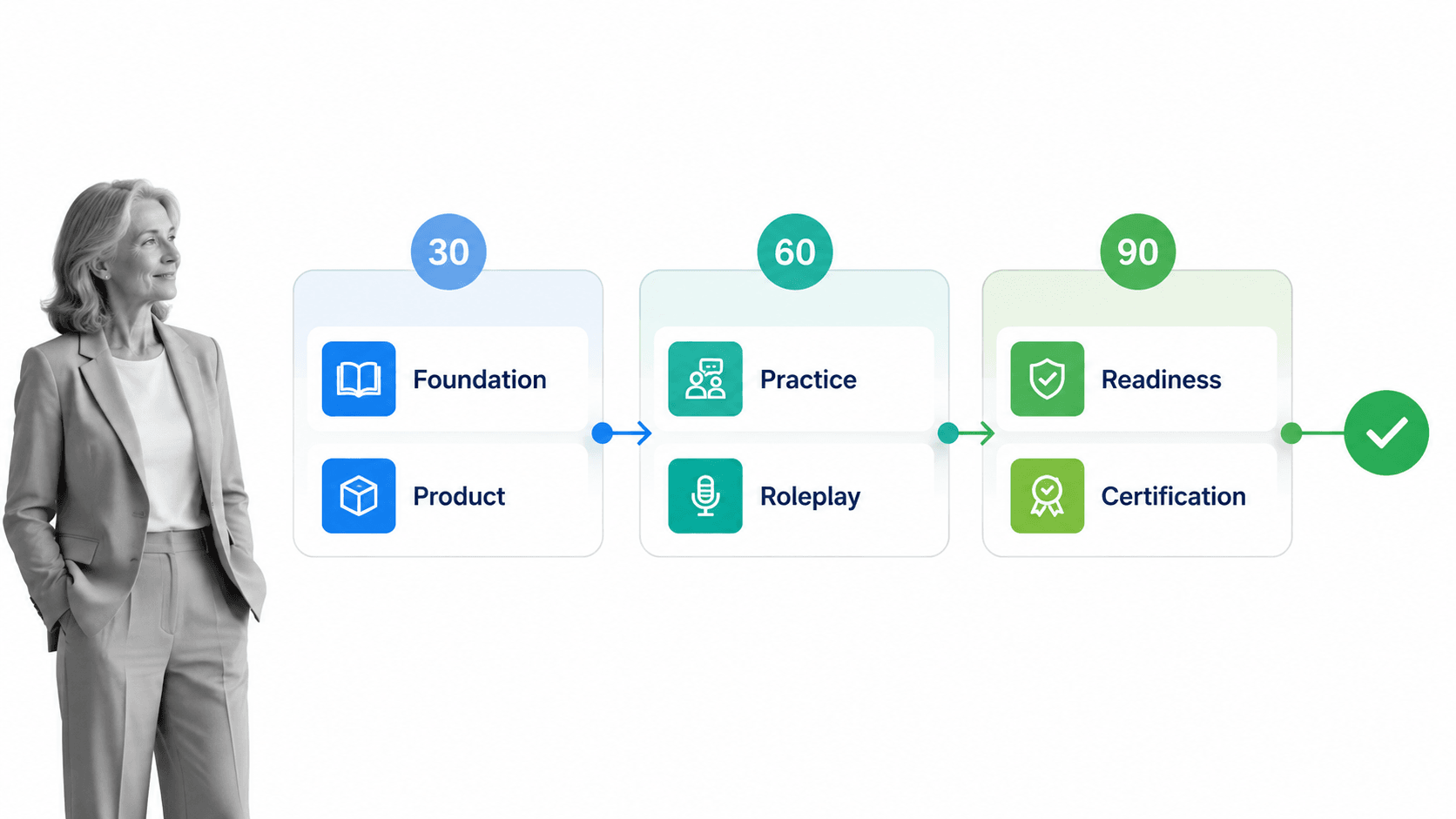
The most effective sales onboarding programs are designed not as a passive consumption of content, but as a structured sequence of observable capabilities. New representatives should have a clear vision of what constitutes success at each stage, readily identifiable resources for support, structured opportunities for practice, and tangible evidence to demonstrate their readiness. This often translates into a well-defined 30-60-90-day framework, meticulously outlining developmental milestones. This structured approach separates exposure to information from the development of genuine capability. For instance, watching a product demonstration is mere exposure, while successfully delivering a clear product explanation in a role-play scenario demonstrates developed capability. Similarly, reading a qualification framework is exposure, but applying it to a live opportunity and documenting the relevant evidence signifies acquired capability.
The Tangible Benefits of an Effective Sales Onboarding Process
Investing in a comprehensive sales onboarding process yields significant, measurable benefits, primarily by fostering an environment where new talent can not only survive but thrive, leading to enhanced employee retention. Consider a newly acquired plant; its initial health is important, but its sustained growth hinges on the right soil, light, water, and ongoing care. Similarly, a new salesperson, regardless of their raw talent, requires a nurturing environment to develop and flourish. Neglecting this crucial phase can lead to the attrition of promising talent, a costly outcome for any organization.
1. Enhanced Clarity and Reduced Ambiguity: New hires are typically inundated with a dense volume of information: product features, buyer needs, competitive landscapes, sales stages, messaging strategies, internal systems, company policies, key relationships, and performance expectations. A well-sequenced onboarding plan acts as a compass, guiding them through this complexity by delineating what is critical now, what will follow, and where to access the definitive source of truth. This structured approach mitigates the common temptation for new hires to rely on outdated files, copied communications, or the often-inconsistent advice of colleagues.
2. Managerial Consistency and Scalability: In the absence of a standardized onboarding process, the effectiveness of a new representative’s ramp-up becomes heavily reliant on the individual manager’s habits, experience, and available time. A controlled, systematic workflow ensures that every new hire receives the same core assignments, practice opportunities, evidence requirements, and review checkpoints. While this framework provides a consistent foundation, it also allows for personalized coaching tailored to the individual’s specific role and prior experience.
3. Accelerated Feedback Loops: Waiting for a missed sales target to identify a knowledge or skill gap is an expensive and reactive approach. Effective onboarding incorporates proactive feedback mechanisms, such as role-playing exercises, call reviews, written assignments, and regular manager check-ins. These activities surface potential issues while they are still easily correctable. For example, if a representative can articulate product features but struggles to uncover business impact, a manager can intervene early to coach discovery skills before the problem impacts the live sales pipeline.
4. Measurable Readiness and Performance Indicators: While simply completing onboarding tasks is a baseline, robust sales onboarding metrics connect activities directly to tangible outcomes. Key performance indicators (KPIs) for effective onboarding include time to productivity, employee retention rates, engagement levels, and overall performance. For sales roles specifically, this can be translated into metrics such as time to generate the first qualified opportunity, scores on role-play assessments, call quality evaluations, CRM data accuracy, sales stage progression, manager certifications of readiness, and the quality of early-stage pipeline development. These metrics serve as data-driven guides for decision-making, identifying individuals who may require additional product practice, specific objection handling coaching, or support in navigating internal handoffs. The overarching objective is to direct support precisely where it is needed to foster the next critical capability.
5. Strengthened Employee-Organization Relationship: A well-executed onboarding process fosters a sense of trust and transparency. It clearly communicates that expectations are not hidden and that professional development is a shared responsibility. Employees gain a deeper understanding of decision-making processes, how their contributions align with broader organizational goals, and where to voice concerns. This structured environment and sense of belonging are fundamental pillars of long-term employee retention.
Integrating Essential Sales Skills into the Onboarding Journey
The acquisition of sales skills should be framed as the development of observable behaviors within realistic work scenarios, rather than the theoretical understanding of abstract traits. While the specific competency model will vary based on the role, industry segment, and sales motion, most comprehensive onboarding programs must address the following core areas:
- Product Knowledge: Sales representatives must possess an in-depth understanding of what they are selling, including its capabilities, benefits, and limitations. Training should equip them to articulate how the product or service addresses specific customer pain points.
- Strategic Prospecting: As the initial stage of the sales process, effective prospecting involves identifying potential customers. Onboarding should provide sales reps with the knowledge and skills to identify, research, and engage with relevant leads, and then evaluate their application of this preparation to specific accounts.
- Active Listening and Qualification: This involves focusing intently on prospect communication and asking insightful follow-up questions. Qualification questioning is paramount to uncovering a prospect’s needs, identifying key stakeholders, understanding the business impact of the problem, and anticipating potential obstacles to action.
- Time Management and Prioritization: Sales professionals must learn to effectively manage their workload, prioritizing promising leads and dedicating sufficient time for preparation and follow-up.
- Buyer-Seller Agreement: Establishing clear verbal agreements at the outset of the sales process helps to build prospect confidence and set expectations for the journey ahead.
- Demo Skills: This combines product expertise with an understanding of customer context. Demonstrations should highlight how the product or service solves a prospect’s specific problems without overwhelming them with excessive features.
- Post-Sale Relationship Management: The onboarding process should also encompass the importance of continued engagement after a sale is made, especially during the transition to implementation or customer success teams. Demonstrating appreciation, courtesy, and reliability is crucial for long-term customer satisfaction and potential future business.
A practical training plan should link each competency to a specific activity and a verifiable readiness signal. For instance, product fluency might require a teach-back exercise, while mastery of discovery techniques could be demonstrated through scored role-play recordings. Qualification proficiency might be assessed through a manager’s review of the representative’s documented evidence for a sample opportunity. This approach provides both the learner and the manager with a clear, objective basis for determining the next steps in the development process.
Case Studies: Benchmarking Excellence in Sales Onboarding
While the specifics of sales onboarding may differ across organizations, successful programs often share common design principles: fostering understanding, connecting work to meaning, blending training with active participation, and making company culture palpable through actions.
Quora’s Mentor-Led Onboarding Approach
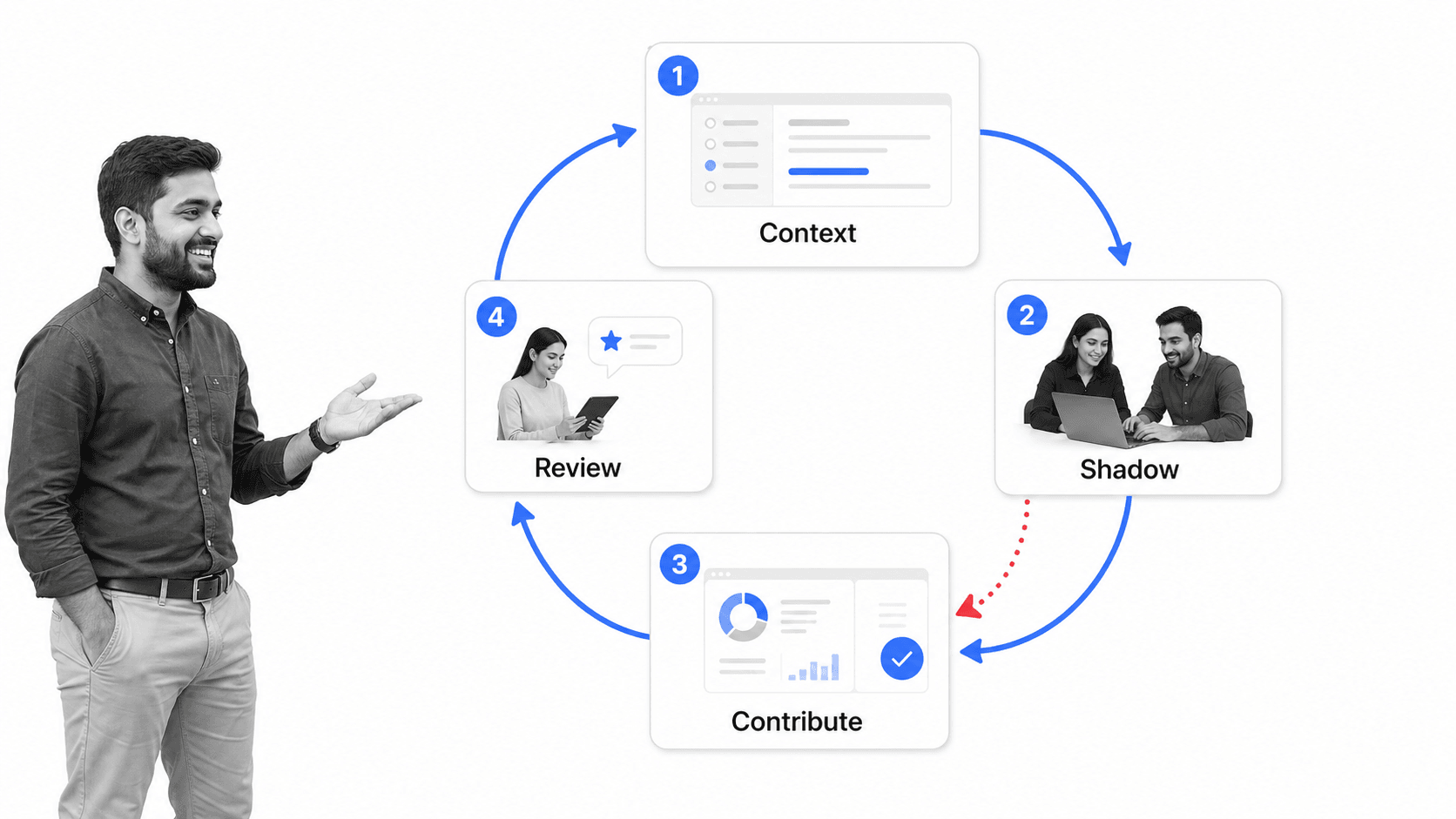
Quora exemplifies a model where new employees are paired with a mentor and are given meaningful work early in their tenure. For sales teams, this translates to providing comprehensive context, allowing new hires to observe experienced colleagues, and then assigning them bounded contributions that have tangible value. A new sales representative might begin by researching a specific account, preparing discovery questions for a potential client, or taking ownership of a segment of a role-play exercise before fully engaging in customer conversations.

Quora prioritizes teaching, with onboarding sessions dedicated to explaining fundamental success factors, key concepts, and essential tools. The program imbues learning with purpose by connecting it directly to actionable tasks. This approach views onboarding as a strategic tool to guide new employees toward the team’s most critical objectives. Crucially, early contribution does not mean overwhelming new hires. The mentor establishes a feedback loop, enabling the new hire to observe seasoned colleagues’ thought processes, attempt the assigned task, receive specific critiques, and subsequently refine their approach. This participatory model ensures that the initial weeks are both instructive and experiential without compromising customer experience.
Zappos’ Culture-Centric Immersion
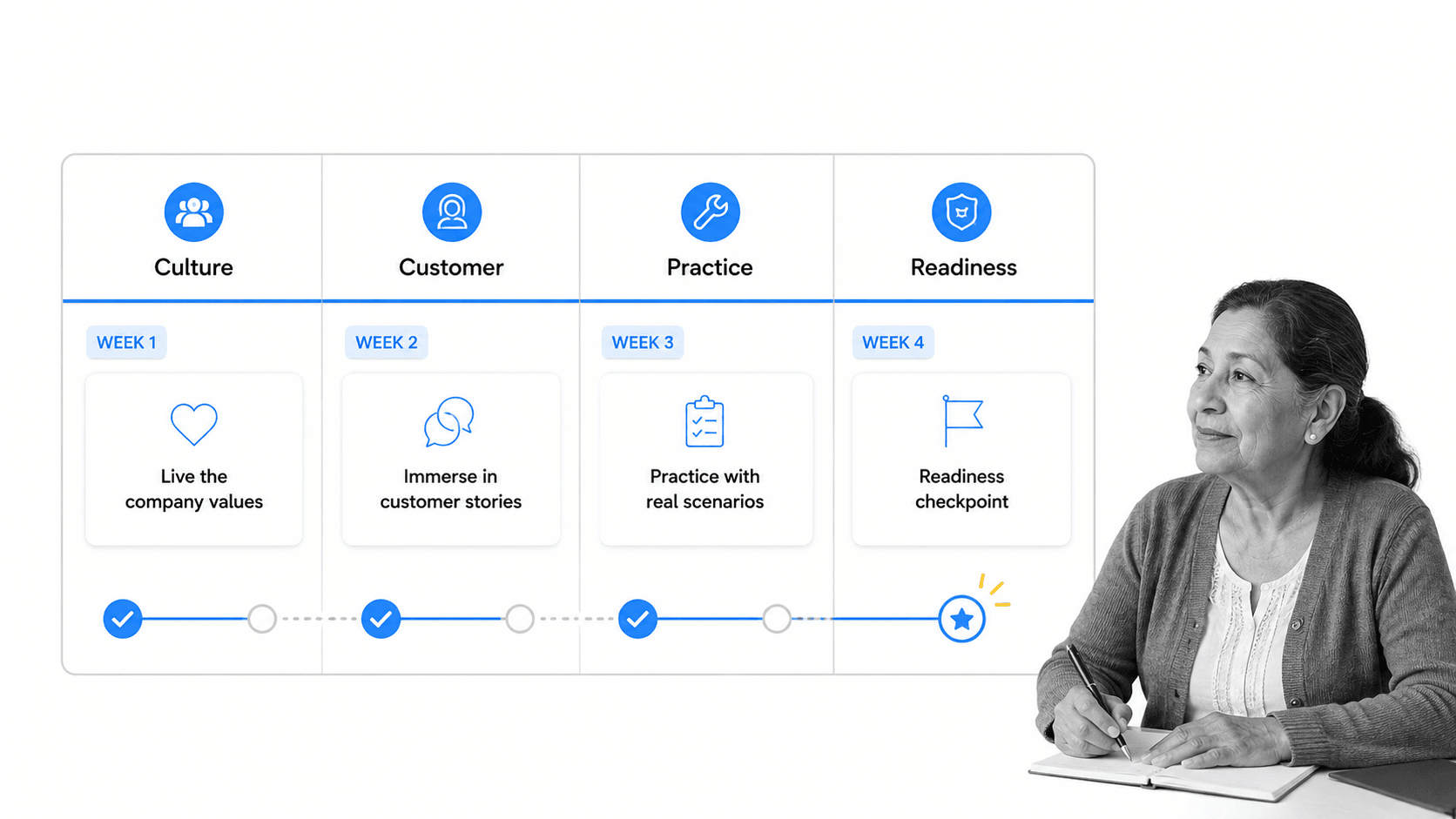
Zappos is renowned for its culture-led onboarding model. Historically, new employees participated in a shared training experience that deeply emphasized company values and customer service before they were fully integrated into their specific roles. For sales organizations, the transferable lesson is that culture should be woven into the fabric of daily activities, not confined to a static welcome presentation.
Zappos’ intensive four-week program focused on reinforcing company culture, fostering team cohesion, and promoting effective communication. New hires were trained on practices that were integral to Zappos’ identity, with core values explained not as a list to memorize, but through historical context to cultivate a shared understanding. This culture and customer immersion period typically involved listening to customer support calls, reviewing customer success stories, shadowing cross-functional partners, and practicing how company values guide decision-making in challenging situations. This ensures that new representatives grasp not only the expected messaging but also the underlying operational behaviors that embody the company’s ethos.
Google’s Managerial Preparation Framework
Google’s research identified a simple yet impactful intervention focused on the manager’s role. Before a new hire’s start date, managers were provided with a concise checklist of essential preparatory tasks, including defining the role, assigning a buddy, scheduling initial conversations, gathering necessary resources, and extending a personal welcome. The reported outcome was a significant acceleration in new hires reaching effectiveness, with a 25% faster ramp-up observed when managers diligently completed this checklist.
This proactive managerial preparation involves short, actionable tasks assigned to the manager shortly before the new hire joins. These tasks often include facilitating the new hire’s integration into the social network of the team and pairing them with a peer buddy. Google also embraced a hands-on educational approach, allowing new hires to engage with tasks and learn through practical application, with company culture and values reinforced organically within the work environment. The core takeaway is not that five tasks can solve every onboarding challenge, but that pre-arrival manager preparation is paramount. Sales managers should be equipped with a clear development plan, dedicated coaching time, assigned support partners, functional system access, and an initial practice schedule before day one. This allows the new representative to dedicate their energy to learning rather than navigating logistical hurdles.
These exemplary case studies consistently highlight four pivotal ideas: providing sufficient context for organizational understanding, linking individual roles to meaningful outcomes, integrating instruction with supervised practical engagement, and embodying company culture through daily work practices. These principles can be effectively operationalized through robust onboarding templates and workflows.
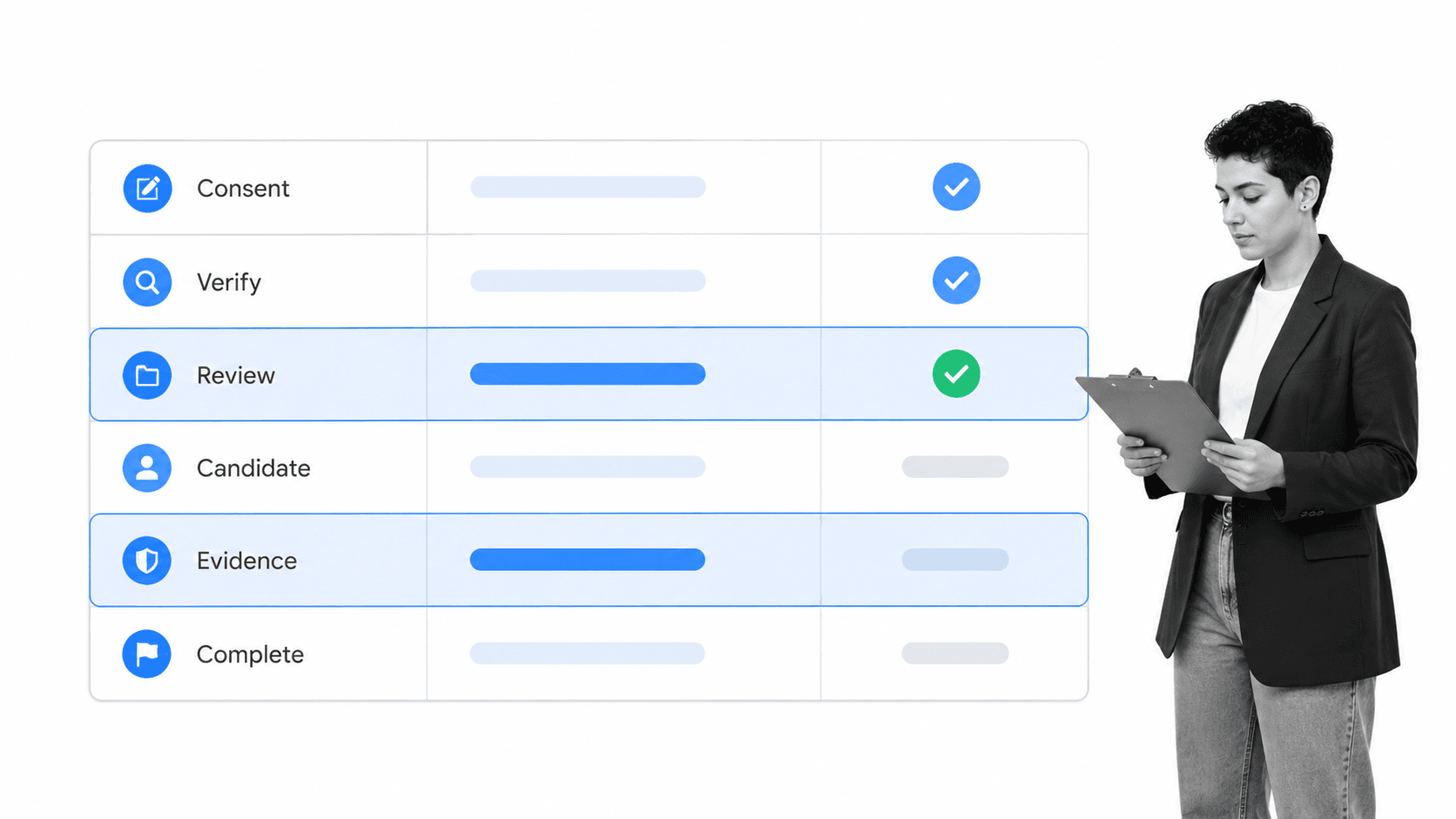
Leveraging Process Street for Optimized Sales Onboarding
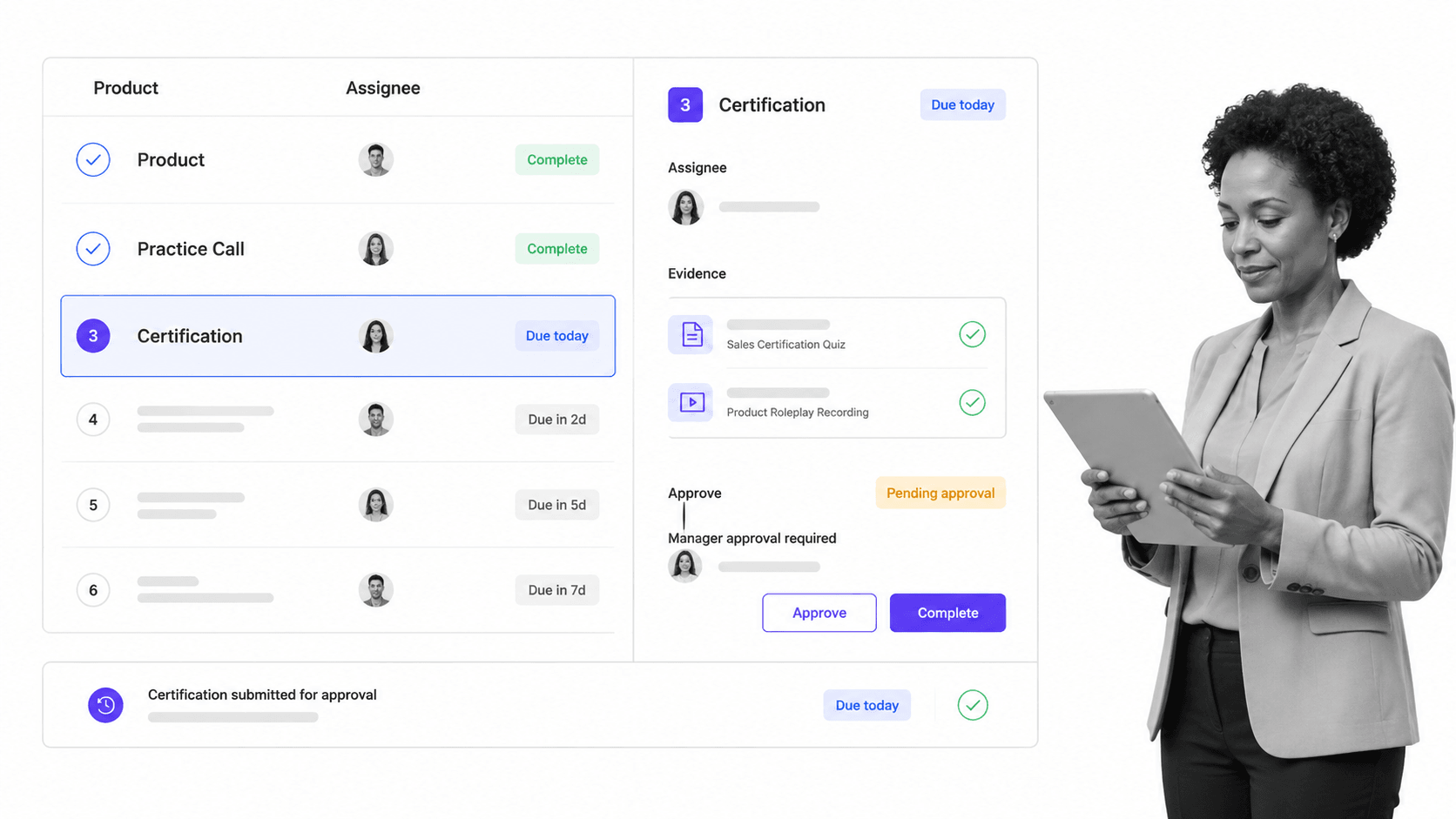
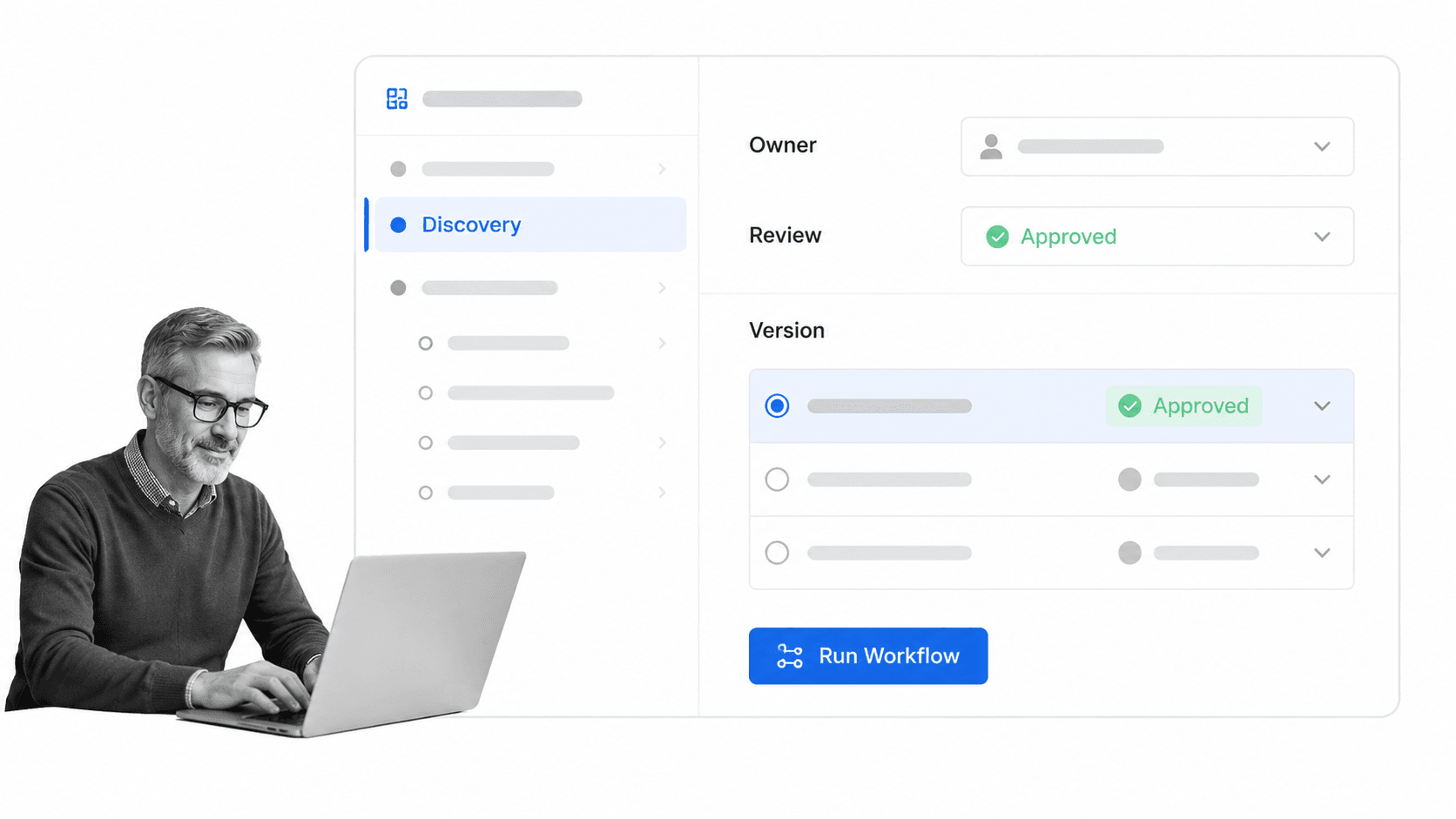
Process Street serves as a comprehensive Compliance Operations Platform, consolidating governed process knowledge with controlled execution. Its ‘Docs’ feature enables the creation and maintenance of approved sales playbooks, policies, and operating procedures, complete with defined ownership, review cycles, approval workflows, and version history. The ‘Ops’ component transforms these instructions into dynamic workflows, incorporating assignments, due dates, mandatory fields, conditional logic, approvals, and integrations, all while maintaining an auditable record of execution.
For sales onboarding, this means a playbook can serve as the authoritative source of truth, while an onboarding workflow guides each representative through their required tasks. Assignments clarify responsibilities, required evidence demonstrates that practice has occurred, and conditional logic adapts the workflow based on role or response. Approvals provide managers with a defined mechanism for assessing readiness, moving beyond informal assumptions.
Furthermore, built-in AI capabilities can assist with specific tasks, such as generating practice questions from approved content, summarizing submitted evidence, or suggesting areas for coaching focus. Crucially, human oversight remains integral to the operational model. Managers retain the authority to review source evidence, refine AI suggestions, approve actions, and maintain a verifiable audit trail of all decisions.
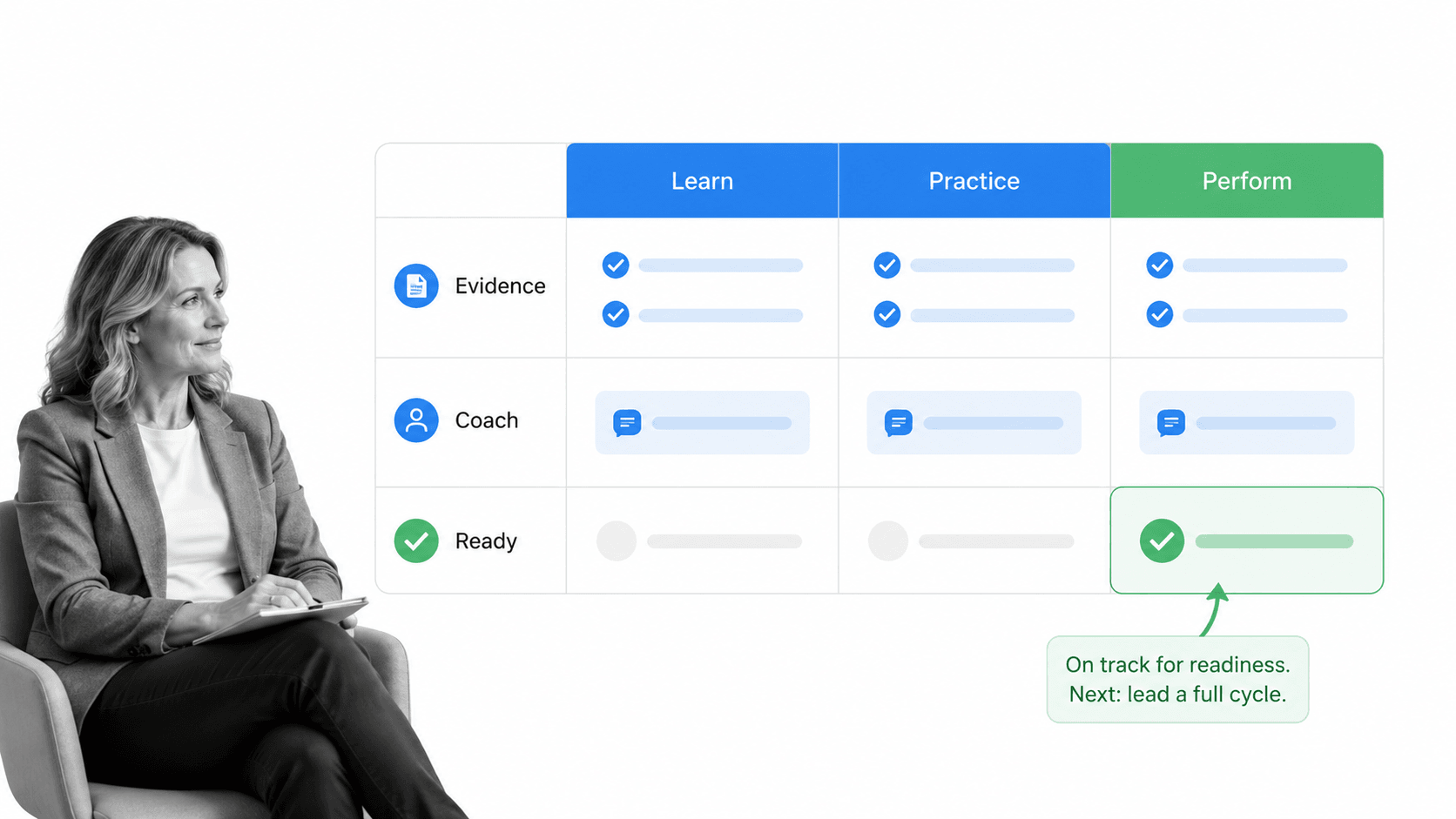
The culmination of these features is a sales onboarding program that effectively bridges the gap between stated organizational expectations and the actual experience of each new hire. Managers gain visibility into progress, can intervene proactively when evidence is lacking, and continuously improve the system based on emerging patterns. New representatives benefit from a clearer developmental path, timely and constructive feedback, and a reliable resource for navigating the processes they are expected to follow.
Cultivating a Leading Sales Team Through Effective Onboarding
Effective sales onboarding transcends a singular orientation event; it is a meticulously managed transition from a novice hire to a trusted, high-contributing team member. The most successful programs meticulously define the critical capabilities required for success, provide structured learning and practice opportunities, actively involve management from the outset, utilize evidence-based readiness assessments, and ensure ongoing development beyond the initial ramp-up period.
Initiating this process with a comprehensive Sales Onboarding Checklist, and then strategically integrating supporting workflows for hiring, conduct policies, background checks, employee development, satisfaction surveys, performance management, and manager responsibilities, forms a robust framework. The program should be focused enough for a new representative to readily comprehend, yet rigorous enough to instill confidence in colleagues and customers regarding the quality of their contributions.
For complementary guidance, exploring broader employee onboarding processes and the extensive library of available onboarding templates can provide further insights. When the foundational elements are in place and the program is ready for execution, initiating a trial period allows organizations to experience firsthand the benefits of a streamlined and effective onboarding system.