Buffer Research Reveals Major Shift in LinkedIn Engagement: Peak Posting Times Move to Late Afternoon and Evening Hours for 2026

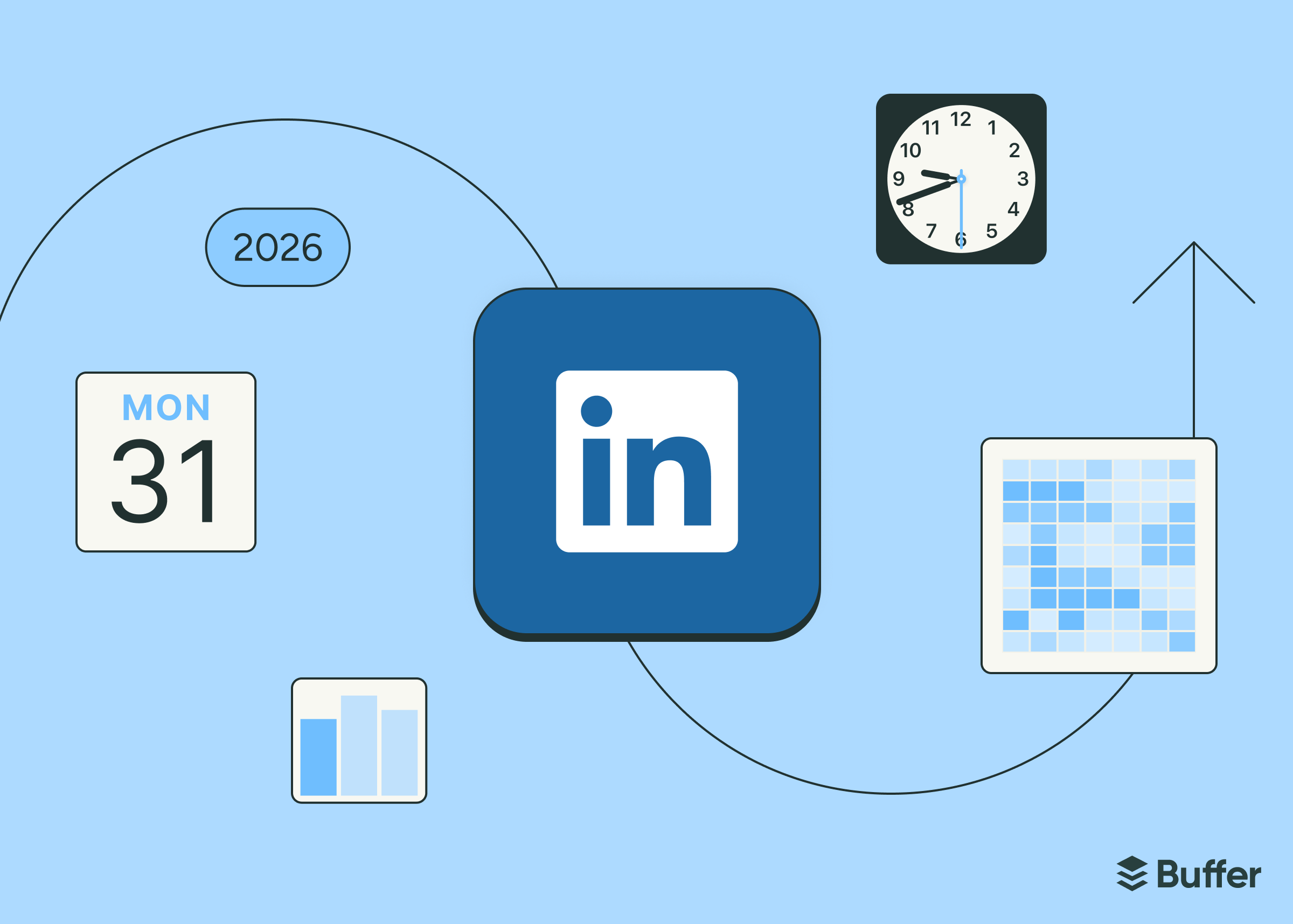
Buffer, a leading social media management platform, has unveiled its comprehensive analysis of LinkedIn engagement trends for 2026, revealing a significant shift in optimal posting times. Based on an in-depth study of over 4.8 million posts sent through its platform, the research indicates that peak engagement is no longer confined to traditional working hours but has largely migrated to late afternoon and evening slots. This marks a notable departure from 2025 patterns, where professional content primarily garnered attention during the 9-to-5 workday.
The extensive data-driven investigation, spearheaded by Buffer’s resident data scientist, Julian Winternheimer, underscores the evolving habits of LinkedIn users. For years, the platform’s engagement metrics predominantly favored content published during business hours, aligning with the perception of LinkedIn as a purely professional, workday-centric network. However, the 2026 findings paint a different picture, mirroring engagement trends observed on more leisure-oriented platforms like Instagram and TikTok, where evening consumption has long been dominant. Professionals are still actively seeking and engaging with career-related content, but they are increasingly doing so after their conventional workdays conclude.
Methodology and the Importance of Timing
The core of Buffer’s research lies in its rigorous analysis of user interaction. Julian Winternheimer’s team meticulously examined millions of LinkedIn posts, tracking reactions, comments, and reposts – key indicators that LinkedIn’s algorithm uses to gauge content value and determine its visibility. The premise is straightforward: higher engagement signals to the algorithm that a post is relevant and valuable, thereby increasing its reach to a broader audience. While various factors contribute to a post’s overall performance, timing plays a crucial role in providing an initial boost, catching users when they are most active and receptive.
It is important to acknowledge, as even LinkedIn’s own marketing blog points out, that timing research is not an exact science. Audience demographics, industry specifics, and content types can all influence optimal posting windows. However, these broad findings provide a powerful starting point for individuals and organizations looking to refine their LinkedIn marketing strategies. By understanding general audience behavior, content creators can significantly improve the chances of their posts being seen and interacted with, whether they are building a corporate brand page or cultivating a personal professional presence.
The Paradigm Shift: Evening Engagement Dominates
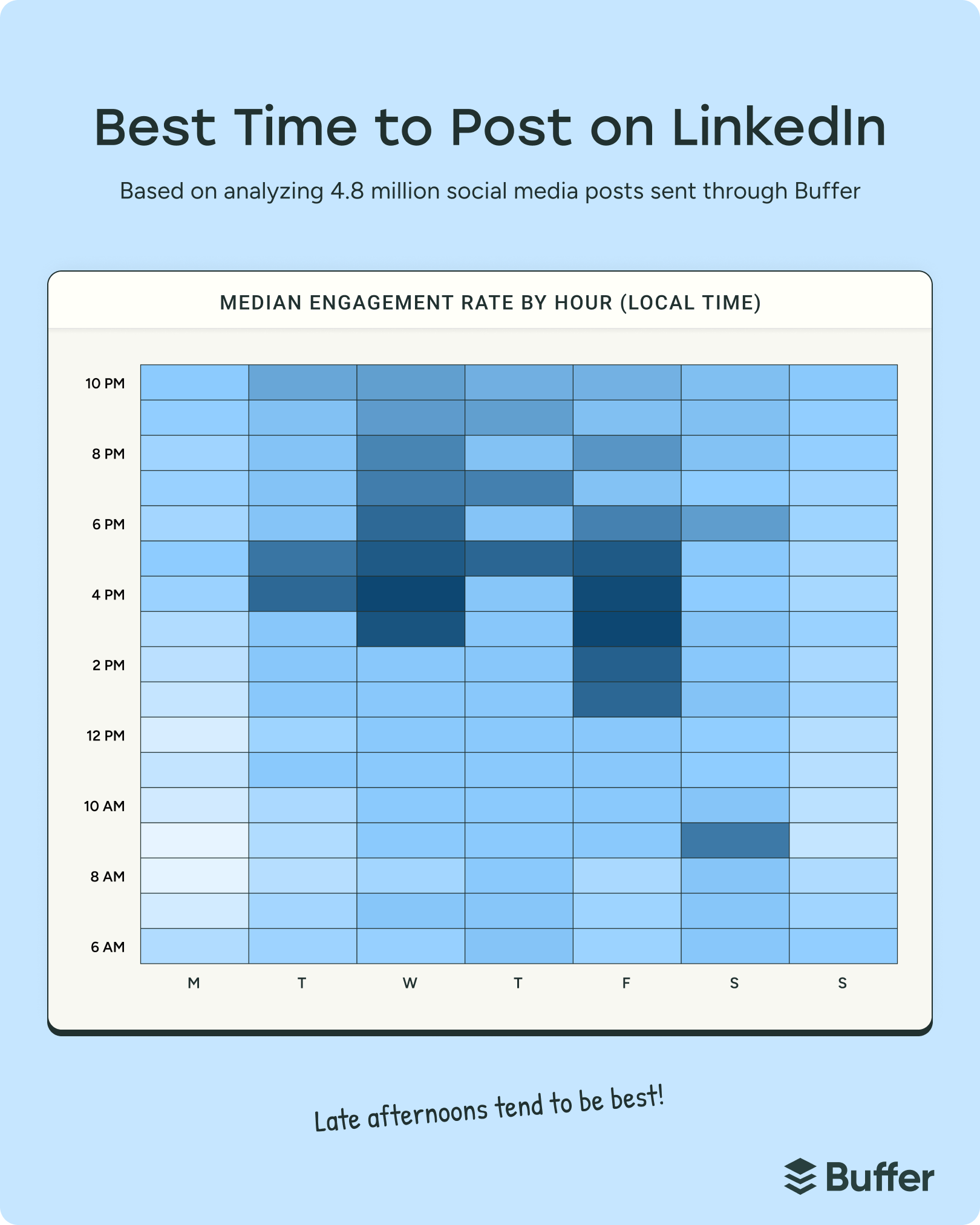
The most striking revelation from the 2026 data is the pronounced shift towards late afternoon and evening engagement. The study pinpoints the window between 3 p.m. and 8 p.m. on weekdays as the new prime time for LinkedIn posts, with particular peaks observed at 4 p.m. on Wednesday and 3 p.m. and 4 p.m. on Friday. This contrasts sharply with 2025, when engagement significantly tapered off after 5 p.m.
This behavioral change suggests a broader evolution in how professionals integrate LinkedIn into their daily lives. The traditional "heads-down" workday may be giving way to more flexible work arrangements, or perhaps individuals are consciously decoupling their professional learning and networking from their core job responsibilities. It is plausible that commutes, evening wind-down routines, or dedicated "personal development" time after hours are now becoming prime opportunities for engaging with professional content. Users might be catching up on industry news, connecting with peers, or exploring career opportunities once they have closed their work laptops and transitioned into a different mindset.
While midday hours still show decent performance, they no longer represent the clear peaks seen in previous years. Morning engagement (6 a.m. to 11 a.m.) has also seen a relative decline compared to the burgeoning afternoon and evening slots. This trend aligns with broader observations across social media, where users often reserve their morning hours for news consumption or quick checks, with deeper engagement occurring later in the day.
Detailed Daily Engagement Insights for 2026
Understanding the weekly rhythm of engagement is critical for strategic content scheduling. Buffer’s analysis provides granular insights into the best times for each day:
-
Monday: Mondays generally exhibit lower engagement compared to the rest of the week, suggesting users are diving into their workweek with less time for social media interaction. However, the data indicates that 10 p.m. emerges as the top slot, followed by 5 p.m. and 9 p.m. This pattern reinforces the evening engagement trend, as professionals might be catching up on content after their initial workday rush or as a late-night activity. High-priority content might be better reserved for later in the week.
-
Tuesday: Similar to Monday, Tuesday sees slightly lower overall engagement. The best times cluster in the late afternoon and evening: 4 p.m., 5 p.m., and 10 p.m. This indicates a consistent user behavior of checking LinkedIn as the workday winds down or during evening leisure hours. Content creators are advised to test these times with their specific audiences before committing to a rigid Tuesday schedule.
-
Wednesday: Standing out as the strongest day for LinkedIn engagement, Wednesday offers prime opportunities for content creators. The top posting time is 4 p.m., which is identified as one of the highest-engagement slots across the entire week. Other strong contenders include 3 p.m. and 5 p.m., forming a robust afternoon-to-early-evening window. This mid-week peak suggests professionals are fully immersed in their work week, actively seeking valuable content, but not yet disengaging for the weekend.
-
Thursday: Following Wednesday’s strong performance, Thursday continues the trend of robust late afternoon and evening engagement. The optimal time to post is 5 p.m., with 7 p.m. and 9 p.m. also showing significant activity. This extends the prime window for reaching professionals who are still engaged with work-related content but are also anticipating the weekend.
-
Friday: Fridays, particularly the late afternoon, are surprisingly strong performers. The best time to post is 3 p.m., as professionals begin to wind down their week but are still connected. 4 p.m. and 5 p.m. also offer high engagement. This suggests that Friday afternoons are a period of lighter work and increased social media browsing, making it an excellent day to share important content.
-
Saturday: Weekends generally see a significant drop in LinkedIn engagement, reflecting a shift away from professional pursuits. However, if weekend posting is necessary, Saturday at 9 a.m. shows the highest activity, followed by 6 p.m. and 10 p.m. These times might cater to early risers or those catching up on personal development during their leisure hours. Nonetheless, weekdays remain the superior option for maximizing reach.
-
Sunday: Sundays are the quietest day on LinkedIn. While 10 p.m. and 9 p.m. show some late-evening activity, and 6 a.m. offers a minimal early morning window, engagement remains considerably lower than during weekdays. Content planned for high interaction is best avoided on Sundays.
The Best Day to Post: Wednesday Takes the Lead
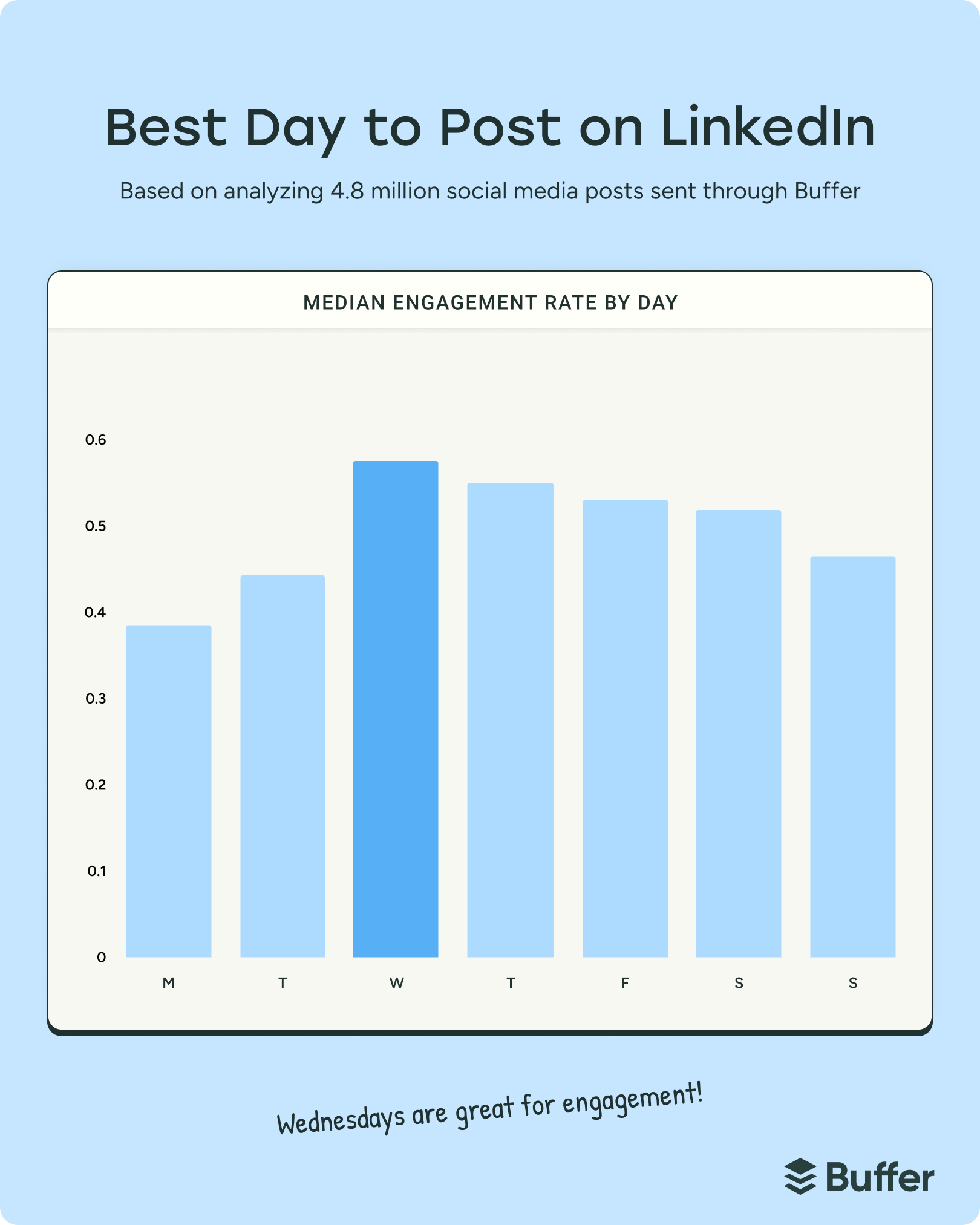
The overarching analysis confirms Wednesday as the best day of the week to post on LinkedIn for maximum engagement. This is closely followed by Thursday and then Friday. This mid-to-late week pattern is intuitively logical: by Wednesday, professionals are fully integrated into their work rhythm and actively seeking insights and networking opportunities. Mondays and Tuesdays, conversely, record the lowest engagement numbers, with Monday being the weakest day overall.
It is worth noting that some other research, including LinkedIn’s own marketing blog, has occasionally highlighted Tuesday as a strong day. This discrepancy underscores the dynamic nature of social media trends and the importance of audience-specific analysis. Factors such as the dataset’s composition, target industries, and geographical distribution can all influence observed patterns. However, for the broad audience represented in Buffer’s multi-million post dataset, the "heads-down" work theory appears to hold true for the early week, making mid-to-late week a more reliable bet for impactful content.
Implications for LinkedIn Marketing Strategies
These 2026 findings have significant implications for how businesses and individual professionals approach their LinkedIn content strategies. The shift to evening engagement suggests a need for flexible content calendars that extend beyond traditional office hours.
- Content Tailoring: Content posted in the late afternoon and evening might benefit from a slightly more relaxed, reflective, or thought-provoking tone compared to rapid-fire updates during the workday. Professionals may be more receptive to long-form articles, in-depth analyses, or aspirational content when they are less constrained by immediate work tasks.
- Targeting Global Audiences: The normalization of posting times by local time zones is a critical detail. For global brands or professionals with an international audience, scheduling tools that automatically adjust to local peak times become invaluable, ensuring content hits at optimal moments across different regions.
- Strategic Planning: High-value content, such as thought leadership pieces, major announcements, or critical calls to action, should be strategically reserved for Wednesday through Friday, particularly during the identified peak afternoon and evening windows. Lower-priority updates or experimental content could be tested on quieter days or during less active hours to gauge specific audience reactions.
- Leveraging Automation: Social media management tools like Buffer become essential for implementing these insights efficiently. Features that automatically suggest or schedule posts at optimal times based on data analysis can significantly streamline workflows and ensure consistency, freeing up marketers to focus on content creation rather than manual timing.
Optimizing Your LinkedIn Strategy Beyond Timing
While timing is a powerful lever, it is part of a larger ecosystem of factors influencing LinkedIn post performance. A holistic strategy considers content quality, posting frequency, and audience engagement.
- The "Golden Hour": The concept of a "golden hour" – a period shortly after a post goes live where early engagement can build momentum – remains relevant. While LinkedIn doesn’t specify an exact duration, prompt initial interactions (reactions, comments) signal to the algorithm that the content is valuable. Publishing during peak times maximizes the chances of this immediate engagement, giving posts a stronger start.
- Posting Frequency: Buffer’s separate analysis of over 2 million LinkedIn posts on frequency offers additional guidance. Posting 2 to 5 times per week is a recommended starting point, leading to approximately 1,182 more impressions per post and a 0.23 percentage point increase in engagement rate compared to posting just once a week. Higher frequencies (6-10 times/week and 11+ times/week) yield even more dramatic gains in impressions and engagement, suggesting that consistent activity is rewarded by the algorithm.
- Content Type: The type of content also plays a crucial role. According to Buffer’s data, carousel (document) posts significantly outperform text-only posts, generating up to 596% more engagement. This highlights the platform’s preference for visually rich, informative, and interactive formats. Beyond format, content that provides genuine insight, professional value, or a unique perspective consistently resonates with the LinkedIn audience.
Finding Your Unique Optimal Times
While broad data provides excellent guidelines, the ultimate strategy involves understanding your specific audience. Every niche, industry, and geographic segment may have slightly different peak activity times.
- Leverage Analytics: Native LinkedIn Analytics offers valuable insights into your top-performing posts. By cross-referencing these with your posting records (which can be maintained through a social media management tool or content calendar), you can identify patterns unique to your followers.
- Continuous Experimentation: Social media algorithms and user behaviors are constantly evolving. What works today might change tomorrow. Therefore, continuous experimentation with posting schedules, content types, and engagement tactics is crucial. Regularly reviewing your own performance data allows for agile adjustments to your strategy.
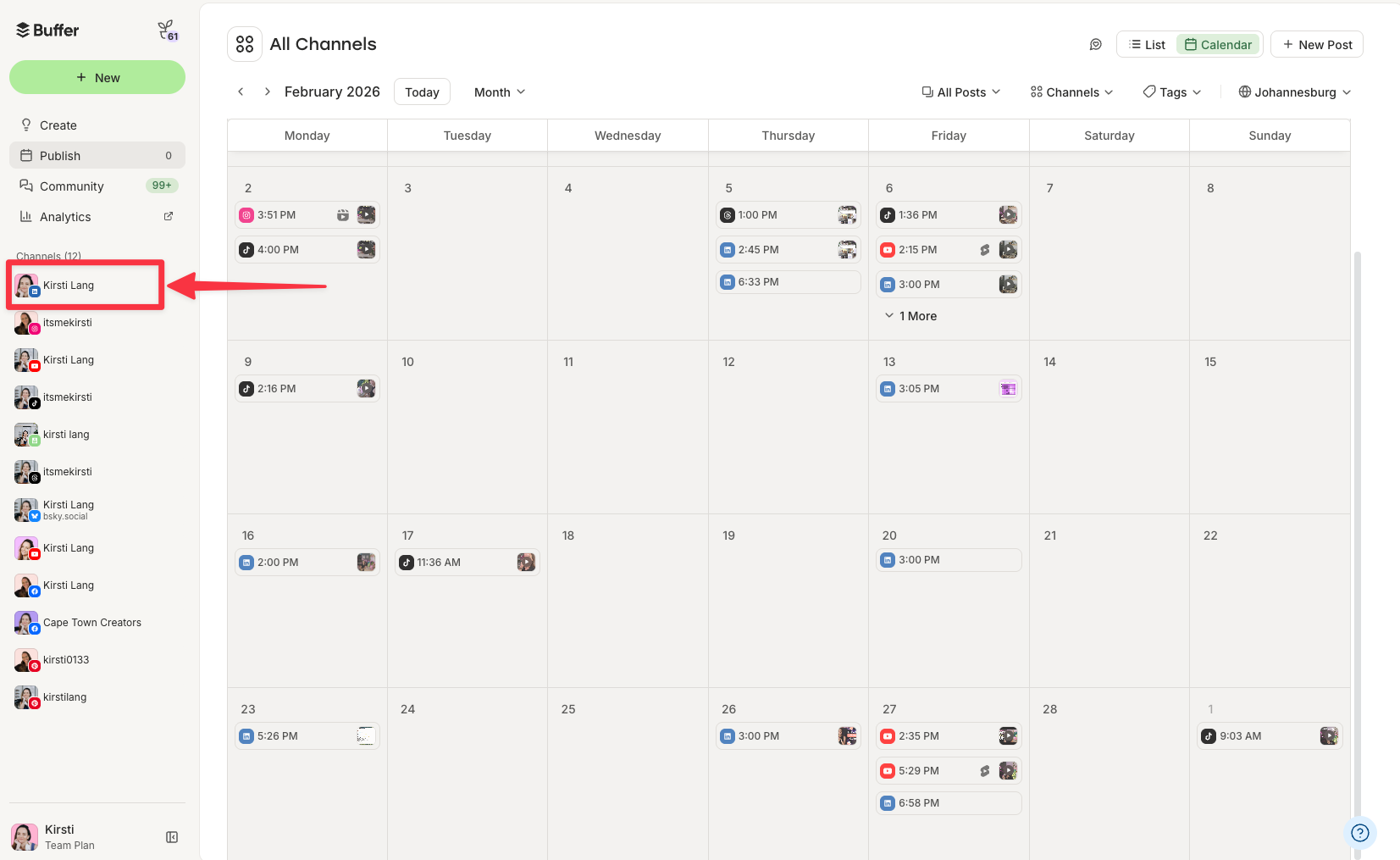
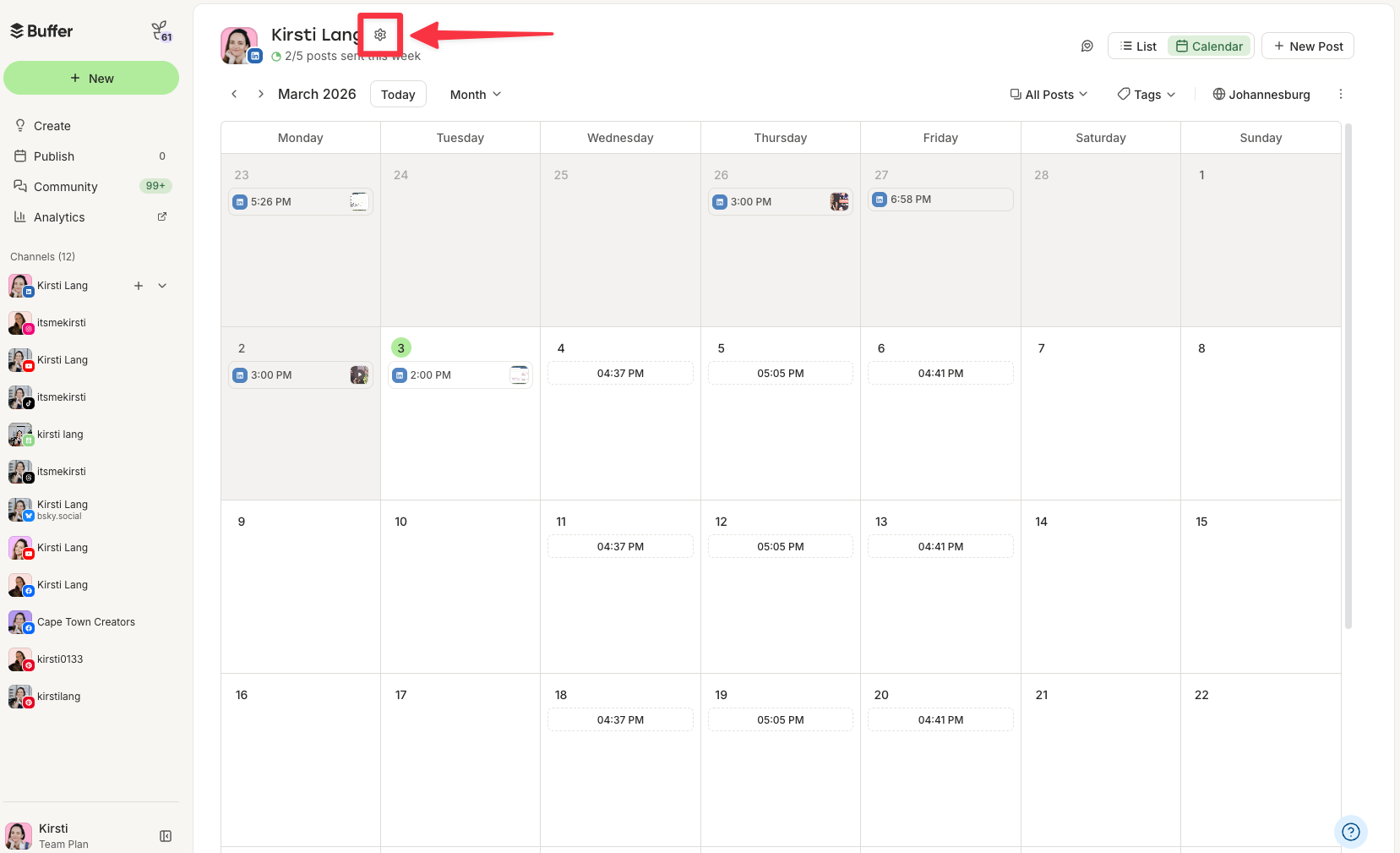
- Tools for Precision: Platforms like Buffer not only provide general data but also integrate these insights directly into their scheduling features, offering "recommended posting slots" tailored to current trends. This automates the process of leveraging optimal times, allowing users to schedule content efficiently and then analyze its performance within the same ecosystem.
In conclusion, the 2026 LinkedIn engagement data from Buffer underscores a significant shift in user behavior, with late afternoon and evening hours now representing the prime opportunity for content creators. By adapting to these new trends, leveraging strategic timing, optimizing content types, and maintaining consistent frequency, professionals and brands can significantly enhance their visibility and impact on the world’s leading professional network. The key lies in a data-informed approach combined with continuous adaptation to the dynamic landscape of social media.