The Evolution of Intelligence: Integrating Traditional Machine Learning with Agentic Reasoning to Transform Enterprise Operations

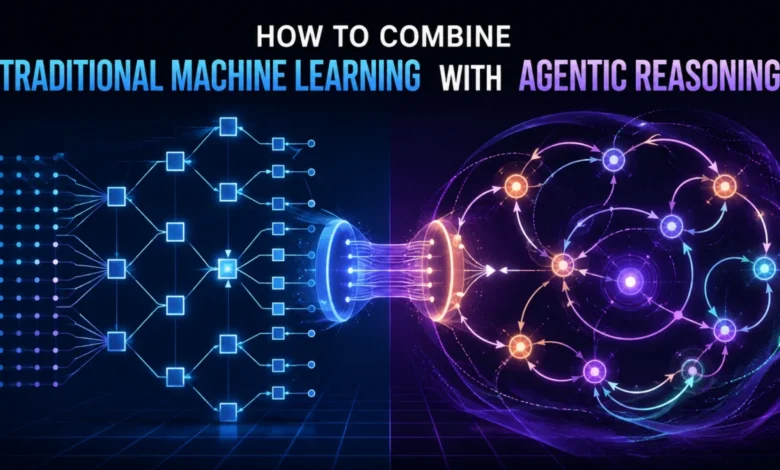
The landscape of artificial intelligence is currently undergoing a structural transformation as industry leaders shift focus from static, predictive models toward dynamic, agentic architectures. For over a decade, traditional machine learning (ML) has served as the backbone of modern data science, powering everything from credit scoring to predictive maintenance. However, as business requirements grow increasingly complex, the limitations of "input-output" models have become apparent. By bridging the gap between high-precision pattern recognition and autonomous, multi-step reasoning, organizations are now developing hybrid AI systems that function as proactive digital workforces rather than mere calculation engines.
The Foundation: The Success and Stagnation of Traditional ML
Since the early 2010s, the development of supervised learning has been defined by the pursuit of statistical accuracy. Models are trained on massive, labeled datasets to map specific inputs to precise outputs. In the financial sector, for instance, algorithms analyze transaction patterns to identify anomalies with a precision rate that far exceeds human capability. Similarly, in healthcare, convolutional neural networks have achieved diagnostic accuracy in radiology that frequently matches or outperforms board-certified specialists.
The engineering maturity of these models is undeniable. They are characterized by low latency, high throughput, and inherent interpretability—qualities that are essential for high-stakes enterprise environments. According to industry reports from 2024, nearly 70% of Fortune 500 companies have successfully deployed at least one traditional ML model into production. Yet, these systems are fundamentally "closed." They operate within a rigid sandbox: they do not learn from their mistakes in real-time, they cannot request additional data if an input is ambiguous, and they are incapable of initiating follow-up actions once a prediction is generated.
The Limits of Static Computation
The primary failure point of traditional ML is its inability to manage "process-oriented" tasks. A model might predict with 99% accuracy that a piece of industrial machinery will fail within 48 hours, but it cannot navigate the logistical complexities of ordering a replacement part, scheduling a technician, or notifying the plant manager. These tasks require context, deliberation, and the ability to interact with external systems—capabilities that traditional ML lacks by design.
Historical data confirms that when ML models are forced to operate outside their narrow scope, the resulting systems often become "brittle." When environmental variables shift—such as a change in market conditions or a breakdown in a data pipeline—a static model may continue to output a result that is no longer logically sound, leading to what engineers refer to as "model drift." Without an agentic layer to interpret these changes and recalibrate the system’s approach, the model’s utility diminishes rapidly.
The Rise of Agentic Reasoning
The transition toward agentic reasoning—often driven by Large Language Models (LLMs) serving as the system’s "brain"—represents a fundamental shift in AI architecture. Unlike traditional models, which act as a mathematical function, an agent acts as a controller. This paradigm shift was solidified in late 2023 and throughout 2024 as researchers demonstrated that LLMs, when prompted correctly, could exhibit planning and tool-use capabilities.
Agentic systems operate on a loop: Perception, Reasoning, Action, and Observation. This cycle allows for the resolution of complex problems that cannot be solved in a single pass. For example, in a supply chain context, an agent does not just forecast a shortage; it searches inventory databases, consults vendor lead times via API, assesses current transit costs, and proposes a re-routing plan to the human operator.
The addition of four distinct capabilities marks the agentic revolution:
- Strategic Planning: Decomposing abstract goals into actionable, hierarchical steps.
- Dynamic Tool Use: Interfacing with external APIs and databases to pull real-time, context-specific information.
- Adaptive Feedback Loops: Adjusting the strategy if an initial step fails or yields unexpected results.
- Autonomous Execution: Interacting with digital environments by triggering workflows or writing to databases.
The Hybrid Future: Orchestration Over Replacement
The prevailing narrative that agents will replace traditional ML is, according to most industry analysts, a misunderstanding of the technology. Instead, the most robust enterprise architectures are adopting a "hybrid" approach. In this model, the agent acts as an orchestrator, while traditional ML models serve as specialized tools within the agent’s toolkit.
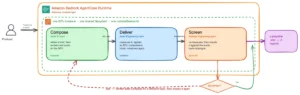
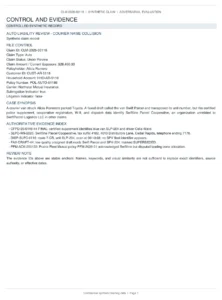
For instance, in a modern insurance claim system, the agent is responsible for the overall lifecycle of the claim. It manages the document intake, validates the policy details, and decides when the fraud detection model is needed. The fraud model, for its part, continues to function as a highly optimized, single-purpose engine that provides a probability score based on structured features. The agent interprets that score, combines it with external evidence retrieved from a search engine, and determines the final path for the claim.
This architecture solves the "last mile" problem of AI. The model provides the insight, but the agent provides the impact. By decoupling the reasoning engine from the predictive model, developers can update or swap out specialized models without retraining the entire agentic system, leading to greater modularity and longevity in software development.
Analysis of Implications for Industry
The economic implications of this transition are significant. By automating the "connective tissue" of business processes—the manual verification, the database lookups, and the cross-departmental communications—organizations can achieve a new level of operational efficiency. Early adopters in sectors like logistics and fintech have reported a 30% to 50% reduction in human-in-the-loop requirements for repetitive, multi-step workflows.
However, this increased autonomy brings new challenges. Security and governance frameworks must evolve to account for systems that can make decisions and take actions. "Human-in-the-loop" oversight is no longer just a best practice; it is a structural requirement. Companies are increasingly implementing "guardrails"—pre-defined operational constraints that prevent agents from executing actions that fall outside of pre-approved parameters.
Chronology of the Shift
- 2012–2018 (The ML Boom): The industry focuses on Deep Learning and supervised models. Emphasis is placed on accuracy metrics like F1-score and AUC-ROC.
- 2019–2022 (The Transformer Era): LLMs emerge, providing the language processing capabilities that would eventually form the basis of agentic reasoning.
- 2023 (The Agentic Catalyst): Research papers on "Chain-of-Thought" prompting and ReAct (Reasoning and Acting) demonstrate that models can perform tasks beyond text generation.
- 2024–2025 (Enterprise Integration): Organizations begin moving away from "chatbots" toward "agents" that can execute workflows in ERP and CRM systems.
- 2026 and Beyond: The focus shifts toward multi-agent systems, where specialized agents collaborate to manage entire corporate divisions.
Conclusion: A New Era of AI Utility
The synergy between traditional machine learning and agentic reasoning represents the most significant advancement in applied AI since the introduction of deep learning. By acknowledging that predictive models and reasoning engines solve fundamentally different classes of problems, developers are building systems that are not only more intelligent but also more reliable and easier to govern.
As these systems become more prevalent, the definition of an AI project is changing. It is no longer just about building a better model; it is about building a better system. The winners in this new era will be the organizations that successfully integrate these two distinct approaches, using the precision of traditional ML to ground their decisions and the flexibility of agentic reasoning to drive them to completion. AI is finally moving out of the laboratory and into the heart of operations, acting not just as a source of information, but as a catalyst for action.