The Shift in Digital Discovery: How AI Search Engines are Rewriting the Rules of Marketing


The landscape of online information retrieval is undergoing a fundamental transformation that threatens to render the traditional "ten blue links" model of search engine optimization obsolete. For two decades, the digital economy has been built on a foundation of web traffic driven by Google’s search results, where brands competed for top-ranking positions to drive clicks. Today, that paradigm is being disrupted by a new generation of AI-powered "answer engines"—such as ChatGPT, Perplexity, and Google’s own AI Overviews—that provide synthesized, direct responses to user queries, often eliminating the need for a user to ever visit a third-party website.

This shift represents more than a technological evolution; it is a structural change in the consumer and B2B buying journey. Research indicates that the era of "zero-click" searches has arrived, forcing marketers to pivot from a focus on organic traffic to a new, complex priority: answer engine visibility.
A Chronology of the Search Revolution
The transition toward AI-driven search began in earnest with the public launch of OpenAI’s ChatGPT in November 2022. While large language models had existed in research labs for years, their integration into consumer-facing interfaces sparked a rapid migration of users seeking immediate, consolidated answers rather than lists of URLs.

By 2024, the search industry entered a state of rapid adaptation. Google, historically the gatekeeper of the internet, introduced its "Search Generative Experience" (SGE), later branded as AI Overviews, to compete with the conversational interface of AI startups. Simultaneously, Perplexity AI gained significant market share by positioning itself as an "answer engine" that prioritizes real-time web connectivity and transparent citations.
This timeline reflects a broader, industry-wide trend: the commoditization of information. As these models grow more sophisticated at summarizing complex topics, the traditional model of browsing multiple websites to build an understanding of a product or service is becoming increasingly infrequent.
The Data Behind the Disruption
The impact of this shift is corroborated by significant industry data. According to a 2025 study by Forrester, 94% of B2B buyers reported using AI tools during their most recent purchasing processes. The data reveals a clear behavioral pattern: 55% of these buyers utilized AI for vendor comparisons, while 54% used it to conduct initial product research. Critically, these activities occurred before the buyer engaged with a sales representative, effectively shifting the "top of the funnel" away from the vendor’s own domain.
The consumer sector shows a similar trajectory. Adobe Digital Insights reported that 56% of U.S. consumers leveraged generative AI during the 2025 holiday shopping season—a 45% increase compared to the previous year. Bain & Company’s analysis further confirms that approximately 60% of search queries now conclude without the user ever clicking on a link, signaling a "zero-click" environment that complicates traditional performance metrics.

Defining the New Tool Stack
To navigate this environment, marketers must distinguish between three distinct categories of AI-driven tools, each serving a unique function in the modern marketing stack:
1. Answer Engines
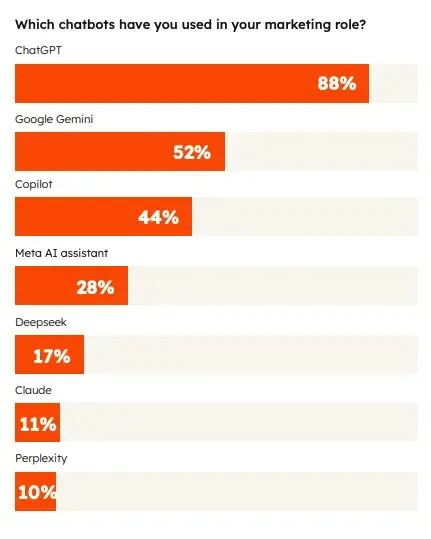
These are the primary interfaces for user discovery. Platforms like ChatGPT, Claude, and Perplexity synthesize data from vast, diverse sources. Unlike traditional search, which acts as a library index, these engines act as analysts. For brands, the challenge lies in the "black box" nature of these models. Because they synthesize information, a brand’s presence is no longer guaranteed by keywords but by the "authority" and "credibility" of their content as perceived by the model’s training data or live search index.

2. AI Site Search
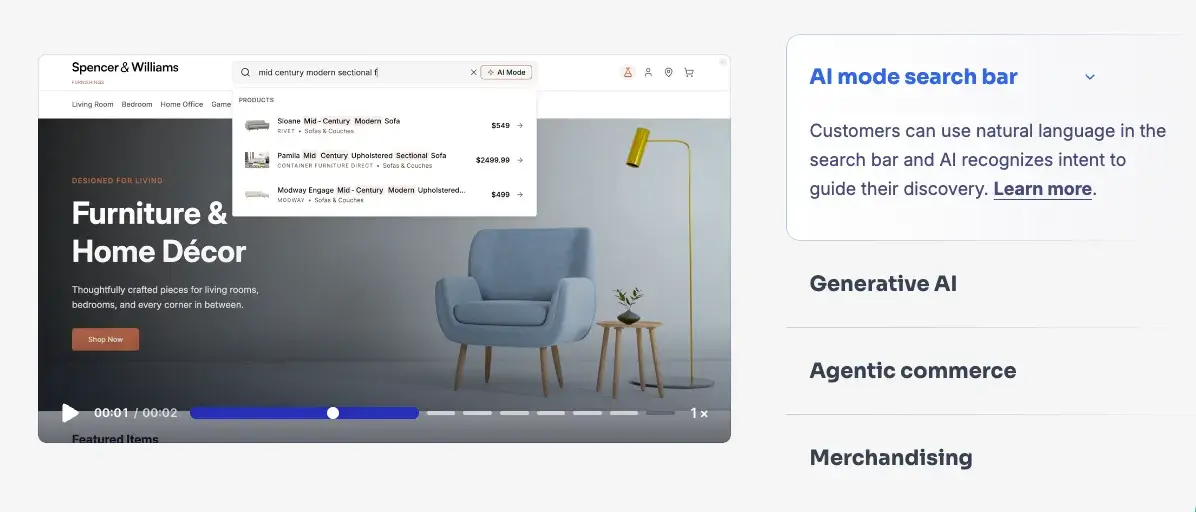
While answer engines handle external discovery, AI site search tools—such as Algolia, Coveo, and Elasticsearch—are critical for retention. These tools are embedded directly into a company’s website or product portal. Their role is to ensure that once a visitor arrives, they can navigate complex documentation or product catalogs using natural language. For SaaS companies and e-commerce giants, failing to implement high-quality AI site search often leads to "search abandonment," where users leave the site to ask an external engine the same question.
3. Answer Engine Optimization (AEO)
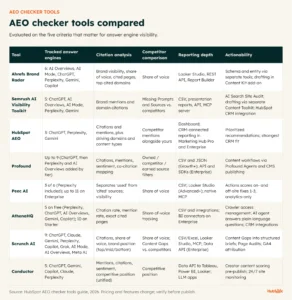
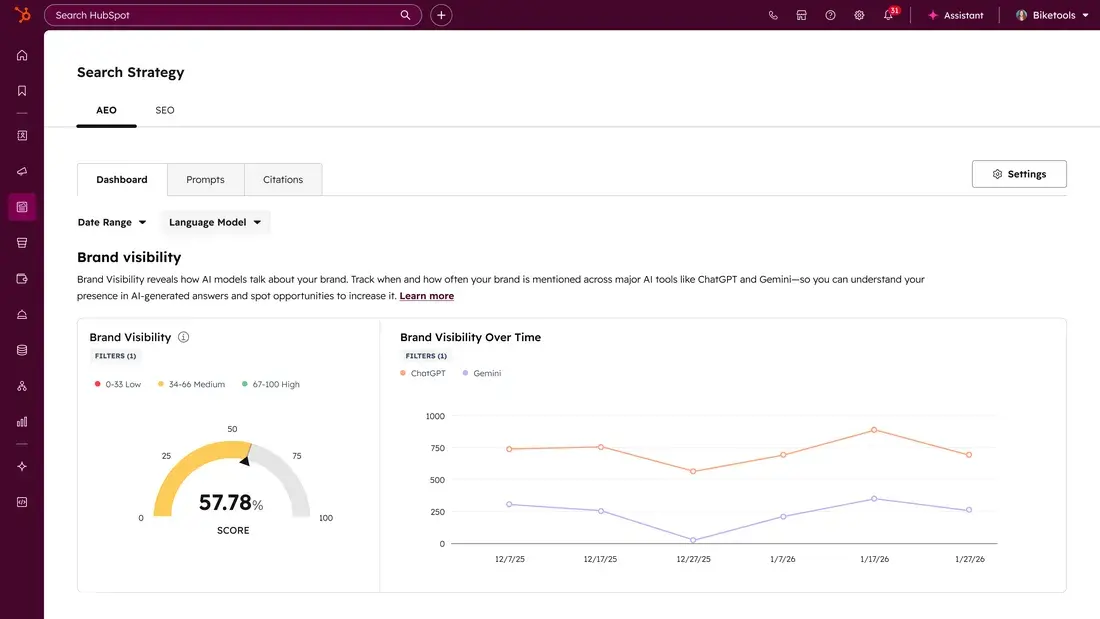
AEO represents the emerging discipline of measuring brand visibility within AI responses. Tools like the HubSpot AEO platform are designed to bridge the gap between AI search and traditional analytics. These platforms act as a monitoring layer, providing data on how often a brand is cited in AI responses and offering recommendations to optimize content for better "recall" by the AI.
Implications for Brand Authority
The shift toward AI-synthesized answers places a premium on high-quality, verifiable content. Because Perplexity and similar platforms rely on citations to maintain user trust, brands that produce deep, well-researched, and technical content are more likely to be cited as authoritative sources.
The Columbia Journalism Review, in its evaluation of AI citation accuracy, noted that while no AI search tool is currently error-free, Perplexity maintained the lowest error rate, underscoring the importance of sourcing in the current ecosystem. For marketers, the implication is clear: the strategy of producing "thin" content for the sake of keyword density is failing. Instead, brands must focus on becoming the "source of truth" that AI models are incentivized to reference.

The Strategic Pivot: Measuring What Matters
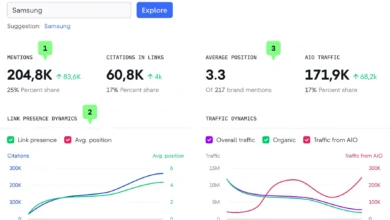
The most significant challenge for modern marketing teams is the lack of standardized metrics. Traditional SEO tools like Google Search Console do not provide data on how a brand is mentioned in an AI summary. As a result, companies are being forced to adopt new, proprietary metrics.
HubSpot’s approach—using CRM data to inform which queries are most valuable to a specific business—represents an evolution in how marketers view search. By prioritizing the prompts that lead to high-value customer actions rather than just "vanity" search volume, businesses can align their content strategy with actual revenue generation.

Future Outlook and Strategic Recommendations
As AI search continues to mature, the distinction between search, research, and purchase will continue to blur. The immediate strategic imperative for marketers is to stop treating AI as a "future" concern.
To adapt, organizations should follow a three-step framework:
- Diagnostic Auditing: Utilize free tools like the HubSpot AI Search Grader to establish a baseline of current visibility across major AI engines.
- Infrastructure Investment: Audit existing site search capabilities. If internal site search cannot handle natural language queries, it is likely creating friction that drives potential customers to external AI engines.
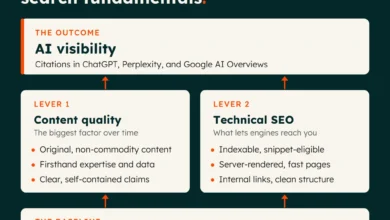
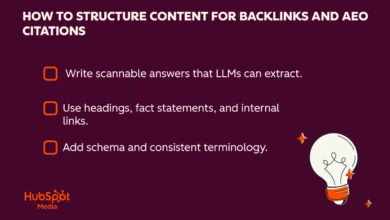
- Content Authority: Prioritize the creation of primary research, original data, and technical documentation. These formats are the most "scrappable" and citeable for LLMs, effectively positioning the brand as a primary source for the AI to reference.
While the "blue link" era of the internet is not disappearing overnight, its dominance is waning. The brands that successfully navigate this transition will be those that view AI not as a competitor, but as a new medium that requires a shift in how they package, present, and promote their expertise. The search for the right answer has evolved; for the modern marketer, the search for visibility must evolve alongside it.