The Hidden Financial Risks of Vacant Property and the Essential Role of Community Oversight


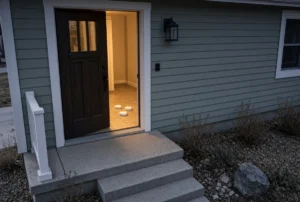
The management of residential rental property is frequently framed as a passive income endeavor, yet recent incidents underscore the reality that physical assets require active, constant monitoring to mitigate catastrophic financial loss. On a recent Saturday at 3:35 p.m., a property owner received an alert from a neighbor regarding a persistent, audible alarm emanating from a rental unit. The tenants were not present, and the subsequent discovery—three smoke detectors stacked on a garage floor, one of which had been triggering a continuous alert—highlighted the vulnerability of unoccupied homes. While this specific instance resulted in no structural damage, it serves as a critical case study in how property owners often overlook the intersection of vacancy, insurance policy fine print, and the informal security network provided by neighbors.
The Chronology of a Potential Liability
The event unfolded over a single weekend, demonstrating how quickly a minor maintenance issue can escalate into a significant liability. Upon receiving the neighbor’s notification, the property owner conducted an immediate site visit. The investigation revealed that the smoke alarms had been removed from their mounts and consolidated in the garage.
This chronology illustrates a common failure in landlord-tenant communication: the lack of a clear, enforced protocol regarding safety devices. Had the smoke alarms been malfunctioning or reaching their end-of-life cycle, the absence of a proactive reporting mechanism meant the devices were left in a state that could have masked a genuine emergency or, conversely, invited a false alarm that could have led to unnecessary emergency service intervention. More importantly, had the property been vacant for an extended period, such a noise complaint might have gone ignored or been dismissed as a malfunction, potentially delaying the discovery of a more serious hazard.
Insurance Clauses and the Cost of Vacancy
The insurance industry categorizes risk based on occupancy, a factor that many property owners fail to scrutinize until a claim is denied. Standard homeowners and dwelling fire policies typically include a "vacancy clause." Industry data from organizations such as the Insurance Information Institute confirms that once a property has been vacant for a defined period—commonly ranging between 30 and 60 consecutive days—the scope of coverage narrows significantly.
Under these clauses, insurers often exclude coverage for vandalism, theft, glass breakage, and water damage once the occupancy threshold is breached. The underlying logic is that a resident acts as a form of "passive loss prevention." A tenant or homeowner present in the dwelling serves as an early-warning system for issues such as pipe bursts, roof leaks, or electrical shorts.
The financial disparity between a timely repair and a long-term claim is substantial. For instance, a leaking water supply line caught on the first day may result in a plumbing service call costing under $500. If that same leak remains undetected for several weeks in an empty house, the resulting mold remediation, structural damage to subflooring, and restoration of electrical and HVAC systems can easily exceed $60,000. In such scenarios, if the insurer successfully invokes the vacancy clause, the property owner assumes the full financial burden of the restoration.
Data on Neighborhood Connectivity and Risk Management
The reliance on neighbors as an informal security layer is backed by sociological trends regarding residential living. According to surveys conducted by firms like Rocket Mortgage, roughly 30% of Americans interact with their neighbors beyond a casual, perfunctory level. Despite this relatively low percentage, there is a strong latent capacity for cooperation; approximately 68% of Americans report having received assistance from a neighbor in the past year, and 58% indicate they would turn to a neighbor in an emergency.
This "village effect" acts as an unpriced insurance premium. While modern technology, such as smart cameras and remote monitoring systems, has gained popularity, these tools are reactive. They can provide high-definition video of a fire or a break-in, but they cannot replace the physical presence of a neighbor who can intervene, call for help, or alert an owner in real-time. The transition from community-based oversight to reliance on digital, automated systems has, in some respects, created a "detection gap" where technology records the damage while humans are no longer present to prevent it.
Best Practices for Risk Mitigation
To safeguard assets against the risks associated with vacancy and property neglect, property owners are advised to implement a multi-tiered risk management strategy. This involves both technical safeguards and improved administrative protocols.
1. Administrative and Lease-Based Protections
- Mandatory Notification: Leases should explicitly require written notice within 24 hours of any smoke or carbon monoxide detector becoming inoperable. Prohibiting the unauthorized removal of these devices is a standard, yet critical, safety requirement.
- Professional Documentation: Conduct and document thorough video walkthroughs during both move-in and move-out phases. This practice provides an evidentiary basis for insurance claims and simplifies dispute resolution regarding damages.
- Vacancy Endorsements: Property owners planning extended absences or those managing properties between tenants should consult their insurers about "vacancy permit endorsements." These endorsements, while requiring an additional premium, ensure that coverage for water damage, theft, and vandalism remains in effect during periods of non-occupancy.
2. Technical and Infrastructure Upgrades
- Automatic Leak Detection: Investing in smart water shutoff valves is one of the most effective ways to mitigate the high-cost risk of water damage. These systems, which can be monitored via smartphone, allow for the automatic closure of the main water line if abnormal flow is detected.
- Replacement Cost Coverage: Ensure that policies are written for "replacement cost" rather than "actual cash value." In an inflationary environment, actual cash value often provides only a fraction of the capital required to rebuild, as it accounts for depreciation.
3. Financial Strategy for Paid-Off Properties
Owners who have paid off their mortgages may be tempted to forgo insurance, as it is not legally mandated by the state. However, the decision to "go bare"—self-insuring the property—requires significant liquid reserves. If an owner cannot comfortably cover the cost of a total loss, such as a major structural fire or a significant liability lawsuit resulting from an injury on the premises, the risk is statistically indefensible. Even for those with sufficient assets, insurance acts as a mechanism for transferring the risk of catastrophic loss, thereby preserving liquidity and providing financial serenity.
The Broader Implications of Passive Income
The pursuit of passive income in real estate often masks the reality of physical asset management. As the market evolves, many investors are increasingly looking toward diversified real estate investment vehicles, such as private equity funds or REITs (Real Estate Investment Trusts), which remove the burden of direct property management. In these arrangements, the investor is shielded from the day-to-day operations—such as monitoring smoke alarms or responding to neighbor complaints—because those functions are professionalized and centralized.
However, for those who choose to hold physical real estate, the lesson remains clear: property ownership is an active, not passive, responsibility. Whether it is through building a relationship with a neighbor who can provide eyes on the ground, or through the diligent selection of insurance coverage, the most successful investors are those who view their tenants and neighbors as essential, if informal, partners in the preservation of their capital. As the owner in this recent incident discovered, a simple text message from a neighbor can be the difference between a minor inconvenience and a significant financial catastrophe. In the world of real estate, presence—whether human or technological—remains the most effective, and cheapest, form of insurance available.