Elon Musk Withdraws Antitrust Lawsuit Against Apple While Maintaining Legal Pressure on OpenAI

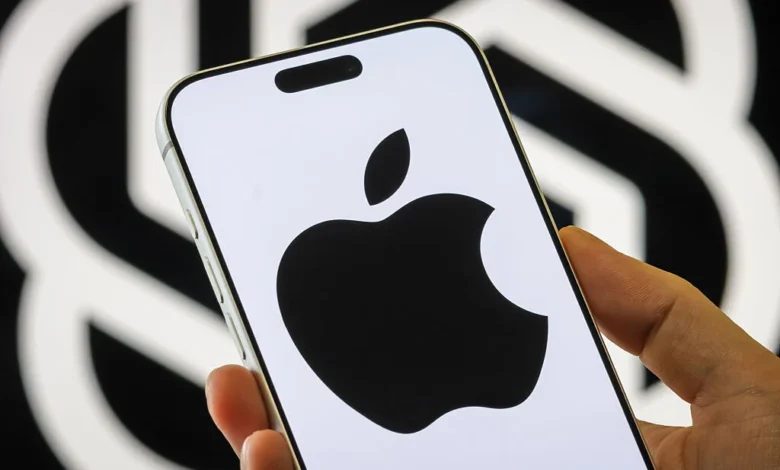
The high-stakes legal confrontation between tech mogul Elon Musk and the titan of consumer electronics, Apple, has reached an unexpected resolution. In a court filing submitted this past Monday, Musk’s company, X, formally moved to voluntarily dismiss its antitrust lawsuit against Apple. This development marks a significant shift in a multi-year conflict that began when Apple announced the integration of OpenAI’s ChatGPT directly into the iOS ecosystem. While Musk has agreed to drop all claims against the iPhone maker with prejudice—meaning he is legally barred from refiling the same accusations—the litigation against OpenAI remains active, signaling that the broader battle over the trajectory of artificial intelligence is far from over.
A Chronology of the Conflict
The tension between Musk and the collaborative efforts of Apple and OpenAI dates back to June 2024, when Apple unveiled "Apple Intelligence." During the company’s Worldwide Developers Conference (WWDC), Apple executives detailed plans to incorporate ChatGPT into Siri and system-wide writing tools. Musk, who has been a vocal critic of OpenAI—a company he co-founded but later distanced himself from—reacted with immediate hostility.
By the summer of 2025, the rhetorical war escalated into formal litigation. Musk filed a lawsuit alleging that the partnership between Apple and OpenAI created an unlawful monopoly. The core of his argument was that the integration of ChatGPT into millions of iPhones gave OpenAI an unfair advantage, effectively locking out competing AI models, such as Musk’s own chatbot, Grok. Throughout the latter half of 2025, Musk intensified his rhetoric, famously claiming that Apple was manipulating its App Store algorithms to ensure that only OpenAI-affiliated products could reach the top rankings. He characterized the deal as an "unequivocal antitrust violation," suggesting that the symbiotic relationship between the two companies created a closed loop that stifled innovation and consumer choice.
The Dynamics of the Alleged Monopoly
Musk’s legal team centered their arguments on the concept of market foreclosure. They contended that because Apple controls the most pervasive mobile platform in the Western world, its decision to provide "system-level" access to OpenAI’s technology created an insurmountable barrier to entry for other AI developers.
In court filings throughout 2025, Musk’s representatives attempted to quantify the harm. They argued that by pre-installing or privileging ChatGPT within the iOS interface, Apple was essentially forcing its user base to rely on a specific provider, thereby depriving rivals of a fair shot at the market. However, the methodology behind these claims faced immediate scrutiny. In October 2025, OpenAI filed a motion to dismiss, mocking the "back-of-the-envelope" math provided by Musk. OpenAI’s legal team highlighted that Musk failed to provide concrete market share data, instead offering a wide-ranging estimate that suggested anywhere from 0% to 55% of the chatbot market was being foreclosed by the deal. OpenAI argued that such vague assertions failed to meet the standard of proof required in antitrust litigation.
The Shift in Strategy
The decision to drop the claims against Apple suggests a strategic pivot. Legal experts observing the case note that antitrust suits against major platform providers are notoriously difficult to win, particularly when the defendant can demonstrate that the integration is a feature of user experience rather than a predatory act. Apple has consistently maintained that its partnership with OpenAI is not exclusive, pointing to the fact that it has already explored integrations with other AI providers like Google’s Gemini and Anthropic’s Claude. By keeping the doors open to other models, Apple successfully undermined the "monopoly" narrative Musk attempted to build.
By resolving the Apple portion of the suit, Musk may be attempting to narrow the scope of his legal war, focusing his resources on the primary antagonist: OpenAI. His goal appears to be proving that OpenAI, through its business development practices and deep-pocketed partnerships, is attempting to monopolize the AI market. This focus aligns with the growth of SpaceXAI, Musk’s own AI venture, which is currently competing for the same talent, computational power, and enterprise contracts as OpenAI.
Reactions and Industry Implications
The broader tech industry has watched this feud with a mix of apprehension and interest. For Apple, the dismissal is a clear victory. It removes the threat of an intrusive discovery process that could have forced the company to reveal proprietary information regarding its App Store ranking algorithms and internal partnership negotiations. Apple’s stock remained relatively stable following the news, reflecting investor confidence that the company has effectively navigated the regulatory and legal challenges associated with its AI pivot.
OpenAI, conversely, remains steadfast in its defense. In previous statements, the company characterized Musk’s legal actions as "harassment" designed to hinder their progress while his own projects struggled to gain equivalent traction. For OpenAI, the continued lawsuit is viewed as a nuisance—an attempt by a disgruntled former founder to use the judicial system as a tool for corporate warfare rather than legitimate competition.
The Role of Regulatory Scrutiny
While the private lawsuit against Apple has been dropped, the underlying questions regarding AI and antitrust remain under the microscope of federal regulators. Both the Department of Justice (DOJ) and the Federal Trade Commission (FTC) have been increasingly active in investigating the "Big Tech" approach to AI development. The "acqui-hiring" and strategic partnerships between giants like Microsoft, Apple, and the leading AI labs are currently the subject of intense debate.
The core question remains: Does the integration of AI into operating systems constitute a utility, or is it a barrier to competition? If AI is deemed a "necessary facility," then the companies that control the hardware—like Apple—could face ongoing pressure to ensure neutrality. However, if AI is viewed as an optional software feature, the current model of exclusive or semi-exclusive partnerships is likely to persist.
Future Outlook for Musk’s Legal Battles
With the Apple chapter closed, all eyes are on how the remaining claims against OpenAI will play out. The court will now have to determine if Musk’s assertions of market manipulation have any merit in a standalone suit. Legal analysts suggest that without Apple as a co-defendant, proving that OpenAI has achieved a "monopoly" becomes significantly harder. OpenAI has successfully argued that the AI market is highly fluid, with new competitors emerging constantly, which contradicts the classic definition of a monopolistic environment.
Furthermore, the dismissal raises questions about the long-term viability of Musk’s strategy. If he cannot prove that the tech giants are conspiring to crush his ventures, he may be forced to compete on the merits of his technology alone. SpaceXAI is currently investing billions into data center infrastructure and high-performance computing, aiming to challenge the incumbent leaders on pure performance and transparency—a goal that requires massive capital expenditure and a clean legal slate.
As the dust settles on the X-Apple litigation, the message from the market is clear: the integration of artificial intelligence into consumer devices is an unstoppable trend. While legal challenges will continue to define the boundaries of how these tools are deployed, the partnership between hardware platforms and AI developers is likely to grow more, not less, integrated. Whether Musk’s pursuit of OpenAI will yield a court-mandated remedy or simply serve as a high-profile distraction remains to be seen. For now, Apple can move forward with its product roadmap, unburdened by the threat of court-ordered restructuring, while OpenAI continues its rapid expansion in an increasingly crowded and litigious landscape.