Boutique Launch Providers Gain Momentum as Satellite Operators Seek Tailored Orbital Access

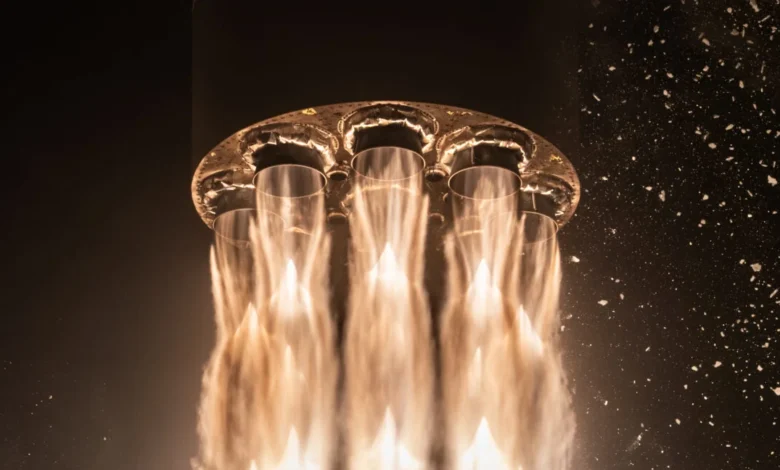
The global space industry is currently witnessing a significant shift in how satellite operators approach the final frontier of orbital deployment. While the massive, high-cadence launch programs of industry giants like SpaceX have defined the last decade, a growing segment of the market—specifically those focused on satellite servicing, debris mitigation, and unique, mission-critical orbits—is increasingly turning toward smaller, dedicated launch providers. This trend was underscored in late 2026 when German aerospace startup Isar Aerospace successfully reached orbit with its Spectrum rocket, marking a pivotal milestone for both the company and the broader European commercial space sector.
The success of the Spectrum mission, which launched from a specialized facility in northern Norway, serves as a validation for the "boutique" launch model. After a disappointing initial test flight last year, the company’s ability to deliver a payload of CubeSats into low-Earth orbit (LEO) signals that Europe is finally beginning to close the capability gap that has long separated it from American and Chinese launch incumbents. For companies like Astroscale, a leader in the burgeoning field of on-orbit servicing, this development is not just a technological win; it is a strategic necessity.

The Strategic Shift Toward Dedicated Launch
For decades, the standard procedure for smaller payloads was "ridesharing"—hitching a ride on a massive rocket alongside dozens of other satellites. While cost-effective, this approach inherently compromises a satellite’s orbital flexibility. A rideshare customer must accept the orbit, inclination, and schedule dictated by the primary payload, which is often a large constellation operator.
For mission-specific operations, such as rendezvous, proximity operations (RPO), and docking, this lack of control is a major hurdle. Satellite servicing requires a precise insertion into a specific orbital plane to match the target object—a task that is notoriously difficult to achieve via a secondary position on a rideshare mission. Astroscale’s Chief Operating Officer, Chris Blackerby, highlighted this friction, noting that while ridesharing remains a standard for basic telecommunications satellites, it is increasingly insufficient for the complex missions his company pursues.
"Dedicated launch is pretty essential for us for most of our missions," Blackerby stated during a recent interview. He emphasized that as Astroscale’s hardware scales up—moving from smaller demonstrations like the original ADRAS-J mission to more robust spacecraft like ELSA-M and ADRAS-J2—the availability of affordable, dedicated launch vehicles in the 500-kilogram to 1-ton class has become the primary bottleneck for the industry.

Chronology of the European Space Resurgence
The emergence of Isar Aerospace is part of a larger, state-backed effort to revitalize European space autonomy. Following the struggles of legacy providers like Arianespace to maintain a consistent launch cadence, European governments and the European Space Agency (ESA) have shifted their support toward a new generation of agile startups.
The timeline of this shift began in earnest around 2024, as the backlog of government and commercial missions grew, fueled by the realization that relying solely on foreign launch providers created significant geopolitical and operational risks.
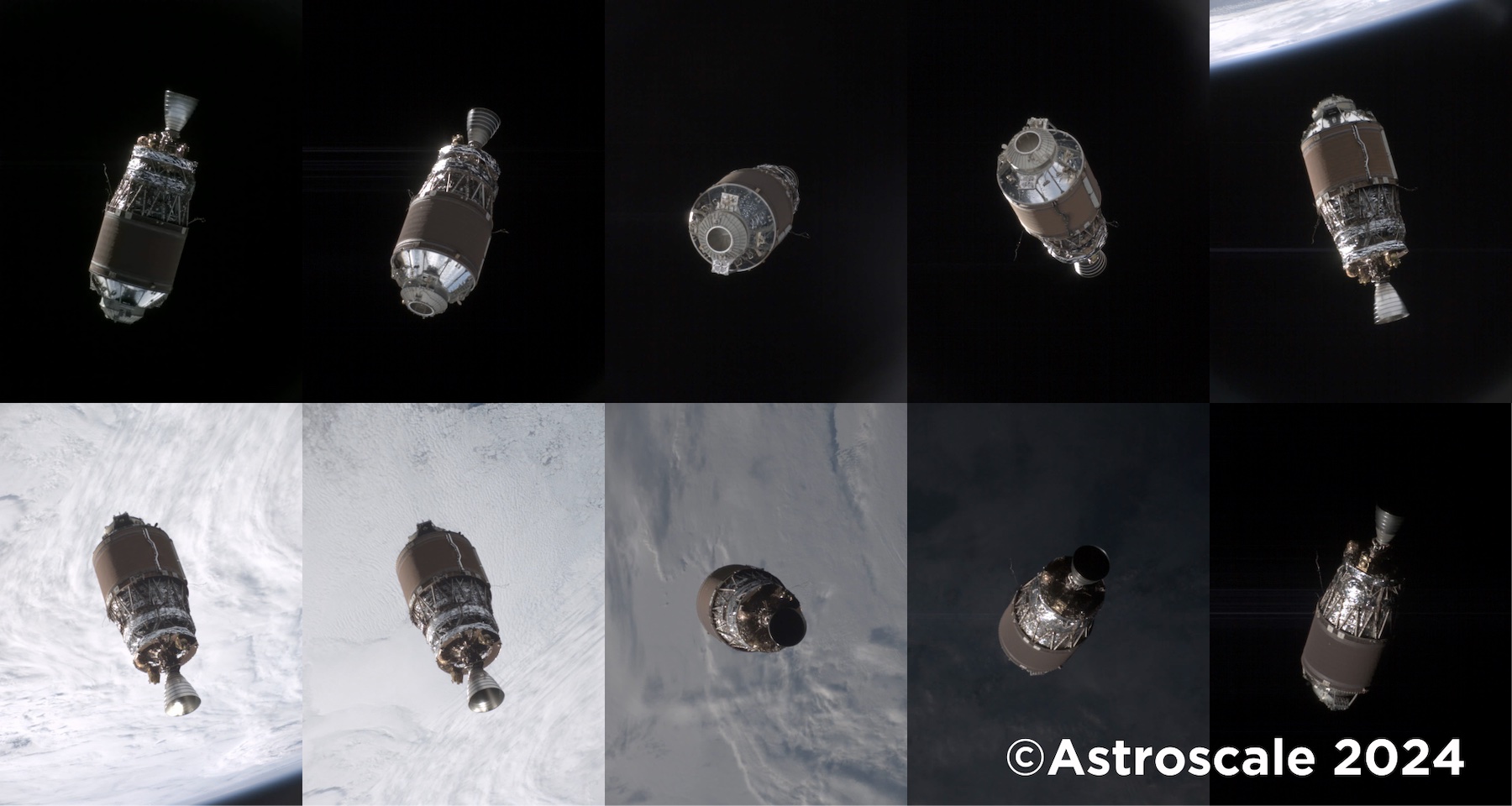
- 2024: Astroscale successfully completes the world’s first commercial rendezvous with a piece of space junk (ADRAS-J), proving that private companies can safely approach and inspect derelict hardware.
- 2025: Several European startups, including Rocket Factory Augsburg and Spain’s PLD Space, begin aggressive ground testing programs to challenge the dominance of incumbents.
- 2026 (Early): SpaceX begins to dial back its Falcon 9 cadence for certain commercial missions, leading to market uncertainty and renewed interest in alternative launch providers.
- 2026 (September): Isar Aerospace achieves orbit, successfully validating the Spectrum rocket’s design. Astroscale officially signs a second launch contract with Isar, signaling market confidence in the new entrant.
Supporting Data: The Capability Gap
The demand for dedicated, small-lift capacity is driven by the specific needs of modern LEO architectures. While large rockets like the Falcon 9 and the emerging Starship are designed for mass-volume orbital injection, they are often overkill for a 600kg servicing craft.

Furthermore, the "launch crunch"—a term frequently used by industry analysts to describe the disparity between the number of planned satellites and the available flight slots—has created a volatile pricing environment. For smaller companies, the risk of a launch being delayed by years because of a shift in a primary mission’s schedule is an existential threat. Consequently, operators are willing to pay a premium for "boutique" providers who can offer a personalized flight schedule and a guaranteed, specific orbital injection.
Industry analysis suggests that the 500kg to 1-ton market segment is currently underserved. While providers like Rocket Lab have pioneered this space, the sheer volume of demand means that there is ample room for multiple players. The failure of other, once-promising startups to reach orbit has left a vacuum that Isar Aerospace is now actively filling.
Official Perspectives and Market Implications
The partnership between Astroscale and Isar Aerospace is emblematic of the symbiotic relationship developing between service providers and launch manufacturers. Astroscale has conducted extensive due diligence, including on-site technical audits and meetings with Isar’s lead engineers, to mitigate the risks associated with an unproven launch platform.
"Choosing a launch provider that hasn’t proven consistent success yet is definitely a risk," Blackerby acknowledged. "But we did a lot of checking on them… and we’re very confident in what we decided."
This confidence extends to the broader military and government sectors. The U.S. Space Force and various European agencies are increasingly interested in "deorbit-as-a-service" and refueling capabilities. These missions require, at a minimum, the ability to launch on demand to reach objects that may be drifting or decaying. As the orbital environment becomes more congested, the ability to rapidly deploy servicing craft to a specific altitude and inclination is transitioning from a scientific novelty to a national security requirement.
Future Outlook: Toward an Orbital Servicing Ecosystem
The roadmap for the remainder of the decade is clear: the industry is moving from "crawl" to "walk" stages of development. Astroscale’s progression—from the ELSA-D mission (which brought its own debris to capture) to the ADRAS-J2 mission (which will attempt to grab an existing, non-cooperative rocket body)—demonstrates the rapid maturity of the technology.

The ultimate goal, according to industry leaders, is to reach a level of financial and operational sustainability where satellite servicing is a routine, repeatable service. If companies like Isar Aerospace can maintain a reliable launch cadence, they will provide the necessary infrastructure to make this vision a reality by the early 2030s.
However, the path forward is not without challenges. The technical complexity of rendezvous and proximity operations (RPO) remains daunting. Safe autonomous approach, fault identification, and the ability to maneuver around spinning or irregularly shaped objects require sophisticated guidance, navigation, and control (GNC) systems. Every successful mission adds to a growing dataset of "close-in" maneuvers, which is essential for developing standardized, safe, and commercially viable servicing protocols.
Ultimately, the rise of boutique launch providers is a sign of a maturing space economy. The transition away from a "one-size-fits-all" launch market toward a segmented, diverse ecosystem of providers suggests that space is becoming more accessible, more flexible, and, crucially, more sustainable. As Astroscale and others continue to test the limits of what is possible in orbit, the success of companies like Isar Aerospace will prove to be a cornerstone of that future, providing the literal vehicle for the next generation of space exploration and maintenance.
Related posts: