Two Decades of Search Marketing: Veteran Matt Van Wagner on the Evolution of PPC, AI Automation, and the Enduring Need to Question Google

The global search marketing industry has experienced a monumental shift over the past twenty years, evolving from an entrepreneurial, decentralized "gold rush" into a highly consolidated ecosystem governed by artificial intelligence, machine learning, and automation. To understand the magnitude of this transformation, one must examine the foundational years of paid search, the maturation of dedicated trade journalism outlets like Search Engine Land, and the obsolete tactics that once dominated pay-per-click (PPC) strategies.
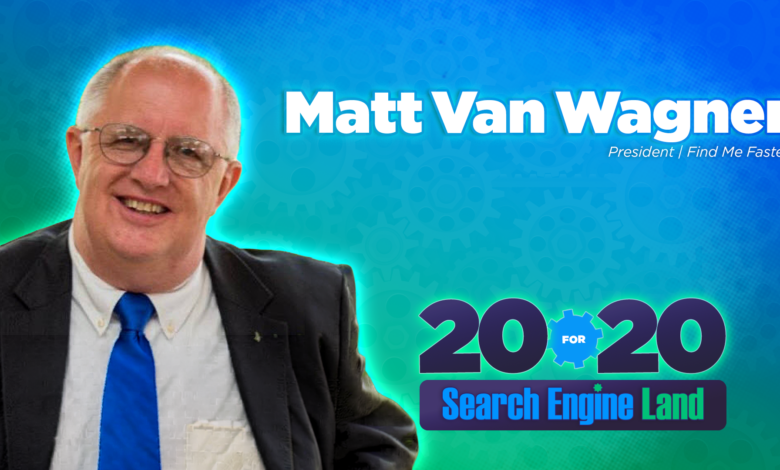
Paid search veteran Matt Van Wagner, an industry pioneer who witnessed the inception of Google Ads and the shifting dynamics of search engine optimization (SEO), recently reflected on this two-decade journey. His insights illuminate how the fundamental relationship between digital platforms and advertisers has fundamentally transformed, shedding light on the ongoing tension between platform automation and business-level profitability.
The Gold-Rush Era and the Birth of Paid Search
Van Wagner’s entry into the search marketing sphere occurred in the early 2000s, a period when traditional B2B marketing channels—such as print trade publications, physical conferences, and direct mail campaigns—were suffering from diminishing returns. Seeking a more measurable and direct way to connect businesses with consumers, Van Wagner attended one of the industry’s earliest search marketing conferences.
The environment stood in stark contrast to traditional corporate marketing. It was charged with entrepreneurial energy, populated by early adopters who recognized that search engines were rewriting the rules of consumer acquisition. Convinced by the potential of this emerging medium, Van Wagner left his career in technology sales and marketing to establish an independent search advertising agency. During this era, the concept of a dedicated search advertising agency was foreign to most corporate boardrooms.
Despite this initial unfamiliarity, selling the value of Google Ads during its nascent phase required minimal persuasion once business owners understood its utility. Demand vastly outpaced supply, and the early community of practitioners operated in a largely collaborative spirit. Because the overall digital marketplace was expanding at an exponential rate, agencies shared insights freely rather than treating competitors as existential threats. According to Van Wagner, the most common strategic misstep among early agencies was not market competition, but rather a failure to charge adequate fees for the immense commercial value they were delivering.
The Maturation of Industry Education and Search Engine Land
As the search landscape matured, early industry conferences began to suffer from stagnant programming, frequently recycling the same foundational speakers and repetitive presentations. The launch of outlets like Search Engine Land and the Search Marketing Expo (SMX) conference series marked a crucial turning point for professional development in the sector.
SMX Advanced revolutionized the conference circuit by bypassing basic introductory concepts and immediately addressing intermediate to advanced strategies. This structural pivot attracted sophisticated practitioners, fostering an environment where informal discussions in hallways, over coffee, and during evening networking events matched the educational value of the formal keynote sessions.
Furthermore, as the conference circuit grew, organizers faced the challenge of preventing insularity. When Van Wagner participated in speaker selection for SMX Advanced, he implemented blind-evaluation processes. By stripping away identifying details—such as names, genders, and company affiliations—from initial abstract submissions, the selection committee prioritized the objective merit of an idea over the personal brand or corporate clout of the speaker. This democratization of the podium helped fresh voices break into a rapidly institutionalizing industry.
Technological Shifts: From Granular PPC to Algorithmic Automation
The tactical execution of paid search has undergone a radical simplification over the past twenty years. Practices once viewed as the pinnacle of sophistication now appear overly complex and administratively burdensome. In the early days of PPC, marketers relied heavily on hyper-granular account architectures, including single-keyword ad groups (SKAGs), duplicated match types, and elaborate negative-keyword matrices designed to precisely isolate and direct traffic.
The advent of machine learning and automated bidding models rendered these intricate manual structures largely obsolete. Today, algorithms process vast numbers of behavioral signals in real-time, adjusting bids and matching queries dynamically.
However, this technological shift has generated friction regarding control and data ownership. Van Wagner points to persistent issues like Google’s default use of broad match settings. Inexperienced advertisers frequently expend financial resources teaching automated systems lessons that historical data suggests the algorithms should already comprehend. The underlying concern among veteran practitioners is that automated platforms increasingly require businesses to fund the education of AI systems using proprietary capital.
While automation is an irreversible trend, Van Wagner argues that algorithms should be designed to integrate existing advertiser knowledge seamlessly. For instance, if an enterprise already possesses definitive data proving that specific search queries are irrelevant, forcing an automated system to rediscover that inefficiency through wasted ad spend represents a suboptimal use of capital.
The Evolving Relationship Between Google and Advertisers
A central theme of Van Wagner’s retrospective is the changing accessibility of major search engines. In the early years, the ecosystem felt collaborative because Google itself was actively charting the parameters of search. Events such as the "Google Dance" provided marketers with direct access to the engineers building the search index. Figures like Matt Cutts acted as crucial communication bridges between Google and the SEO community.
Over time, as search monetization scaled into a multi-billion-dollar enterprise, that direct accessibility receded. Nevertheless, industry relations have seen constructive developments through corporate liaison roles. Van Wagner highlights Google Ads Liaison Ginny Marvin as a positive influence on the dialogue between the platform and the advertising community. Having transitioned from the advertiser side to Google, Marvin possesses firsthand familiarity with the operational frustrations of marketers, enabling her to advocate effectively for the user base while representing corporate interests.
Despite these communication channels, Van Wagner cautions advertisers against conflating Google’s corporate objectives with their own business metrics. Advertisers measure success through profitable sales, return on ad spend (ROAS), and measurable customer acquisition costs. Google, as a publicly traded commercial entity, maintains a primary incentive to maximize advertising expenditure.
When evaluating automated campaign recommendations, default settings, and sweeping product updates, marketers must maintain a healthy skepticism. Van Wagner stresses that advertisers should never assume automated recommendations automatically align with their best financial interests. Independent evaluation remains a critical safeguard for enterprise marketing budgets.
Historical Turning Points: The Florida Update and the Rise of Paid Search
The vulnerability of digital visibility was exposed definitively by Google’s "Florida update" in the early 2000s. Released just ahead of the critical year-end holiday shopping season, the algorithm update abruptly obliterated the organic search rankings of numerous businesses and agencies that relied heavily on prevailing SEO methodologies.
While some of those tactics bordered on aggressive optimization, the event served as a stark industry-wide lesson: search engine algorithms can alter the operational landscape overnight, taking corporate revenue streams down with them. This systemic volatility cemented paid search as an indispensable insurance policy for digital commerce. If organic visibility vanished due to an algorithm shift, PPC campaigns provided a reliable, immediate mechanism to stabilize traffic and sustain revenue generation.
Concurrently, the competitive landscape between search engines featured high-stakes product marketing. Van Wagner recalls authoring commentary on the launch of Google Instant, a feature that predicted and displayed search results dynamically as users typed. The product generated massive mainstream media attention and public relations value, effectively neutralizing the heavy conventional advertising expenditures deployed by Microsoft to promote Bing.
Faced with entrenched user habits—where consumers rarely questioned their default search engine choice—Microsoft ultimately adopted a strategic pivot. Rather than attempting to force marketers to learn an entirely distinct proprietary interface, Microsoft designed its advertising platform to mirror the structure of Google Ads. This interoperability reduced friction for agencies managing multi-channel campaigns, even if it complicated efforts at platform differentiation.
The Enduring Value of Independent Search Journalism
Reflecting on the infrastructure of the search marketing industry, Van Wagner emphasizes the irreplaceable role of independent trade journalism. Publications like Search Engine Land have served as critical historical archives and real-time analytical filters for practitioners navigating two decades of continuous platform disruption.
Without independent editorial voices scrutinizing platform updates, regulatory changes, and algorithmic shifts, marketers would be left entirely dependent on platform-generated messaging. True editorial independence provides the necessary skepticism to question corporate narratives and evaluate the practical implications of new advertising technologies.
Conclusion: Accountability and Adaptation in Modern PPC
As the digital marketing industry looks toward a future dominated by generative AI and closed ecosystems, the core principles articulated by veteran practitioners remain remarkably consistent. Mistakes will inevitably occur—such as accidental broad-match negative configurations that burn through thousands of dollars in hours—and professional accountability requires acknowledging those errors rather than shifting blame to algorithms or platform quirks.
Ultimately, the transformation of search marketing from an entrepreneurial gold rush into an automated enterprise underscores a timeless maxim: while the tools, match types, and bidding algorithms will continue to evolve, the responsibility for financial stewardship rests entirely with the advertiser. Questioning platform defaults, protecting proprietary data, and maintaining a relentless focus on business-level profitability are more critical today than at any point in the history of digital advertising.