The artificial intelligence sector is currently fixated on a frontier that promises to bridge the gap between digital processing and physical reality: world models. Long heralded by computing pioneers as the missing link for artificial general intelligence (AGI), these systems aim to imbue machines with a fundamental, intuitive understanding of physics, space, and causality. Yet, despite commanding billions of dollars in venture capital and generating immense academic buzz, the commercial reality of world models remains obscured by a pervasive shroud of corporate secrecy.
This tension took center stage at the recent All In conference, where industry leaders, researchers, and suppliers gathered to dissect the trajectory of spatial intelligence. Moderating a panel on world models provided a rare vantage point into one of the most enigmatic corners of modern technology. The landscape is currently dominated by two heavily funded heavyweights: Yann LeCun’s AMI Labs and Fei-Fei Li’s World Labs. Both organizations enjoy astronomical valuations and substantial backing, yet they occupy a remarkably low position on the traditional commercialization scale. Rather than rushing to monetize products or capture consumer market share, these labs are operating in a protracted foundational phase, leaving observers, partners, and competitors guessing about their ultimate intentions.
The Anatomy and Promise of World Models
To understand the intense secrecy surrounding world models, one must first examine the technology itself. At their core, world models are designed to automate spatial intelligence. While current generative AI models excel at processing text, code, and two-dimensional imagery, world models attempt to construct a dynamic, predictive internal simulation of the physical environment.
This capability transcends simple data processing. A mature world model can predict how objects move, interact, and respond to physical forces over time. The potential applications span a vast commercial spectrum. In autonomous driving, world models serve as the foundational architecture allowing self-driving vehicles to anticipate unpredictable pedestrian movements and complex traffic dynamics. In robotics, they provide humanoid machines with the dexterity and environmental awareness required to navigate unstructured spaces, manipulate objects, and perform manual labor. Beyond physical hardware, world models hold immense promise for interactive media, enabling real-time generation of explorable 3D environments for video games, visual effects, and cinematic production.
Furthermore, early explorations into advanced spatial intelligence suggest potential use cases in biomedicine, manufacturing, and clinical software. For instance, AMI Labs has already dipped its toes into cross-disciplinary partnerships, such as its collaboration with Nabia to develop specialized AI software for medical professionals. With such an expansive universe of potential applications, the technology represents a blank canvas of immense economic value.
The Cone of Silence: Inside AMI Labs and World Labs
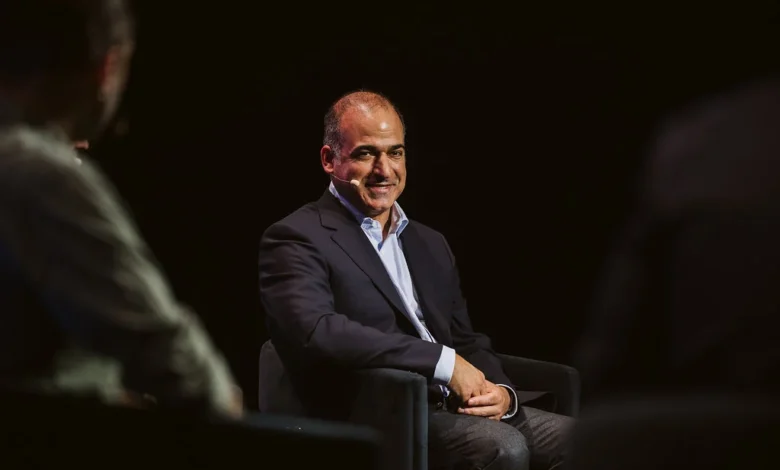
Despite these glittering horizons, pinning down concrete commercialization timelines from the leading players proves remarkably difficult. Michael Rabbat, co-founder of AMI Labs and vice president of World Models, addressed these questions during the conference panel with characteristic reticence. When pressed on the specifics of the company’s internal product development, Rabbat offered a measured defense of the lab’s posture.
"We’ll talk about it when we’re ready to talk about it," Rabbat stated during the panel discussion. In subsequent electronic correspondence, he clarified the company’s current operational stance: "We’re still in a research and building phase, so we’re not talking publicly about any product plans or timeline."
Given that AMI Labs is less than a year old, a posture of strict confidentiality is standard operating procedure for deep-tech research organizations. However, this caginess is not an isolated phenomenon; it characterizes the entire world-modeling ecosystem. World Labs, founded by computer science luminary Fei-Fei Li, has brought its Marble platform closer to public view, featuring demonstrations that range from straightforward media creation to building explorable environments for gaming and CGI. Yet, even these advanced demos function primarily as capability showcases rather than finished commercial products ready for enterprise deployment.
The Information Vacuum Down the Supply Chain
This pervasive secrecy does not merely affect conference moderators and journalists; it trickles down to impact the foundational suppliers building the infrastructure for these labs. On the sidelines of the All In conference, Alex de Vigan, CEO of Physicl—a specialized data supplier feeding the burgeoning world model economy—expressed frustration with the absolute information vacuum maintained by his primary clients.
De Vigan acknowledged that Physicl’s proprietary datasets have proven instrumental in training advanced spatial intelligence systems, yet he remains entirely in the dark regarding the specific architectures those datasets are optimizing. "I wish they would tell us more," de Vigan noted. "We could build more useful data if we knew what they were working on."
This dynamic highlights a unique friction point in the contemporary AI economy. Data suppliers are expected to fuel multi-billion-dollar research engines without knowing whether their inputs are training a robotic navigation system, a cinematic rendering engine, or an automated medical diagnostic tool. The resulting disconnect demonstrates how absolute operational secrecy can inadvertently stifle the efficiency of the supply chain itself.
The Strategic Logic of the Dark Forest
The deliberate ambiguity maintained by world model startups is not accidental; it is a calculated survival strategy rooted in the unique economics of the current AI boom. Because world models are inherently versatile, a single foundational architecture can theoretically pivot into dozens of distinct, highly lucrative verticals.
However, no single research lab possesses the resources to simultaneously dominate robotics, Hollywood visual effects, autonomous driving, and medical software. Companies like AMI Labs and World Labs are currently keeping their options open while they evaluate which vertical offers the most viable, high-margin path to commercialization.
Prematurely revealing a specific product roadmap carries profound strategic risks. If AMI Labs were to announce tomorrow that it had finalized a next-generation cinematic rendering system or a breakthrough framework for humanoid robotics, it would instantly signal its hand to the broader market. Such transparency would trigger immediate defensive maneuvers from rival world model startups, well-funded neolabs, and tech giants like OpenAI and Anthropic.
In essence, the very abundance of venture capital that enables these labs to build quietly under the radar also arms their eventual competitors. Because capital is readily available across the sector, any revealed roadmap invites immediate, well-financed imitation. By maintaining strict operational silence, labs can delay the onset of intense market competition, buying critical months or years to solidify their technological moats.
For followers of contemporary science fiction, this tactical maneuver bears a striking resemblance to the "dark forest" hypothesis popularized by author Cixin Liu in his acclaimed Three-Body Problem trilogy. In a cosmic environment where hostile civilizations lurk unseen, the safest strategy for any individual actor is absolute radio silence: if you do not know who else is hunting in the woods, the wisest course of action is never to attract attention.
Broader Implications and Future Outlook
As the artificial intelligence industry moves deeper into 2026, the tension between open scientific progress and proprietary corporate survival will only intensify. The current phase of quiet incubation cannot last indefinitely. Venture capital investors, eventually demanding returns on massive capital outlays, will force these labs out of the laboratory and into the harsh light of commercial competition.
When that transition occurs, the landscape of physical AI will transform dramatically. The unveiling of true commercial world models will likely trigger a wave of consolidation, strategic acquisitions, and fierce market rivalries across robotics, automotive manufacturing, and digital media. Until then, the world’s most advanced spatial intelligence labs will continue operating in the shadows, mapping the physics of reality while keeping their ultimate destinations strictly to themselves.