Apple Watch Series 12 Initial Review: Step Counting Arrives as Heart Rate Accuracy Claims Face Early Scrutiny

The technology sector and fitness enthusiast community have turned their attention to the latest iteration of Apple’s wearable ecosystem following the hands-on evaluation of the Apple Watch Series 12 over its initial 24 hours of release. Early analysis of the device reveals a mixed reception, highlighted by the long-awaited introduction of native, easily accessible step counting and newly integrated metrics such as "recovery HRV." However, these advancements are tempered by preliminary findings questioning whether the newly redesigned sensor array truly delivers on Apple’s ambitious marketing claims regarding industry-leading heart rate accuracy during rigorous physical exertion.
Background Context and Technological Evolution
For years, the absence of a straightforward, prominent step-counting metric on the default watch face or primary smart stack remained a persistent point of critique among consumers accustomed to competing fitness trackers from brands like Garmin, Fitbit, and Oura. While previous generations of the Apple Watch relied heavily on the proprietary "Activity Rings" model—which measures movement, exercise, and standing time through a closed-circle visual system—consumers frequently voiced a preference for raw, numerical step data without needing to open third-party applications.

The Apple Watch Series 12 addresses this demand directly through a dedicated pedometer model built squarely into its newly engineered system processor. According to Apple’s hardware specifications, this dedicated processor component allows for continuous, highly localized motion calculations. Consequently, however, this architectural requirement has also led to a significant hardware divide: older models, including the immediate predecessor Apple Watch Series 11, lack the necessary integrated processor architecture to run the upgraded pedometer calculations natively, leaving owners of previous-generation devices without the feature.
Chronology of Testing and Early Findings
Initial stress-testing of the device began immediately following unboxing, focusing primarily on step-counting validation, heart rate monitoring fidelity during indoor and outdoor running protocols, and initial sensor behavior.
In casual trials spanning short distances, such as navigating from a desk to an office entrance, the step counter registered exact increments instantaneously, aligning with manual verification. This high responsiveness suggests that the hardware-level pedometer is functioning smoothly under low-intensity conditions.

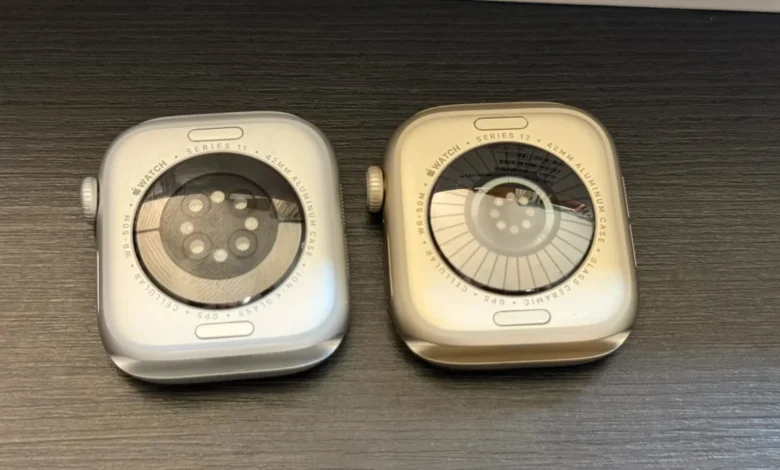
Conversely, heart rate monitoring evaluations over the first 24 hours produced more nuanced results. Testing methodologies utilized simultaneous data collection across three distinct monitoring tools: the Apple Watch Series 12, a legacy Apple Watch Series 11 for baseline comparison, and a specialized chest strap monitor widely considered the gold standard for continuous cardiovascular tracking. Additionally, comparative data from other leading market alternatives, such as the Garmin Forerunner series, were factored into the multi-device evaluation.
Supporting Data and Comparative Sensor Performance
During indoor running evaluations, the Apple Watch Series 11 and the new Series 12 demonstrated largely similar visual tracking curves when mapped against the baseline chest strap. Despite Apple’s promotional positioning of the Series 12 as housing the most accurate optical heart rate sensor ever incorporated into a mainstream consumer wearable, the visual data traces indicated that performance margins between the Series 11 and Series 12 were narrow.
A primary technical limitation identified during these trials involves data sampling frequency. During active workout modes, the Apple Watch Series 12 continues to sample heart rate data at five-second intervals, equating to 12 data points per minute. In contrast, dedicated chest strap monitors and high-end athletic watches record cardiovascular metrics on a one-second interval, capturing 60 data points per minute. During outdoor running tests involving sudden elevation shifts and short bursts of acceleration, this five-second sampling gap occasionally resulted in missed peaks during brief physiological spikes, though competing devices also exhibited minor tracking variances under identical environmental conditions.

Beyond raw cardiovascular tracking, the introduction of "recovery HRV" (Heart Rate Variability) represents a structural shift from the cardiac-health-focused HRV metrics historically prioritized by Apple. Rather than measuring intermittent diagnostic fluctuations, the new recovery metric is tied directly to overnight physiological baseline calculations and sleep staging data. Early cross-device comparisons between the Apple Watch Series 12 and established ring-form wearables showed minor numerical offsets—such as an overnight reading of 45 milliseconds on the Apple device compared to 50 milliseconds on an alternative platform—highlighting the necessity of evaluating long-term personal trends rather than isolated daily figures.
Upcoming Features and Software Integration
Several heavily publicized software capabilities associated with the broader watchOS ecosystem remain inaccessible during initial evaluations due to rollout timelines and hardware prerequisites. Advanced artificial intelligence and audio processing capabilities, including Live Rewind—designed to generate text transcriptions of ambient audio from the preceding 15 seconds—and automated meeting summarization tools, are slated for deployment via subsequent software updates later in the year.
Similarly, comprehensive sleep readiness scoring models require a minimum baseline window of approximately seven consecutive days of overnight data logging to establish personalized fatigue and recovery indexes. As a result, comprehensive evaluations regarding holistic training readiness must wait until the device has completed a full weekly data accumulation cycle.

Broader Implications for the Wearable Market
The launch of the Apple Watch Series 12 underscores an ongoing industry arms race centered on biometric precision, hardware integration, and user-centric data visibility. By finally incorporating direct step counting and granular recovery metrics, Apple is addressing longstanding consumer requests that previously drove users toward dedicated sports watch ecosystems.
However, the decision to restrict foundational metrics like the new pedometer model exclusively to the Series 12 processor architecture highlights a continuous hardware segmentation strategy that may draw scrutiny from consumers invested in recent legacy hardware. As long-term testing continues across a wider array of high-intensity athletic disciplines, environmental extremes, and longitudinal sleep tracking studies, the true performance advantages of the redesigned sensor array will become clearer, determining whether the Series 12 can substantiate its bold claims of market leadership in wearable sensor technology.