The Rise of Permissionless Pilots: How Startups Are Inverting the Enterprise Sales Cycle

The modern B2B enterprise software sales cycle has long been characterized by a grueling, friction-heavy gauntlet. Traditionally, closing a major corporate contract required navigating a labyrinth of introductory sales calls, lengthy security reviews, bureaucratic procurement processes, legal negotiations, and complex technical integrations. Only after clearing these arduous hurdles would a prospective buyer finally experience the pivotal "Time to Wow!" moment—the exact juncture where the value of a software product becomes tangibly apparent in the context of the buyer’s own operations.
However, a decade after SaaS industry leaders first formalized the concept of optimizing the "Time to Wow," a disruptive new sales motion has emerged within the startup ecosystem. Coined as "permissionless pilots," this emerging strategy upends the conventional sales funnel by delivering the crucial value demonstration at the very beginning of the engagement rather than the end. By leveraging publicly available data sources and advanced automation, visionary founders are eliminating upfront friction entirely, enabling potential enterprise clients to experience immediate value before a single sales representative makes contact.

The Traditional Enterprise Sales Catch-22
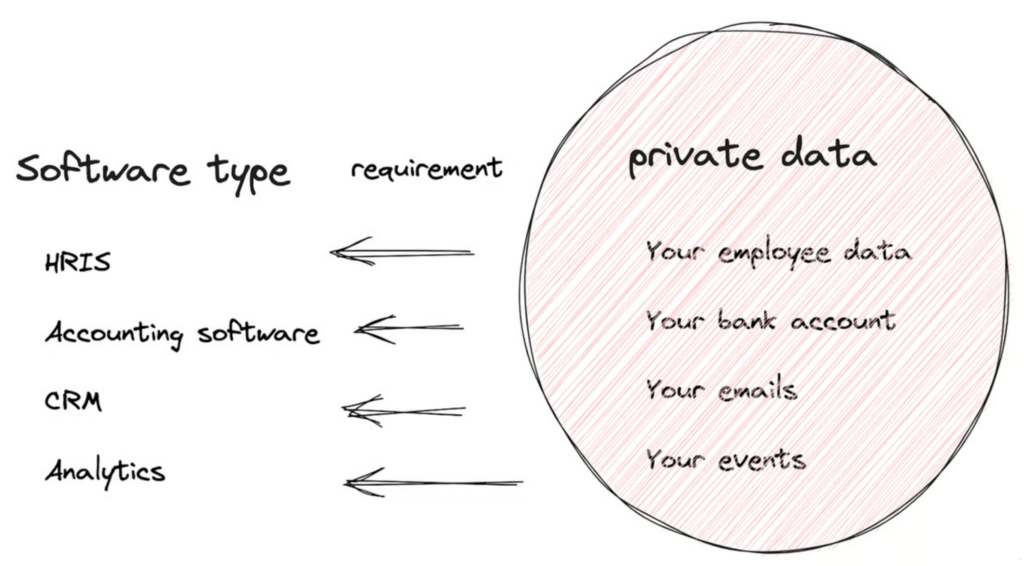
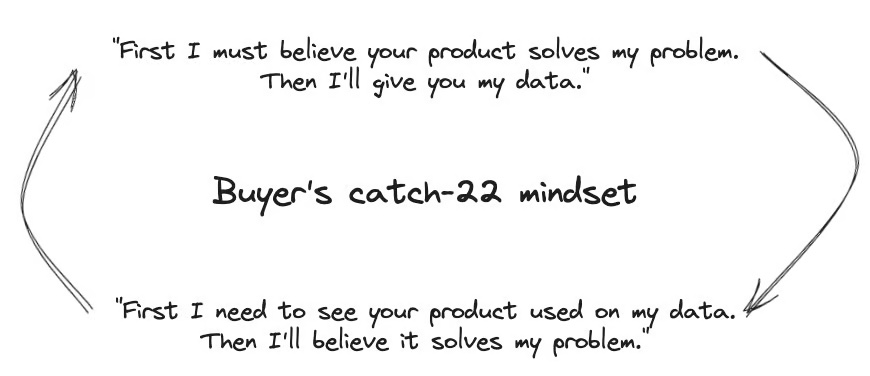
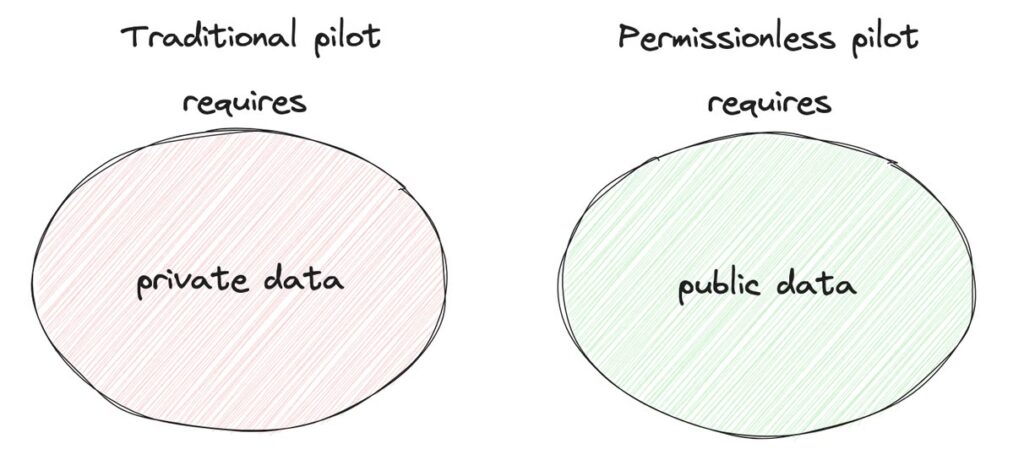
The fundamental flaw of the legacy enterprise sales model lies in a stubborn catch-22 inherent to data-driven software: enterprise products generally require a customer’s proprietary data to function effectively, yet corporate buyers are understandably hesitant to surrender sensitive internal data to an unproven third party.
Historically, software vendors attempted to resolve this dilemma through generic product demonstrations utilizing synthetic or simulated "dummy data." Much like watching a commercial or listening to a description of a vehicle rather than test-driving it, dummy data fails to inspire absolute confidence. It leaves prospective buyers wondering whether the software will perform adequately under the messy, complex conditions of their actual operating environments.
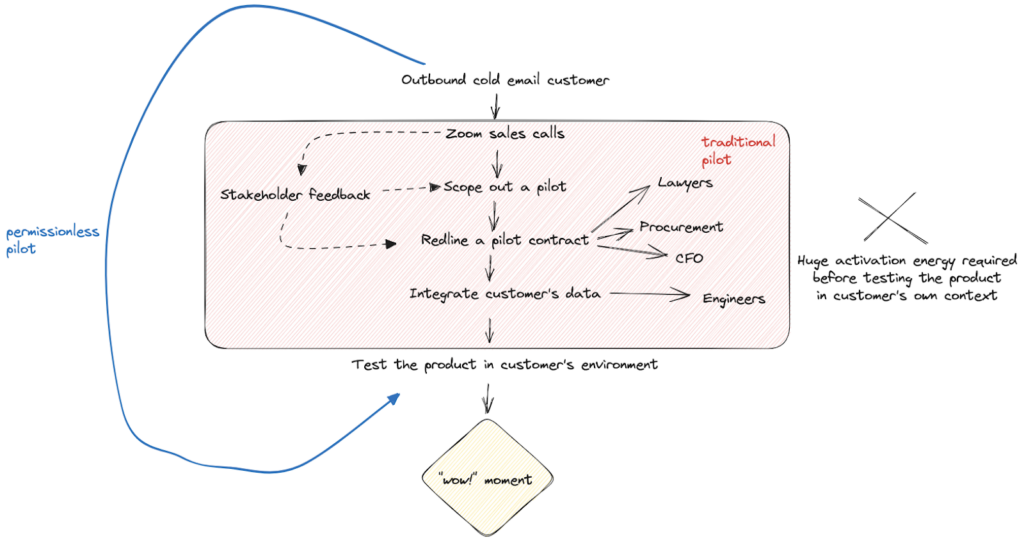
Conversely, obtaining permission to integrate a vendor’s tool with proprietary company data demands considerable internal capital from the buyer. A champion within the enterprise must spend valuable political capital to secure cross-departmental alignment, navigate IT security approvals, and undergo legal scrutiny—all before knowing with absolute certainty whether the product will deliver a return on investment. Candidly, industry analysts have frequently noted that it is a logistical marvel that any enterprise software sales close at all under such restrictive conditions.
Decoding the Permissionless Pilot
The permissionless pilot completely neutralizes this friction by setting the customer’s time-to-value metric to zero. Rather than waiting for a formal agreement, data-sharing authorization, or technical configuration, a permissionless pilot utilizes publicly accessible, customer-specific data to instantly generate a hyper-personalized product demonstration.
The strategy is termed "permissionless" because it requires no advance consent, configuration, or administrative oversight from the target enterprise. The software simply analyzes publicly available data pertinent to the target company, runs it through its proprietary algorithms, and presents the prospect with concrete, actionable insights immediately upon discovery.
This approach shifts the psychological "Wow!" moment from the culmination of a months-long sales pipeline to the initial point of contact. By demonstrating immediate, undeniable utility using a prospect’s own public footprint, startups bypass traditional gatekeepers and directly engage the end-users who stand to benefit most from the technology.
Real-World Validation: The Emerge Tools Case Study
While the concept of permissionless pilots may initially sound like theoretical venture capital rhetoric, it has been deployed with remarkable success by early-stage companies targeting massive corporate entities. A prime example of this methodology in action is Emerge Tools, a mobile application performance management (APM) and optimization startup backed by prominent venture capital firms.
Emerge specializes in helping mobile development teams reduce application binary sizes, resulting in faster download times, reduced data consumption, and improved startup performance. Despite offering a powerful value proposition, the startup faced a notoriously rigid sales cycle within enterprise mobile engineering groups, which typically required multi-stakeholder buy-in.
To circumvent this barrier, the founding team engineered a scalable system capable of automatically reverse-engineering the publicly available binary code of any native mobile application found within the iOS App Store and Google Play Store. Instead of pitching enterprise clients via traditional outbound sales calls, Emerge began running automated analyses on thousands of public apps, creating dedicated landing pages and performance reports for each.
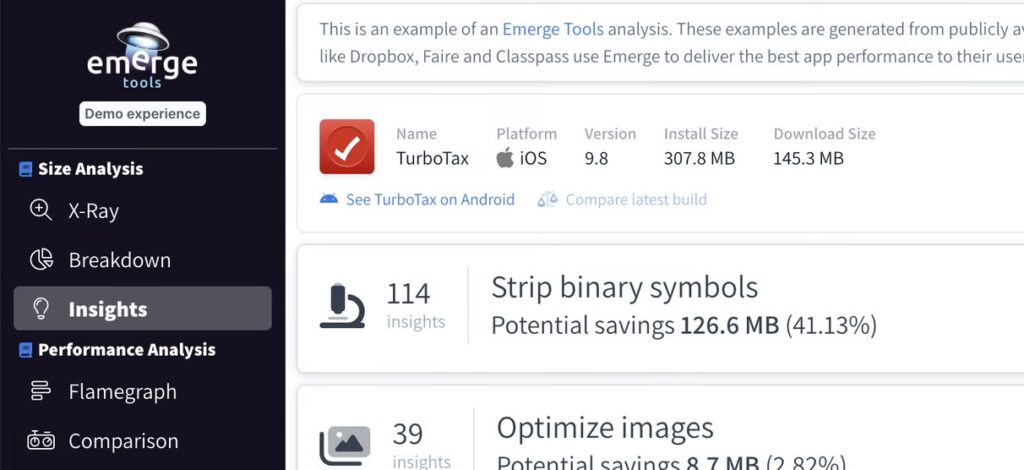
For instance, the platform generated automated optimization insights for major corporate applications, such as the TurboTax iOS app owned by financial software giant Intuit. The automated analysis immediately revealed optimization opportunities capable of reducing the application’s size by over 40 percent. Crucially, Intuit’s engineering leadership did not need to sign a nondisclosure agreement, share proprietary source code, or navigate corporate procurement channels to receive this value; the insights were generated entirely from public binaries.
Scaling Organic Growth and Inbound Demand
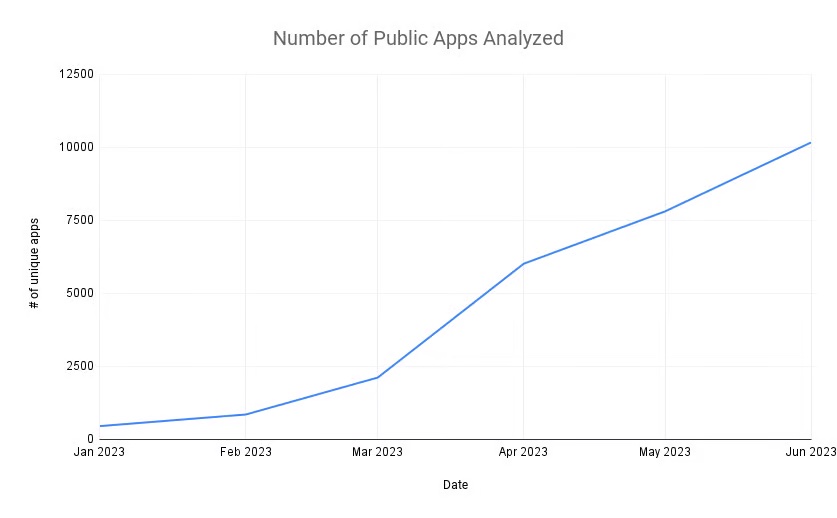
Throughout 2023, Emerge scaled its automated analysis pipeline from roughly 500 applications to tracking over 10,000 public mobile apps on a routine cadence. The resulting performance insights were systematically repurposed into technical blog posts, deep-dive case studies, and social media threads distributed across professional networks.

Because each application analysis resided on a distinct, permanent public URL, these pages functioned as viral artifacts. Mobile developers discovered the reports organically, verified the accuracy of the optimization metrics against their own software, and frequently shared the findings internally with colleagues via messaging platforms like Slack.
This product-led growth motion yielded substantial compounding benefits. Emerge reported a 400 percent increase in organic search traffic, keyword visibility, and social media engagement within a single year. More importantly, the inbound visibility translated directly into enterprise contracts with household-name technology companies—including DoorDash, Square, Airbnb, Duolingo, Dropbox, ClassPass, and Bumble—accomplishing major sales milestones with minimal traditional outbound sales headcount.
Expanding the Framework Across Industries
While mobile application development represents an ideal testing ground due to the public nature of app binaries, the permissionless pilot framework is broadly applicable across a diverse array of enterprise software sectors. The proliferation of unstructured digital data over the past decade, combined with recent breakthroughs in machine learning, computer vision, and Large Language Models (LLMs), has vastly expanded the viability of automated public-data demonstrations.
Industry analysts have identified several sectors where permissionless pilots could effectively disrupt traditional sales models:
- Search Engine Optimization (SEO): Platforms such as Conductor demonstrate product value by analyzing public search engine results and instantly providing prospective clients with technical recommendations to improve search visibility and keyword rankings.
- E-commerce Optimization: By cross-referencing millions of public retail listings, software solutions can automatically identify conversion-driving improvements in product copy, visual assets, and pricing strategies for major online merchants.
- Cybersecurity and Vulnerability Scanning: Threat intelligence firms emulate the methodologies of platforms like HackerOne by conducting high-level, non-invasive reconnaissance scans on public web applications to highlight existing security vulnerabilities to prospective clients.
- Financial Technology and Hedge Funds: Forensic intelligence tools, such as Bedrock AI, ingest publicly available SEC filings and legal documentation to automatically flag potential accounting discrepancies and earnings quality issues for institutional investors.
- Web-Based Personalization: Conversion platforms like Mutiny allow enterprise marketing prospects to visualize how software can dynamically personalize landing page content based on specific audience segments without requiring immediate account creation or code installation.
Strategic Implications and Best Practices
As enterprise software markets become increasingly crowded, traditional sales and marketing expenditures are yielding diminishing returns. Buyers are suffering from fatigue related to generic cold outreach, canned demonstrations, and protracted procurement cycles. Permissionless pilots offer a compelling alternative that aligns product-led growth principles with enterprise-grade sales motions.
However, industry experts emphasize that the execution of a permissionless pilot requires careful nuance and strategic foresight. Startups must deploy these automated demonstrations in a manner that reinforces brand credibility, protects user privacy, and adheres to ethical data collection standards. The tone of the initial outreach must be helpful rather than critical, focusing on empowering the prospective client with actionable intelligence.
By fundamentally restructuring the sales sequence to deliver the "Wow!" moment before the negotiation even begins, permissionless pilots bridge the trust gap between innovative tech startups and risk-averse enterprise buyers, signaling a profound evolution in modern B2B commerce.