AI-Powered AlphaFold Initiative Releases 3D Structures for Thousands of Viral Protein Complexes to Bolster Global Pandemic Preparedness

When the SARS-CoV-2 virus emerged and plunged the world into a public health crisis, the scientific community held one decisive advantage: decades of painstaking foundational research on coronaviruses. Because scientists already understood the fundamental architecture of coronavirus key proteins, they were able to conceptualize, design, and manufacture vaccines in record-shattering timeframes. However, epidemiologists and virologists warn that humanity may not be afforded the same luxury during the next global health emergency.
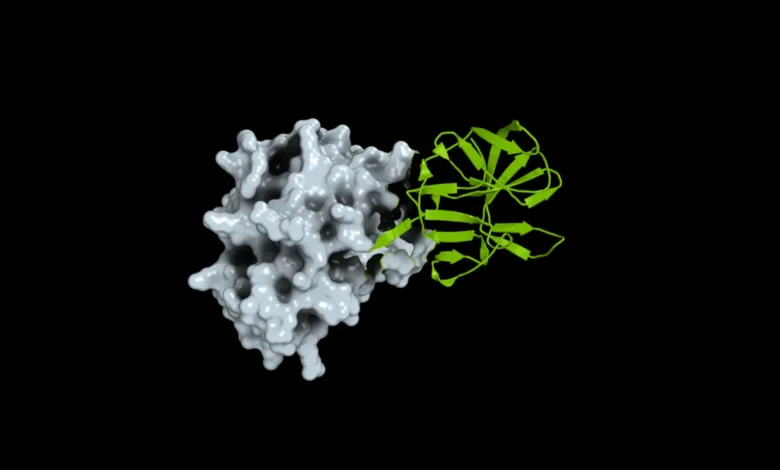
To bridge this critical vulnerability, a formidable coalition of global research institutions, technology leaders, and bioinformatics powerhouses has joined forces. Headlined by NVIDIA, Google DeepMind, and the European Molecular Biology Laboratory’s European Bioinformatics Institute (EMBL-EBI)—alongside academic and international organizations such as Seoul National University, Sungkyunkwan University, the Swiss Institute of Bioinformatics, the University of Glasgow, and the Coalition for Epidemic Preparedness Innovations (CEPI)—the consortium has officially released predicted three-dimensional structures for the protein complexes of more than 2,800 viruses.
This unprecedented dataset has been made openly available to researchers, academics, and pharmaceutical developers worldwide through the AlphaFold Database. By preemptively cataloging these intricate biological structures, the global scientific community is effectively building a digital stockpile of knowledge, striving to outpace future pathogens before they trigger catastrophic outbreaks.
The Looming Threat of Future Pandemics
The urgency driving this technological leap is underscored by sobering statistical models. According to an extensive risk analysis conducted by the Center for Global Development, there is a roughly 50 percent probability that the world will face a pandemic as severe and disruptive as COVID-19 by the year 2050. As global interconnectedness, urbanization, and climate change continually alter the ecological landscapes where animal and human populations intersect, the emergence of novel zoonotic diseases is not a question of if, but when.
“When the next pandemic happens, there may be something that comes completely out of the blue, and we’ll be lacking the baseline knowledge we had for COVID-19,” explained Joe Grove, a professor of molecular virology at the Medical Research Council-University of Glasgow Centre for Virus Research, and a key collaborator on the project. “What we’re trying to do here is stockpile some of that structural knowledge ahead of time, transforming how humanity responds to biological threats.”
Historically, identifying the 3D structure of viral proteins has been a massive bottleneck in drug and vaccine development. Traditional experimental methods—such as X-ray crystallography, nuclear magnetic resonance spectroscopy, and cryogenic electron microscopy—require growing pure protein crystals, bombarding them with radiation, and calculating molecular positions. These techniques are notoriously labor-intensive, often demanding years of meticulous laboratory work and costing thousands of dollars for a single protein structure.
For thousands of lesser-studied viruses, such experimental data simply does not exist. The new collaborative dataset decisively alters this paradigm by leveraging artificial intelligence to scale structural biology to unprecedented levels.
Technological Breakthrough: AlphaFold2 Meets NVIDIA BioNeMo
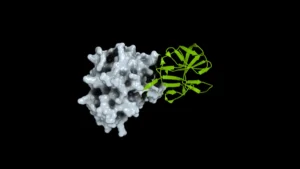
The newly released dataset was generated using AlphaFold2, Google DeepMind’s revolutionary artificial intelligence model designed to predict how protein sequences fold into complex three-dimensional shapes. While AlphaFold previously mapped the structures of individual proteins, tackling viral proteomes required solving complex protein interactions, known as complexes, where multiple protein molecules bind together to execute sophisticated biological functions.
To achieve this at scale, the computational workload was dramatically accelerated using the NVIDIA BioNeMo Inference Runtime. By optimizing AlphaFold2 to run efficiently on high-performance NVIDIA graphics processing units (GPUs), the research team was able to process thousands of viral proteomes—spanning viral families known to infect humans, ranging from common cold pathogens to dangerous emerging threats like Mpox—in a fraction of the time traditional computing methods would require.
Furthermore, NVIDIA is openly releasing the BioNeMo Structure Prediction Pipeline, the exact GPU-accelerated workflow utilized to generate the dataset. This move hands the keys of advanced computational biology directly to researchers, empowering academic laboratories and institutions to translate protein sequences into predicted 3D structures for their own specific research targets.
“Our ambition with the AlphaFold Database has always been to democratize access to foundational biology at scale,” noted Risha Patel, life sciences partnerships manager at Google DeepMind. “This collaboration to bring thousands of complex viral protein structures into the database will equip scientists around the world with the vital structural insights they need to prepare for future outbreaks.”
Uncharted Biological Territory: Discovering the Unknown
One of the most remarkable revelations of the project is the sheer novelty of the data produced. Approximately 30 percent of the protein interactions added to the database represent structures completely unprecedented in scientific literature. These interaction geometries have never before been documented in the Protein Data Bank, the premier global repository for experimentally determined biological macromolecule structures.
This influx of unexplored structural data acts as a powerful catalyst for basic science. Rather than viewing proteins in isolation, researchers can now study how viral proteins interact within complex systems, shedding light on the mechanics of cellular invasion, replication, and immune evasion.
“This database is an engine for hypothesis generation,” said Chris Dallago, applied research science team lead in digital biology at NVIDIA. “We’re enabling biologists and the AI community to investigate protein interactions, not just as single molecules, but as fully realized complexes, allowing the entire field of digital biology to advance rapidly.”
For veteran researchers, the leap from working in the dark to having immediate access to high-confidence structural predictions is revolutionary. Reflecting on his own academic training, Professor Grove noted, “When I did my Ph.D., there were no structures for any of the proteins we were investigating. It was like working in the dark—we had to guess what was going on. This dataset is a powerful tool for all the researchers doing their Ph.D.s now, giving them high-quality structural data that’s going to accelerate fundamental science.”
Global Access and Equitably Distributed Defense
The timing of the dataset’s release was strategically aligned with a high-profile United Nations General Assembly meeting, convened by the World Economic Forum in New York City, focused intensely on pandemic prevention, preparedness, and response. With this latest inclusion, the AlphaFold Database now houses predictions for more than 260 million protein and protein complex structures, cataloging virtually every known protein sequence documented by science.
Crucially, the consortium emphasized that democratizing this data is not merely an academic exercise, but a matter of global health equity. Infectious diseases frequently originate in low- and middle-income countries that may lack the specialized, capital-intensive laboratory infrastructure required to perform complex structural biology experiments.
“Making this data open is critical for understanding viral diagnostics and developing targeted treatments and vaccines,” stated Jo McEntyre, interim director of EMBL-EBI. “Importantly, the dataset also covers lesser-studied viruses and significantly lowers the barriers for scientists in low-resource settings who are confronting outbreaks firsthand on the ground.”
Every prediction within the open dataset is meticulously annotated with confidence metrics, providing researchers with clear indicators of structural reliability. This transparency ensures that scientists can immediately distinguish between high-confidence predictions ready for downstream application and complex geometries requiring further experimental validation.
Broader Implications for Healthcare and Drug Discovery
The implications of this open-access structural repository extend far beyond rapid pandemic response. By mapping the Achilles’ heels of thousands of viruses, the scientific community has laid a robust foundation for structure-based drug design. When a novel pathogen jumps from animal reservoirs to humans in the future, researchers will no longer need to start from scratch. Instead, they can query the AlphaFold Database, identify homologous structures or predicted binding pockets, and rapidly design monoclonal antibodies, small-molecule inhibitors, or mRNA vaccines tailored to disrupt the invader’s machinery.
As digital biology converges with high-performance artificial intelligence, initiatives like the NVIDIA, Google DeepMind, and EMBL-EBI partnership signal a transformative shift in medicine—moving humanity from a reactive posture of crisis management to a proactive stance of structural preparedness.