Pentagon Pushes for Polygraph Next: Inside the U.S. Military’s $30.3 Million Gamble on AI Lie Detectors

The United States Department of Defense is preparing to invest $30.3 million over the next five years to develop and deploy a modernized suite of credibility assessment tools, a controversial initiative officially designated as "Polygraph+" or "Polygraph Next." According to recently published Department of Defense budget documents for fiscal year 2027, the ambitious program will center heavily on machine learning scoring algorithms and "standoff sensing"—a non-invasive biometric methodology designed to capture physiological readings without the physical attachment of sensors or monitoring devices to a subject’s body.
First brought to light by defense trade publication Inside Defense, this capital injection aims to overhaul federal credibility assessment technologies to significantly enhance analytical accuracy and operational reliability. However, the project arrives amid intense internal scrutiny, political polarization, and deep skepticism from the scientific and legal communities. Critics argue that pouring millions of dollars into automated deception detection merely repeats decades of flawed historical attempts to quantify human psychological complexity into objective metrics. As the Pentagon faces heightened internal security pressures, the pursuit of Polygraph Next highlights an enduring reliance on disputed technologies to police internal loyalty and plug government leaks.
Background Context and the Leak Crisis at the Pentagon
The timing of the DCSA’s budget request is closely tied to an atmosphere of heightened internal tension and institutional anxiety within the upper echelons of the Department of Defense. Under the leadership of Defense Secretary Pete Hegseth, the Pentagon has leaned increasingly on polygraph examinations as an aggressive investigative mechanism to root out the sources of unauthorized disclosures to the press.
This internal security crackdown intensified dramatically following a September report by The New York Times, which revealed that approximately 50 high-ranking military officers assigned to the Joint Staff were subjected to polygraph testing. The extraordinary mass screening was initiated in direct response to sensitive news coverage detailing the rapid depletion of United States weapons stockpiles amid the ongoing military conflict involving Iran.
Rather than functioning purely as a routine administrative vetting procedure, the polygraph has transformed within the current defense apparatus into an urgent instrument of internal discipline. Observers note that the push for Polygraph+ reflects an institutional demand for advanced surveillance mechanisms capable of deterring, identifying, and prosecuting whistleblowers, leakers, and perceived internal security threats before they can compromise sensitive military operations.
The Architecture of Polygraph Next: AI and Standoff Sensing
The development and execution of the Polygraph+ program will be managed by the Defense Counterintelligence and Security Agency (DCSA), the primary federal entity responsible for conducting comprehensive background investigations, security clearance adjudications, and counterintelligence checks across the federal workforce. Per the congressional budget justification documents, the modernized technology will be integrated directly into prospective employee vetting pipelines and ongoing insider threat mitigation protocols.
Although the DCSA has declined to formally comment on specific operational details and the budget proposal awaits final congressional authorization, prior initiatives by the Pentagon offer a clear window into the likely technological framework of the program. In 2023, the Defense Innovation Unit (DIU)—the Pentagon’s dedicated organization for scouting and integrating commercial dual-use technologies—launched an open solicitation process aimed at identifying private-sector innovations capable of advancing automated deception detection.
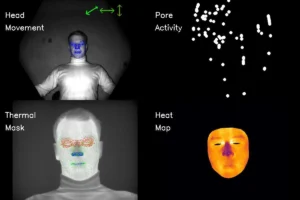
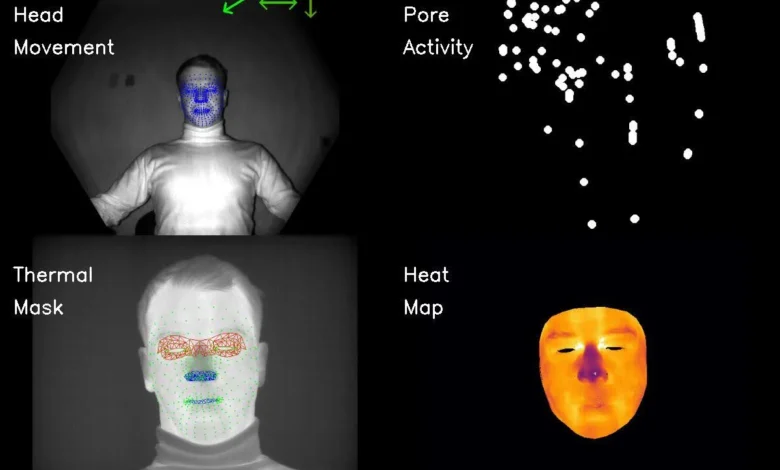
Through this competitive evaluation process, the DIU selected two distinct private contractors to develop functional prototypes: Presage Technologies and Altec Research. Presage Technologies asserted an ability to extract critical physiological indicators, including heart rate and respiration frequency, using standard, off-the-shelf optical cameras. Meanwhile, Altec Research, traditionally a medical sensor enterprise, expanded its portfolio into non-contact sensing systems. Released promotional imagery and technical documentation from the DIU revealed that Altec’s prototype technology was engineered to monitor subtle micro-movements, including involuntary head shifts, fluctuations in facial skin temperature, and localized pore activity—all without physical contact.
A Century-Old Technology Built on Shaky Foundations
To understand the radical nature of the Pentagon’s proposed pivot toward AI-driven, non-contact lie detection, industry analysts look to the foundational history of the traditional polygraph, a mechanism that has undergone virtually no fundamental scientific evolution since its invention in the 1920s.
Traditional polygraph instruments operate by simultaneously recording several physiological reactions, including blood pressure, pulse rate, respiration volume, and galvanic skin response (sweat production). During an interrogation, examiners compare physiological fluctuations generated during neutral, baseline inquiries (such as "Is the sky blue?") against targeted investigative inquiries (such as "Have you ever engaged in espionage or committed a crime?").
Despite the federal government administering tens of thousands of these examinations annually for security clearances and criminal investigations, the scientific validity of the polygraph has faced continuous, rigorous challenge for decades. Crucially, polygraph results are almost universally inadmissible as evidence in civilian and military courts of law due to their unproven reliability.
The historical skepticism of the scientific community is well-documented:
- 1983: The Office of Technology Assessment (OTA) released a landmark report for Congress concluding that there was exceedingly limited scientific evidence to support the validity of polygraph testing for employee screening.
- 2003: The U.S. National Research Council (NRC) published an exhaustive review stating that the scientific evidence supporting the efficacy of polygraph screening was "weak at best."
While the American Polygraph Association asserts that traditional polygraphs maintain an accuracy rate between 80% and 94%, the 2003 NRC report highlighted a devastating mathematical reality for large-scale operations. Given that the Department of Defense employs approximately 2.8 million military and civilian personnel, deploying a screening technology with even a modest margin of error could result in the false accusation, professional marginalization, or unjust penalization of tens of thousands of innocent employees.
Subjectivity, Countermeasures, and Vulnerabilities
Beyond baseline accuracy concerns, human-administered polygraphs suffer from severe procedural and psychological vulnerabilities. Interpretations of polygraph charts are inherently subjective. Studies have consistently demonstrated that different examiners reviewing the exact same physiological readouts frequently arrive at wildly divergent conclusions. Furthermore, demographic disparities persist, with research indicating that individuals from certain minority groups are disproportionately judged as deceptive due to baseline physiological variations.

Moreover, the human body’s stress responses can be intentionally manipulated. Interviewees equipped with specialized knowledge can easily learn and execute physical countermeasures designed to artificially spike their physiological metrics during baseline questioning. Simple techniques—such as placing a small tack or pin inside a shoe and pressing down on it during neutral questions—allow subjects to distort baseline data, rendering the subsequent comparison metrics entirely useless.
"If you know how it works, you can beat it," explains Sophie van der Zee, an associate professor specializing in deception research at Erasmus University in Rotterdam. According to van der Zee, the primary utility of the polygraph has never been its objective scientific validity, but rather its psychological impact as a deterrent. "Often, subjects confess before the test even begins," she notes. "But that only works if people genuinely believe that a polygraph works."
The Elusive Search for Pinocchio’s Nose
For nearly a century, researchers, defense agencies, and private innovators have pursued the holy grail of absolute deception detection. Over the decades, experimental technologies have spanned thermal imaging cameras, high-speed pupil trackers, voice stress analyzers, and functional magnetic resonance imaging (fMRI) brain scans. None of these modalities have achieved consistent, reliable validation outside of tightly controlled laboratory environments.
The fundamental obstacle facing all lie detection systems remains uniform: there is no single, universal physiological indicator of deception that applies universally to every individual across all contexts. "There is still no Pinocchio’s nose," van der Zee observes, summarizing the core challenge that continues to bedevil researchers.
Proponents of artificial intelligence argue that machine learning models could theoretically revolutionize polygraphy by identifying complex, multi-variable patterns in biometric data that human examiners are incapable of perceiving. AI models are particularly suited for "multi-modal" deception detection architectures, which synthesize multiple physiological streams into a unified composite deception score that is significantly more difficult for a subject to manipulate.
Van der Zee points out that human deception manifests across three core psychological dimensions: physiological stress, cognitive load, and the conscious executive effort required to suppress the truth. Traditional polygraph technology successfully targets only one of these dimensions. "The more you can have combined methods that approach it from these three different angles, the more successful you will be," she explains.
Historical Precedents and Past Failures
The integration of advanced computing into lie detection is far from a novel concept. Over the past twenty years, numerous well-funded government and academic initiatives have attempted to merge biometrics, automated data processing, and psychological profiling, only to quietly dissolve due to technological dead ends.
- Silent Talker (2000s): Developed by researchers at Manchester Metropolitan University in the United Kingdom, this system analyzed video footage of facial movements to generate an automated deception score. The technology was subsequently integrated into iBorderCtrl, an EU-funded pilot program for automated border security screening.
- AVATAR (Automated Virtual Agent for Truth Assessments in Real-Time): Deployed experimentally in the United States, this kiosk-based system combined automated eye-tracking, vocal acoustic analysis, and gross body movement detection to screen travelers at international border crossings.
Like their predecessors, these ambitious projects ultimately faded away as independent evaluations revealed that automated systems struggled to scale effectively in real-world operational environments.
Legal Scholars Warn of Technological Overreach
As the Department of Defense moves forward with its $30.3 million investment in Polygraph Next, legal scholars and privacy advocates are raising alarms about the civil liberties implications of merging artificial intelligence with scientifically contested lie detection methodologies.
Kyri Kotsoglou, a legal scholar at Northumbria University in the United Kingdom who specializes in forensic evidence and the use of polygraphs within the justice system, characterizes the Pentagon’s initiative as a fundamentally flawed endeavor. "It’s a misguided effort to reduce the complex to something that is tangible," Kotsoglou states, adding that combining AI with polygraphy represents "the worst of both worlds" by superimposing computational uncertainty over an already invalid scientific baseline.
Kotsoglou emphasizes that even the most advanced machine learning algorithms cannot reliably associate newly discovered biometric patterns with intentional deception, primarily because the foundational "ground truth" of whether a person is lying during a polygraph exam can never be definitively established by the machine itself.
"Even if you have all the records in the world from polygraph tests, you don’t know whether those polygraph tests are right or not," concurs Marion Oswald, a professor of law who has collaborated extensively with Kotsoglou on the legal ramifications of automated credibility assessment. Oswald fears that next-generation lie detection systems will ultimately serve the same administrative function as their 20th-century ancestors: acting as psychological props and intimidation tactics rather than objective diagnostic instruments.
"It seems very much a response to the concern of the current administration to leaks and perceived lack of loyalty," Oswald concludes. "[Lie detection is] being used as a threat, to intimidate and force people to confess to things, as opposed to anything that’s actually getting valid information."
Outlook and Implications for Federal Workforce Vetting
As the DCSA refines its budgetary roadmap and prepares prototypes for operational testing, the broader implications of Polygraph+ extend far beyond the immediate fallout of Pentagon intelligence leaks. If funded by Congress, the large-scale deployment of standoff sensing and AI-scored polygraphs across the federal hiring and security clearance apparatus could subject millions of current and prospective public servants to automated behavioral monitoring.
While defense officials maintain that modernization is vital to safeguarding national security secrets against sophisticated state actors and insider threats, critics warn that investing millions in unproven technologies risks institutionalizing systemic bias, false accusations, and psychological coercion under the veneer of algorithmic objectivity. Until science can definitively locate a reliable, universal physiological signature of human deceit, the Pentagon’s multi-million-dollar gamble on Polygraph Next may ultimately prove to be less a revolution in truth-seeking and more an expensive continuation of an enduring, flawed tradition.