The Essential Guide to Answer Engine Optimization and Selecting the Right AEO Checker for Your Business

The rise of generative AI has fundamentally altered the digital discovery landscape, shifting the paradigm from a link-based web to an answer-first ecosystem. As platforms like ChatGPT, Perplexity, and Google’s AI Overviews (AIO) increasingly provide direct, synthesized responses to user queries, the traditional "blue link" search strategy is no longer sufficient. This transformation has given birth to Answer Engine Optimization (AEO), a critical marketing discipline focused on ensuring brand visibility, accuracy, and citation within AI-generated outputs. For businesses, the challenge is clear: when a search engine resolves a user’s query without a click-through, the brand’s visibility can vanish entirely if it is not embedded within the AI’s response.
The Evolution of Search: From Links to Synthesis
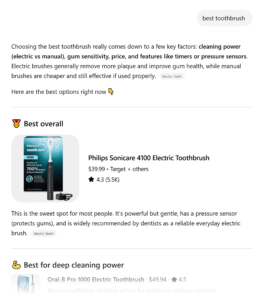
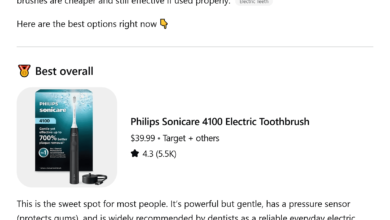
Historically, Search Engine Optimization (SEO) was defined by the quest for top-ranking positions on search engine results pages (SERPs). The goal was simple: rank high, earn a click, and capture traffic. However, the introduction of AI Overviews by Google in May 2024 marked a watershed moment. By surfacing AI-generated summaries at the top of search results, Google signaled that "zero-click" searches would become the new standard for informational queries.
![AEO checker tools that measure answer engine visibility [2026]](https://53.fs1.hubspotusercontent-na1.net/hubfs/53/aeo-checker-1-20260903-3858273.webp)
This shift is not limited to Google. Perplexity AI operates as a research-centric engine, providing comprehensive summaries with explicit inline citations. OpenAI’s ChatGPT, through its search integration, now synthesizes web data in real-time, effectively bypassing the need for users to browse individual websites. For brands, this creates an existential risk: if your content is not parsed, indexed, and cited by these engines, you effectively do not exist in the new search reality.
Defining Answer Engine Optimization
AEO is the strategic practice of optimizing digital content to be retrieved, understood, and cited by generative AI engines. While SEO remains vital for maintaining the technical authority and crawlability that these models require, AEO adds a layer of semantic precision. To succeed in AEO, brands must shift their focus from keyword stuffing to providing direct, authoritative answers to the specific questions potential customers are asking.
The core of AEO lies in the "citation." When an AI engine generates a response, it pulls from its training data and real-time search index. If a brand provides a clear, structured, and verifiable answer to a user’s query, the AI is significantly more likely to include the brand as a cited source.
![AEO checker tools that measure answer engine visibility [2026]](https://no-cache.hubspot.com/cta/default/53/9dd5e54b-fbef-4dd0-bc44-1689feb1ea18.png)
The Mechanics of an AEO Checker
As manual monitoring becomes impossible at scale, specialized software known as AEO checkers has emerged. These tools serve as the diagnostic layer for a brand’s AI presence. A robust AEO checker performs several essential functions:
- Visibility Benchmarking: Measuring how often a brand is mentioned or cited compared to competitors.
- Gap Analysis: Identifying queries where a competitor’s content is cited, but your own is not, despite having relevant subject matter expertise.
- Accuracy Monitoring: Ensuring the AI is not hallucinating or misrepresenting the brand’s products or services.
- Content Prioritization: Providing actionable recommendations on which pages to update to improve the likelihood of future citations.
By tracking these metrics, businesses can transform their content strategy from reactive to proactive, ensuring their brand voice is a consistent feature in the AI-driven information economy.
Manual Verification: A Tactical Starting Point
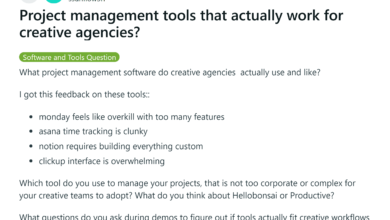
Before committing to enterprise-grade software, many marketing teams begin with manual audits. This involves executing priority queries in incognito sessions across Google, ChatGPT, and Perplexity.
![AEO checker tools that measure answer engine visibility [2026]](https://53.fs1.hubspotusercontent-na1.net/hubfs/53/aeo-checker-2-20260903-852936.webp)
To conduct a professional-grade manual check:
- Step 1: Define Your Query Set. Categorize queries into brand-specific terms, product-related questions, and broader informational topics.
- Step 2: Session Sampling. Because AI responses are dynamic and personalized, a single search is insufficient. Perform at least three to five searches for each query across different sessions to account for variability.
- Step 3: Document Findings. Record whether an AI summary was triggered, whether your brand was cited, and whether the claim made by the AI was accurate.
- Step 4: Analyze Competitive Gaps. Identify instances where your brand should have been cited but was excluded in favor of a competitor.
While this manual process offers immediate insights, it is inherently limited by sample size and time constraints. As the volume of queries grows, companies inevitably transition to automated tools to maintain a competitive edge.
Evaluating the AEO Tool Landscape
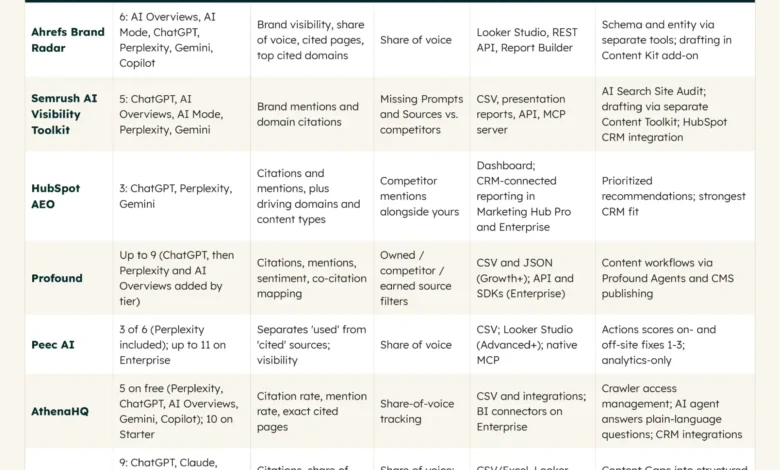
The marketplace for AEO tools is currently segmented by the specific capabilities they offer. Leading providers have differentiated themselves based on which engines they track and the depth of their analytical output.
![AEO checker tools that measure answer engine visibility [2026]](https://53.fs1.hubspotusercontent-na1.net/hubfs/53/aeo-checker-3-20260903-8904553.webp)
Tools with AI Overviews Tracking:
Ahrefs’ Brand Radar stands out for its reliance on real-world search query data, making its tracking of Google AI Overviews particularly granular. Semrush’s AI Visibility Toolkit, meanwhile, excels at integrating with existing organic research workflows, allowing teams to flag which ranking keywords are most likely to trigger AI summaries.
Tools with Citation and Mention Detection:
HubSpot’s AEO tool is increasingly prominent for its dual focus on citations (linked sources) and mentions (brand name inclusion). This distinction is vital, as mentions provide brand awareness even without a direct referral click. Profound is another key player, offering advanced sentiment scoring and an analysis of citation sources (owned vs. earned), which helps marketers understand the qualitative nature of their visibility.
Tools for Perplexity and Specialized Monitoring:
Peec AI has carved a niche as a pure-play analytics tool, providing clean and consistent data specifically for Perplexity’s unique citation structure. AthenaHQ offers a lower barrier to entry with its free-tier monitoring, making it an accessible option for smaller teams to begin tracking their presence on modern engines.
![AEO checker tools that measure answer engine visibility [2026]](https://53.fs1.hubspotusercontent-na1.net/hubfs/53/aeo-checker-4-20260903-6212698.webp)
Technical Readiness:
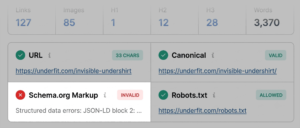
Finally, tools like Scrunch AI and Conductor focus on the "back-end" of AEO—ensuring that a brand’s technical infrastructure (schema markup, page speed, and entity data) is optimized for AI crawlers to render and interpret information correctly.
The Broader Implications of the AI Shift
The transition toward AI-generated search results represents one of the most significant shifts in internet history. For the past two decades, the internet economy was predicated on a model where visibility led to traffic, and traffic led to revenue. The "Answer Engine" era threatens to decouple visibility from traffic, as users are increasingly satisfied with the information provided on the search result page itself.
This creates a new challenge for performance marketers: how do you measure the ROI of a "zero-click" citation? The consensus among digital analysts is that brands must now treat AEO as a top-of-funnel brand-building activity. While a citation might not result in an immediate session on a website, it establishes the brand as an authoritative expert in the AI’s logic. Over time, this builds a "mental availability" that influences future purchasing decisions.
![AEO checker tools that measure answer engine visibility [2026]](https://53.fs1.hubspotusercontent-na1.net/hubfs/53/aeo-checker-5-20260903-8938354.webp)
Furthermore, the risk of misinformation remains a point of contention for both users and brands. If an AI engine misrepresents a brand’s product, the brand has limited recourse to "edit" the response. This underscores the importance of clear, structured data on official websites. When a brand uses schema markup and definitive, accurate information, they provide the AI with the foundational "truth" it needs to synthesize an accurate answer.
Strategic Recommendations
For organizations looking to adapt to this new era, the path forward is clear:
- Invest in Authority: Focus on producing high-quality, primary research and original data. AI engines prioritize content that is unique and verifiable.
- Prioritize Structured Data: Ensure your website is technically optimized for machine readability. Use schema markup to define your brand, products, and services clearly.
- Adopt Continuous Monitoring: Move away from static SEO reporting. Implement an AEO checker that provides weekly or daily visibility scores across multiple engines.
- Integrate CRM and Analytics: The most effective AEO programs connect visibility data to real-world outcomes. By tracking which queries drive both AI citations and eventual conversions in your CRM, you can justify the investment in AEO-focused content creation.
The era of the "answer" is here. While the mechanics of search will continue to evolve, the underlying requirement for brands remains unchanged: to be successful, you must be the most helpful, accurate, and authoritative source of information for the people you serve. In the world of AI, your ability to provide that value is the only metric that truly counts.