The Strategic Shift to Share of Voice: Navigating Brand Visibility in the Age of AI and Organic Search


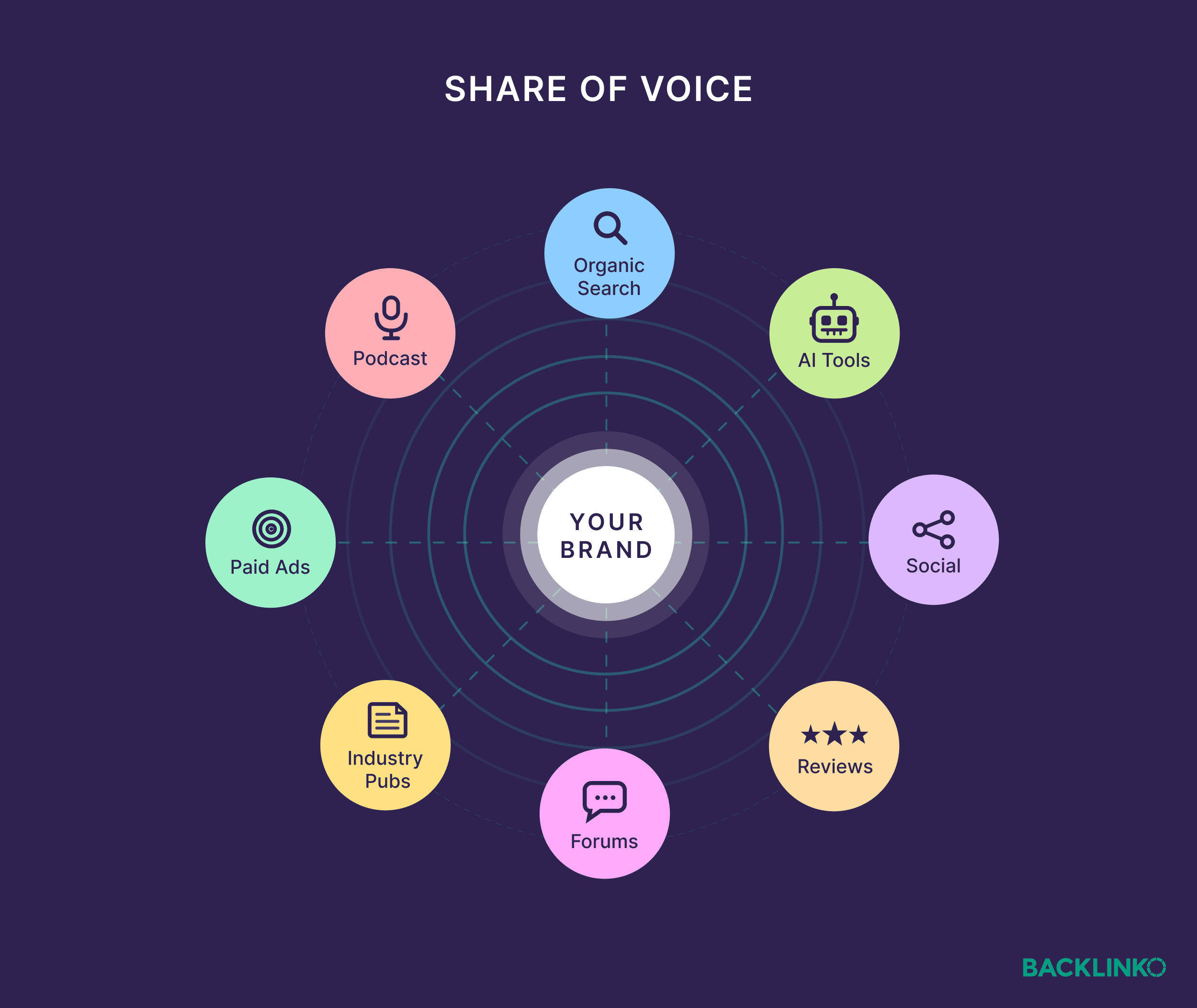
Digital marketing analytics have reached a critical inflection point where traditional metrics, once considered the gold standard of performance, are increasingly failing to capture the full scope of consumer behavior. As buyers migrate toward AI-driven search engines, community-driven platforms like Reddit, and zero-click search results, the reliance on click-through rates and session data has created a significant "visibility gap." To address this, market analysts and SEO experts are advocating for a return to Share of Voice (SoV) as the primary North Star metric for the modern enterprise. While traditionally used to measure a brand’s portion of total advertising spend within a market, the modern iteration of SoV has evolved into a comprehensive measure of brand authority across every touchpoint where a buyer researches and makes decisions.
The Historical Evolution of Share of Voice
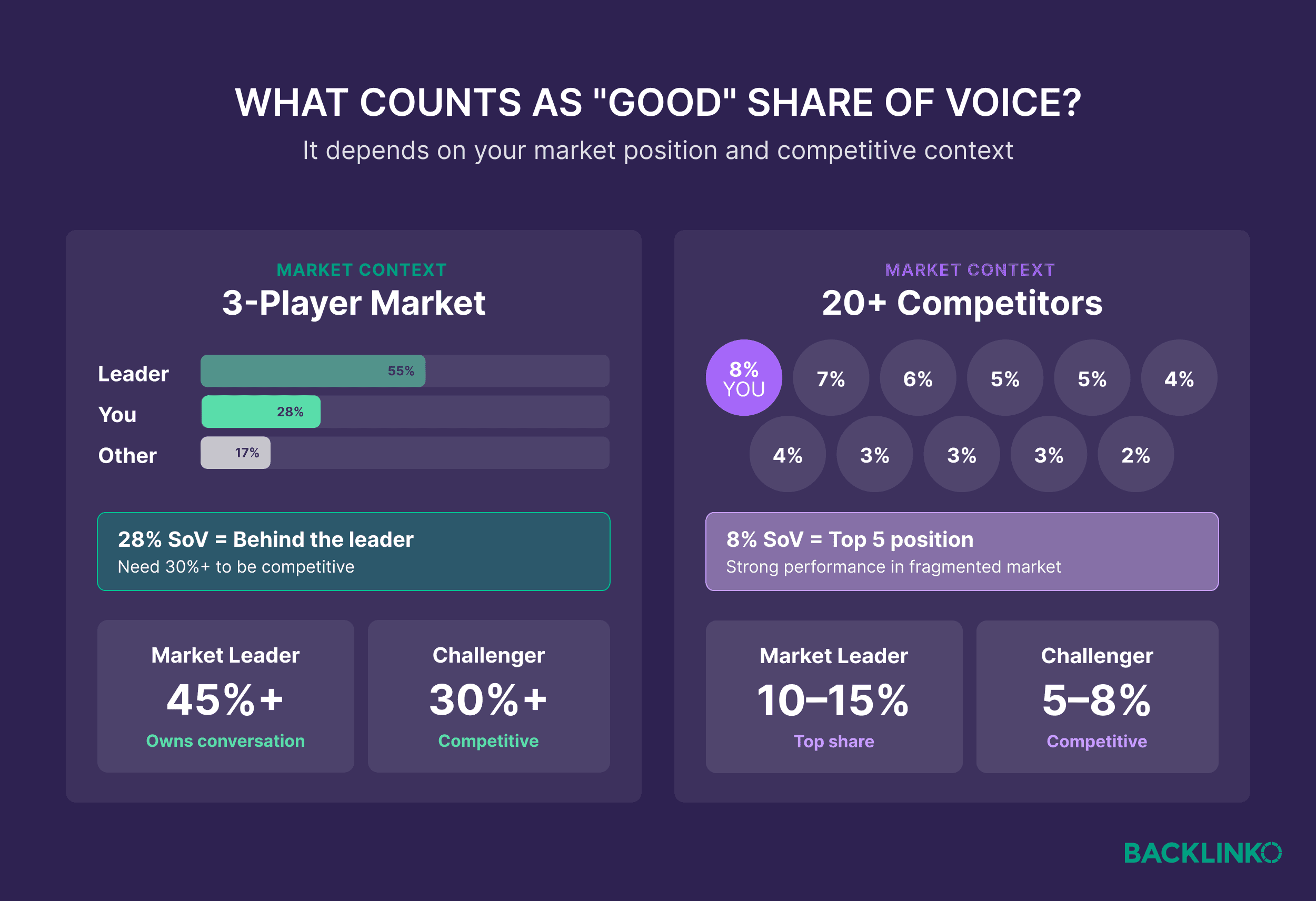
The concept of Share of Voice originated in the mid-20th century, primarily within the realms of print, radio, and television advertising. In that era, a brand’s dominance was directly proportional to its budget; if a company owned 40% of the total ad spend in the automotive category, its SoV was 40%. With the advent of the internet and the rise of search engine optimization (SEO) in the early 2000s, the metric shifted toward "organic share of voice," which calculated how often a brand appeared in the top positions of search engine results pages (SERPs) for specific keywords.
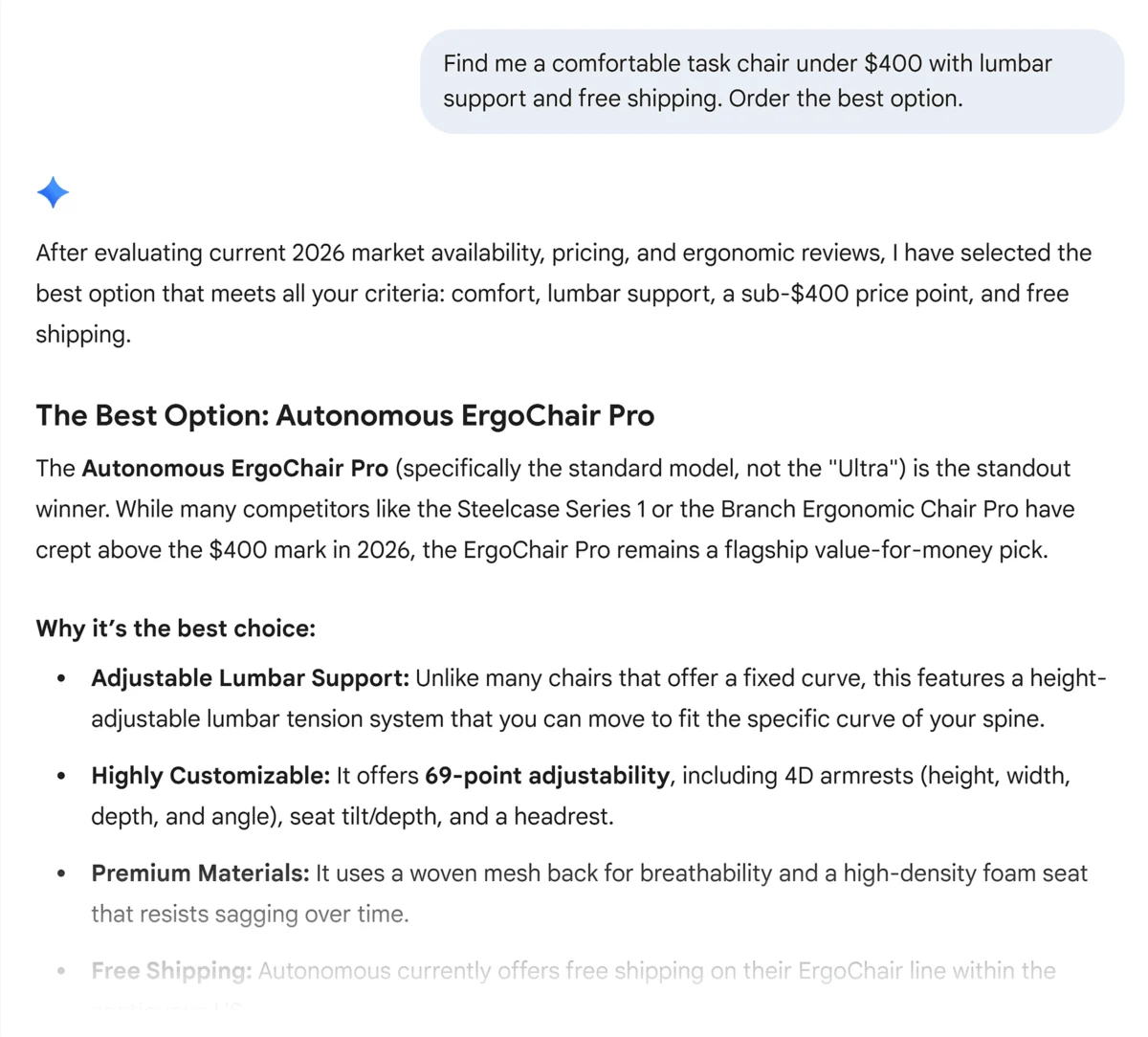
Today, the landscape is undergoing its most radical transformation yet. The rise of Large Language Models (LLMs) such as OpenAI’s ChatGPT, Google’s Gemini, and Perplexity AI has introduced a "conversational" layer to discovery. In this new environment, a brand may not receive a click, but it may be cited as the primary recommendation in an AI-generated response. Furthermore, the prevalence of "zero-click searches"—where Google provides the answer directly in a featured snippet or AI Overview—means that a brand can influence a buyer’s decision without that interaction ever appearing in traditional traffic analytics.
The Visibility Iceberg: Why Clicks No Longer Suffice
Industry data suggests that the "visibility iceberg" is becoming more pronounced. Traditional analytics dashboards, such as Google Analytics, only track the "tip" of the iceberg: the users who actually click a link and land on a website. Beneath the surface lies a massive volume of brand impressions that occur in AI answers, social media scrolls, and community discussions.
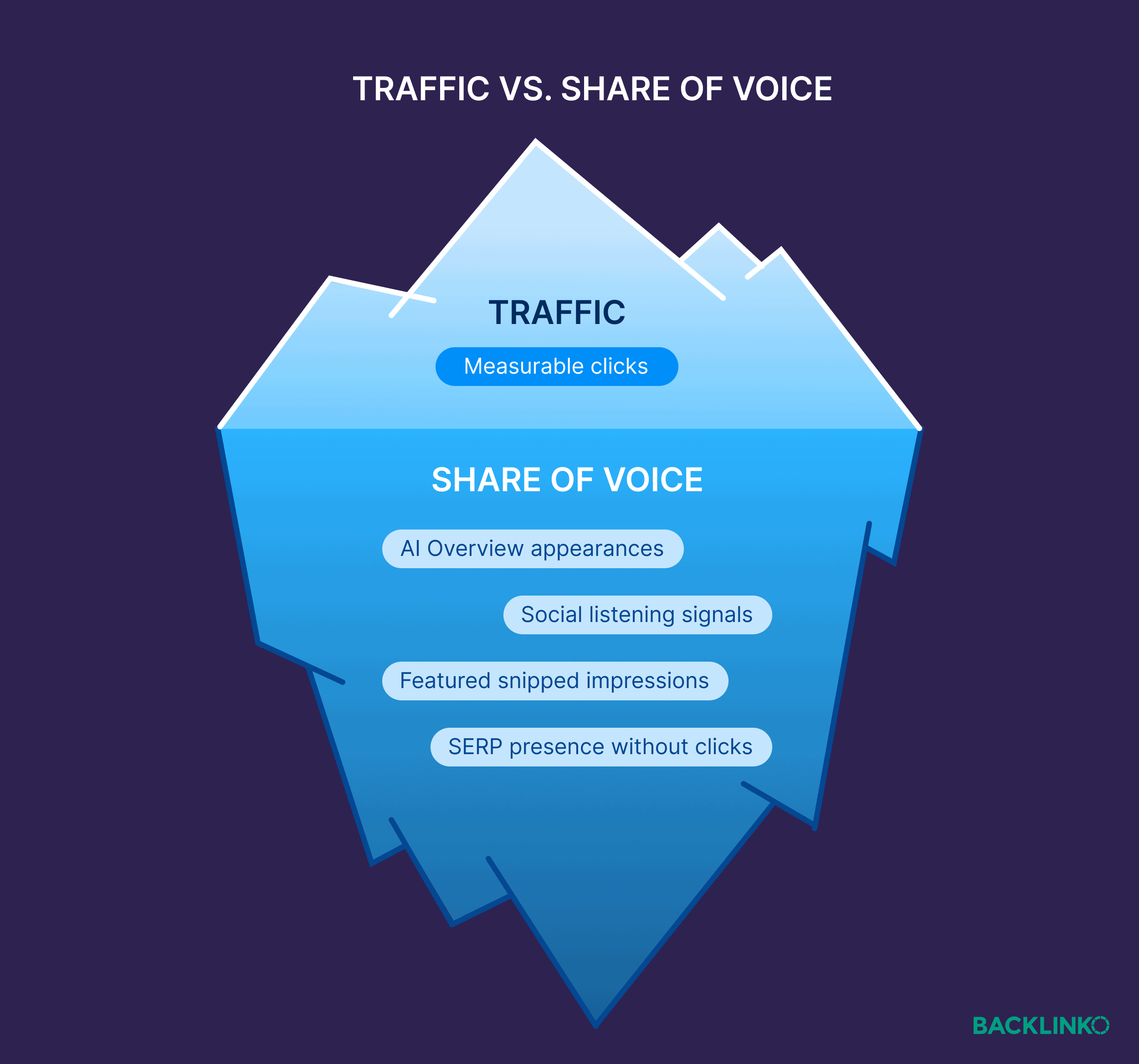
When a potential buyer asks an AI, "What is the best project management software for remote teams?" and the AI lists five competitors but omits a specific brand, that brand has lost visibility. Because no click occurred, the brand’s internal data will show no change, masking a slow erosion of market share. Share of Voice captures this hidden data by measuring a brand’s presence relative to its competitors across the entire digital ecosystem.
Distinguishing Between SEO and AI Share of Voice
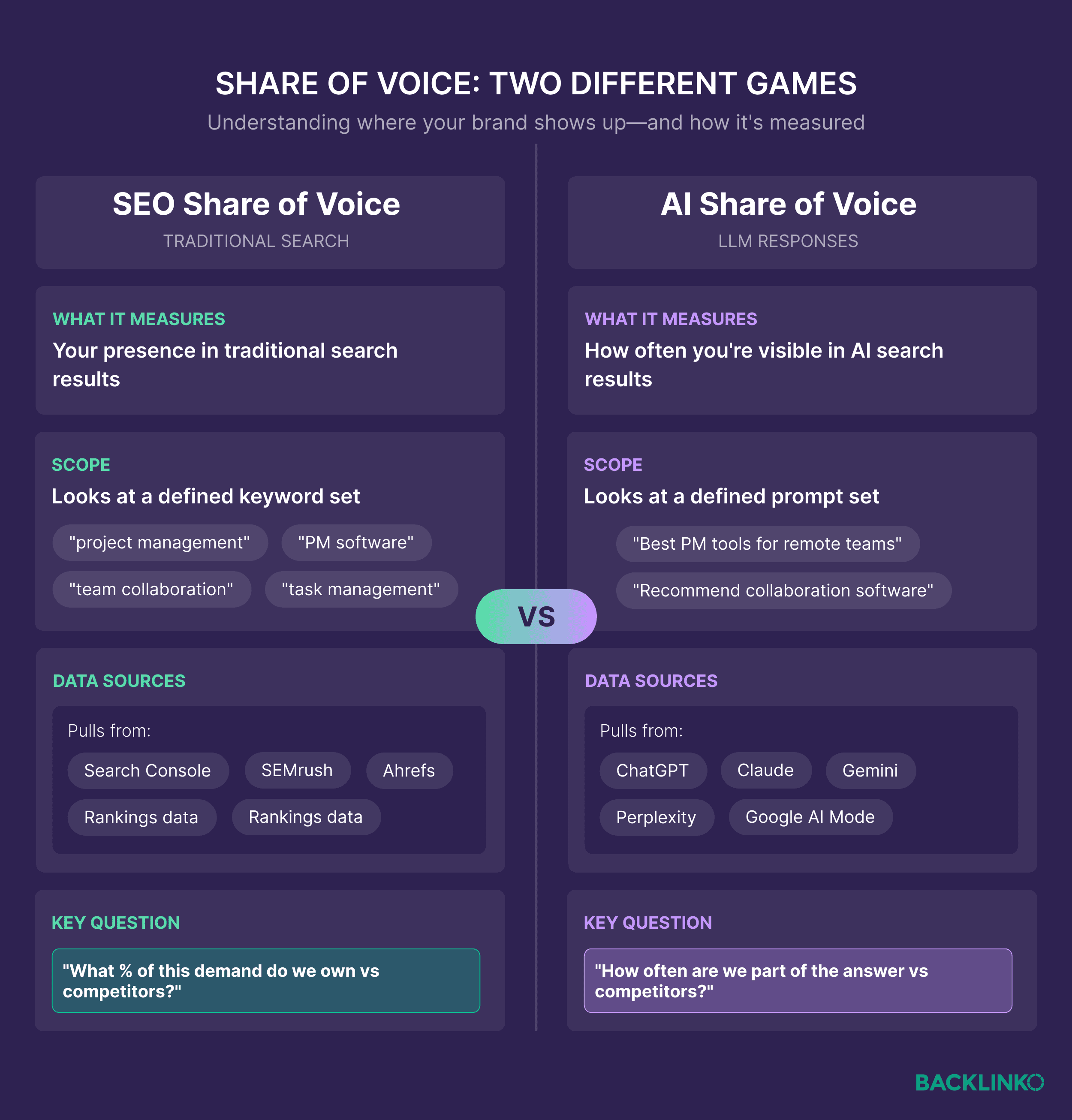
Modern SoV measurement is bifurcated into two distinct but related categories: Organic SEO SoV and AI Search SoV. Each requires a different methodology for tracking and analysis.
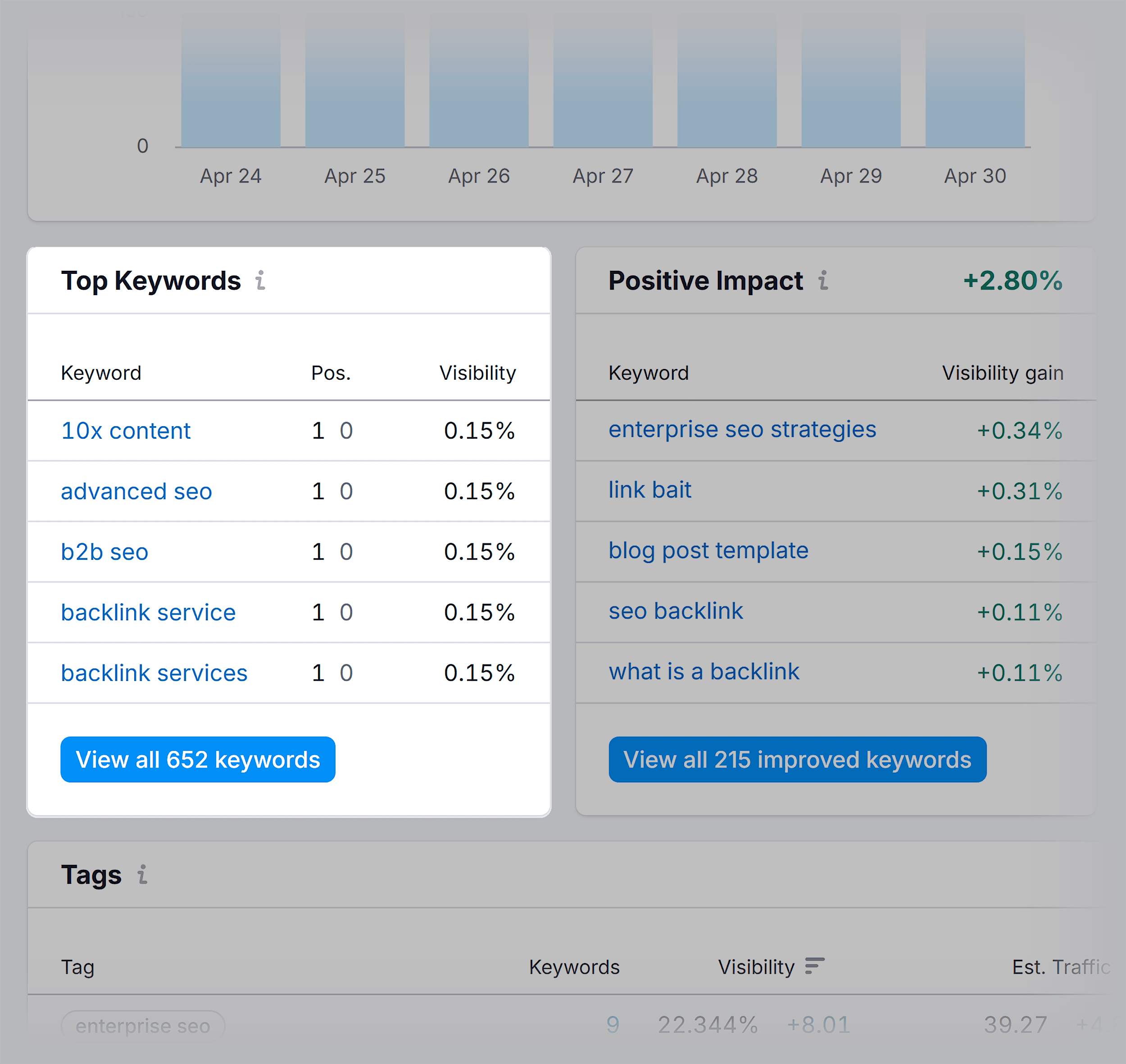
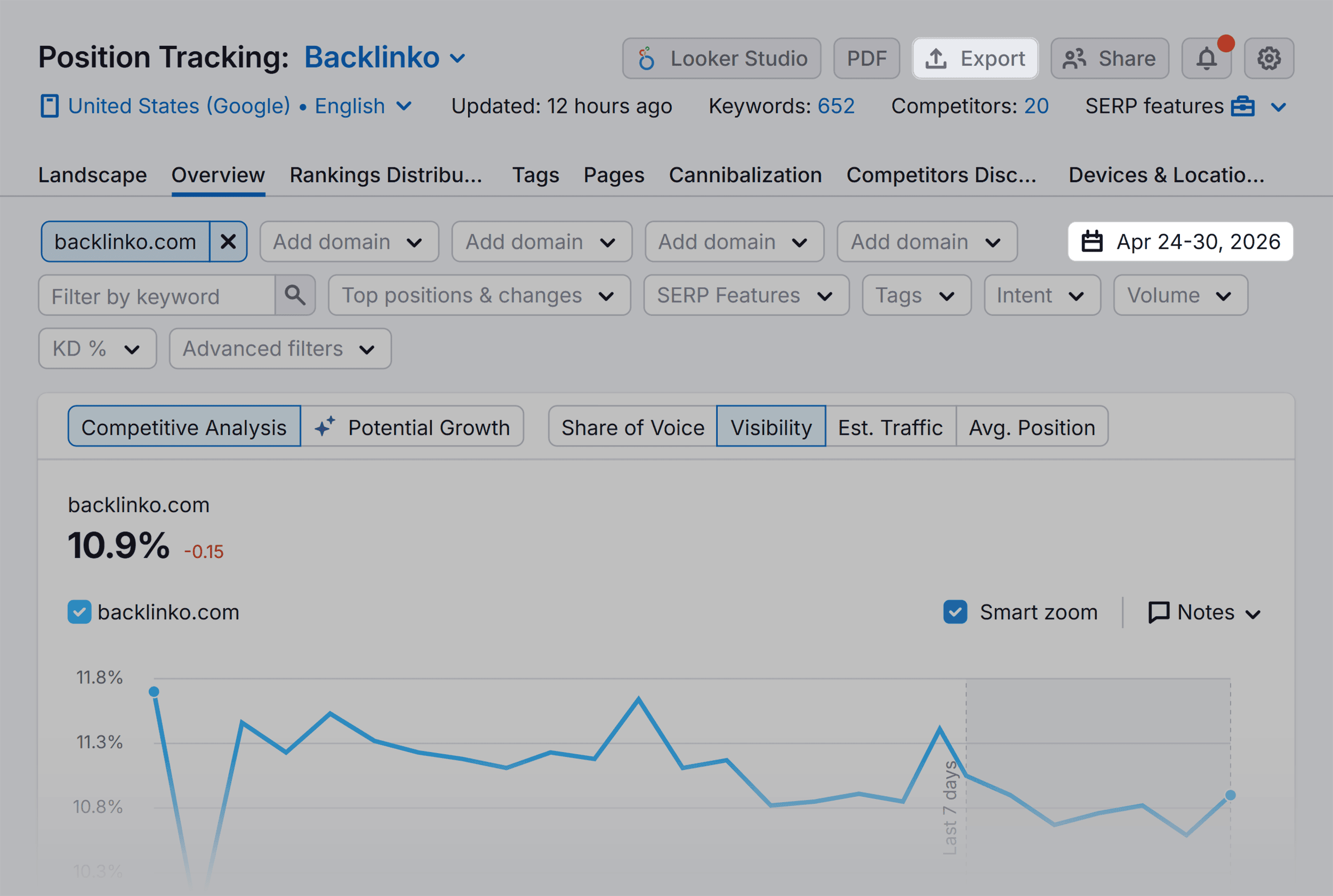
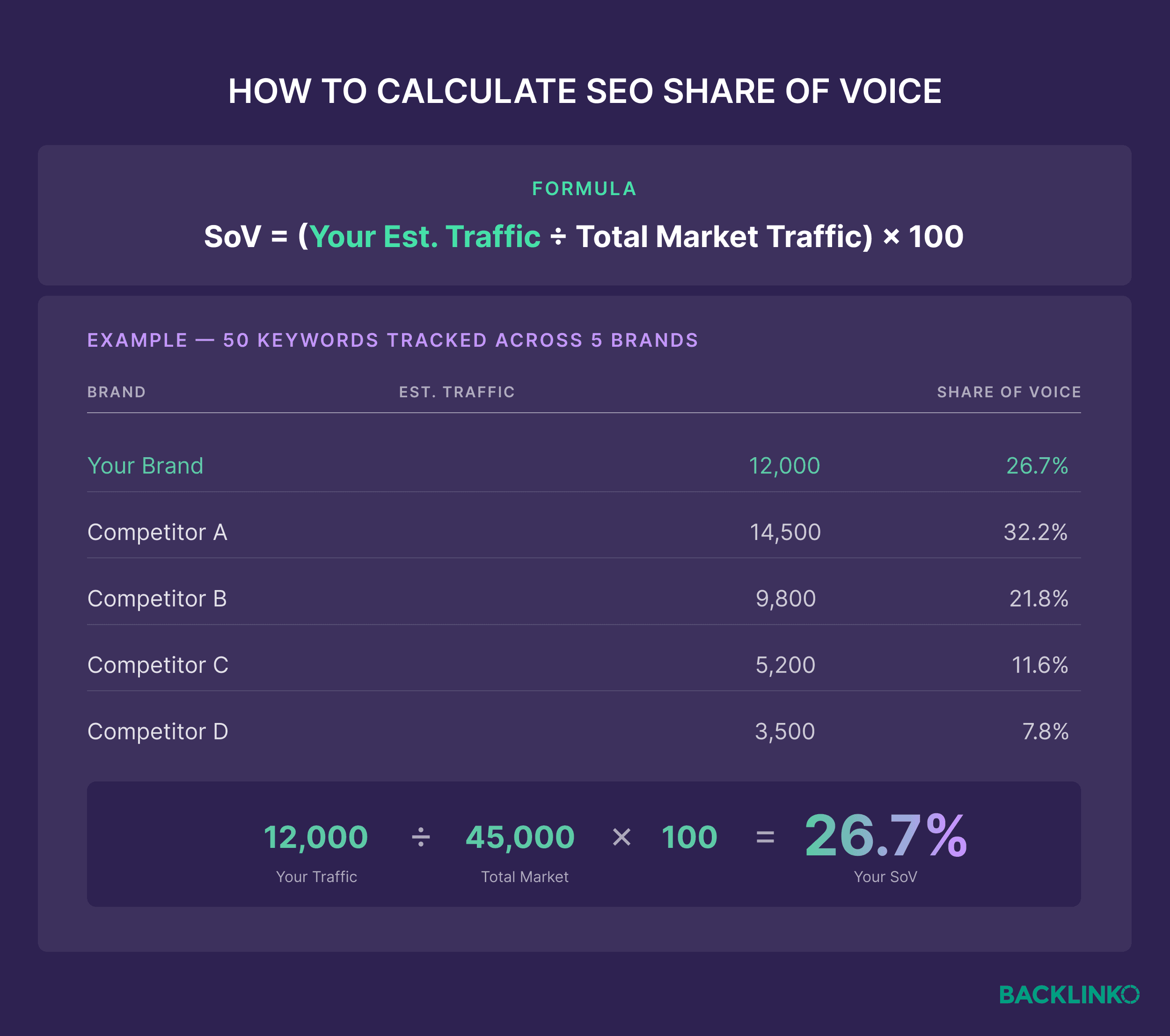
Organic SEO SoV remains the foundation for most digital brands. It is calculated by taking a set of high-intent keywords, determining the total available monthly search volume, and calculating the percentage of that traffic a brand is likely to capture based on its ranking positions. For instance, if 100 target keywords generate 100,000 monthly visits and a brand’s rankings capture 20,000 of those visits, its organic SoV is 20%.

AI Search SoV, conversely, is a newer and more complex metric. It measures the frequency with which a brand is mentioned or cited in LLM responses. Unlike traditional search, where ranking is the primary goal, AI SoV focuses on "citatability" and "credibility." Analysts track how often a brand appears in responses to category-related prompts. If a brand is mentioned in 50 out of 100 prompts regarding its industry, it holds a 50% mention share, though this is often weighted by the sentiment of the response and the prominence of the citation.
A Four-Step Framework for Measuring Share of Voice
To transition from a traffic-heavy reporting model to a visibility-centric SoV model, organizations are adopting a structured four-step framework.
Step 1: Defining the Competitive Landscape
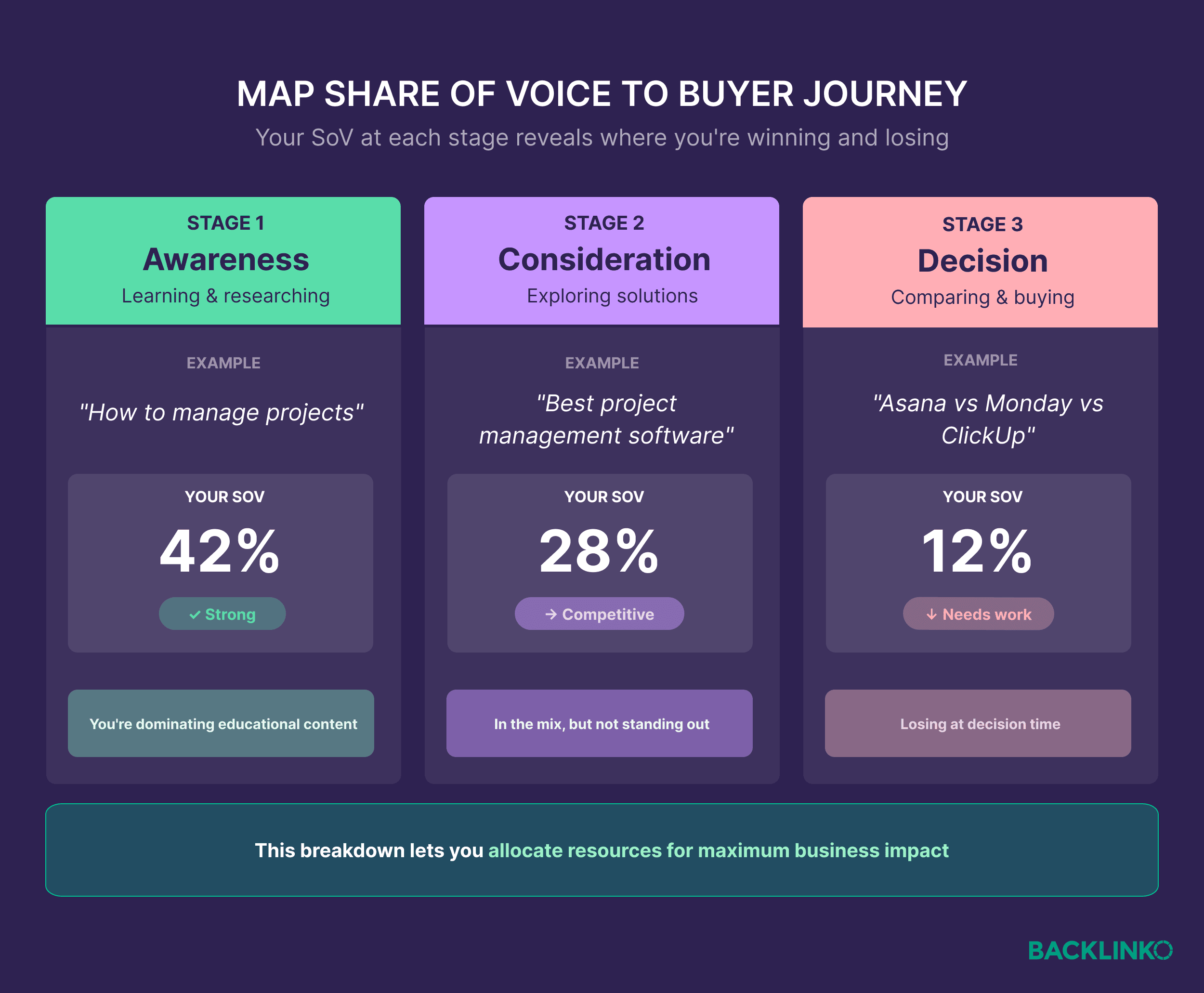
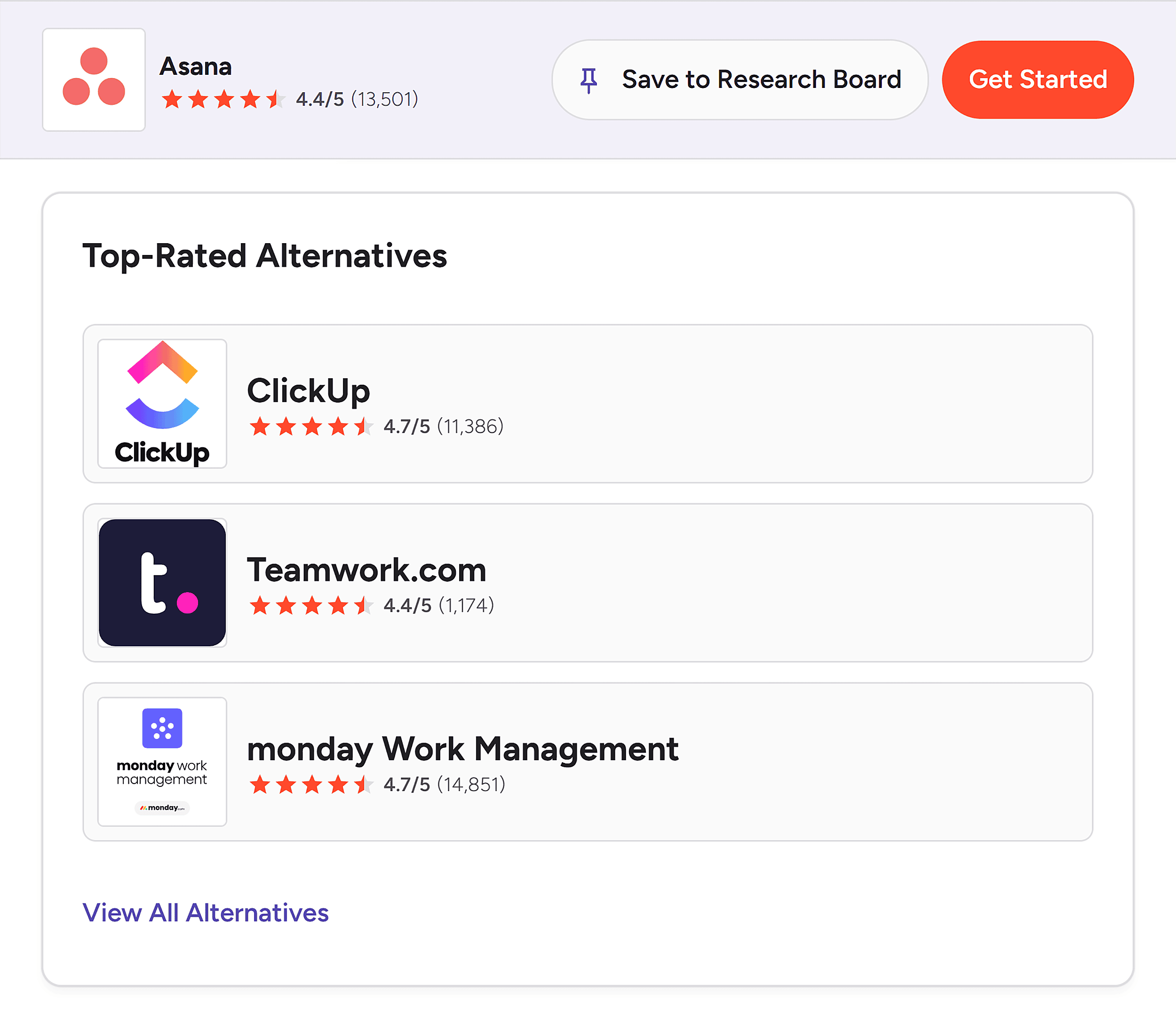
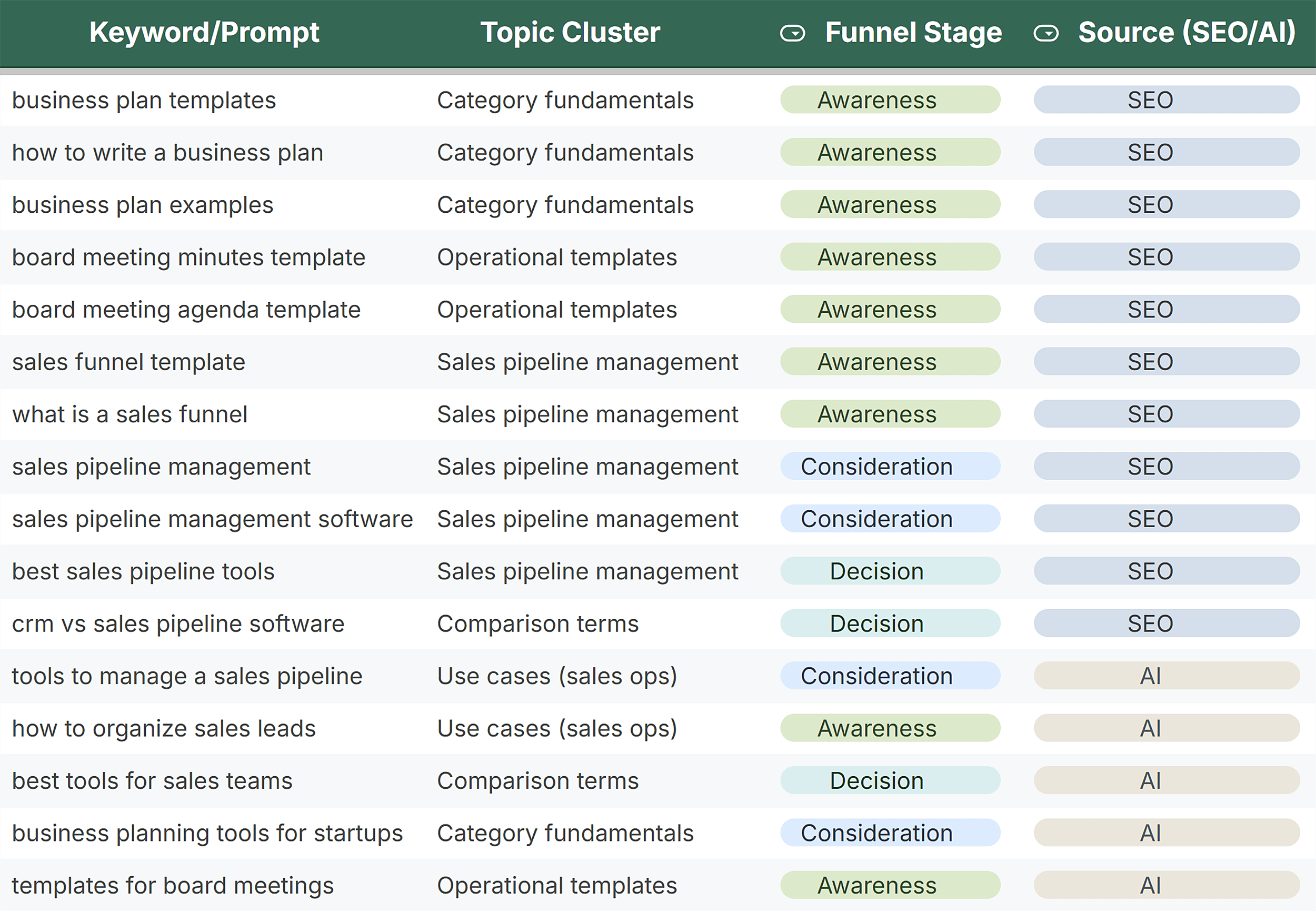
The first phase involves mapping the industry terrain. This requires identifying not only direct product competitors but also "informational competitors"—media sites, blogs, and review platforms that compete for the same search real estate. Strategic mapping involves organizing these into topic clusters tied to revenue. By segmenting the landscape into awareness (top-of-funnel), consideration (middle-of-funnel), and decision (bottom-of-funnel) stages, brands can identify exactly where they are losing the "conversation."
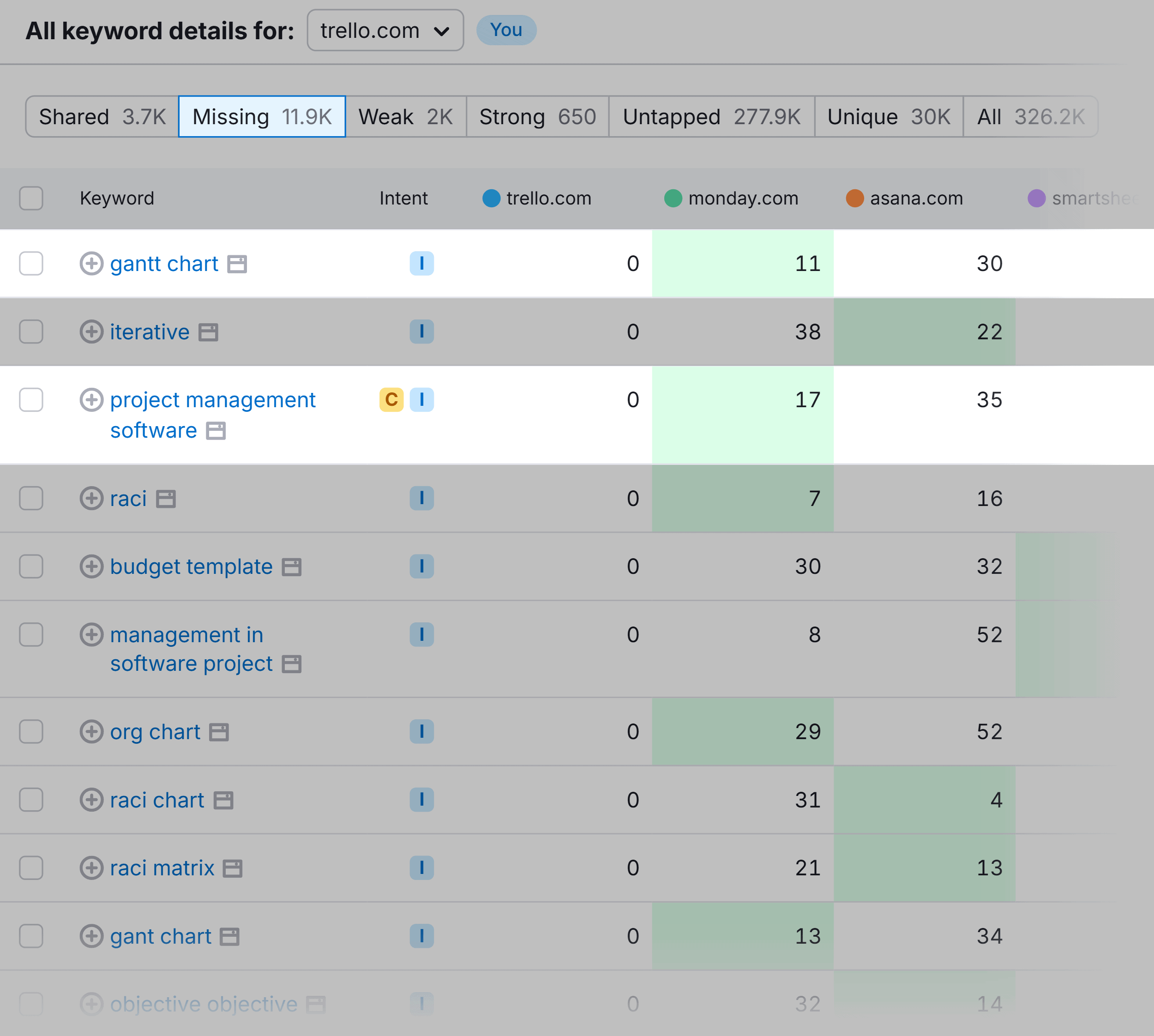
Step 2: Building Keyword and Prompt Libraries
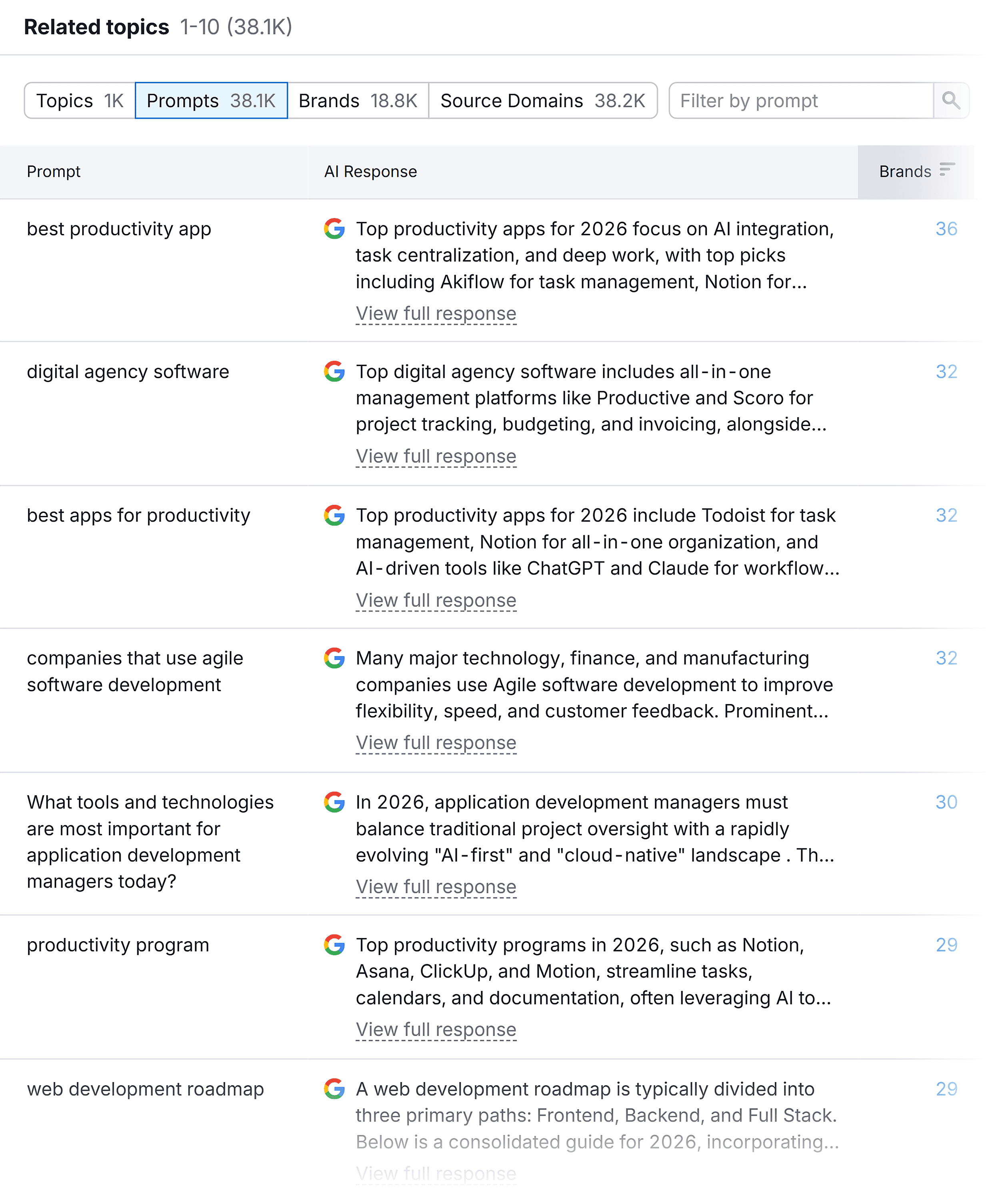
A robust SoV strategy requires a library of 200 to 500 queries that reflect how modern consumers search. This includes traditional short-tail keywords and more conversational AI prompts. Data from Google Search Console (GSC) and PPC campaigns provide the baseline for SEO keywords, while community platforms like Reddit and Quora offer insights into the phrasing of AI prompts.

Step 3: Calculating and Comparing Data
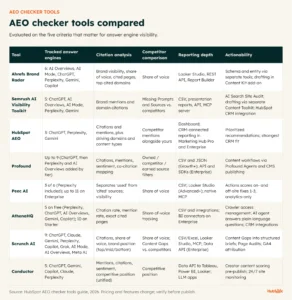
Calculation is the most data-intensive phase. For SEO, brands must multiply search volume by the estimated click-through rate (CTR) of their ranking positions. For AI, the process involves "prompt testing"—running standardized queries across ChatGPT, Perplexity, and Google Gemini to determine mention frequency. Advanced tools, such as the Semrush AI Visibility Toolkit, have begun to automate this process, allowing brands to see how AI "talks" about them compared to their rivals.
Step 4: Establishing a Strategic Baseline
SoV is a longitudinal metric. Establishing a baseline allows a brand to track trends over time. Market experts recommend a monthly tracking cadence to filter out the "noise" of daily search fluctuations while capturing broader market shifts. Quarterly deep dives are then used to re-evaluate the competitive set and adjust for new market entrants or changes in AI algorithms.

Interpreting the SEO-AI Matrix
A critical part of the analysis is understanding the divergence between SEO and AI visibility. A brand may find itself in one of four quadrants:
- Search Dominance (High SEO, High AI): The brand is a market leader across all discovery platforms. The strategy here is defensive, focusing on content freshness.
- The Credibility Gap (High SEO, Low AI): The brand ranks well in Google but is ignored by AI. This often indicates a lack of citable, authoritative data or a structure that LLMs cannot easily parse.
- The Emerging Authority (Low SEO, High AI): AI tools recommend the brand despite a lack of top organic rankings. This suggests high brand sentiment and "word-of-mouth" credibility that has yet to translate into traditional SEO power.
- Invisible (Low SEO, Low AI): The brand is absent from the buyer’s journey. This requires an urgent investment in fundamental content pillars and topical authority.
Broader Impact and Implications for 2026 and Beyond
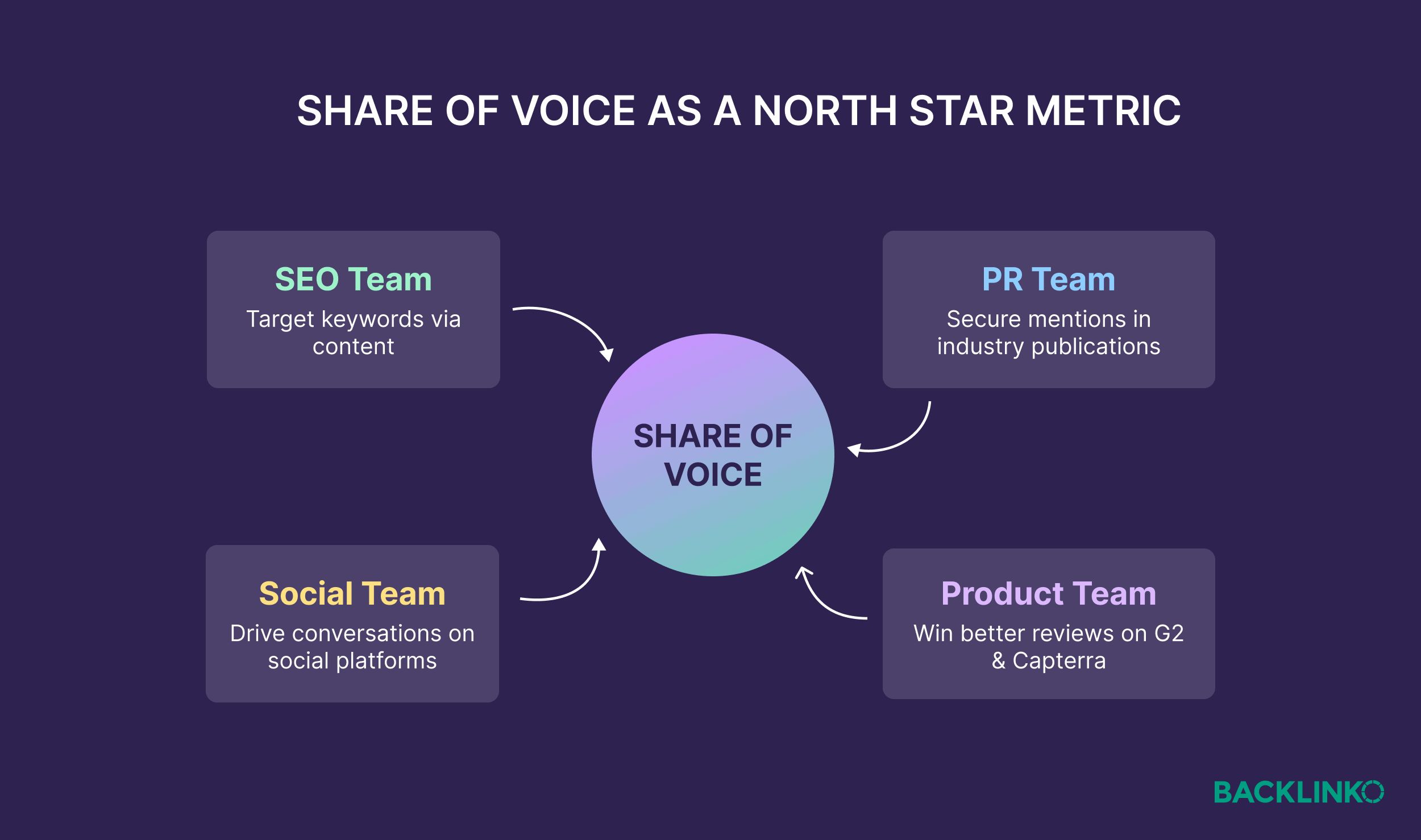
The shift toward Share of Voice as a North Star metric is more than a technical change; it is a cultural shift for marketing departments. Historically, SEO, PR, and Social Media teams have operated in silos, each optimizing for their own specific KPIs. However, SoV provides a unified metric that encompasses the work of all three departments.
When a PR team secures a mention in a major trade publication, that publication is crawled by LLMs, which in turn increases the brand’s AI Share of Voice. When the social media team drives engagement on Reddit, those threads often appear in Google’s "Perspectives" or "Discussions" carousels, increasing SEO Share of Voice. By rallying around a single percentage of the category conversation, marketing teams can collaborate more effectively.
Furthermore, as search engines continue to integrate generative AI, the value of a "click" is expected to rise as the volume of clicks potentially decreases. This paradox means that the clicks a brand does receive will be from more informed, higher-intent buyers who have already been "pre-sold" by the brand’s high Share of Voice in the earlier stages of their research.
Strategic Solutions for Improving Visibility
For brands identifying gaps in their SoV, the path forward involves targeted tactical interventions. To close visibility gaps in the decision stage, brands are prioritizing comparison content—such as "[Brand] vs [Competitor]" pages—and sourcing more third-party reviews to increase their credibility in AI models. To solve efficiency problems, where a brand has high visibility but low conversion, resources are being reallocated from broad "awareness" content to high-intent "bottom-of-funnel" assets.
Ultimately, Share of Voice serves as a diagnostic tool for the health of a brand in a fragmented digital world. As we move further into 2026, the brands that thrive will be those that stop obsessing over individual clicks and start focusing on owning the conversation within their category. In an era where AI defines the narrative, being "heard" is the first step toward being "bought."