Navigating the New Search Frontier: A Comprehensive Analysis of Profound and Peec AI for Answer Engine Optimization

The digital marketing landscape is currently undergoing its most significant transformation since the inception of the commercial search engine, as consumer behavior shifts from traditional keyword-based queries to conversational, AI-driven interactions. According to recent research from McKinsey & Company, approximately 50% of consumers have already integrated AI-powered search into their routine digital habits, with more than 70% relying on these systems to answer complex questions and aggregate information. This evolution has necessitated the rise of Answer Engine Optimization (AEO), a strategic discipline focused on ensuring brand visibility within the generative responses provided by platforms such as ChatGPT, Claude, Perplexity, and Google’s AI Overviews. As marketing leaders pivot from traditional Search Engine Optimization (SEO) to this new paradigm, two primary platforms have emerged as frontrunners for monitoring and optimizing AI visibility: Profound and Peec AI.
The transition to AEO represents more than a simple update to marketing tactics; it is a fundamental shift in how brand authority is established and measured. In the traditional search model, success was defined by "blue links" and page-one rankings. In the AEO model, success is defined by citations, mentions, and the sentiment of the narrative generated by a Large Language Model (LLM). This environment has created an urgent demand for specialized tools that can track how these "answer engines" represent brands in real-time. Marketing teams are now tasked with understanding not just where they rank, but how they are being synthesized and recommended by AI agents to potential customers.
The Evolution of Search: A Chronology of the Shift to AEO
To understand the current competition between Profound and Peec AI, it is essential to trace the technological trajectory that brought the industry to this point. For over two decades, SEO was the primary driver of digital discovery, characterized by the following milestones:

- 1998–2010: The Keyword Era. Search was largely a matter of matching specific keywords and building backlink profiles to signal authority to Google’s PageRank algorithm.
- 2011–2021: The Semantic and Knowledge Era. With the introduction of the Knowledge Graph (2012) and algorithms like BERT (2019), Google began moving toward understanding intent and context, introducing "Featured Snippets" which served as the precursor to modern AI answers.
- November 2022: The Generative Explosion. The launch of ChatGPT by OpenAI fundamentally altered user expectations, moving the goalposts from "finding a list of sources" to "getting a direct answer."
- 2023–2024: The Integration of SGE. Google introduced Search Generative Experience (SGE), later rebranded as AI Overviews, while competitors like Perplexity AI gained traction by providing cited, real-time answers.
- 2025 and Beyond: The AEO Dominance. Marketing workflows are now being rebuilt around Answer Engine Optimization, as brands realize that being the "hidden source" behind an AI answer is the new equivalent of a top-three ranking.
This chronology highlights why tools like Peec AI and Profound have become essential. They serve as the "analytics layer" for a world where traditional Google Search Console data provides only a fraction of the total visibility picture.
Strategic Comparison: Peec AI vs. Profound
While both platforms are designed to solve the problem of AI visibility, they cater to different organizational needs and operational maturities. Peec AI has positioned itself as an agile, insight-driven platform, while Profound has established itself as an enterprise-grade solution focused on deep workflow integration.
Peec AI: Agility and Speed to Insight
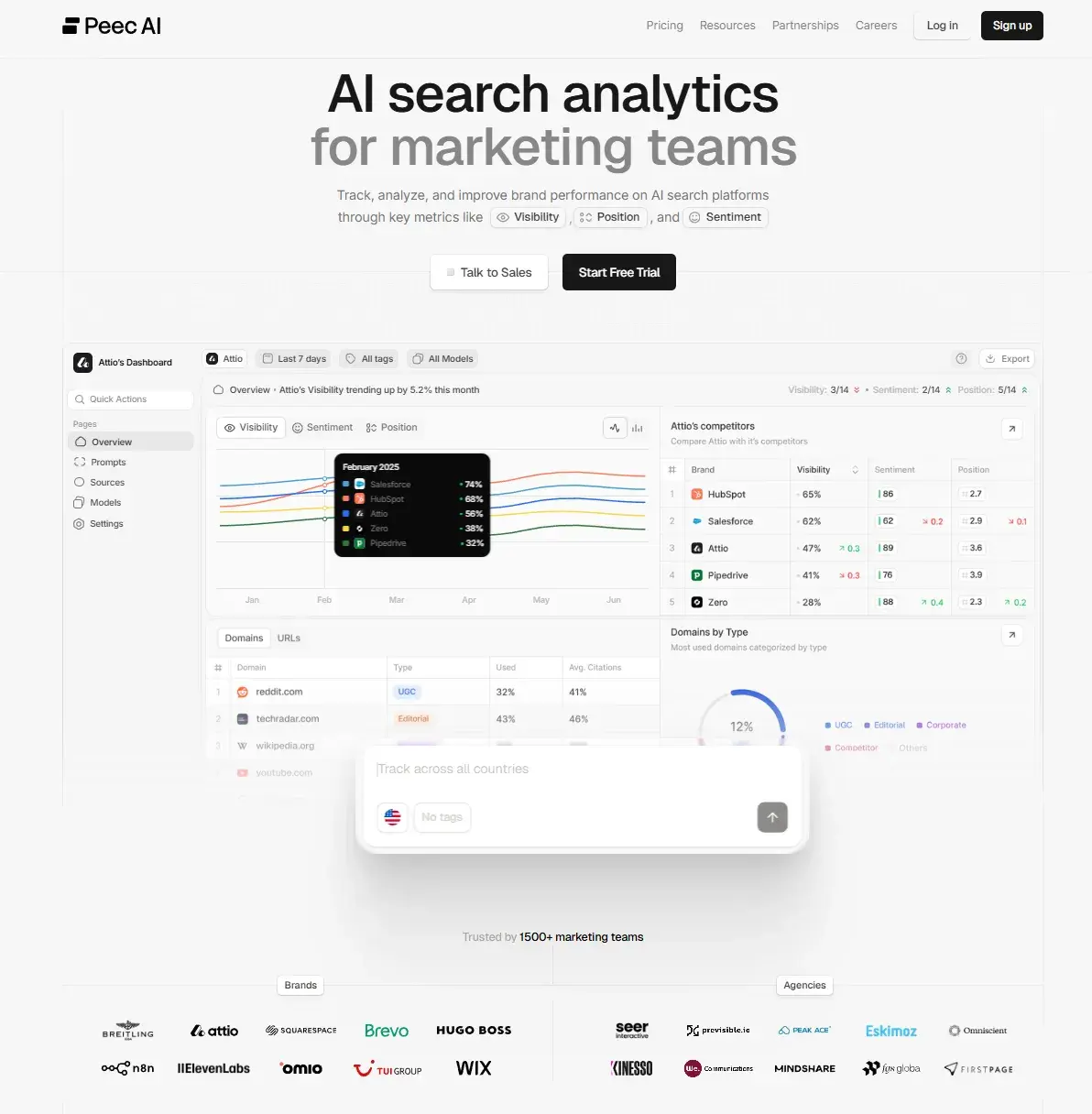
Peec AI is engineered for marketing teams that require immediate clarity on their AI footprint without the burden of complex technical setups. Its core value proposition lies in its ability to track essential AEO metrics—such as brand mentions, citation frequency, and competitive share of voice—across multiple engines.
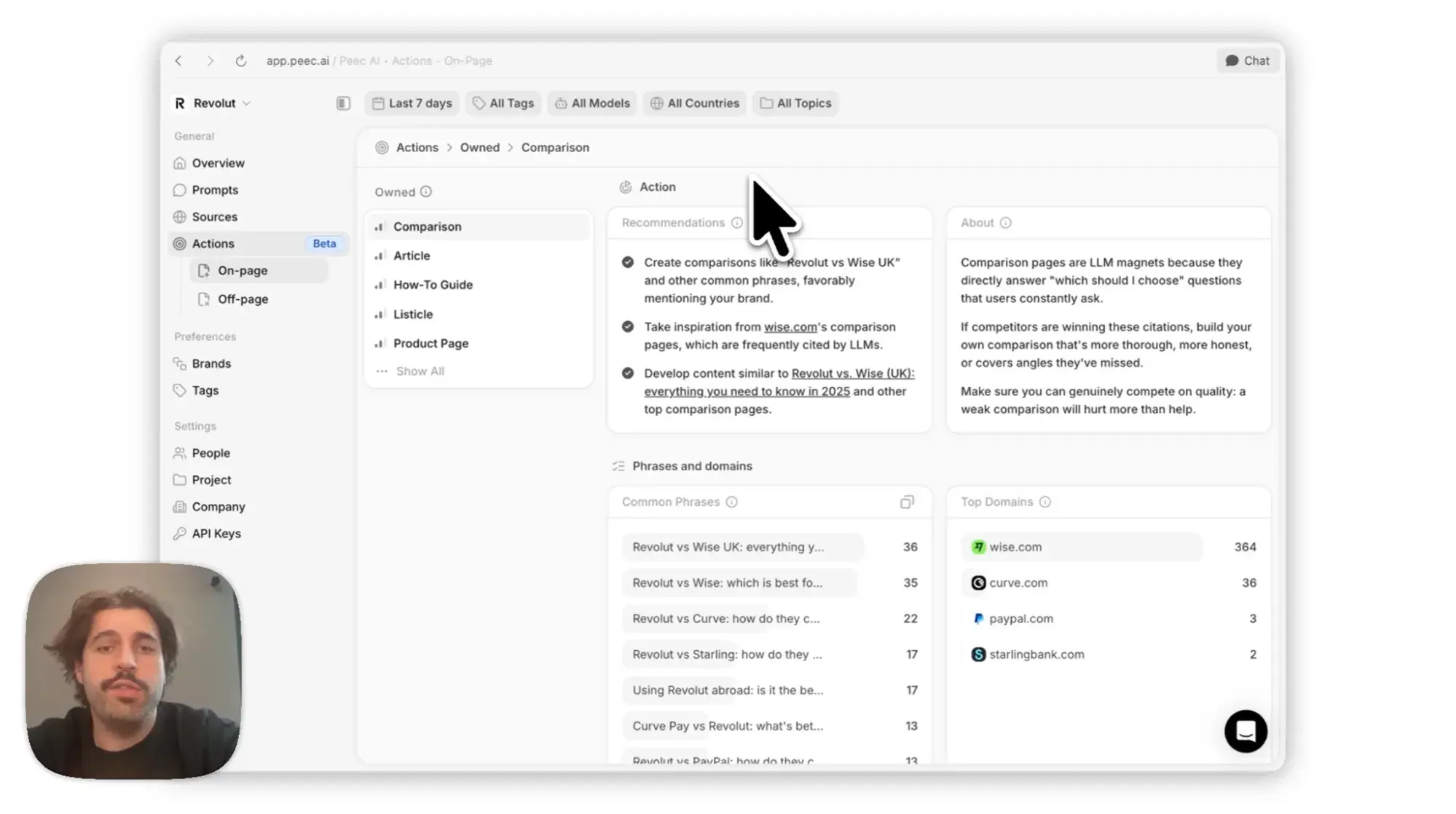
The platform is particularly noted for its "Act on Insights" feature. Unlike traditional analytics tools that merely report data, Peec AI translates visibility gaps into specific strategic recommendations. For instance, if a brand is missing from a ChatGPT response regarding "best enterprise CRM," Peec AI might identify that the AI is pulling data from specific Reddit threads or niche review sites where the brand lacks a presence. This allows teams to prioritize off-page SEO and community engagement that directly influences AI training data and retrieval-augmented generation (RAG) processes.
Profound: Enterprise Scalability and Workflow Connectivity
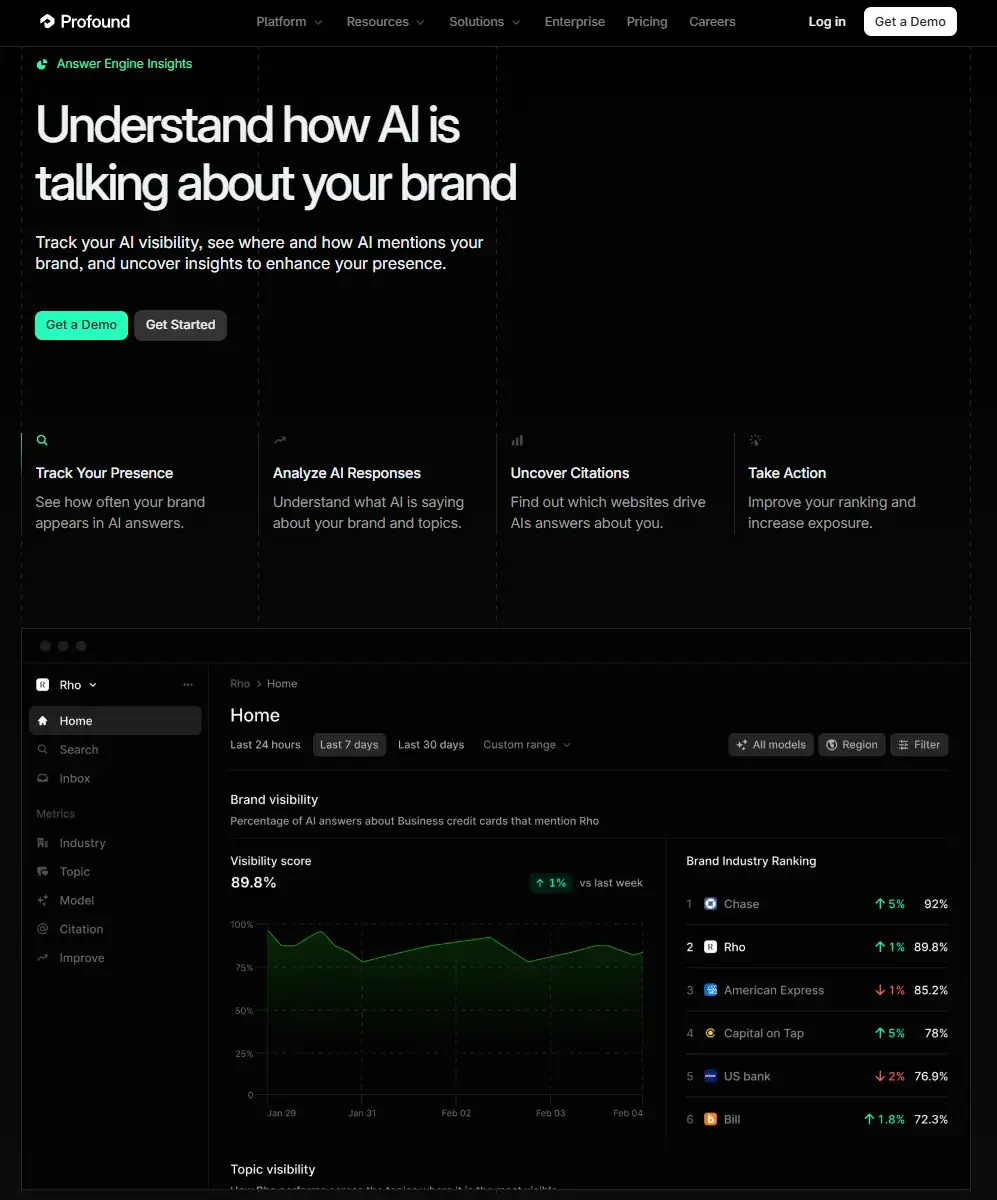
Profound targets the upper echelons of the market, focusing on organizations that view AEO as a core business function rather than a supplemental marketing tactic. Its primary differentiator is its "front-end capture" methodology, which monitors how AI responses appear in live environments, providing a granular look at how prompts influence brand positioning.
Profound’s strength is its ecosystem of integrations. By connecting natively with Content Management Systems (CMS) like WordPress and Contentful, as well as collaboration tools like Slack and Google Search Console, Profound allows enterprise teams to operationalize AEO data. When the platform detects a drop in AI visibility, it can trigger alerts or content update requests directly within the team’s existing workflow, bridging the gap between data collection and execution.
Data-Driven Analysis of Platform Coverage
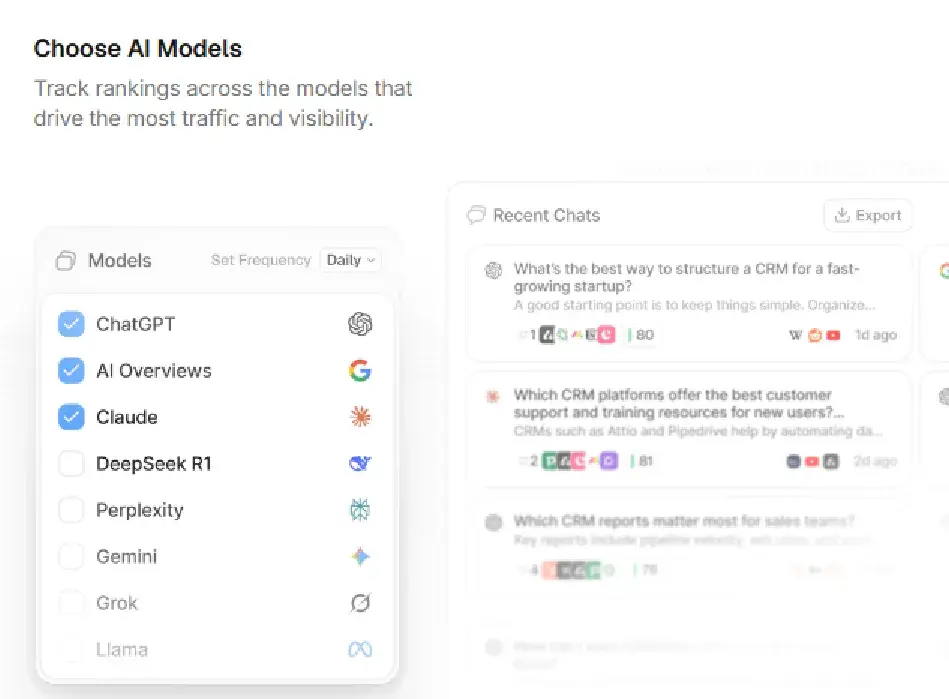
A critical factor for any AEO tool is its "engine coverage." As the market fragments between various LLMs, a tool that only monitors one engine provides an incomplete picture of the buyer’s journey.
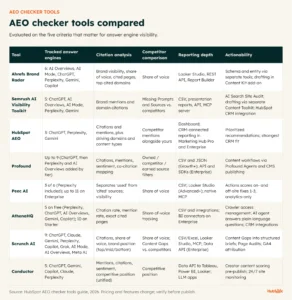
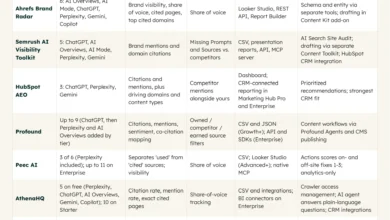
Peec AI offers support for seven major platforms, including Google AI Overviews, ChatGPT, Perplexity, and Claude. However, its pricing structure dictates coverage, often limiting lower-tier users to tracking only three engines simultaneously. This model favors mid-market companies that know exactly where their audience spends time.
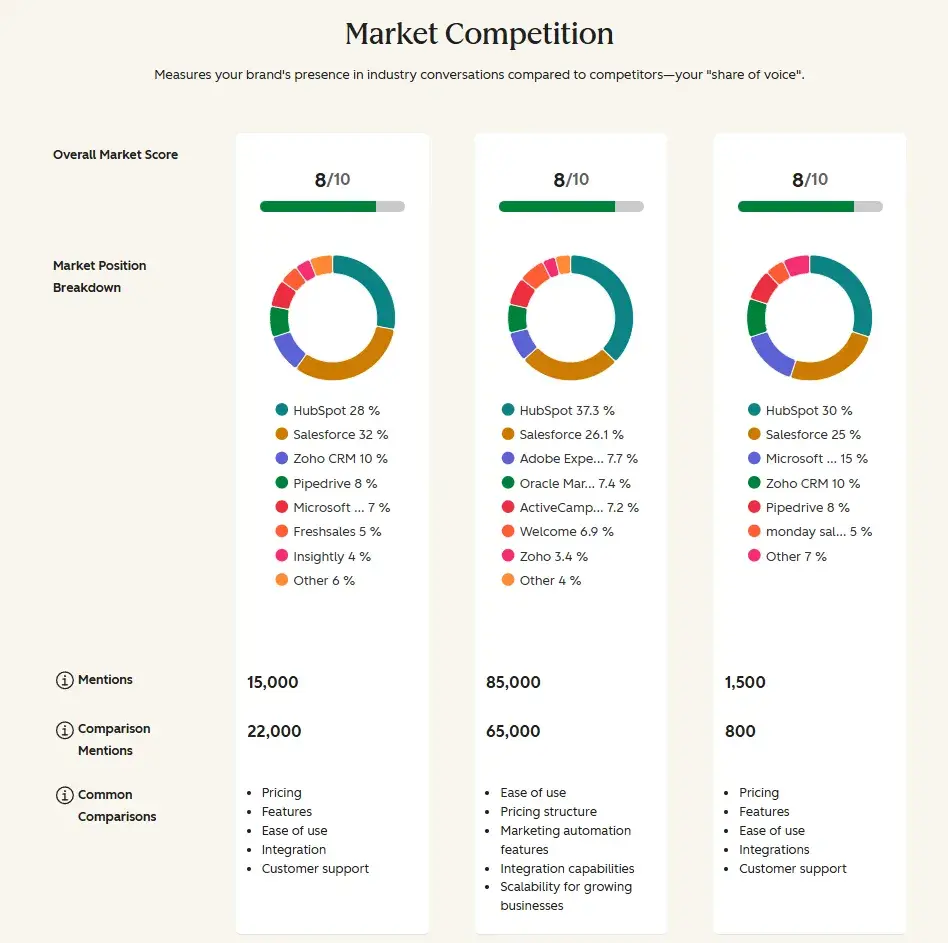
Profound, conversely, offers a tiered approach that scales with the complexity of the organization. While its starter plan is limited to ChatGPT, its enterprise offerings provide a comprehensive view of the entire AI landscape, including Gemini, Copilot, Meta AI, and Grok. For a global brand, this multi-engine visibility is non-negotiable, as regional preferences for AI tools can vary significantly.
Economic Implications and Pricing Structures
The cost of entry for AEO monitoring remains a significant consideration for CMOs and digital directors. The pricing models of Peec and Profound reflect their target demographics:
- Peec AI Pricing: With packages starting at $99 per month and scaling to $1,499 for the Pro version, Peec is accessible to agencies and growth-stage startups. Its "Enterprise" tier is custom-priced, allowing for unlimited model tracking.
- Profound Pricing: Profound sits at a higher price point, with its starter package beginning at $499 per month. Its "Growth" and "Enterprise" tiers, priced at $1,500 and $5,000+ respectively, reflect its positioning as a heavy-duty tool for large-scale operations.
Industry analysts suggest that the higher price point of Profound is justified for companies with high-volume content needs, where the cost of manual AEO tracking would far exceed the platform’s subscription fee. Conversely, Peec AI offers a superior Return on Investment (ROI) for smaller teams that need to prove the value of AEO before committing to a larger budget.
The Role of HubSpot as a Disruptor
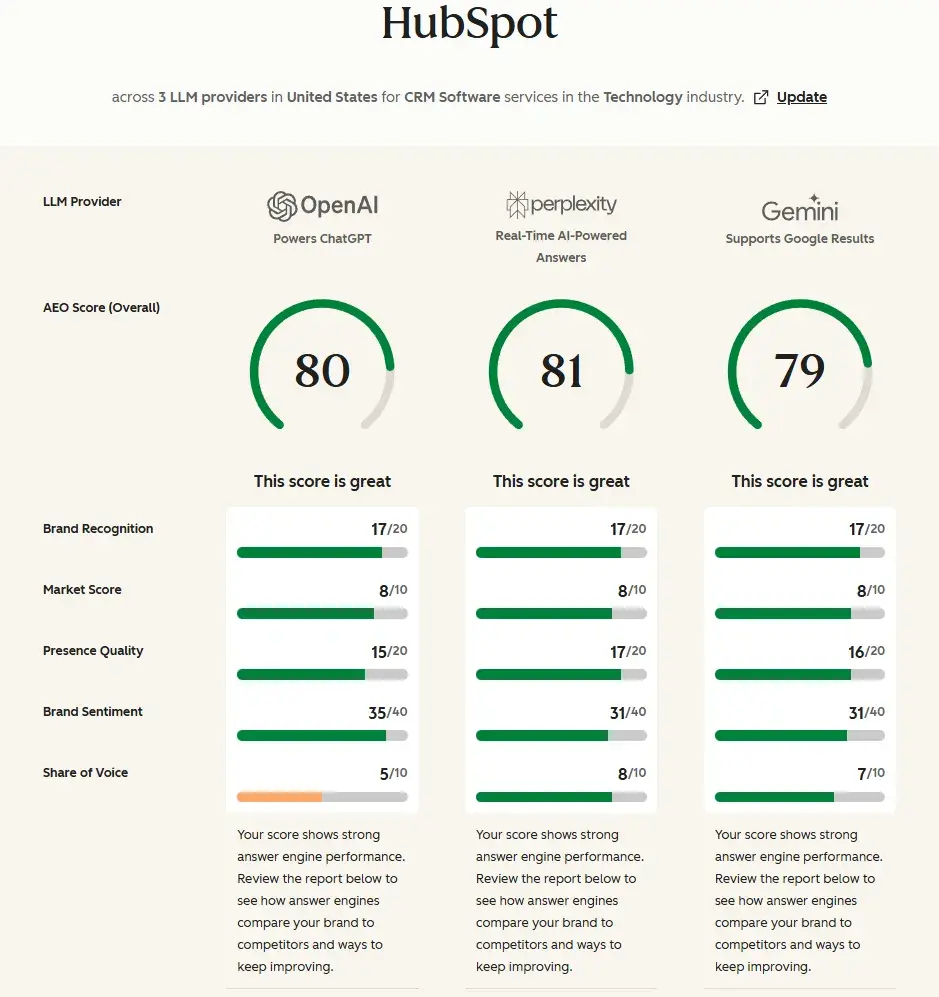
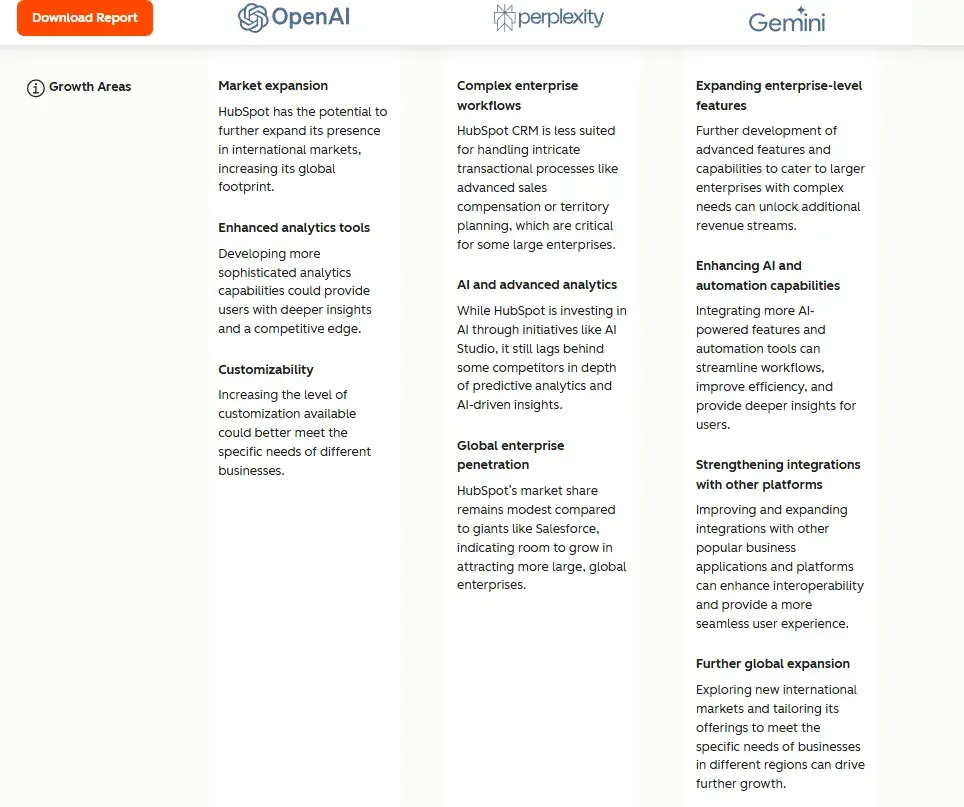
The competitive landscape is further complicated by the entry of established marketing technology giants. HubSpot recently launched its own AEO Grader and dedicated AEO tools, offering a "middle ground" solution. At a price point of approximately $50 per month, or included within Marketing Hub Pro and Enterprise tiers, HubSpot’s tool provides sentiment analysis, competitive positioning, and continuous visibility updates.
The HubSpot alternative is particularly compelling for brands already embedded in the HubSpot ecosystem. By connecting AEO recommendations directly to social and content tools, HubSpot minimizes the friction between identifying a problem and implementing a fix. This suggests that the future of the AEO tool market may eventually consolidate into broader MarTech suites, though specialized players like Profound and Peec AI currently maintain a technical lead in reporting depth.
Broader Impact and Implications for the Marketing Industry
The rivalry between Profound and Peec AI underscores a broader shift in the digital economy: the "Zero-Click" reality. As AI engines provide comprehensive answers directly on the search results page, click-through rates (CTR) to brand websites are expected to face downward pressure.
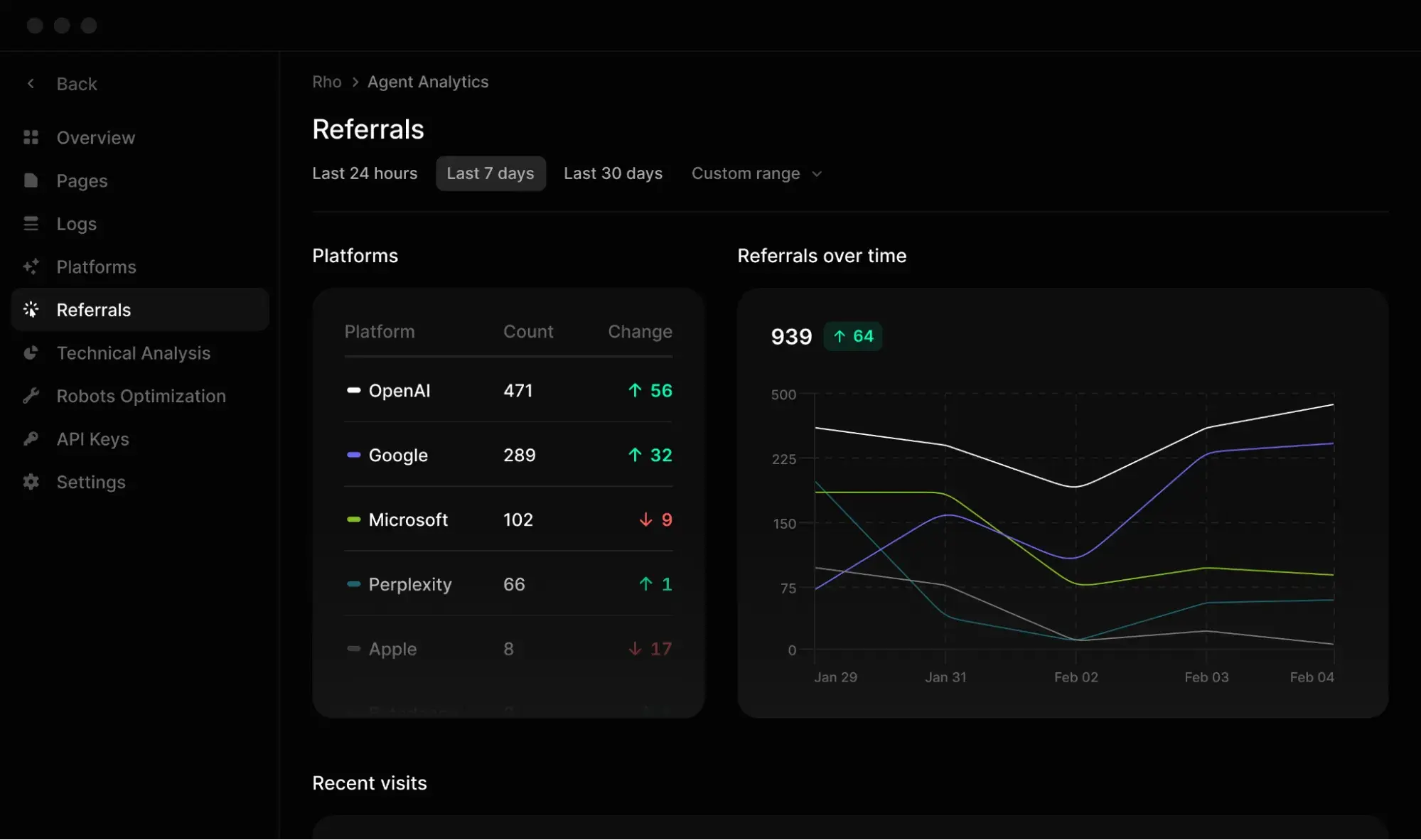
For marketing leaders, this means that the metric of "website traffic" may become less important than "brand sentiment within the AI narrative." If an AI search engine recommends a product but the user never clicks through to the website—instead moving directly to an e-commerce platform or making a purchase via an AI agent—the brand still wins, but traditional SEO metrics would mark the interaction as a failure.
AEO tools are the first step in solving this measurement crisis. By providing a "Share of Voice" metric within AI responses, these platforms allow marketers to prove the value of their content strategy even when traditional traffic metrics lag. Furthermore, the data provided by these tools is increasingly being used to inform broader business strategies, such as product development and public relations, based on how AI systems perceive and categorize a brand’s offerings.
Conclusion: Selecting the Right Path for Growth
The choice between Profound and Peec AI ultimately depends on an organization’s operational maturity. Peec AI remains the premier choice for teams that prioritize speed, actionable recommendations, and budget efficiency. It is the "specialist’s tool" for the modern SEO professional who needs to show quick wins.
Profound is the "infrastructure choice" for the enterprise. Its focus on security, governance, and deep integration makes it suitable for large organizations where AEO data must be shared across departments and integrated into complex, automated content workflows.
As AI-powered search continues to evolve from a novelty into the primary method of information retrieval, the ability to monitor and influence these engines will define the next generation of market leaders. Whether through the agility of Peec, the scale of Profound, or the integration of HubSpot, brands must act now to secure their place in the "answers" of tomorrow. Failure to optimize for these engines is no longer just a missed opportunity in search rankings; it is a risk to the brand’s very existence in the digital consciousness of the consumer.