The Origins and Evolution of Growth Hacking: From a Casual Conversation to a Global Business Paradigm


In the late afternoon of a Monday in 2010, three industry figures—Patrick Vlaskovits, Sean Ellis, and Hiten Shah—convened at a California establishment known as Memphis to address a growing crisis in the startup ecosystem. While the setting was informal, the subject of their discussion was a fundamental shift in how emerging companies approached market entry and scalability. At the time, the prevailing wisdom for startup marketing was anchored in the traditional corporate playbook: hire expensive marketing executives from established firms and deploy broad-spectrum, capital-intensive tactics. However, this strategy was yielding diminishing returns, causing startups to deplete their resources before achieving sustainable product-market fit.
The conversation that occurred at that table in 2010 catalyzed a movement that would eventually be codified as "growth hacking." This term was not intended to represent a mere list of promotional tactics, but rather a holistic, data-driven philosophy designed to replace the bloated, inefficient marketing models of the past with a disciplined, experimental approach to business development.
The Failure of Traditional Marketing in the Startup Lifecycle
During the early 2000s, the common trajectory for a well-funded startup was to mirror the marketing departments of Fortune 500 companies. This often meant large-scale brand awareness campaigns, television spots, or massive investments in billboard advertising. For a nascent company with limited runway, such expenditures were frequently catastrophic.
The core issue identified by Vlaskovits, Ellis, and Shah was the misalignment between corporate marketing goals and startup survival requirements. Seasoned marketing executives often focused on top-of-funnel reach, while startups required a granular, bottom-up approach that emphasized user retention, product engagement, and viral mechanics. When these traditional marketers were hired, they often relied on "random acts of marketing"—uncoordinated tactics across multiple channels that failed to move the needle on key performance indicators (KPIs). The result was a high burn rate with no corresponding increase in user acquisition or lifetime value.
Defining the Growth Hacker
The term "growth hacker" was introduced to distinguish a specific type of professional: one who sits at the intersection of marketing, product development, and data engineering. Unlike a traditional marketer, a growth hacker is inherently obsessed with the "true north" of a business—the metric that indicates the product is providing value to the customer.
By definition, a growth hacker is not merely concerned with acquisition. Their scope includes:
- Activation: Ensuring that new users actually experience the core value of the product during their first interaction.
- Retention: Implementing mechanisms to keep users returning, as the cost of acquiring a new customer is significantly higher than maintaining an existing one.
- Referral: Building virality into the product itself so that the user base becomes an engine for further growth.
- Revenue: Optimizing the conversion funnel to ensure the business model is sustainable.
The Chronology of a Methodology
The formalization of growth hacking did not happen in a vacuum; it was a response to the rapid maturation of the internet and the rise of software-as-a-service (SaaS) business models.
- 2008–2010: Founders like Sean Ellis (advising Dropbox and Eventbrite) and Hiten Shah (KISSmetrics) began observing that the most successful companies were those that utilized data to iterate on their product features rather than relying on external marketing spend.
- 2010: The term "growth hacker" is coined, providing a nomenclature for a practice that had been performed by necessity in the shadows of the Silicon Valley ecosystem.
- 2011–2015: The methodology gains traction, with companies like LinkedIn and Uber building internal "growth teams" that operated independently of traditional marketing departments.
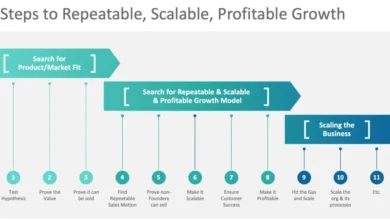
- 2017: The publication of Hacking Growth by Sean Ellis and Morgan Brown marks the transition of the discipline from a "hacker" mindset to a systemic business process that can be taught, measured, and replicated across industries.
Data-Driven Reality: The Cost of Stalled Growth
The necessity for a structured growth discipline is underscored by the high failure rate of companies that fail to adapt. A study referenced in the Harvard Business Review noted that 87 percent of companies surveyed had encountered significant growth stalls, defined as a dramatic slowdown in revenue growth. Perhaps more alarming is the finding that companies lose, on average, 74 percent of their market capitalization in the decade surrounding a growth stall.

These stalls are rarely caused by a lack of marketing budget; they are usually the result of "premature core abandonment" or an inability to update internal business processes to match changing market conditions. Growth hacking serves as a prophylactic against these stalls by creating a constant feedback loop between user behavior and product development.
Modern Implementation: The Rise of the Growth Team
In the current business landscape, the "growth hacker" is no longer a lone wolf. The practice has evolved into a structured organizational function. Modern growth teams are typically multidisciplinary, comprising:
- Product Managers: To prioritize feature sets based on user feedback.
- Software Engineers: To implement technical changes to the user interface and acquisition funnels.
- Data Analysts: To track the efficacy of experiments and ensure that growth is statistically significant rather than anecdotal.
- Marketers: To manage the messaging and distribution of value propositions.
At firms such as LinkedIn, growth teams have expanded to over 120 members, subdivided into specialized units focused on specific stages of the user journey, such as onboarding, network growth, and engagement. This modularity allows these companies to test thousands of variables—ranging from email subject lines to complex referral algorithms—simultaneously.
Broader Implications and Future Outlook
The transition of growth from a "hack" to a "system" has profound implications for how businesses are managed. It implies that growth is not an external force to be purchased through advertising, but an internal process to be engineered through product optimization.
This philosophy has effectively democratized the ability for startups to compete with legacy incumbents. By focusing on rapid, low-cost experimentation, a small team can outmaneuver a larger competitor that is bogged down by bureaucratic marketing cycles and rigid, outdated strategies.
Furthermore, as emerging technologies like machine learning and artificial intelligence continue to advance, the "growth machine" is becoming increasingly automated. Predictive analytics now allow teams to identify potential churn before it happens and to tailor onboarding experiences to individual user segments in real-time.
Conclusion: From Tactics to Discipline
The journey from a 2010 conversation at a California bar to the establishment of formal growth departments in global enterprises reflects a maturation of the digital economy. What was once a scrappy, unconventional approach has become a cornerstone of modern business strategy.
For the contemporary professional—whether a founder, an engineer, or a marketing director—understanding the discipline of growth is no longer optional. It is the primary mechanism for survival in an environment where the "half-life" of business models continues to shrink. The legacy of the growth hacking movement lies not in a specific tool or tactic, but in the institutionalization of curiosity, experimentation, and a relentless focus on the customer experience as the primary engine of long-term value creation. By treating growth as a rigorous, repeatable process, companies can transition from volatile, hit-or-miss successes to sustainable, scalable enterprises.