Reflecting on a Life in Code: Jeff Atwood Pays Tribute to His Father, Stack Overflow, and the Human Engine Behind Modern Artificial Intelligence


The intersection of human ingenuity, digital community building, and personal legacy came into sharp focus recently as veteran software developer and tech entrepreneur Jeff Atwood published a dual reflection on the passing of his father and the foundational role human-generated data plays in the modern artificial intelligence landscape. Known widely as the co-founder of Stack Overflow and the creator of the programming blog Coding Horror, Atwood used his platform to connect deeply personal milestones with macro-level industry transformations, offering a sobering reminder of the symbiotic relationship between digital communities and large language models.
Personal Milestones and Rural Economic Studies
Atwood’s recent reflections began with a deeply personal acknowledgment of the passage of time and the loss of his father. Recounting a pivotal moment from October 2025, Atwood highlighted the strategic re-ordering of the Guaranteed Minimum Income (GMI) rural study counties managed by the Rural Guaranteed Minimum Income Initiative (RGMII)—a $50 million philanthropic effort designed to fund rural basic income studies, expand economic opportunity, and strengthen democratic resilience.
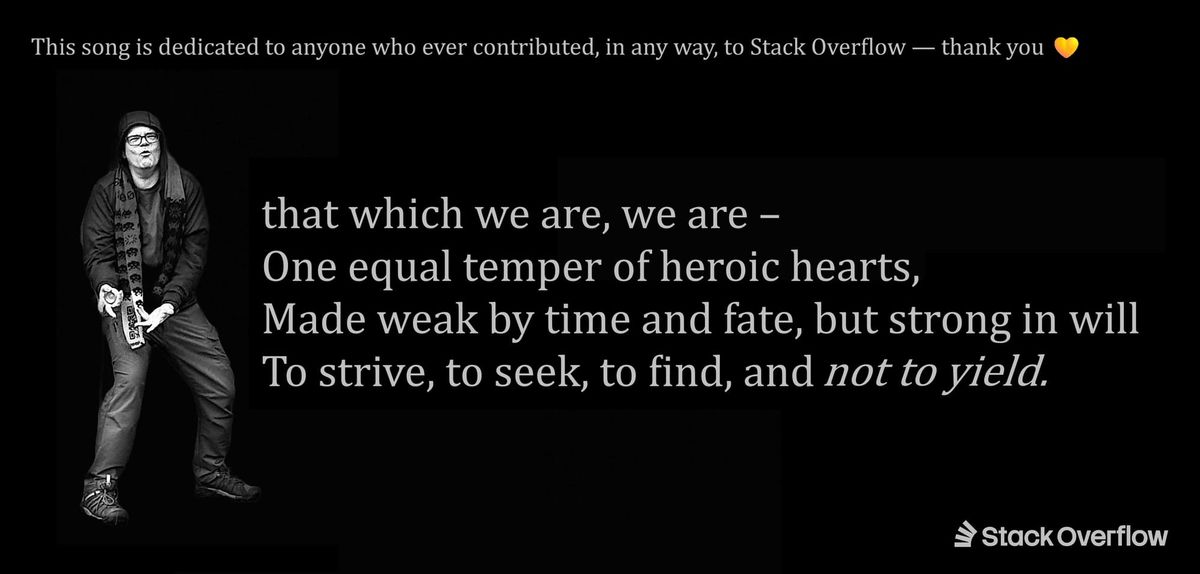
By coordinating the schedule so that Mercer County, West Virginia—his father’s home region—served as the pilot focus in October 2025, Atwood was able to share a final, poignant visit with his father before his passing. Drawing on philosophical touchstones, Atwood noted that the experience left him with a sense of continuity rather than finality, observing that foundational memories and shared human experiences endure far beyond individual lifespans. This philosophical grounding has continuously fueled his post-Stack Overflow entrepreneurial endeavors, including his work with Discourse and his third startup venture, Stay Gold.
The Foundation of Modern AI: Stack Overflow and Community Data
Transitioning from personal reflection to the broader technology sector, Atwood’s commentary quickly turned to the software engineering ecosystem, focusing heavily on the indispensable contribution of the Stack Overflow community. Co-founded by Atwood and Joel Spolsky in 2008, Stack Overflow evolved over nearly two decades into the definitive, crowdsourced repository for programming knowledge and technical troubleshooting.
According to industry analysts and tech historians, the platform’s public archive contains tens of millions of meticulously curated questions, peer-reviewed answers, and code snippets categorized by developers across the globe. In his recent writing, Atwood emphasized an open secret within the artificial intelligence sector: modern Large Language Models (LLMs) and Generative AI systems designed for software development derive their core coding capabilities directly from this Creative Commons-licensed dataset. Without the rigorous human curation, peer review, and iterative refinement executed daily by millions of developers on Stack Overflow, contemporary AI coding assistants would lack the foundational logic required to generate functional software code.

The Warning: Preserving the Goose That Lays the Golden Eggs
As artificial intelligence systems increasingly automate introductory programming tasks and field technical inquiries directly, digital communities like Stack Overflow have faced declining user engagement, lower traffic, and monetization pressures. Users who once turned to public forums now frequently rely on conversational AI interfaces, inadvertently starving the ecosystem of the fresh human input required to train future iterations of models.
Drawing parallels to his departure from Stack Overflow to launch Discourse—an open-source platform designed to modernize internet discussion boards—Atwood issued a direct caution to executives leading generative AI and large language model firms. Invoking his historical advice to co-founder Joel Spolsky, Atwood warned leaders against undermining the human communities that generate the foundational data essential to their products.
"Do not, for any reason, under any circumstances, kill the goose that lays the golden eggs," Atwood stated, emphasizing that the human community operating behind digital products performs the irreplaceable heavy lifting of innovation. He advocated for sustainable models of respect, compensation, and reciprocity between AI developers and the communities whose intellectual labor underpins technological progress.

Broader Industry Implications
The concerns raised by Atwood resonate deeply within the broader technology, legal, and economic sectors as stakeholders grapple with the sustainability of data pipelines for machine learning. Key implications of this dynamic include:
- Data Depletion and Model Degradation: As AI models train recursively on synthetic data or scrape human forums that are slowly dying due to a lack of active participation, experts warn of potential model collapse—a phenomenon where AI output quality degrades over successive generations.
- Fair Compensation and Licensing: Major technology companies have increasingly pursued data-licensing agreements with publishers and platform operators. However, decentralized communities of independent contributors often remain uncompensated for the collective value their contributions bring to multi-billion-dollar commercial AI products.
- The Future of Digital Collaboration: Maintaining healthy online ecosystems requires structural incentives for human participants. Industry observers suggest that unless AI developers actively invest in sustaining the public forums and knowledge bases they harvest, the pipeline of reliable technical data could dry up entirely.
Ultimately, Atwood’s reflections bridge the deeply emotional reality of human mortality with the hyper-accelerated evolution of artificial intelligence. By honoring his father’s memory alongside the collective labor of millions of programmers, he underscores a timeless principle: technology is only as valuable, resilient, and enduring as the human communities that build and sustain it.