AI-Accelerated Development Delivers Productivity Gains While Unveiling Critical New Challenges in Codebase Visibility and Risk Management

The promise of artificial intelligence in software engineering is rapidly becoming a tangible reality, with engineering teams across industries reporting significant increases in productivity and velocity. The deployment of AI-powered coding tools has moved beyond experimental phases, firmly establishing itself within production environments and reshaping the landscape of software development. This accelerated pace, however, brings with it a complex set of new challenges, particularly concerning comprehensive codebase visibility and the management of accumulating risk.
A recent survey conducted by Dimensional Research for Flux, encompassing 309 engineering leaders, highlights this transformative shift. A substantial 67% of organizations that have integrated AI-generated code into their workflows report a marked increase in productivity. Furthermore, nearly 45% of these organizations have already deployed AI coding tools directly into their production environments, a testament to the rapid adoption and perceived value of these technologies. This snapshot, while from a single report, reflects a broader industry trend where development teams are leveraging AI to accomplish tasks and deliver code faster than previously imagined, even just a year ago. The immediate impact is clear: AI is not merely a futuristic concept but a present-day catalyst for enhanced efficiency in software delivery.
A New Era of Software Development: The Rapid Ascent of AI-Powered Tools
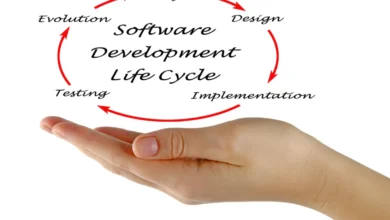
The integration of artificial intelligence into the software development lifecycle (SDLC) has been a gradual but accelerating process. For years, developers have benefited from AI-adjacent tools such as intelligent IDEs offering sophisticated code completion, static analysis tools identifying potential bugs, and automated testing frameworks. However, the advent of large language models (LLMs) and generative AI has ushered in a fundamentally new era. Tools like GitHub Copilot, AWS CodeWhisperer, and others have moved beyond mere assistance, offering capabilities to generate entire functions, suggest complex code blocks, and even refactor existing code.
The chronology of this shift is remarkably swift. While foundational AI research has been ongoing for decades, the practical, widespread application of generative AI in coding began to gain significant traction in the early 2020s. The release of highly capable models to the public quickly spurred innovation and adoption within the developer community. Initial skepticism has largely given way to pragmatic implementation, as organizations recognize the competitive advantages offered by AI in reducing development cycles and freeing human engineers to focus on higher-order architectural and problem-solving tasks. This rapid deployment, as evidenced by the Flux survey, underscores the perceived immediate value and the strategic imperative for businesses to leverage these advanced capabilities.
The Evolving Ecosystem of Development Tools and the Role of Automated Code Review
Parallel to the rise of AI-generated code, the broader ecosystem of development tools is undergoing a significant maturation. Automated code review, increasingly augmented by AI capabilities, is quickly becoming a standard component of modern production tooling. The Flux research indicates that nearly 40% of organizations have already implemented automated code review systems. This adoption is driven by compelling advantages: these tools excel at catching defects early in the submission process, consistently applying predefined coding standards, and providing feedback with a speed that human review processes simply cannot match.
Industry experts widely acknowledge the efficacy of AI in this domain. Indeed, nearly two-thirds of the engineering leaders surveyed believe that AI could, in certain aspects, outperform human reviewers in code review. This sentiment is rooted in AI’s superior ability to apply uniform standards consistently across vast volumes of code, a critical capability when development teams are generating code at an unprecedented pace. In environments where human teams face overwhelming amounts of code to review, AI offers a scalable solution for maintaining quality at the point of submission.
The Double-Edged Sword: Productivity Versus Pervasive Blind Spots
While automated code review effectively addresses a crucial question—"Does this individual change contain detectable defects?"—at the moment of a pull request, its scope is inherently limited. It is designed to scrutinize discrete changes rather than to provide a holistic, continuous view of the evolving codebase. This distinction is becoming increasingly critical as AI-accelerated development fundamentally alters the volume, velocity, and characteristics of code flowing into production systems.
Teams are now generating code not only faster but also in greater quantities. Often, this AI-generated code appears remarkably polished and sophisticated at first glance, which paradoxically can make it more challenging for human reviewers to identify subtle issues or architectural inconsistencies. Moreover, the inherent time-consuming nature of manual code review remains a significant bottleneck. The Flux survey revealed that almost 80% of engineering teams already dedicate at least 10% of their time to code review, with approximately one in ten spending upwards of 40% of their working hours on this task. This substantial time investment underscores the strain on human review capacity, a strain that AI-accelerated output only exacerbates.
The core issue is that review capacity is not scaling commensurately with AI-accelerated code output. This imbalance leads to more than just increased workload; it introduces significant potential risks. The sheer volume of new code can obscure small changes that carry profound downstream consequences. Security vulnerabilities, for instance, are increasingly slipping through traditional review processes simply because the volume of code to evaluate at a granular level is too vast for human teams. Nearly half of the respondents in the survey indicated that they struggle to consistently detect security issues week after week, with challenges in identifying dependency changes and performance impacts lagging closely behind. Alarmingly, only a minuscule 3.6% of respondents reported that AI-introduced issues never reach production, indicating that for the vast majority of teams, the reality of AI-generated vulnerabilities making it into live systems is a known and recurring concern.

Architectural Drift and the Crisis of Visibility
The accumulation of issues within a codebase due to AI-accelerated development often manifests as architectural drift – subtle, incremental changes that, over time, deviate significantly from the intended design. Many engineering leaders grapple with this precise challenge: they embrace AI coding tools, witness an impressive surge in development velocity, invest in automated review to catch immediate problems, only to discover months later that deeper, systemic issues have accumulated in their codebase, entirely missed by their existing review processes. This is not merely a case of a human reviewer missing an isolated bug, which can always happen. Instead, it points to a more profound systemic failure.
Architectural changes, especially when they occur incrementally and without continuous oversight, are exceptionally difficult to detect. When no single entity possesses comprehensive visibility into the week-over-week evolution of the codebase, these subtle drifts go unnoticed. The incidents that eventually arise from such accumulation might superficially appear to be failures of individual code reviews, but they are fundamentally failures of visibility.
Beyond the Pull Request: The Critical Need for Codebase Visibility
True codebase visibility entails something specific and comprehensive: a deep understanding of what changed, where, and why, continuously tracked across time and across diverse development teams. It means having the capability to detect the growth of complexity within a specific module before it becomes unmaintainable. It means catching instances where generative AI inadvertently replicates existing antipatterns, allowing them to proliferate across various services without human detection. Traditional methods like tracking individual Jira tickets, conducting post-incident retrospectives, or relying solely on engineer-flagged issues are insufficient for this level of insight. These methods offer retrospective or siloed views; what is needed are continuous signals derived directly from the code itself.
The appropriate mental model for addressing these challenges involves distinct layers of oversight. Automated code review remains an indispensable component for any engineering organization deploying AI-generated code. Its effectiveness in catching defects before they are merged into the main branch prevents a significant number of potential issues. However, its operation is confined to individual changes at the point of submission—a critical but singular checkpoint.
Codebase visibility, in contrast, operates continuously and at the system level. It provides the crucial context that a specific dependency shifted three weeks ago in a manner that would be highly relevant to the security team, or that a particular module has been accumulating complexity across a dozen commits in ways no single pull request review could ever reveal. These critical signals do not emerge from isolated reviews of individual pull requests or from static project management tickets. They arise from an ongoing, dynamic analysis of how the codebase evolves over time.
Industry Reactions and the Path Forward: Evolving Engineering Practices
Many engineering leaders are already acutely aware that something essential is missing from their current development pipelines. They possess robust code review coverage, yet they lack the crucial week-over-week panoramic view of AI’s aggregate impact on their codebase. This recognition underscores a growing consensus: shipping AI-generated code at scale is a fundamentally different problem than merely reviewing individual pieces of it, and it demands a correspondingly distinct set of solutions and practices.
Industry experts and thought leaders in areas such as Platform Engineering and DevSecOps are increasingly advocating for a proactive evolution of engineering practices. For instance, discussions at recent developer conferences and in industry whitepapers frequently emphasize the need for "AI governance" within development workflows—a framework for ensuring that AI-generated code adheres to organizational standards, security policies, and architectural principles. Leading software architects are calling for greater investment in tools that can provide continuous architectural monitoring and drift detection, moving beyond traditional static analysis to dynamic, temporal analysis of codebases.
This shift also has profound implications for developer roles. While AI handles more routine code generation, human engineers are increasingly being tasked with higher-level responsibilities: architectural oversight, system design, prompt engineering for AI tools, and, crucially, the interpretation and refinement of AI-generated output. The emphasis shifts from merely writing code to curating, validating, and ensuring the systemic integrity of code, regardless of its origin. Organizations that successfully navigate this transition will likely gain a significant competitive advantage, balancing rapid development with robust quality and security.
The Future of Software Engineering: An AI-Native Approach to Quality and Security
The long-term implications for software engineering point towards an imperative for an "AI-native" approach to quality and security. This involves recognizing that AI-accelerated development fundamentally alters the risk profile of a codebase. Proactive risk management, therefore, must evolve to address these new characteristics. This means moving beyond reactive incident response to implementing continuous, system-level monitoring that can detect subtle changes before they escalate into major issues.
The accumulation of technical debt, maintainability challenges, and potential security vulnerabilities in AI-generated codebases presents a significant challenge for the future. Without adequate visibility, organizations risk building complex systems on unstable foundations, leading to increased operational costs and reduced agility in the long run. The strategic imperative for businesses is clear: to harness the immense productivity gains offered by AI while simultaneously investing in advanced visibility and governance tools that ensure the health, security, and architectural integrity of their software assets. The future of software engineering will be defined not just by how quickly code can be generated, but by how effectively its systemic impact can be understood and managed.