Coder Announces General Availability of Self-Hosted AI Agents to Secure Enterprise Development Workflows

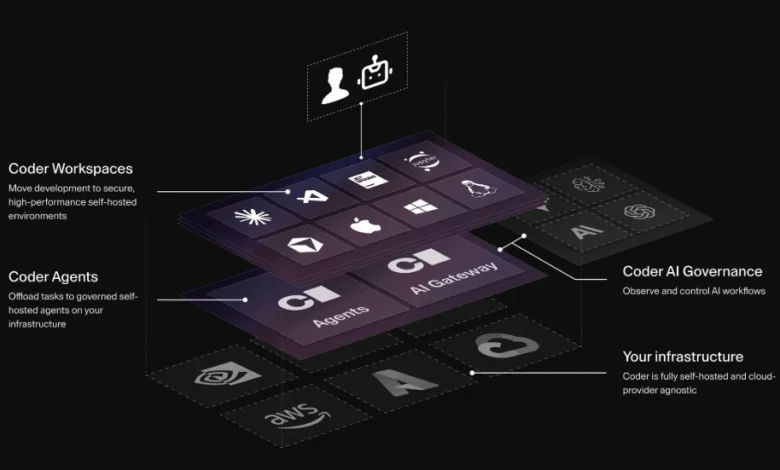
AUSTIN, Texas — Coder has officially announced the general availability of Coder Agents, a landmark expansion of its self-hosted development platform that provides regulated industries and government agencies with a secure, air-gap-capable infrastructure for AI-assisted programming. By moving both the AI agent and the code execution environment entirely on-premises, Coder aims to bridge the gap between the rapid evolution of generative AI and the stringent data sovereignty requirements of highly sensitive sectors.
The announcement marks a pivotal shift in how enterprises deploy artificial intelligence. While many organizations have experimented with AI coding assistants, the inherent security risks associated with sending proprietary source code to third-party cloud providers have created a significant barrier to widespread adoption in sectors such as defense, finance, and healthcare. Coder’s new offering removes these third-party dependencies, allowing teams to maintain complete control over their model selection, toolchains, and runtime environments.
The Evolution of Secure AI Development
The trajectory toward this launch began with the introduction of Coder’s Agent Relay, a feature that allowed developers to connect cloud-based AI tools—like Cursor—to secure, self-hosted Coder workspaces. While effective for some, many organizations required a more comprehensive solution that did not rely on external cloud connections at all.
Following the beta testing phase, Coder identified that security and performance were the primary drivers for adoption. During the beta period, data revealed a compelling trend: nearly 70% of all Coder Agents workloads were triggered via API rather than through direct interactive IDE sessions. This shift indicates that developers are increasingly utilizing AI not just for chat-based assistance, but as a robust, automated infrastructure component for background tasks, CI/CD pipelines, and large-scale refactoring projects.
By transitioning from beta to general availability, Coder has hardened the platform to meet enterprise-grade demands. Key upgrades include enhanced agent durability, stabilized APIs for headless background operations, and granular role-based access controls (RBAC) that provide administrators with full visibility into how, when, and by whom AI agents are being utilized.
Bridging the Air-Gap Requirement
For government entities and private organizations handling highly classified or proprietary information, the "air-gap" is the gold standard for data security. An air-gapped environment is one that is physically isolated from the public internet, making it immune to external cyberattacks and data leaks originating from cloud-based model providers.
Coder Agents addresses this by enabling the entire AI stack—from the model inference engine to the IDE and the execution sandbox—to reside within the organization’s firewall. This capability is critical for teams that must adhere to compliance frameworks such as FedRAMP, HIPAA, or the General Data Protection Regulation (GDPR). Because the environment is self-hosted, organizations can curate their own Model Context Protocol (MCP) servers and internal skill sets, ensuring that the AI has access only to the specific repositories and tools authorized by security teams.
Market Context and the Shift to "Local-First" AI
The broader software development landscape is currently undergoing a "local-first" transformation. With the rise of high-performing open-source large language models (LLMs) such as Meta’s Llama series, Mistral, and DeepSeek, enterprises no longer feel forced to rely exclusively on proprietary cloud models like GPT-4 or Claude.

According to industry analysts, the primary concern for CTOs in 2024 and 2025 has been "IP leakage." When developers paste code into public chatbots, they inadvertently risk training those models on private corporate assets. Coder’s strategy aligns with the growing demand for private LLM hosting, where the organization hosts its own model weights on internal hardware, such as NVIDIA-powered clusters. By integrating this with Coder’s platform, the organization creates a closed-loop system where the AI is a secure, internal utility.
"The industry is moving past the initial ‘hype’ phase of AI coding," noted an industry expert familiar with the release. "We are now entering the ‘infrastructure’ phase. Organizations are asking how they can integrate these tools without compromising their compliance posture. Coder’s approach of centralizing governance while decentralizing execution is a blueprint for how large enterprises will adopt AI in the coming years."
Technical Implications for Development Teams
For developers, the transition to Coder Agents is designed to be seamless. Because the platform remains compatible with standard industry tools and protocols, engineers can continue using their preferred IDEs while the "heavy lifting" of AI processing is handled by the organization’s own infrastructure.
The platform’s support for MCP (Model Context Protocol) is particularly significant. MCP allows AI models to connect securely to data sources and tools without requiring individual integrations for every new service. By standardizing this in a self-hosted environment, Coder enables IT departments to build "gold-standard" AI environments that are pre-configured with security policies, approved libraries, and internal documentation, which the AI can reference to produce higher-quality, compliant code.
Strategic Roadmap and Future Outlook
Looking ahead, Coder has indicated that it will continue to prioritize operational simplicity. For many enterprises, the barrier to AI adoption has not been the lack of models, but the complexity of managing the underlying infrastructure. By providing a "set-it-and-forget-it" self-hosted solution, Coder is lowering the barrier to entry for smaller, highly regulated firms that lack the massive DevOps teams typically required to maintain custom AI platforms.
The company plans to continue investing in four key areas:
- Model Agnostic Flexibility: Ensuring that as new, more efficient open-source models emerge, they can be swapped into the Coder environment with minimal configuration.
- Operational Simplicity: Reducing the maintenance overhead for IT teams through automated updates and standardized deployment patterns.
- Developer Experience (DX): Ensuring that security measures do not create friction for developers, maintaining the speed and flow states that make AI coding assistants attractive in the first place.
- Governance and Auditing: Providing deeper insights into agent behavior to satisfy regulatory audits and internal security mandates.
Conclusion
The general availability of Coder Agents represents more than just a software update; it is a signal of the maturation of the AI-augmented development market. As enterprises move beyond the experimental phase, the focus has shifted toward security, control, and reliability.
For the modern enterprise, the ability to leverage the productivity gains of AI without sacrificing the integrity of their codebase is no longer a luxury—it is a competitive necessity. With the deployment of Coder Agents, organizations are now empowered to build their own internal "AI-augmented software factories," keeping their most sensitive intellectual property safe while accelerating their release cycles in an increasingly competitive digital economy.
As of today, the offering is fully supported for commercial enterprise use. Organizations looking to implement these capabilities can find comprehensive documentation and deployment guides on the Coder website, facilitating a transition toward a more secure, controlled, and productive future in software engineering.