Decoding the Buyer Mindset: David Skok Reveals Advanced Strategies for Optimizing SaaS Funnel Conversion Rates at SaaStock


In the highly competitive landscape of Software-as-a-Service (SaaS), customer acquisition costs continue to rise, placing unprecedented pressure on marketing and sales funnels. Addressing this critical industry challenge, renowned venture capitalist and startup expert David Skok took the stage at this year’s SaaStock conference to deliver a comprehensive masterclass on optimizing funnel conversion rates. Skok’s presentation centered on a foundational yet frequently overlooked premise: achieving breakthrough conversion metrics requires a profound, empirical understanding of the cognitive and psychological processes occurring inside a buyer’s mind as they navigate the purchasing journey.
The annual SaaStock conference, recognized globally as one of the premier gatherings for SaaS founders, executives, investors, and go-to-market leaders, serves as a breeding ground for cutting-edge growth strategies. This year’s event drew thousands of attendees to examine the shifting dynamics of the tech sector, where efficiency and net-revenue retention have largely superseded the "growth-at-all-costs" mentality of previous years. Within this macro-economic context, Skok’s session on cognitive buyer mapping emerged as one of the most anticipated and impactful events of the conference schedule.
The Psychology of the Modern SaaS Buyer
Opening his presentation, Skok detailed how traditional marketing and sales funnels often fail because they are built from the inside out, reflecting the operational preferences of the vendor rather than the cognitive reality of the buyer. Modern B2B buyers, according to Skok, operate under severe constraints: decision-making units within enterprises have expanded, risk aversion is at an all-time high, and information overload has made buyers inherently skeptical of traditional promotional messaging.
To counteract these friction points, Skok argued that organizations must align their go-to-market motions with the distinct stages of buyer cognition. This framework requires mapping every touchpoint—from initial brand awareness and educational content consumption to product evaluation and final procurement—against the psychological milestones of problem recognition, solution exploration, vendor evaluation, and consensus building.
Using methodologies refined over decades of advising high-growth technology companies, Skok demonstrated how minor friction points in the user experience can trigger cognitive fatigue, causing potential leads to abandon the funnel prematurely. By systematically auditing the buyer’s journey through a psychological lens, companies can identify and eliminate these hidden barriers, transforming underperforming pipelines into predictable revenue engines.
Chronology of the Methodology: From Concept to Breakthrough
The strategic frameworks presented at SaaStock are not theoretical constructs; they are the culmination of years of iterative testing and deployment across Skok’s portfolio of investments and advisory engagements. The chronology of these optimization techniques traces back to the evolution of modern inbound marketing, transitioning from simple lead-generation tactics to sophisticated account-based experiences.
In the early phases of applying this mindset-driven framework, Skok and his teams focused primarily on content alignment—ensuring that the messaging delivered at the top of the funnel directly addressed the immediate anxiety points of the target persona. Over time, as enterprise buying cycles grew more complex, the methodology expanded to include mid-funnel and bottom-funnel dynamics, emphasizing the importance of enabling internal champions to sell on behalf of the vendor within their own organizations.
At SaaStock, Skok synthesized this multi-year evolution into an actionable blueprint. He walked the audience through specific diagnostic steps:
- Mapping the emotional state of the buyer at each distinct transition point in the funnel.
- Identifying the gap between what a company communicates and what a risk-averse buyer actually needs to hear to build trust.
- Restructuring product demonstrations and trial experiences to validate the buyer’s internal hypotheses rather than simply listing feature sets.
Industry Data and Empirical Evidence
The urgency for such optimization is underscored by recent macroeconomic data within the global SaaS sector. According to aggregated industry benchmarks from leading revenue intelligence platforms, average B2B website conversion rates hover stubbornly between 1% and 3%, while lead-to-opportunity conversion rates frequently stall below 15%. Furthermore, customer acquisition costs (CAC) across the SaaS industry have surged by over 60% across a five-year rolling window, making top-of-funnel volume an unsustainable driver of enterprise value.
Skok’s presented case studies illustrated how aligning funnel mechanics with buyer psychology yields dramatic deviations from these baseline averages. Companies that implemented the cognitive mapping framework reported substantial improvements in trial activation rates, shortened sales cycles by weeks, and experienced measurable upticks in net-new annual recurring revenue (ARR). By shifting focus from volume-driven acquisition to conversion efficiency, these firms achieved sustainable growth without proportionally increasing their marketing expenditures.
Industry Reactions and Expert Analysis
The reaction from the SaaStock community was overwhelmingly positive, with founders and sales leaders praising the session for offering a pragmatic antidote to generic growth advice. Go-to-market analysts noted that Skok’s emphasis on buyer empathy represents a necessary maturation of the SaaS industry.
As market conditions tighten, buyers demand greater transparency, shorter paths to value, and verifiable return on investment. Traditional tactics—such as aggressive gated content, high-pressure sales calls, and feature-heavy product demos—are increasingly meeting resistance. Skok’s framework addresses this cultural shift by framing sales and marketing not as acts of persuasion, but as acts of facilitation that guide the buyer smoothly through their own internal consensus-building process.
Moreover, financial analysts observing the conference pointed out that improving funnel conversion rates directly impacts enterprise valuation. In a market where valuation multiples are heavily tied to capital efficiency and Rule of 40 performance, optimizing conversion metrics reduces burn rate and accelerates payback periods on marketing investments. Consequently, mastering the buyer mindset is no longer just a tactical marketing function; it is a core fiduciary responsibility for executive leadership teams.
Broader Implications and Next Steps for SaaS Leaders
The long-term implications of Skok’s SaaStock presentation extend well past immediate pipeline adjustments. As artificial intelligence and automation reshape how buyers research software solutions, the human element of trust and cognitive alignment will become even more pronounced. Automated tools can scale the delivery of content, but they cannot inherently diagnose or soothe the psychological anxieties of a risk-averse enterprise buyer committee.
For organizations looking to operationalize these insights, industry experts recommend initiating a comprehensive funnel audit. This process involves interviewing recent win-and-loss accounts to uncover the unspoken objections and cognitive hurdles experienced during the evaluation process. By anchoring marketing copy, sales scripts, and product onboarding flows in these empirical discoveries, companies can replicate the breakthrough results outlined on the SaaStock stage.
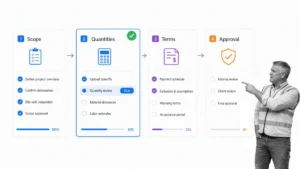
For those unable to attend the live session in Dublin, comprehensive slide decks have been made publicly available via digital publishing platforms, offering a detailed visual breakdown of the psychological frameworks. Additionally, curated video overviews provide concise summaries of the core concepts, ensuring that the broader entrepreneurial community can access and implement these advanced go-to-market strategies.