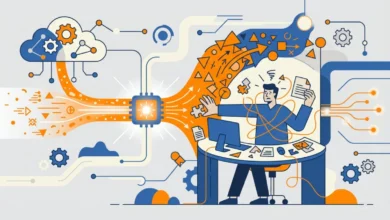
The rapid integration of artificial intelligence into professional workflows has fundamentally altered the mechanics of modern productivity. As of September 2026, industry data indicates that professionals leveraging AI agents can complete complex, multi-step tasks—such as configuring software interfaces or generating system architecture—at speeds up to 10 times faster than manual processes. However, this acceleration has introduced a systemic vulnerability in workplace operations: a phenomenon now being categorized as "Knowledge Debt."
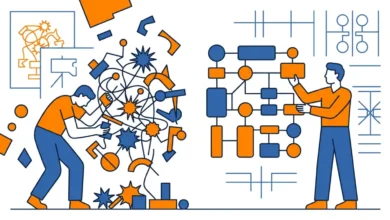
Knowledge Debt occurs when an individual utilizes AI to build or execute a complex system without fully understanding the underlying logic or framework of the output. While the initial delivery of a project—such as the configuration of 32 optimized Stream Deck buttons in under 20 minutes—may be successful, the operator often lacks the contextual knowledge required to troubleshoot or maintain the system once it is live. This creates a fragile dependency on the technology, where any disruption in the AI-generated code or workflow leaves the user unable to perform necessary repairs or optimizations.
The Mechanism of Knowledge Debt
In the current professional landscape, the ability to "ship" quickly is often conflated with operational efficiency. Developers and project managers are increasingly adopting a "generate-and-deploy" methodology. The inherent risk, however, is that while the speed of delivery is optimized, the long-term sustainability of the system is compromised.
Industry analysts note that retroactive learning—the practice of dissecting and documenting AI-generated outputs after the fact—is becoming an essential skill. By dedicating approximately 15 minutes per task to document how an AI-produced system functions, professionals can effectively "repay" their Knowledge Debt. This ensures that the operator retains control over the systems they manage, transforming the AI from a black-box utility into a transparent, manageable tool.
Redefining Time-Blocking in the Age of Agents
Traditional time management paradigms, which rely on linear, hour-by-hour task execution, are becoming increasingly obsolete. Historically, a time block represented a single, discrete task. With the emergence of AI agents, that structure has shifted into a "10-80-10" workflow model. In this framework, the professional spends 10% of their time defining the desired outcome, 80% of the execution is handled by an autonomous agent, and the final 10% is reserved for review and refinement.
This shift allows for parallel processing. A single time block can now accommodate multiple workflows, such as concurrent data migrations, newsletter production, and script generation. Because the "middle 80%"—the manual labor phase—no longer requires the human operator’s constant attention, the role of the professional has evolved from "executor" to "architect and auditor."
The Hedonic Treadmill of AI Productivity
One of the most pressing concerns regarding the adoption of AI is the tendency toward "productive overwork." When AI enables individuals to complete their primary objectives ahead of schedule, the common psychological response is to immediately fill the vacated time with additional tasks. This behavior mirrors the "hedonic treadmill," where increased efficiency does not result in improved work-life balance or restorative rest, but rather an escalation in output volume.
Organizational psychologists suggest that this pattern leads to rapid professional burnout. To mitigate this, experts recommend the implementation of "hard stop" times. By consciously choosing to step away or prioritize low-energy recovery tasks upon the completion of a primary "top three" list, professionals can maintain a sustainable pace. The goal is to avoid the default impulse of filling every void in the schedule, thereby preserving cognitive resources for high-leverage decision-making.
Energy Matching and Strategic Scheduling
The optimization of professional output is as much about energy management as it is about time management. The concept of "Energy Matching"—the practice of aligning specific tasks with the energy levels required to perform them—is gaining traction in corporate productivity circles.
Many professionals fall into the trap of performing low-energy administrative tasks during high-energy morning hours, effectively wasting their most productive windows on rote work. By utilizing a "Friday Afternoon Routine," individuals can move administrative or maintenance tasks to the end of the week, reserving high-energy Monday mornings for complex, creative, or strategic initiatives.
Furthermore, "Day Theming" has emerged as a superior alternative to rigid time-blocking. By categorizing days into themes—such as "Communication Days" for meetings and "Deep Work Days" for development—professionals can minimize the cognitive tax of switching contexts. Data from calendar audits suggests that "scattered meetings"—those placed in the middle of deep-work blocks—are the primary cause of decreased productivity. Consolidating meetings into a single "Meeting Day" preserves the integrity of the work week and minimizes the recovery time required between complex tasks.
Data-Driven Productivity Audits
The proliferation of AI tools has also provided a new mechanism for time management: the retrospective calendar audit. By granting an AI agent access to the last 60 days of calendar data, professionals can obtain an objective, data-driven analysis of their time allocation.
This process, which historically required expensive outside consultants, now provides instantaneous insight into "time leaks." By comparing the actual distribution of hours against the intended priorities, users can identify patterns of inefficiency. For instance, if an audit reveals that 40% of a user’s time is spent in fragmented meetings, the user can proactively implement buffer blocks and automated meeting constraints via tools like Calendly or Outlook.
Implications for the Future of Work
The integration of AI into professional workflows is not merely a technical upgrade; it is a fundamental shift in the definition of labor. As organizations move toward a future where AI handles the bulk of execution, the value of the human worker will increasingly reside in the ability to define intent, curate quality, and maintain operational transparency.
However, the industry must remain vigilant against the risks of automation. Without a conscious effort to document systems, manage energy, and resist the urge to over-fill schedules, the very tools designed to liberate the workforce may instead create a new, more intense form of structural fatigue.
The successful professional of the future will be one who treats their own cognitive load with the same rigor they apply to their technical systems. By enforcing system constraints—such as mandatory gaps between meetings, intentional energy matching, and the regular auditing of time usage—individuals can harness the power of AI without incurring the long-term liabilities of Knowledge Debt.
Ultimately, the goal of these productivity frameworks is not to increase the volume of output indefinitely, but to optimize the quality of work while preserving the mental stamina required for long-term professional sustainability. As these practices become standard, the distinction between high-performers and those struggling to keep pace will be defined by their ability to control the technology, rather than being controlled by the speed at which it operates.