Why You Feel Time-Poor Even Though Average Work Hours Have Declined Significantly Over the Last Seven Decades

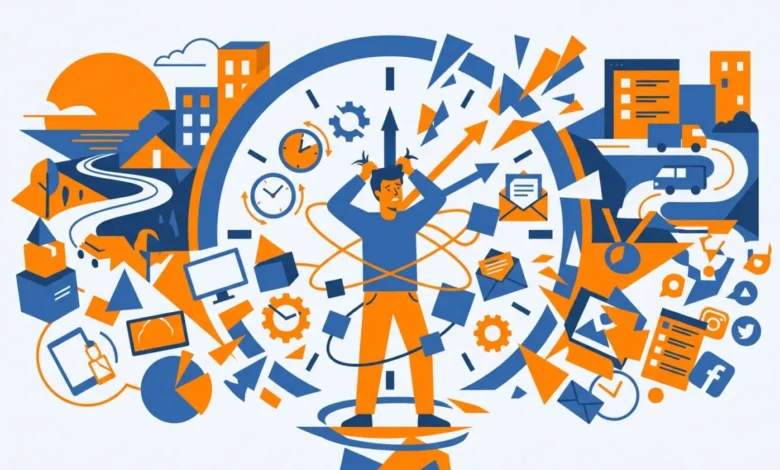
The modern professional is caught in a paradoxical state: despite a statistical reduction in average annual working hours over the past seventy years, the pervasive feeling of being "time-poor" remains at an all-time high. Recent data from the BBC Science Focus indicates that approximately 80% of the population reports a consistent struggle with time management, feeling perpetually behind despite having fewer formal hours at the office than their predecessors.
This phenomenon, often categorized by behavioral scientists as "time poverty," suggests that the issue is not a lack of hours, but rather a crisis of intensity and cognitive fragmentation. As digital communication channels—email, Slack, WhatsApp, and various messaging platforms—have proliferated, the traditional boundaries between professional labor and personal downtime have eroded, leading to a state of constant, low-level accessibility that prevents the brain from entering a restorative state.
The Evolution of the Work Week: A Statistical Overview
The shift in the nature of work has been documented extensively by labor economists. Over the last 70 years, the average number of hours worked annually has dropped by 514 hours. In the mid-20th century, the standard work week was characterized by distinct start and end times, with minimal connectivity outside of the office environment.
The decline in total hours should theoretically provide more leisure time, yet the feeling of "drowning" in tasks persists. Analysts point to the "digital bleed"—the constant tether to mobile devices—as the primary culprit. When an individual never fully disconnects from the digital ecosystem, the brain fails to "file" the day as finished. This lack of closure leads to cognitive fatigue, where the individual remains in a state of high-alert, even during hours that were historically reserved for rest.
Diagnostic Time Auditing vs. Prescriptive Planning
To combat this sense of overwhelm, productivity experts are increasingly advocating for a shift from reactive management to diagnostic assessment. There is a fundamental distinction between a "time audit" and "time tracking."
A time audit is retrospective; it serves as a diagnostic tool to uncover where hours are actually spent, rather than where an individual assumes they are going. A time tracking approach, conversely, is prescriptive, focusing on how one plans to spend their future hours.
For professionals struggling with the feeling of time scarcity, a periodic audit—ideally conducted once or twice a year—can reveal the reality of their daily intensity. Experts recommend selecting one standard workday and one weekend day, avoiding atypical days like Mondays or Fridays. By logging activities in 30-minute intervals, individuals can quantify their "bounce rate"—the frequency with which they switch between disparate communication platforms. This data often reveals that the actual time spent on high-value tasks is significantly lower than the time spent on administrative "quick checks," which cumulatively break down focus and increase mental load.
Cognitive Gaps and the "I Did" List
A significant contributor to the feeling of time poverty is the psychological disconnect between tasks attempted and tasks completed. The human brain tends to prioritize the memory of interruptions and pending items over the memory of completed work, a variation of the Zeigarnik effect.
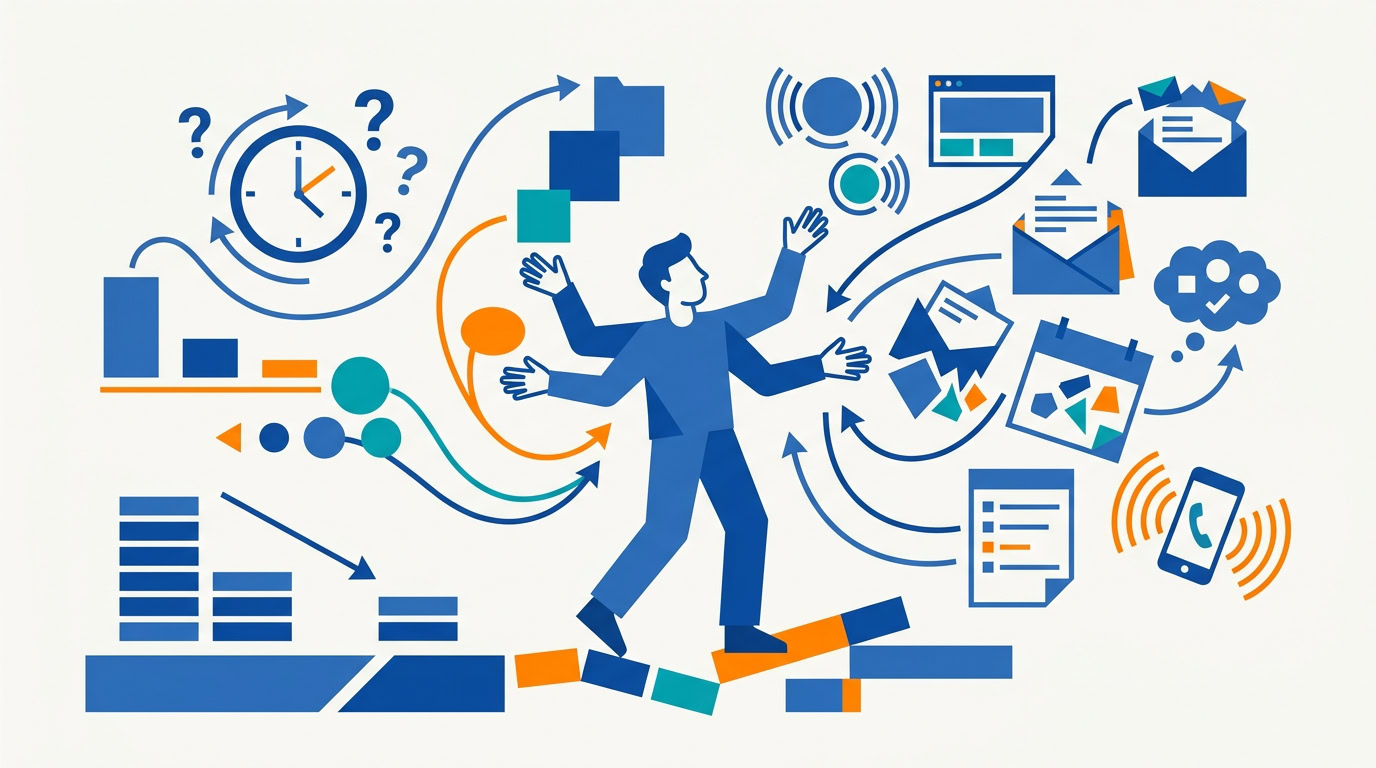
To bridge this gap, organizational psychologists suggest the implementation of an "I Did" list. Unlike a traditional to-do list, which highlights future obligations and induces anxiety, the "I Did" list acts as a record of accomplishments. By documenting three completed tasks at the end of each day, an individual can gain a more objective perspective on their productivity. This practice is designed to counter the cortisol-spiking sensation of being "behind" by providing empirical evidence of output, thereby stabilizing the emotional response to one’s daily workload.
Implementing Physical Friction to Regain Focus
The digital environment is designed to maximize engagement, often at the expense of deep work. To counter the impulse to engage with digital distractions, some professionals are turning to "physical friction" as a method of self-regulation.
Hardware solutions, such as physical buttons that disable non-essential applications on a smartphone, force a deliberate, physical action to break a focus-killing habit. The requirement to stand up and walk to a device to unlock restricted apps creates a "commitment device" that adds enough friction to discourage impulsive digital checking.
These tools are categorized by experts as "training wheels." The objective is not to rely on the hardware indefinitely, but to use it as a scaffold to rebuild the capacity for single-tasking. Once the cognitive habit of sustained focus is re-established, the training wheels can be removed. This transition marks the shift from a dependency on external tools to the internal mastery of one’s attention.
Leveraging Expertise for Goal Execution
The "blank page" problem—the paralysis that occurs when starting a complex, long-term project—remains a major barrier to productivity. Modern workflows are increasingly incorporating generative AI as a surrogate for expert mentorship. By using large language models as a sounding board, individuals can bypass the initial uncertainty of project planning.
The methodology involves asking, "Who has already achieved this goal?" and using the AI to simulate the expertise of that individual. By prompting the system to provide a vision statement, a three-year plan, and granular monthly milestones, an individual can transform an abstract ambition into a tactical roadmap. This process moves the focus from "how to start" to "what to do next," effectively neutralizing the perfectionism that often leads to procrastination.
Broader Implications and Future Outlook
The current crisis of time poverty is likely to persist as long as digital connectivity remains an expectation rather than an option. The implication for corporate culture is clear: organizations that prioritize clear, asynchronous communication over constant, real-time availability may see a significant increase in employee satisfaction and output.
From an individual standpoint, the solution lies in a radical acceptance of intensity over volume. Adding more hours to a week is no longer the solution for a population that is already over-stimulated. Instead, the path forward involves auditing current behaviors, documenting concrete achievements, and reintroducing physical boundaries between the individual and their digital tools.
As of late 2026, the movement toward intentional, high-intensity work is gaining traction. The emphasis is shifting away from the "always-on" culture that defined the early 2020s and toward a model that respects cognitive limits. By starting with simple, low-friction habits—such as writing down three accomplishments at the end of the day—professionals can begin to regain a sense of agency over their time, regardless of the volume of incoming digital demands. The goal is to move from a state of being "crushed" by the calendar to one of intentional, focused, and measurable progress.