
The persistent struggle to integrate new habits into daily routines is rarely a result of a personal character flaw or a lack of willpower. Instead, productivity experts and behavioral psychologists increasingly point to a failure in "habit design"—the process of aligning specific behaviors with the constraints of one’s current lifestyle. As of September 17, 2026, research into time management and cognitive load suggests that the common "all-or-nothing" approach to self-improvement is the primary driver of routine collapse.
The Contextual Mismatch in Habit Formation
The fundamental premise of a habit stack—pairing a new behavior with an existing one—is grounded in the concept of implementation intentions. However, a significant disconnect often occurs when individuals adopt routines designed for a different "season of life." A morning regimen that incorporates an hour of gym time followed by reading might be sustainable for a professional with a flexible schedule, but it is objectively incompatible with the demands of a parent managing a morning school rush.
When an individual attempts to force a high-friction routine into a high-demand schedule, the inevitable crash is frequently misattributed to a deficiency in discipline. In reality, the failure is structural. Psychologists suggest that the human brain possesses a limited reservoir of cognitive energy each morning. By attempting to force complex, time-intensive habits during a period of high environmental chaos, individuals exceed their cognitive load, leading to immediate abandonment of the routine.
The Mechanics of the "Moving Train" Strategy
To bypass this resistance, experts advocate for the "moving train" analogy. Attempting to initiate a new behavior from a state of total rest is significantly harder than anchoring that behavior to a task already in motion. This method, often referred to as "habit stacking," relies on leveraging existing neural pathways—automatic behaviors like brushing teeth, starting a car, or beginning the workday.
The formula is deceptively simple: "After [Current Habit], I will [New Habit]." The key to success, according to recent productivity studies, lies in the selection of the "trigger" (X). If the trigger is not already an automatic, non-negotiable part of one’s day, the stack will fail because the brain is forced to manage two competing new tasks. By anchoring a new behavior to an established, automatic action, the friction associated with the initiation phase is minimized.
Fact-Based Analysis: The Fallacy of the "Hustle Trap"
A major impediment to sustainable habit change is what researchers term the "hustle trap"—the tendency to aim for the most optimized, impressive version of a habit immediately. Data on habit retention indicates that individuals who start with "minimum viable habits" have a 40% higher success rate over a six-month period compared to those who start with "idealized" versions of a routine.
For example, a person desiring to start a meditation practice might attempt a 30-minute silent session at 5:00 AM. When their schedule is disrupted, they abandon the habit entirely. Conversely, those who utilize "boiling-water windows"—the brief, naturally occurring pauses while waiting for a microwave, a kettle, or an engine to warm—report higher levels of consistency. By performing a two-minute meditation during these passive moments, the individual bypasses the need to "find" time, effectively turning dead time into productive or restorative time.
The Role of Specificity in Behavioral Execution
Ambiguity acts as a catalyst for procrastination. Behavioral studies confirm that intentions defined with high specificity are significantly more likely to be executed than vague, general goals. For instance, the intention "I will do yoga after work" provides too much room for internal debate and decision fatigue.
By contrast, the statement "After I walk through the front door, I will immediately lay out my mat and start the 20-minute yoga video on my tablet" removes the decision-making process. This aligns with the "Next Action" methodology found in the Getting Things Done (GTD) framework. By defining the exact physical motion required to begin, the brain’s "excuse engine"—the psychological mechanism that seeks to avoid discomfort or effort—is effectively bypassed.
Chronology of Habit Failure and Optimization
In examining the timeline of a typical failed habit, a clear pattern emerges:
- The Inspiration Phase: An individual identifies a goal (e.g., increased physical fitness) and selects an ambitious stack (e.g., 60-minute workout).
- The Initial Push: The individual succeeds for 3–5 days, relying on high initial motivation.
- The Contextual Conflict: A "chaotic" day occurs (e.g., family emergency, work deadline). The ambitious stack fails because it requires a stable environment.
- The Willpower Trap: The individual blames themselves for the failure, leading to a period of total cessation.
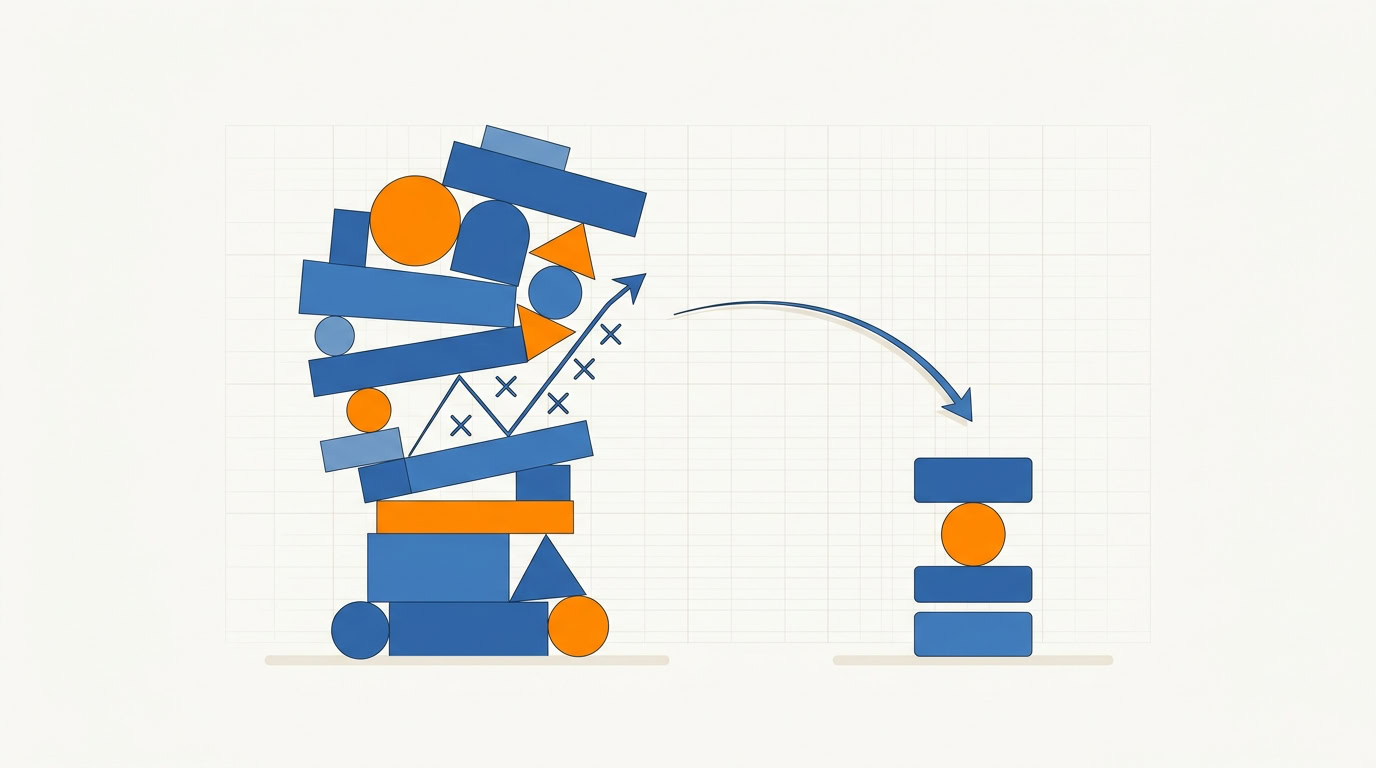
- The Re-evaluation: A successful approach requires shifting from "the perfect version" to the "minimum viable version," which can be sustained even during peak stress.
Official Perspectives on Behavioral Design
Productivity specialists and cognitive scientists are increasingly emphasizing that "tweaking" or over-engineering a system often serves as a form of procrastination. The act of planning, adjusting apps, and refining trackers can provide the illusion of progress while delaying the actual performance of the habit.
The professional consensus is clear: the work is not in the system design; the work is in the repetition of the behavior. If a stack fails, the recommendation is to audit the system for "design flaws" rather than character flaws. A habit should be designed for the version of the individual that exists on their worst day, not their best day. Once the behavior is cemented into the daily rhythm, only then should an individual look to optimize, expand, or add complexity.
Broader Implications for Productivity
The shift toward "micro-habits" and "contextual auditing" represents a broader trend in organizational psychology. As global professional environments become increasingly fast-paced, the ability to maintain personal standards amidst chaos is becoming a critical competitive advantage. Organizations that provide training in habit formation—such as the 25X productivity system—often report that employees who master these small-scale, stackable habits demonstrate higher levels of long-term job satisfaction and lower rates of professional burnout.
Ultimately, the lesson is one of humility regarding one’s current circumstances. By acknowledging the reality of one’s current "season," individuals can avoid the common trap of setting expectations that are doomed by external constraints. Identifying "waiting windows"—those moments of forced inactivity during the day—is a practical, data-backed strategy to reclaim time. Whether it is planking while a microwave runs or practicing mindfulness while waiting for a computer to boot up, the key to building lasting change is to work within the existing architecture of one’s day, rather than attempting to build a new one from scratch.
To begin, one must identify a single, non-negotiable trigger, attach a micro-action that takes less than two minutes, and commit to the process for 30 consecutive days before attempting any optimization. Anything more complex is, statistically, an invitation to failure.