Google Gemini lets you share your AI likeness with friends, tag each other in prompts, and star together in generated videos.

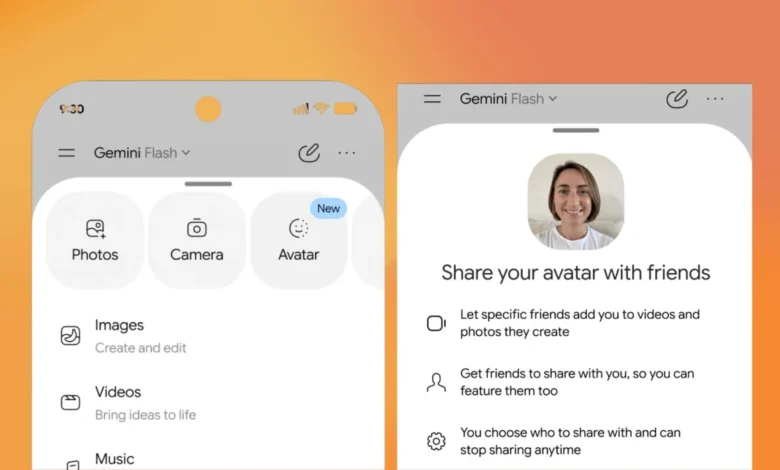
Google has introduced a major social expansion to its Gemini artificial intelligence ecosystem, rolling out a feature that allows users to share their personal AI likenesses with friends and collaborate within generative media. The update transforms Gemini from a solitary assistant into a shared multimedia platform, enabling users to tag friends in text prompts, maintain character and voice consistency across generations, and co-star in custom AI-generated images and videos without the logistical hurdles of traditional filming or digital editing.
This new capability arrives as tech companies increasingly compete to make generative AI more personalized, interactive, and socially integrated. By bridging the gap between individual AI avatars and social networks, Google aims to redefine how friends, creators, and digital communities generate collaborative content. However, the rollout also highlights growing industry-wide questions regarding data privacy, consent, and the ethical management of digital likenesses.

Understanding Gemini’s Personal AI Avatars
The foundation of this social update rests on Gemini’s existing personal avatar architecture. Previously designed primarily for individual use, Gemini avatars allow users to construct a digital double by processing high-definition recordings of their face and voice. This multimodal reference data gives the underlying AI models the necessary parameters to accurately recreate a user’s physical appearance, facial expressions, and vocal characteristics across a wide variety of synthetic scenarios.
To initiate the process, users navigate to the Gemini web interface at gemini.google.com, access the file menu within the text box, and select the avatar creation tool. The system then generates a secure QR code. Scanning this code with a smartphone redirects the user to a guided capture sequence, requiring a short video recording while speaking aloud to capture both visual and auditory data points.
Google has established strict technical parameters to ensure optimal output quality. The setup process requires a quiet environment, balanced eye-level illumination free of harsh shadows or overexposure, and an unobstructed view of the user’s face. Accessories such as sunglasses, hats, or face coverings are prohibited during the scan to prevent rendering errors. Once captured, the data is processed, allowing the user to anchor their digital twin to their account.

The Mechanics of Social Sharing and Collaborative Prompting
With the latest update, the utility of these avatars extends far beyond solo projects. Users can now grant trusted contacts access to their digital likeness through a newly introduced sharing infrastructure.
To share an avatar, users must access the settings menu within Gemini, navigate to the dedicated avatar management section, and input the Gmail address of the intended recipient. The platform then transmits an invitation, giving the recipient the autonomy to accept or decline the connection. Google has emphasized that users maintain absolute sovereignty over their digital likeness. Access can be granted, modified, or completely revoked at any moment, ensuring that individuals retain control over who can feature them in generated media.
Once an avatar has been shared and accepted, collaboration becomes seamless. Users can invoke their own digital twin or the likeness of any connected friend directly within a text prompt using standard handle notation, such as @[username]. When multiple avatars are tagged in a single prompt, Gemini’s rendering engines synthesize the data to place the individuals into a shared visual environment—whether that means generating an image of friends standing together on a mountain peak or scripting a short video scene featuring multiple voices and characters interacting fluidly.

Current Limitations, Eligibility, and Regional Rollouts
Despite the innovative nature of the feature, Google has implemented several strict guardrails regarding its availability, reflecting the complex regulatory landscape surrounding generative AI and biometric data processing.
First, accessibility is restricted to adult users. To create and share a Gemini avatar, individuals must be at least 18 years of age and possess a personal Google account; workspace or institutional accounts managed by minors are excluded from the rollout. Furthermore, the feature currently operates exclusively in English.
Most notably, the social avatar feature is not universally available. Due to stringent regional privacy laws and regulatory frameworks—such as the European Union’s General Data Protection Regulation (GDPR) and the Artificial Intelligence Act—the update is currently unavailable within the European Economic Area (EEA), Switzerland, and the United Kingdom. Industry analysts note that biometric data collection and synthetic likeness sharing face intense regulatory scrutiny in these jurisdictions, requiring tech firms to undergo exhaustive compliance reviews before deploying similar technologies.

Broader Industry Implications and Future Outlook
The integration of shareable AI avatars marks a pivotal shift in consumer-facing generative technology. As text-to-image and text-to-video models mature, the primary bottleneck for content creation has shifted from technical capability to personalization and narrative cohesion. By enabling social tagging and shared digital doubles, Google is lowering the barrier to entry for collaborative storytelling.
However, the technology also brings forth significant socio-technical challenges. The ability to deploy someone else’s likeness—even with their explicit permission via a closed ecosystem—raises valid concerns regarding the potential for misuse, unauthorized scraping, or social friction if shared permissions are mismanaged. While Google’s inclusion of a revocation mechanism and invitation-acceptance protocol provides a structural defense against abuse, the broader normalization of synthetic likenesses in casual communication requires careful societal adaptation.
As competitors in the generative AI space observe Google’s move, similar collaborative features are expected to emerge across rival platforms. Whether users will embrace sharing their digital doubles on a broad scale remains to be seen, but the launch undeniably signals that the future of AI generation is not just personal—it is inherently social.