Kiro Launches General Availability of Persistent Agentic Engineering Bots in Kiro Crew

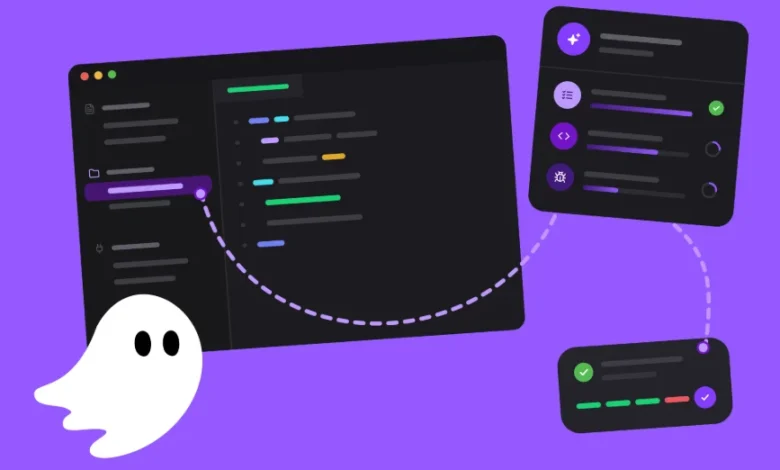
In a significant pivot for the software development lifecycle, Kiro has officially announced the general availability of Kiro bots within its Kiro Crew platform. This development marks a transition from transient, session-based AI interactions toward a model of persistent, autonomous agents capable of managing complex, long-running engineering workflows. By shifting the paradigm from ephemeral task-based prompting to dedicated, memory-retaining digital coworkers, Kiro aims to solve the growing "context fragmentation" crisis that has plagued developers increasingly reliant on generative AI.
The Problem of Context Fragmentation in Modern Development
The modern software engineering stack has become increasingly sophisticated, yet the integration of AI tools has often introduced new operational bottlenecks. Currently, most AI-assisted coding assistants operate on a "query-response" model. An engineer might open five separate chat windows to handle disparate tasks: one for refactoring a legacy authentication module, another for debugging a flaky CI/CD test, a third for drafting a database migration schema, a fourth for summarizing on-call incident reports, and a fifth for researching library implementations.
This fragmentation leads to significant cognitive load and operational waste. Each session is siloed, meaning the AI lacks visibility into the broader objectives of the project. Furthermore, when an engineer steps away for a meeting, these sessions often stagnate. Upon returning, the developer must manually re-authenticate tool permissions, re-verify the context of previous suggestions, and piece together the logic across multiple disconnected threads. Industry research suggests that developers spend up to 25% of their daily coding time performing "context switching," a cost that is only exacerbated by the current generation of fragmented AI tools.
Architecture of Kiro Bots: A New Paradigm for Agentic Work
Kiro’s new "Kiro Crew" architecture replaces these temporary sessions with named, persistent agents. These are not merely chat interfaces; they are autonomous entities designed with specific responsibilities, unique personas, and long-term memory. Each bot operates within its own dedicated workspace, which includes an inspectable dashboard, a persistent log of decisions, and an ongoing chat stream where the engineer can provide high-level directives.
The architecture allows for a "manager-worker" hierarchy. A primary bot—acting as a team lead—can delegate subtasks to specialized worker agents. If the lead bot determines that a refactoring task requires a database schema change, it can spawn a worker agent to analyze the migration, verify compatibility with the current codebase, and report back to the lead agent’s dashboard. This allows the human engineer to review high-level progress summaries rather than overseeing the granular execution of every sub-process.
Crucially, these bots are designed to be "always-on." They can be scheduled to run overnight, performing automated tasks such as monitoring build failures, drafting release notes, or performing dependency updates. This shifts the role of the software engineer from a manual executor of code to an architect and supervisor of a specialized AI workforce.
Chronology and Development Roadmap
The release of Kiro Crew follows a year of rapid iteration in the agentic AI space. While the broader industry saw the rise of LLMs in 2023 and 2024, 2025 and 2026 have been defined by the move toward "Agentic Workflows"—where AI can execute multi-step processes across software ecosystems.
- Q1 2026: Kiro initiates internal beta testing for persistent agent frameworks, focusing on memory retention and workspace isolation.
- Q2 2026: Introduction of the Kiro Crew prototype, featuring basic role-based access controls for AI agents.
- Q3 2026: Expansion of the API to allow bots to interface with external CI/CD pipelines and observability tools.
- November 2026: Official General Availability of Kiro Crew, allowing enterprise teams to deploy specialized, persistent bots across their repositories.
Scoped Permissions and Security Protocols
A primary concern for engineering leads adopting autonomous agents is the security of the codebase. Kiro has addressed this through a rigorous "Scoped Permissions" framework. Unlike generic LLM interfaces that often require broad repository access, Kiro bots are assigned specific "roles" with limited scope.

For instance, a "Security Bot" might be granted read-access to logs and code for vulnerability scanning but is denied permission to execute deployment scripts or modify production databases. This ensures that the principle of least privilege is maintained, even as the agents gain autonomy. Furthermore, memory isolation prevents a bot working on "Project A" from inadvertently leaking proprietary logic or context into "Project B," a common risk in shared-memory AI systems.
Strategic Implications for Engineering Teams
The deployment of Kiro Crew is expected to have a measurable impact on team velocity. By delegating "toil"—the repetitive, manual work that consumes significant developer hours—to these agents, teams can reallocate human resources toward high-level system design, complex product strategy, and architectural improvements.
Industry analysts observe that this move represents the third wave of AI in software engineering. The first wave was code completion (e.g., GitHub Copilot). The second wave was chat-based code generation (e.g., ChatGPT, Claude). The third wave, which Kiro is now championing, is autonomous agency. In this phase, the AI is no longer just a tool that responds to a prompt; it is a member of the team that initiates, manages, and executes tasks based on long-term goals.
However, this transition is not without challenges. Engineering managers must now contend with the "human-in-the-loop" requirement. As bots become more autonomous, the risk of "automated drift"—where an agent follows a path that is technically correct but strategically misaligned with company goals—increases. Kiro’s dashboard-first design is a direct response to this, providing developers with the visibility required to intervene, course-correct, or terminate bot activities in real-time.
Looking Toward the Future of Autonomous Development
As Kiro moves into general availability, the company plans to expand the ecosystem by allowing developers to create custom bot templates. This could lead to a marketplace of specialized AI agents, ranging from "QA Automation Specialists" that write and execute end-to-end tests, to "Documentation Architects" that maintain internal wikis and API references in sync with the codebase.
The economic implications are significant. As organizations scale, the ability to maintain "context" across large-scale distributed systems becomes the primary constraint on growth. If Kiro bots can effectively manage the overhead of context-keeping, companies may be able to maintain high velocity even as their codebases grow into the millions of lines.
Initial feedback from early adopters suggests that the transition is most successful in teams that adopt a structured approach to agent management. Teams that treat their bots as junior developers—providing clear documentation, defined "Definition of Done" criteria, and regular code reviews—are seeing the highest efficiency gains.
Conclusion
The launch of Kiro Crew represents a departure from the "chatbot" era of software engineering. By centering development around persistent, goal-oriented agents, Kiro is addressing the fundamental friction points that have hindered the adoption of autonomous AI in professional settings. While the technology requires a shift in management philosophy, the potential for increased developer productivity and reduced operational overhead makes it a significant development for the future of software engineering. As the platform matures, the industry will be watching closely to see how effectively these agents can bridge the gap between intent and implementation, and whether the "Kiro Crew" model becomes the new standard for the modern, AI-augmented development team.
For developers looking to integrate these tools, the platform is now accessible at kiro.dev/crew, offering the framework for building a tailored workforce of agents designed to handle the complexity of modern, large-scale software development.