Mastering B2B Growth: A Comprehensive Blueprint for Navigating Product-Market Fit and Scaling Profitably


The journey from an initial business-to-business (B2B) concept to a sustainable, revenue-generating enterprise is fraught with operational challenges, strategic missteps, and financial perils. In the fast-paced ecosystem of technology startups and enterprise software ventures, achieving product-market fit (PMF) is frequently cited as the single most critical milestone. However, surviving PMF is only half the battle; scaling that success into a repeatable, predictable, and profitable growth engine remains the true test of entrepreneurial endurance. Addressing this foundational phase of corporate development, seasoned investors and industry operators have increasingly turned their attention to structured, methodical frameworks designed to eliminate the guesswork from startup expansion.
Recently, startup expert and veteran venture capitalist contributor sat down with Harry Stebbings, host of the globally recognized and influential technology podcast "The Twenty Minute VC," to dissect a comprehensive nine-step model tailored specifically for B2B startups. The conversation offered a rare, granular look into the mechanics of early-stage scaling, highlighting a meticulously engineered roadmap that guides founders from the embryonic stages of product conceptualization all the way to high-velocity, profitable market penetration. By examining the structural cadence of these nine steps, entrepreneurs can systematically de-risk their business models and avoid the costly detours that derail promising enterprises before they reach maturity.
The Anatomy of Startup Failure: The Cost of Skipping Steps
In the high-stakes environment of venture capital and early-stage scaling, the pursuit of rapid growth often tempts founders to accelerate past foundational milestones. According to seasoned industry veterans, one of the most fatal and financially devastating mistakes an early-stage CEO can make is attempting to bypass critical developmental phases. The allure of premature scaling—pumping capital into customer acquisition and sales pipelines before achieving true product-market fit—consistently ranks among the leading causes of startup mortality.
Industry data compiled across multiple venture capital cohorts indicates that up to seventy percent of technology startups fail primarily due to premature scaling. When founders attempt to skip steps in the product-market fit sequence, they obscure fundamental product deficiencies, misalign their go-to-market strategies, and burn through precious capital reserves. A structured, sequential roadmap serves as an essential guardrail, potentially saving founders countless operational hours and mitigating the risk of millions of dollars in wasted capital. Understanding the exact cadence of market validation ensures that every dollar invested in sales and marketing yields measurable, predictable returns.
Deconstructing the Nine-Step Growth Framework
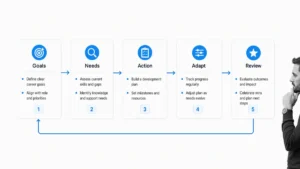
The core of the recent discussion on The Twenty Minute VC centered on an exhaustive nine-step framework designed to take a B2B startup from its initial hypothesis to a finely tuned, scalable revenue machine. While the complete methodology spans a detailed slide deck and visual architecture, the philosophy rests on a systematic approach to market discovery, product validation, and operational efficiency.
The initial phases of the model focus heavily on problem validation and customer discovery. Before a single line of code is written or a dedicated sales representative is hired, founders must establish absolute clarity regarding the specific enterprise pain point they are solving. This involves deep customer immersion, identifying acute economic or operational friction within target organizations, and confirming that the proposed solution addresses a "hair-on-fire" problem rather than a minor inconvenience.
Once problem-market fit is established, the framework transitions into solution validation and the creation of a minimum viable product (MVP). Here, startups must rigorously test their hypotheses with design partners and early adopters, gathering quantitative and qualitative feedback to refine the core offering. Crucially, the model emphasizes that customer retention and engagement serve as the definitive barometers of product-market fit. If early users do not organically integrate the product into their daily workflows or demonstrate high retention rates, the startup must iterate rather than advance to the scaling phase.

Transitioning to Repeatable and Scalable Growth
Having successfully navigated the product-market fit threshold, the subsequent steps in the nine-part roadmap pivot toward commercial execution. This is where many technically brilliant startups falter, as engineering prowess does not automatically translate into sales excellence. The model outlines a deliberate progression toward establishing a repeatable sales process, identifying ideal customer profiles (ICPs), and formulating unit economics that support long-term profitability.
Repeatable growth requires the codification of the sales playbook. Founders must transition from founder-led sales—where the visionary closes every deal through sheer force of will—to a structured, process-driven sales organization capable of onboarding new account executives and sales development representatives with consistent results. This phase necessitates the meticulous documentation of the buyer’s journey, mapping out every touchpoint, objection, and decision-making trigger across different organizational personas.
Mapping the Complex B2B Buyer’s Journey
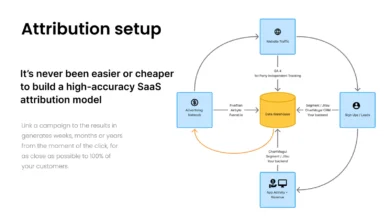
In modern enterprise software and B2B commerce, the path to a closed-won deal is rarely linear. Purchases rarely involve a single decision-maker; instead, they navigate complex organizational hierarchies where technical evaluators, financial gatekeepers, and executive sponsors all exert influence. Recognizing this complexity, the framework emphasizes the importance of comprehensively documenting the buyer’s journey, identifying specific sources of friction, buyer concerns, and core motivations at each sequential stage.
To assist founders in operationalizing this strategy, detailed administrative templates, such as specialized Google Sheets frameworks, have been made publicly available. These tools allow organizations to map out generic buyer pathways and contrast them against complex, real-world scenarios. For instance, a common enterprise dynamic involves a developer initiating the evaluation of a tool due to technical merit, while the actual purchasing decision and budget allocation are ultimately controlled by Operations or DevOps leadership when the project reaches production readiness.
By utilizing structured mapping tools, startups can visualize these multi-persona journeys. Founders are advised to document their internal marketing and sales process steps first, and then deliberately step into the shoes of the buyer. By analyzing how different stakeholders react at each milestone, companies can proactively eliminate friction points, streamline onboarding, and align their messaging with the distinct priorities of both technical end-users and economic buyers.
Broader Implications for the Venture Ecosystem and Founders
The renewed focus on structured growth models arrives at a critical juncture for the global technology ecosystem. Following a period of hyper-growth characterized by abundant capital availability and an emphasis on top-line expansion at all costs, the venture capital landscape has undergone a profound correction. Investors and boardrooms now prioritize capital efficiency, clear paths to profitability, and sustainable unit economics over vanity growth metrics.
In this tightening macroeconomic climate, frameworks like the nine-step B2B growth model offer a vital operational compass. By adhering to a disciplined, step-by-step progression, early-stage companies can optimize their burn rates, extend their runways, and build fundamentally resilient businesses. The collaboration between experienced operators sharing institutional knowledge and platforms broadcasting these insights to a global audience democratizes access to elite strategic guidance, empowering the next generation of enterprise founders to build enduring, high-value companies.
Related posts: