Navigating the Complex Landscape: Ten Critical Resource Management Challenges in Modern Project Environments


Effective resource management stands as a foundational pillar of successful project delivery, yet it remains one of the most consistently challenging areas for organizations worldwide. Far from being merely a technical exercise in allocating tasks, the intricacies of project resource management are predominantly human-centric, involving the nuanced interplay of individual objectives, team dynamics, and organizational culture. Project managers, PMO leaders, and senior executives frequently grapple with ensuring the right people, with the right skills, are available at the right time to execute strategic initiatives. This complex endeavor is often compounded by work unpredictability, human estimation biases, and the ever-present pressures of balancing financial constraints with operational demands.
The Evolving Dynamics of Project Resource Management
In today’s rapidly changing business landscape, characterized by increasing project complexity, globalized teams, and the widespread adoption of agile methodologies, the importance of robust resource management has never been more pronounced. Historically, project management often focused heavily on technical specifications and rigid timelines. However, contemporary understanding recognizes that projects are executed by people, and it is the human element – their skills, availability, motivation, and collaboration – that ultimately determines success or failure. The term "resources," while commonly used, sometimes inadvertently dehumanizes the individuals whose expertise and effort drive projects forward. These individuals, whether stakeholders, project team members, or specialized contributors, are professionals with their own career aspirations, departmental mandates, and personal commitments, all of which must be considered in effective planning.
Organizational culture plays a significant role in shaping resource management practices. Companies with a siloed approach, where departments guard their personnel and visibility across projects is limited, invariably face greater challenges. Management expectations, particularly unrealistic ones regarding availability or output, can exacerbate these issues. Furthermore, the absence of appropriate technological solutions to provide real-time visibility into resource capacity, skills, and allocation further complicates the picture, leaving decision-makers to rely on outdated spreadsheets or anecdotal information. The financial and strategic implications of poor resource management are substantial, ranging from project delays and budget overruns to diminished employee morale and a compromised ability to achieve critical business objectives. Industry reports consistently indicate that a significant percentage of project failures can be directly attributed to inadequate resource planning and execution. For instance, studies by organizations like the Project Management Institute (PMI) frequently highlight resource constraints and skill gaps as top contributors to project underperformance, underscoring the urgent need for systemic improvements.
Deep Dive into Core Challenges and Strategic Solutions
Understanding the specific pitfalls is the first step toward building resilient and effective resource management frameworks. The following outlines ten common challenges and offers actionable strategies for resolution, drawing upon established best practices in project and portfolio management.
1. Inconsistent Resource Assignment: Hindering Strategic Alignment
A fundamental challenge arises when project resources are assigned without clear, standardized criteria. This ad-hoc approach often leads to critical personnel being allocated to lower-priority work, inadvertently diverting essential skills from strategic initiatives. The consequence is a misalignment between organizational objectives and project execution, where high-value talent is not optimally leveraged, and projects with significant strategic impact either stall or proceed with inadequate support.
- Implications: This inconsistency results in delayed strategic projects, underutilization of specialized talent, and missed market opportunities. It can also inflate project costs due as less-suited individuals take longer or require more rework, indirectly impacting the organization’s competitive edge.
- Supporting Data: Industry reports often indicate that up to 30% of project resources may be misaligned with organizational strategic priorities due to ad-hoc assignment processes, leading to considerable efficiency losses.
- Resolution: Organizations must establish robust, transparent resource allocation frameworks. This involves defining clear criteria for assignment, potentially by project priority, required skill sets, and strategic alignment. The PMO, in collaboration with product owners and functional managers, should lead this process. Furthermore, clear processes for how project leaders can formally secure resources and gain buy-in for their initiatives are essential. Consistency in allocation ensures that resources are deployed where they can generate the most value.
2. Suboptimal Resource Utilization: The Efficiency Paradox
The phenomenon of uneven workload distribution – where some team members are perpetually overworked while others have excess capacity – is a pervasive issue. This disparity not only creates significant stress and potential burnout for overloaded individuals but also represents a squandering of available talent and a direct hit to overall organizational efficiency. The contrast between rushed deadlines and idle capacity highlights a critical flaw in resource planning.
- Implications: Chronic overwork can lead to high employee turnover, reduced productivity due to fatigue, and compromised work quality. Conversely, underutilization translates to wasted payroll and missed opportunities to accelerate other projects. Both scenarios contribute to project delays and increased operational costs.
- Supporting Data: Studies on project teams reveal that only about 60-70% of a typical project team member’s time is spent on productive project-specific tasks, with significant portions lost to context-switching, administrative overhead, or underutilization.
- Resolution: Implementing advanced project management software with real-time capacity and workload tracking capabilities is crucial. These tools allow managers to visualize resource availability and commitments, enabling proactive resource leveling to balance workloads. The goal is to ensure no one is overstretched while also identifying available capacity for new assignments, fostering a more equitable and productive work environment.
3. Skill Gaps: A Critical Bottleneck for Project Delivery

A frequent and significant challenge is the lack of personnel possessing the specific skills or the required level of expertise for project tasks. Allocating work to under-skilled team members often results in a cascade of problems, including an increase in errors, a decrease in quality, and extended project timelines as individuals struggle to perform outside their core competencies.
- Implications: Beyond immediate project delays and budget overruns, persistent skill gaps can hinder innovation, damage project quality, and negatively impact an organization’s reputation. It can also lead to increased frustration among team members and managers alike.
- Supporting Data: A recent survey of PMO leaders indicated that over 45% frequently struggle with skill deficiencies within their project teams, citing it as a major impediment to project success and a key driver of external contractor dependency.
- Resolution: Proactive skill gap analysis and strategic workforce planning are essential. This involves forecasting future skill needs based on the project pipeline and organizational strategy. Solutions include investing in comprehensive training and development programs, establishing cross-skilling initiatives to build redundancy, and strategic recruitment to acquire critical external talent. It is vital to emphasize that simple availability does not equate to the necessary skill set, requiring a more nuanced approach to staffing.
4. Lack of Utilization Tracking: The Data Vacuum
Without systematic tracking of how resources spend their time, organizations operate in a data vacuum. This absence of critical information prevents informed decision-making regarding workload distribution, capacity planning, and accurate project costing. Without data, it is impossible to understand where time is genuinely being spent, leading to guesswork in planning and reactive problem-solving.
- Implications: This data vacuum results in inaccurate project estimates, making it difficult to justify resource requests or assess project profitability. It also obscures bottlenecks, hinders performance evaluation, and undermines efforts to optimize resource deployment. For professional services organizations, the lack of time tracking directly impacts billing accuracy and revenue recognition.
- Supporting Data: Organizations that fail to track resource utilization often report a 15-20% variance in estimated versus actual project effort, directly impacting profitability, future planning accuracy, and the ability to learn from past projects.
- Resolution: Implementing mandatory, yet user-friendly, timesheet systems integrated with project management software is paramount. While often met with resistance, the strategic value of this data for decision-making far outweighs the perceived inconvenience. Managers must clearly communicate the purpose of time tracking – not as micromanagement, but as a vital tool for organizational learning, accurate forecasting, and equitable workload distribution.
5. Absence of Resource Forecasting: The Future Blind Spot
Many organizations fail to forecast their future resource needs, leading to a reactive approach to staffing. This blind spot regarding future skill requirements, quantities, and availability results in last-minute scramble for talent, unrealistic deadlines, and instability in the project pipeline. The inability to predict future demand means organizations are perpetually playing catch-up.
- Implications: The lack of forecasting directly contributes to project delays, missed deadlines, and increased reliance on expensive external contractors. It also severely limits the organization’s ability to initiate new strategic projects when opportunities arise, incurring significant opportunity costs and hindering innovation.
- Supporting Data: Companies without robust resource forecasting models are twice as likely to miss project deadlines and frequently face critical resource shortages within a 3-6 month window, leading to reactive and often suboptimal hiring decisions.
- Resolution: Implementing dedicated resource forecasting and capacity planning tools is essential. This involves integrating the project pipeline with detailed resource demand plans, gathering reliable estimates from project leaders and resources on task durations, and establishing clear timelines for project initiation based on resource availability. Resource planning also provides crucial insights into when new skills will be needed, enabling proactive recruitment or training initiatives.
6. High Resource Turnover: The Erosion of Institutional Knowledge
High turnover among project personnel is a critical issue that often stems from an environment unsuited to their needs. This can include excessive workload, lack of appropriate tools, insufficient support, or, critically, poor managerial practices. As the adage goes, "people leave managers, not jobs." The departure of experienced team members leads to a significant loss of institutional knowledge and project momentum.
- Implications: The costs associated with high turnover are substantial, encompassing recruitment, onboarding, and training of new hires, which can be 1.5-2 times an employee’s annual salary. Beyond financial costs, it leads to project delays, reduced team cohesion, a loss of critical project-specific context, and a negative impact on overall team morale and productivity.
- Supporting Data: Employee turnover in project-centric roles can significantly inflate project costs and timelines, with research indicating that a 10% increase in turnover can translate to a 5% increase in project duration and cost.
- Resolution: Cultivating an empowering, supportive, and psychologically safe team culture is paramount. This involves ensuring fair workload distribution, providing necessary tools and resources, and establishing regular feedback mechanisms to continuously improve the work environment. Organizations must prioritize leadership training for project managers to equip them with the skills to motivate, support, and retain their teams. Tracking employee retention rates specifically for project roles can provide valuable insights for continuous improvement.
7. Resources Allocated to Conflicting Priorities: The Tug-of-War for Attention
A common scenario involves project team members being assigned to multiple projects or having to balance project responsibilities with their "day job" operational tasks, all without clear prioritization. In such situations, individuals are often left to make their own judgments about what to work on, which can lead to inefficient context switching and strategic misalignment if operational demands consistently overshadow project work.
- Implications: This "tug-of-war" leads to reduced focus, inefficient context switching (which can decrease individual productivity by up to 40%), delays across multiple initiatives, and increased stress for team members. Crucially, it means projects, especially strategic ones, may not receive the dedicated attention required for timely and successful completion.
- Supporting Data: A study on multitasking by the American Psychological Association found that frequent context switching due to conflicting priorities can reduce individual productivity by up to 40% and increase error rates.
- Resolution: Effective communication and the establishment of a clear, visible organizational priority framework are vital. PMOs should play a central role in arbitrating resource conflicts and ensuring that all project work aligns with strategic goals. Implementing portfolio-level communication strategies and reporting dashboards can provide the necessary visibility to identify and address inconsistencies in resource allocation and resolve conflicting demands proactively.
8. Lack of Managerial Visibility: The Blind Spot of Leadership
Project and resource managers frequently lack comprehensive, aggregated data on their team members’ workloads, availability, and skill sets. Relying solely on direct conversations, while important for rapport, is insufficient for understanding the broader departmental or organizational resource landscape. This lack of holistic visibility hinders effective decision-making and proactive management.
- Implications: The absence of aggregated resource data leads to inefficient resource allocation, an inability to identify potential bottlenecks before they impact projects, difficulties in managing team performance effectively, and a tendency toward reactive problem-solving. It also impedes accountability and the ability to forecast future needs accurately.
- Supporting Data: Managers without adequate visibility into their teams’ workloads are reportedly 30% more likely to experience project delays and report lower team morale due to perceived inequities in workload distribution.
- Resolution: Providing managers with access to integrated reporting and dedicated resource management tools is crucial. These platforms offer real-time dashboards and analytics that present a holistic view of resource data. Promoting transparency in workload and capacity data across teams and encouraging scheduling work around people’s actual capabilities and availability, rather than just task deadlines, are key to empowering managers with the insights they need.
9. Unbalanced Portfolio Resourcing: Strategic Misalignment
This challenge occurs when resources (both human and financial) are disproportionately allocated across different strategic initiatives, often without conscious strategic intent. One area might receive substantial investment and talent, while another, equally critical, remains chronically under-resourced. This imbalance can emerge over time due to historical inertia or a lack of integrated portfolio planning.
- Implications: An unbalanced portfolio leads to skewed strategic outcomes, with some organizational goals being vastly overachieved while others are neglected. This represents an inefficient use of overall organizational capital, missed opportunities in under-invested areas, and an inability to achieve balanced growth or innovation across the business.
- Supporting Data: Organizations without a clear portfolio-level resource balancing mechanism risk up to 25% of their project investment being misdirected or underperforming against strategic objectives, leading to suboptimal overall business performance.
- Resolution: Implementing robust portfolio management practices that directly link resource allocation decisions to overarching business goals and strategic pillars is essential. This requires a shift from project-centric thinking to portfolio-centric decision-making. Utilizing portfolio-level reporting and regular strategic reviews ensures that resource investments are conscious, data-driven, and aligned with the organization’s highest priorities.
10. Unaccounted Resource Risk: The Unexpected Disruptors
Project plans often fail to adequately factor in inevitable human-related risks such as illness, unexpected leave, or unforeseen personal emergencies. These occurrences, though individual, can have significant ripple effects across projects, derailing timelines and impacting delivery. While impossible to predict specific instances, the likelihood of such events can and should be planned for.
- Implications: Unaccounted resource risks contribute directly to project delays, missed deadlines, decreased customer satisfaction, and potential financial penalties. They also place undue pressure on remaining team members, leading to stress and potential burnout, and can damage the organization’s reputation for reliability.
- Supporting Data: Unforeseen resource unavailability contributes to approximately 10-15% of project schedule overruns, underscoring the need for proactive risk identification and mitigation strategies.
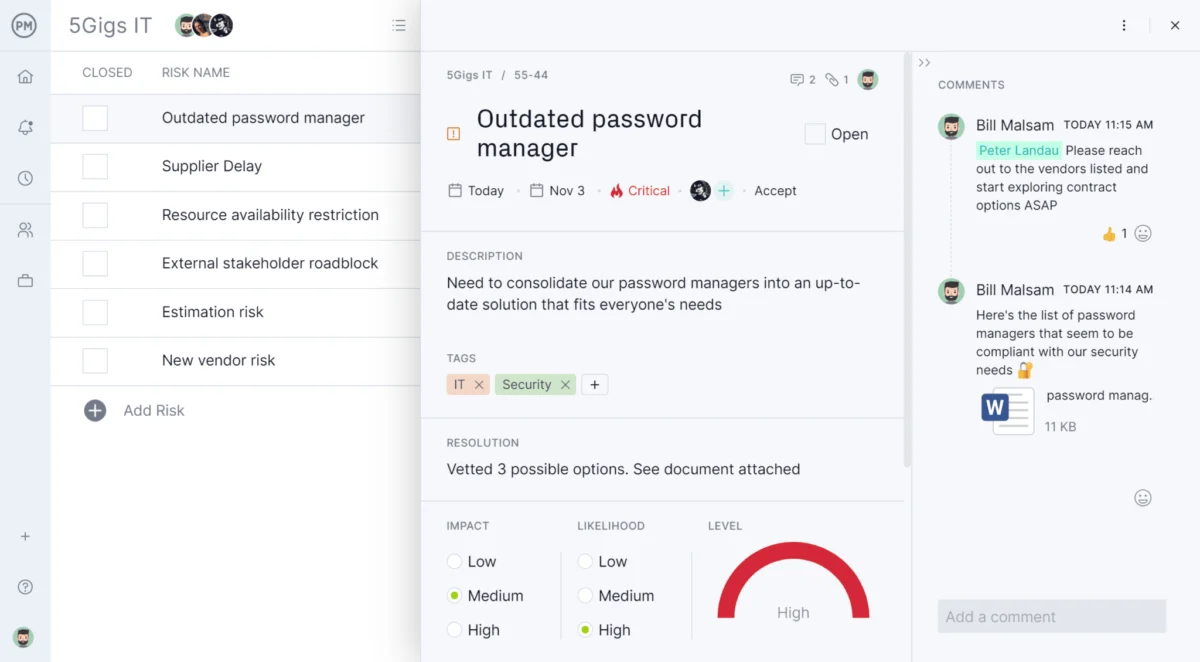
- Resolution: People-based risks must be formally integrated into the project risk register. This involves identifying potential single points of failure, developing contingency plans (e.g., cross-skilling initiatives to ensure multiple team members can perform critical tasks), and establishing clear communication protocols for unexpected absences. Building a small buffer into project timelines can also provide a cushion against minor disruptions. Furthermore, defining clear ways of working that encourage knowledge sharing and documentation helps mitigate the impact of individual absences.
The Indispensable Role of Modern Resource Management Tools
The journey towards effective resource management in modern project environments invariably leads to the adoption of sophisticated tools. Relying on outdated methods, such as spreadsheets, for managing complex resource pools is no longer viable. Spreadsheets quickly become outdated, lack real-time integration, and offer limited capabilities for forecasting, capacity planning, or skill-based matching. They cannot effectively manage a dynamic resource pool where skills evolve and availability fluctuates.
Dedicated Resource Management (RM) and Project Portfolio Management (PPM) software solutions offer a transformative alternative. These platforms provide real-time visibility into resource capacity, demand, and allocation across an entire portfolio of projects. They enable robust forecasting capabilities, facilitate skill-based resource matching, and automate reporting, significantly reducing the administrative burden while enhancing accuracy. These tools are instrumental in shifting organizations from reactive firefighting to proactive, data-driven resource optimization. They provide the necessary infrastructure to manage resource pools, track utilization, identify skill gaps, and balance workloads effectively.
However, it is crucial to recognize that technology alone is not a panacea. The most advanced software will only be as effective as the processes and cultural mindset supporting it. Successful implementation requires a commitment to new ways of working, a willingness to embrace transparency, and a continuous effort to align technological capabilities with organizational strategy.
Strategic Imperatives for Project Success
Ultimately, effective resource management transcends operational efficiency; it is a strategic imperative that directly influences an organization’s competitive advantage, capacity for innovation, employee satisfaction, and financial performance. Organizations that master resource management are better positioned to deliver projects on time and within budget, adapt to market changes, attract and retain top talent, and consistently achieve their strategic objectives.
The challenges are universal, but the solutions, while requiring significant effort and a commitment to change, are within reach. By investing in the right tools, fostering a supportive culture, and implementing robust processes, organizations can transform their approach to project resourcing, ensuring that their most valuable assets – their people – are effectively deployed and empowered to drive success. This strategic focus will undoubtedly lead to greater project success, improved stakeholder satisfaction, and a more resilient and agile organization.