The prevailing cultural archetype of the Financial Independence, Retire Early (FIRE) movement is one of extreme austerity: the image of a practitioner subsisting on a diet of rice and beans, scouring digital marketplaces for coupons, and operating vehicles that predate their own children. Critics frequently characterize the movement as an exercise in self-deprivation, arguing that those who pursue early retirement are merely "cheap" individuals who sacrifice the joys of the present for a hypothetical future. However, a closer examination of the economic realities and behavioral patterns of the FIRE community reveals a starkly different, more nuanced narrative. Far from being a lifestyle defined by miserliness, FIRE represents a significant, often high-cost reallocation of capital toward autonomy and non-monetary assets.
To understand the evolution of this movement, one must look at the timeline of its growth. While the seeds of early retirement were planted in the 1992 publication of Vicki Robin and Joe Dominguez’s Your Money or Your Life, the modern iteration of FIRE gained significant momentum following the 2008 financial crisis. During a period of widespread economic instability, a segment of the workforce began prioritizing the accumulation of passive income streams over traditional career longevity. By 2012, the movement had transitioned from niche internet forums to mainstream financial discourse, coinciding with a shift in how individuals perceived the value of corporate stability versus personal time.
The foundational argument against the "cheap" label lies in the concept of opportunity cost. When an individual chooses to exit the corporate workforce in their thirties or forties, they are not merely opting out of a salary; they are relinquishing a multi-million-dollar lifetime earnings potential. For high-earning professionals, the decision to retire early often involves walking away from annual compensation packages that include six-figure base salaries, discretionary bonuses, and equity grants. Over a decade, this can amount to millions of dollars in forgone compensation. From a macroeconomic perspective, this is not a frugal decision; it is the most expensive financial transaction an individual can make. It is an investment in time, bought with the currency of lost future wages, which makes the act of retiring early fundamentally "prodigal" rather than conservative.
Beyond the loss of income, the transition to early retirement involves a significant shift in healthcare and benefits management. In the United States, the decoupling of health insurance from employment is a massive financial hurdle. Early retirees must navigate the private insurance market, often incurring costs that are entirely unsubsidized. For a family of four, these premiums can reach $36,000 annually, representing a recurring, non-negotiable expense that would be considered exorbitant by typical budget-conscious standards. This reality challenges the narrative that FIRE practitioners are cutting costs; rather, they are absorbing the full, unsubsidized cost of living that the average worker’s employer obscures through group benefit structures.

The internal logic of the movement is better defined as "selective consumption" rather than blanket frugality. Practitioners often optimize their spending by stripping away costs for goods and services they do not value—such as new luxury vehicles or premium travel upgrades—in order to redirect that capital toward high-utility, life-enhancing expenditures. For many, this includes the prioritization of high-cost lifestyle choices that contradict the "cheap" stereotype.
One primary example is housing. Many individuals who achieve financial independence choose to invest in properties that offer higher quality-of-life metrics, such as proximity to quality schools, outdoor space, or aesthetic value, even when smaller, less expensive options are available. The additional expenditure on property taxes, maintenance, and higher mortgage payments in these scenarios often totals tens of thousands of dollars annually. When a family chooses a residence not for necessity but for the enrichment of their daily experience, they are prioritizing comfort and environment over the pure accumulation of wealth.
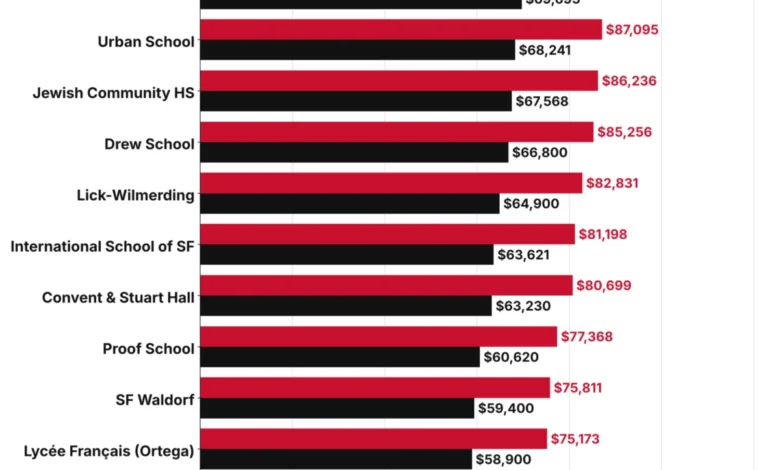
Furthermore, the investment in children remains a significant, often overlooked, driver of FIRE-related spending. Critics of the movement often claim that FIRE practitioners avoid having children to save money. In reality, many retirees choose to invest heavily in their children’s development, including private education and immersion programs. In major metropolitan areas, annual tuition for independent schools can exceed $45,000 per child. When combined with the broader costs of raising children—including enrichment activities, healthcare, and travel—the annual "non-frugal" expenditure for an early-retiring family can easily exceed $170,000, excluding the aforementioned opportunity cost of lost salaries.
The data suggests that the "cheap" stereotype is a misinterpretation of a specific prioritization strategy. When an individual spends $10,000 or more annually on food delivery or high-quality convenience services to reclaim time for family, they are making a conscious economic trade-off. The goal of the FIRE movement is not the minimization of spending, but the optimization of spending to align with personal values. By eliminating the overhead of a corporate lifestyle—such as professional wardrobes, daily commuting costs, and work-related networking expenses—the practitioner gains the liquidity to spend aggressively in areas that yield personal satisfaction.
The implications of this shift are profound for both the individual and the economy. As more individuals pursue financial independence, the nature of the labor market and consumer demand is evolving. This shift challenges the traditional lifecycle of retirement, which has historically been pushed toward age 65. If the FIRE model continues to gain traction, it may necessitate broader systemic changes in how society views labor, healthcare access, and social safety nets.
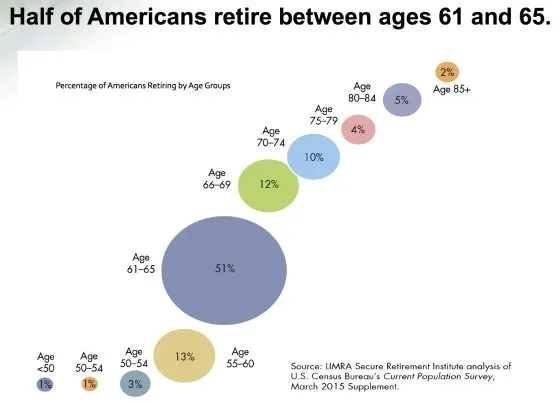
Financial analysts note that the "one more year" syndrome—the tendency for workers to remain in high-stress, unfulfilling jobs purely for the accumulation of excess capital—is increasingly being rejected in favor of shorter, more intense career bursts. The analysis of this trend indicates that when individuals reach a certain threshold of financial security, their utility for additional currency diminishes significantly, while their utility for time increases. Consequently, the "spending" of one’s career for the benefit of freedom becomes the ultimate luxury.
Ultimately, the dichotomy between the "miserly" FIRE practitioner and the reality of their financial behavior is a product of misunderstanding the movement’s primary objective. The goal is not the accumulation of a hoard of gold, but the conversion of human capital into life autonomy. When a person chooses to forgo a $500,000 annual income to spend their days in a home they love, raising their children and investing in their education, they are not behaving like a miser. They are participating in a highly sophisticated form of personal asset management.
The FIRE community, particularly those categorized under "Fat FIRE" (a subset characterized by higher spending levels), represents a demographic that is actively engaging in the economy. They are consuming goods, supporting private education systems, and utilizing professional services, albeit on their own terms. The narrative that they are "cheap" is a relic of a time when early retirement was considered an anomaly. In the current economic climate, the decision to walk away from a paycheck is an act of high-stakes financial confidence.
As we look toward the future of retirement, it is clear that the standard, monolithic definition of frugality no longer applies. Whether through the decision to send children to language-immersion schools or the choice to live in a house that provides joy rather than mere shelter, the FIRE practitioner is a consumer who prioritizes quality of life over the arbitrary benchmarks of traditional career progression. The myth of the cheap FIRE devotee is, effectively, a narrative that has reached its own point of retirement. It has been replaced by a more complex reality: one where the value of time is the highest-priced commodity of all, and where the most successful individuals are those who can afford to stop chasing the dollar and start investing in the life they actually want to lead.
Related posts: