BellSoft Unveils Hardened Builder for Paketo Buildpacks, Revolutionizing Container Security and Compliance with Zero-CVE Baseline

BellSoft, a prominent provider of Java and cloud-native solutions, has officially launched its Hardened Images builder, an innovative advancement designed to significantly enhance security and compliance for users of the open-source Paketo Buildpacks project within the Cloud Native Computing Foundation (CNCF) ecosystem. This strategic development marks a critical step forward in addressing the pervasive challenges of container image security, offering a proactive and automated solution for continuous vulnerability management and robust compliance postures in modern cloud-native environments.
The Expanding Horizon of Cloud-Native Security Challenges
The rapid and widespread adoption of containerization technologies like Docker and Kubernetes has fundamentally reshaped how applications are developed, deployed, and scaled. Containers offer unparalleled benefits in terms of portability, resource efficiency, and agility, making them an indispensable component of modern cloud-native architectures. However, this transformative power introduces a complex array of security challenges that traditional security models are often ill-equipped to handle. The dynamic and ephemeral nature of containerized environments means that vulnerabilities can emerge from numerous sources: insecure base images, misconfigured Dockerfiles, outdated dependencies, and a lack of consistent vulnerability scanning and patch management protocols.
A central point of vulnerability in traditional container workflows often stems from the ubiquitous Dockerfile. While providing granular control over image construction, Dockerfiles demand meticulous crafting and continuous maintenance. Manual configuration, dependency management, and base image selection, when multiplied across a large portfolio of applications and development teams, frequently lead to what BellSoft aptly describes as "Dockerfile sprawl." This phenomenon creates substantial technical debt, compliance risks, and operational overhead. Security patches and base image updates become arduous, requiring manual propagation across numerous repositories, and the overall security posture of an organization becomes bottlenecked by the slowest team to implement critical updates. Compounding this challenge, a recent BellSoft survey revealed a startling statistic: over 60% of developers are unaware that a poorly written Dockerfile can introduce critical vulnerabilities into their applications. This significant knowledge gap underscores the urgent need for automated, secure-by-default solutions that abstract away security complexities from individual developers.
Paketo Buildpacks: Simplifying the Cloud-Native Development Cycle
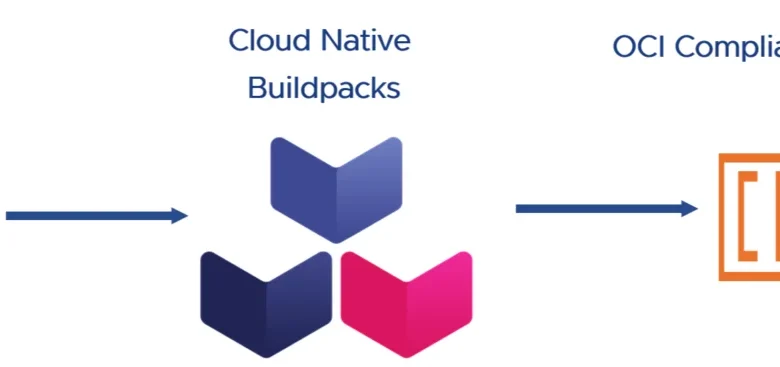
The Cloud Native Computing Foundation (CNCF) has been instrumental in fostering open-source projects that accelerate cloud-native adoption. Among these, Paketo Buildpacks has emerged as a crucial project aimed at simplifying the conversion of application source code into runnable container images. Buildpacks abstract away the intricate details of container image creation, allowing developers to concentrate primarily on their application logic. The core mechanism of a buildpack is both elegant and highly efficient: it intelligently inspects application code, identifies necessary dependencies, automatically downloads and compiles components, and ultimately produces a runnable Open Container Initiative (OCI) image. All these steps are executed with a single command, eliminating the need for manual Dockerfile creation. This automation not only accelerates development timelines but also inherently enhances consistency, reproducibility, and potential security by standardizing the build process and enforcing best practices.
BellSoft’s Hardened Builder: A New Paradigm for Container Security
BellSoft’s new Hardened Images builder represents a significant leap forward, building upon the foundational capabilities of Paketo Buildpacks by embedding an advanced layer of security and compliance directly into every container image. The conventional buildpack process typically bundles a build environment, the buildpacks themselves, and a runtime into the final container image. BellSoft’s innovation lies in its strategic replacement of these standard build environment and runtime components with its proprietary Hardened Images. This means that any container image generated using BellSoft’s hardened builder automatically inherits the company’s rigorous security and compliance posture from its foundational layers.
The bedrock of this hardened approach is BellSoft’s Alpaquita OS, a lightweight, security-focused operating system meticulously optimized for cloud-native workloads, often paired with BellSoft’s high-performance Liberica JDK. By leveraging Alpaquita OS as the base, the hardened builder ensures a baseline that is largely free of Common Vulnerabilities and Exposures (CVEs). This marks a profound departure from traditional containerization, where developers often start with generic base images and then laboriously add security measures. With BellSoft’s solution, security is integrated from the ground up, providing a consistently secure and continuously managed foundation for production-ready container images. This proactive integration substantially reduces the potential attack surface and minimizes the likelihood of vulnerabilities originating from the underlying operating system or core libraries.

Automated Vulnerability Management and Seamless Patch Propagation
One of the most compelling advantages of BellSoft’s Hardened Images builder is its sophisticated mechanism for continuous vulnerability management and automated patching. In an era where new CVEs are discovered with alarming frequency, the manual management of patches across a distributed microservices architecture is an unsustainable burden. The hardened builder directly addresses this challenge: when a vulnerability is identified and subsequently patched within BellSoft Hardened Images – which are rigorously maintained and updated by BellSoft’s security experts – every application built on that builder automatically receives the fix during its very next build cycle. This critical capability ensures that security updates are disseminated across all services and teams simultaneously, eradicating the delays and inconsistencies that plague manual patching processes.
This automated propagation yields substantial benefits for organizations. Development teams are no longer required to interrupt their workflows to manually update Dockerfiles or base images across potentially hundreds or thousands of repositories. Security teams experience a significant reduction in "scanner fatigue," as they can rely on a consistently clean security baseline, freeing them to focus on higher-level strategic security initiatives rather than reactive firefighting. The system effectively operationalizes security, embedding it seamlessly into the CI/CD pipeline and ensuring that security is a continuous consideration, not an afterthought.
Enhanced Compliance and Transparency through Software Bill of Materials (SBOM)
The increasing emphasis on software supply chain security has been driven by both industry best practices and a growing wave of regulatory mandates. Governments and enterprises worldwide are progressively demanding comprehensive Software Bill of Materials (SBOMs) for all software components. An SBOM provides a detailed, itemized inventory of all proprietary and open-source components, libraries, and dependencies incorporated into a software product, along with their respective versions and licensing information. This level of transparency is indispensable for accurate risk assessment, effective vulnerability management, and ensuring adherence to various regulatory requirements.
BellSoft’s hardened builder seamlessly integrates this crucial requirement into its output. Every published image produced by the builder is accompanied by a full Software Bill of Materials and a verifiable provenance record. This inherent transparency significantly simplifies compliance audits, providing regulators and enterprise procurement teams with the documented evidence of secure software practices they increasingly demand. The verifiable provenance record further bolsters trust by detailing the origin and transformations of each component within the container image, establishing an immutable chain of custody vital for robust supply chain security. By proactively generating comprehensive SBOMs, organizations can effectively meet evolving cybersecurity mandates and cultivate a culture of accountability in their software development lifecycles.
Addressing Vulnerability Management as a Business Imperative
Alex Belokrylov, CEO of BellSoft, articulated the fundamental rationale behind this innovation with remarkable clarity: "Vulnerability management is a business problem, not an engineering one. It deserves a business answer, not the silent accumulation of toil on already-stretched internal teams. Scanner fatigue is real, and so is the cost of ignoring it." His statement powerfully highlights the significant economic and operational burdens that traditional, reactive vulnerability management imposes on organizations. The relentless cycle of monitoring CVE feeds, triaging vulnerabilities that impact specific base images, and coordinating patches across disparate teams diverts invaluable engineering resources away from strategic innovation and product development.
By offering a service that maintains a consistently clean, largely CVE-free image baseline, BellSoft empowers security and platform engineering teams to pivot their focus from reactive crisis management to proactive security strategy. This strategic shift liberates engineers to concentrate on higher-value tasks, thereby enhancing overall operational efficiency and mitigating the hidden costs associated with security breaches and compliance failures. The automation inherent in the hardened builder effectively operationalizes security, integrating it seamlessly into the CI/CD pipeline and transforming security from a periodic check into a continuous, embedded process.
Chronology and Contextual Evolution of Container Security

The evolution toward highly automated and secure containerization has unfolded over several distinct phases. The popularization of Docker in 2013 ignited the container revolution, leading to widespread adoption but also quickly exposing the inherent complexities of managing dependencies and security within container images. Early security approaches largely relied on manual Dockerfile creation followed by reactive vulnerability scanning, often resulting in a continuous cycle of patch management.
The Cloud Native Computing Foundation (CNCF), established in 2015, quickly became a pivotal organization for fostering open-source technologies essential for cloud-native development. Projects like Kubernetes revolutionized container orchestration, while others, like Buildpacks, addressed the critical aspect of container image creation. Buildpacks, initially conceived by Heroku and subsequently evolved by the Cloud Foundry Foundation before being adopted by the CNCF as Paketo Buildpacks, represented a significant paradigm shift towards abstracting away complex build processes.
BellSoft’s contribution, announced in 2026, marks the logical next step in this progression. It enhances the established efficiency of Paketo Buildpacks by integrating a deep, continuous security layer. This development is particularly timely, aligning with a global surge in software supply chain attacks and an intensified regulatory focus on software integrity. The chronological development reflects an industry maturation from basic containerization to sophisticated, secure-by-default cloud-native practices, driven by both technological innovation and evolving threat landscapes.
Broader Impact and Implications for the Cloud-Native Ecosystem
The introduction of BellSoft’s Hardened Images builder for Paketo Buildpacks carries profound implications for the entire cloud-native ecosystem. It establishes a new benchmark for "secure by default" development, illustrating how security can be intrinsically woven into the very fabric of application delivery, rather than being an auxiliary component.
- Standardization of Security Practices: By providing a hardened, pre-configured base, BellSoft significantly contributes to the standardization of security practices across organizations leveraging Paketo Buildpacks, thereby reducing the variability in security postures that often arises from disparate team-level implementations.
- Acceleration of DevSecOps Adoption: The builder inherently champions DevSecOps principles by automating critical security tasks and integrating them directly into the development pipeline. This facilitates a "shift left" security strategy, ensuring that vulnerabilities are addressed early and continuously throughout the software development lifecycle.
- Lowering Barriers to Secure Cloud-Native Development: For smaller teams or organizations embarking on their cloud-native journey, the complexities of securing container images can be formidable. BellSoft’s solution effectively lowers this barrier, enabling them to build and deploy secure applications without requiring extensive specialized security expertise from the outset.
- Fostering Innovation: By offloading the burden of baseline image security, development teams can reallocate valuable time and resources to core product innovation, thereby accelerating time-to-market for new features and applications.
- Strengthening the Open-Source Ecosystem: BellSoft’s commercial innovation, built upon the foundation of the open-source Paketo Buildpacks, exemplifies a symbiotic relationship where commercial entities can enhance and contribute significant value to open-source projects, benefiting the entire community.
- Alignment with Managed Security Trends: This offering aligns seamlessly with a broader industry trend where businesses increasingly seek managed security services that abstract away complexity and provide expert-driven solutions for critical infrastructure components.
Industry Reactions and Future Outlook
While specific external statements beyond BellSoft’s CEO are not immediately available, the industry’s reception can be logically inferred. Platform engineers and DevOps leads are likely to enthusiastically embrace a solution that streamlines their container build processes while simultaneously bolstering security. Chief Information Security Officers (CISOs) would undoubtedly view this as a strategic tool capable of drastically reducing the organization’s attack surface, simplifying compliance reporting, and effectively mitigating the risk of software supply chain vulnerabilities. Representatives from the CNCF would likely commend such an initiative for enhancing the robustness and security of the cloud-native ecosystem, showcasing how fundamental projects like Paketo Buildpacks can be extended and enriched through innovative commercial partnerships.
Looking forward, the demand for such deeply integrated security solutions is poised for exponential growth. As global regulatory frameworks become more stringent and the cyber threat landscape continues to evolve, "secure by default" will transition from a mere best practice to an absolute imperative. BellSoft’s Hardened Images builder for Paketo Buildpacks positions itself at the vanguard of this evolution, offering a compelling vision for how organizations can achieve both agility and impenetrable security in their cloud-native endeavors. The future of container security will undoubtedly be characterized by increased automation, deeper integration with underlying infrastructure, and an unwavering focus on transparency and verifiable provenance – all foundational principles championed by this groundbreaking new offering. This initiative not only addresses current pain points but also proactively equips organizations for the intricate cybersecurity challenges of tomorrow, underscoring the vital interplay between open-source innovation and targeted commercial solutions in forging a more resilient and secure digital future.