Weeks ago, a seemingly ordinary email arrived in the personal inbox of Andy Yates, an engineer at Buffer, the renowned social media management platform. The sender was the team behind TRMNL, a company celebrated for its minimalist e-ink displays and a vibrant ecosystem of user-created plugins. TRMNL’s proactive approach involves scouting for innovative plugins developed on their platform, and they had discovered a private tool simply named "Buffer." Intrigued by its potential, TRMNL reached out to Yates, inquiring about his willingness to release the plugin for wider public use. What TRMNL’s team was unaware of at the time was the profound serendipity of their discovery: not only did Andy Yates work for Buffer, but Buffer’s own public API was merely a week away from its official launch. This remarkable coincidence has since evolved into a compelling narrative, illustrating the transformative power of open APIs and the ingenuity of individual developers. With the Buffer API now generally available, the story of this unique plugin, which currently graces Andy Yates’s desk, stands as a testament to unexpected innovation and collaborative spirit.
The Genesis of an Ambient Productivity Tool
The Buffer plugin for TRMNL’s e-ink displays represents a fascinating intersection of personal utility and professional innovation. Andy Yates, having recently acquired a TRMNL device, was exploring its capabilities and the burgeoning plugin development community. TRMNL screens are founded on a distinctive design philosophy: to offer a calm, non-intrusive display of essential information, enriching the workspace without demanding constant attention. Unlike the often-distracting glow of traditional screens, e-ink displays provide information with the gentle permanence of print, designed to integrate seamlessly into one’s environment. Users typically leverage these devices for displaying calendars, weather updates, to-do lists, and a multitude of other community-built applications. Yates, a Buffer engineer, naturally gravitated towards integrating his professional world with this new personal device, wondering how his Buffer queue — the schedule of posts awaiting publication — might appear on the serene e-ink screen.
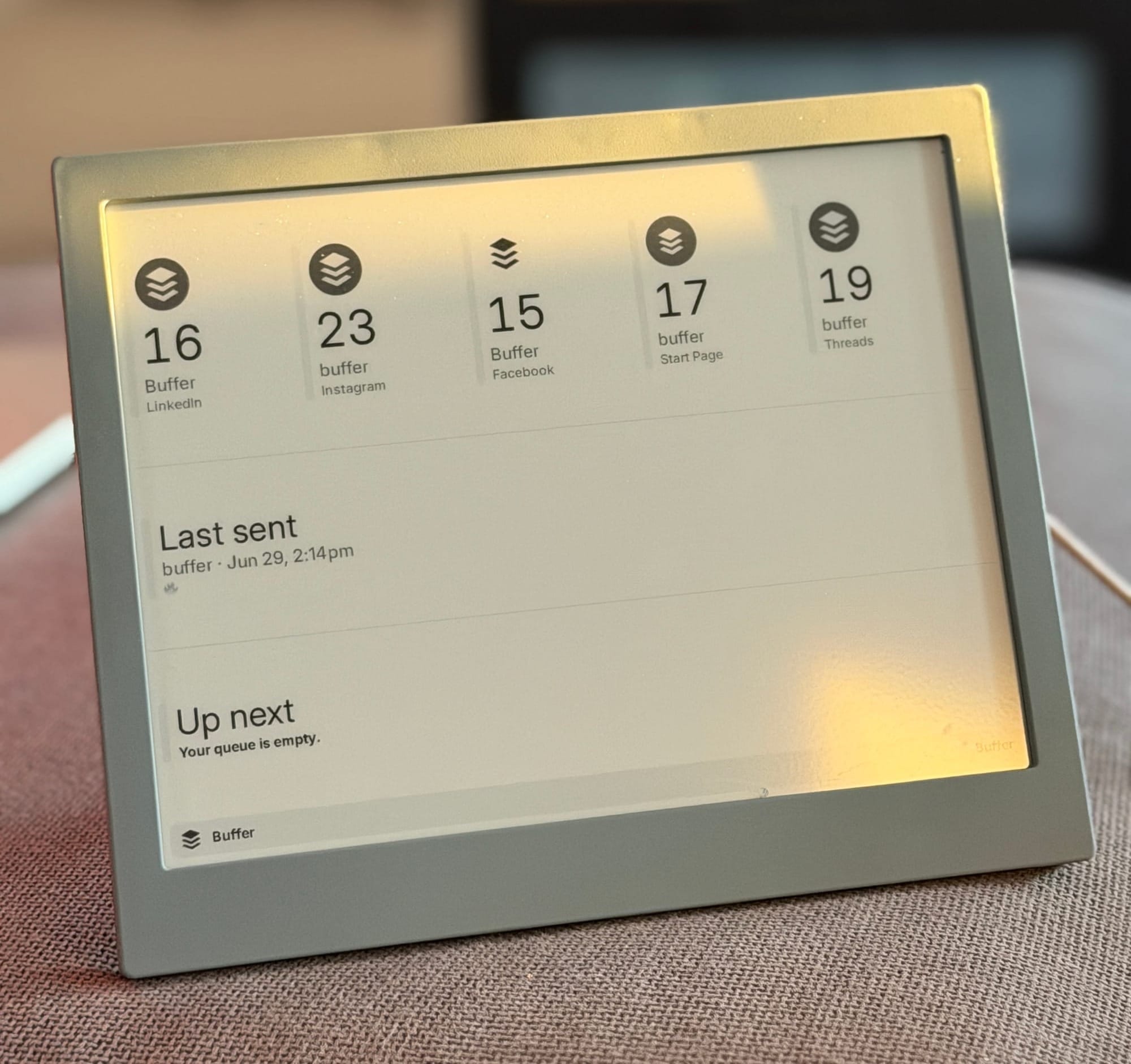
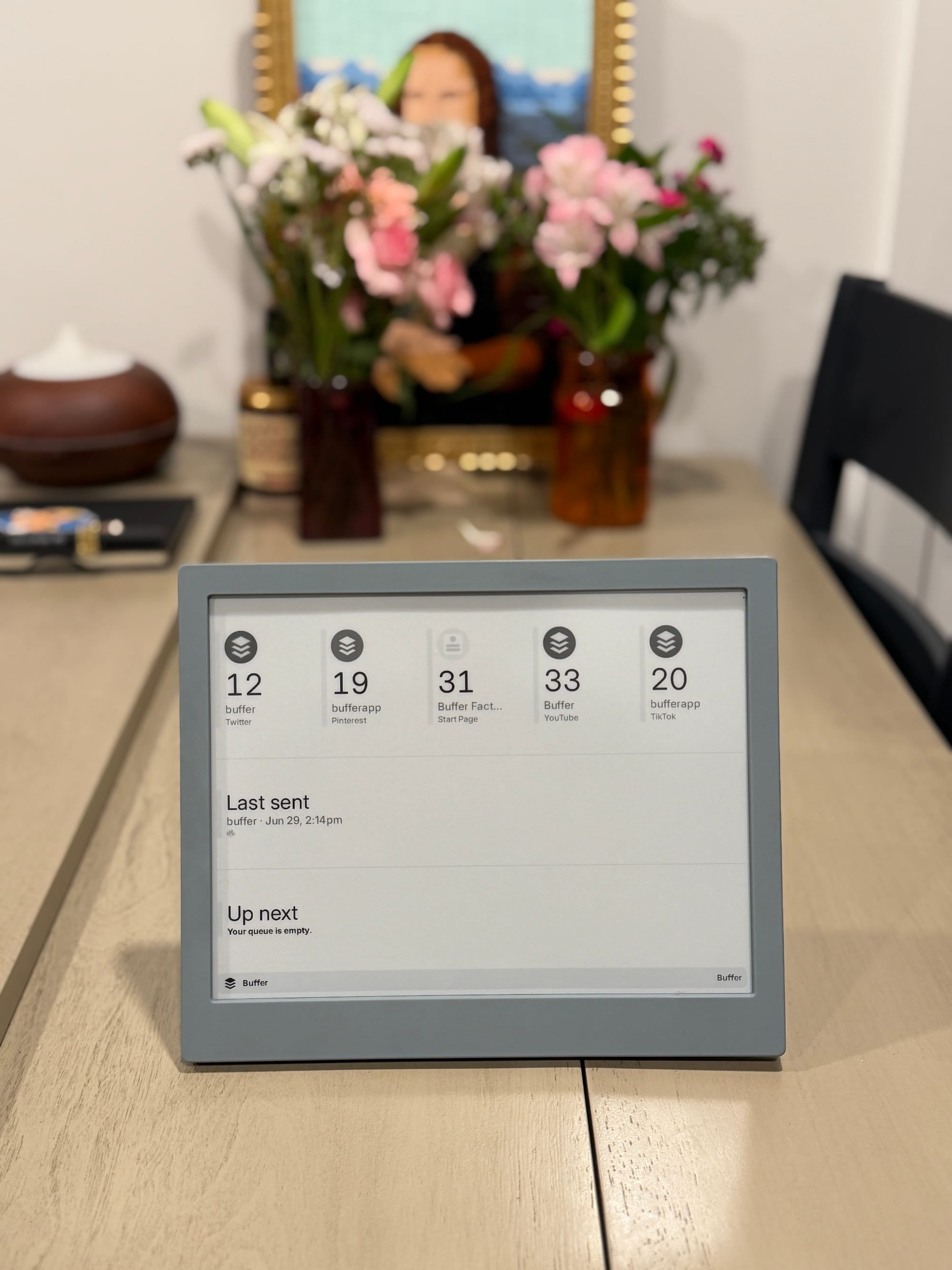
His curiosity led him to develop a private plugin that showcased critical Buffer metrics: current queue counts, details of a recently sent post, or an upcoming scheduled update, all refreshed automatically. This "personal hack," born out of a desire for greater ambient awareness of his work, quickly became an indispensable part of his daily workflow. The plugin, which began as an isolated project, has now been officially released and is accessible to any TRMNL owner, allowing them to install it and seamlessly connect their Buffer account. This journey from a private build to a public offering underscores the robust potential of developer ecosystems that encourage individual experimentation and contribution.
TRMNL’s Vision for Calm Computing
TRMNL’s approach to technology stands in stark contrast to the often-overwhelming digital landscape. Their e-ink displays are designed to reduce cognitive load and minimize digital distractions, embodying the principles of "calm technology." In an era where constant notifications and screen time contribute to digital fatigue, TRMNL offers a deliberate retreat. Their devices integrate information into the physical environment, much like a clock or a picture frame, providing context without demanding interaction. This philosophy has resonated with a growing segment of users seeking to optimize their focus and well-being. The market for e-ink displays, traditionally dominated by e-readers, has seen increasing diversification into productivity tools, digital signage, and ambient information displays, with market projections indicating continued growth as consumers prioritize focused work environments. TRMNL’s success lies in its ability to harness this technology to create a platform that is both aesthetically pleasing and functionally valuable.
The vibrant plugin ecosystem is central to TRMNL’s value proposition. By providing an accessible development environment and actively scouting for innovative user-created solutions, TRMNL fosters a community of developers who extend the device’s utility far beyond its initial scope. This collaborative model not only enriches the user experience but also positions TRMNL as a hub for innovation in the ambient computing space.
Buffer’s Strategic Embrace of Open APIs
The timing of TRMNL’s discovery of Yates’s plugin could not have been more fortuitous for Buffer. For SaaS companies like Buffer, a public API represents a strategic imperative, opening avenues for innovation, integration, and ecosystem expansion. A well-designed API allows third-party developers to interact with a service’s core functionalities, building custom applications, integrations, and automation workflows that cater to specific user needs. This expands the utility and reach of the core product without requiring the company to develop every conceivable feature in-house.
Buffer’s journey towards launching its public API was a significant undertaking, involving extensive development, rigorous testing, and careful consideration of security protocols. The decision to open its API reflected Buffer’s commitment to empowering its users and fostering a broader developer community around its social media management tools. By providing a robust and accessible API, Buffer aims to enhance its value proposition, enabling businesses and individual creators to integrate Buffer more deeply into their existing workflows, whether for advanced analytics, custom scheduling, or, as Yates demonstrated, ambient information display. The API’s launch signifies Buffer’s strategic move to solidify its position as a flexible and integral component within the broader digital marketing and productivity ecosystem.
The Unveiling: A Timeline of Serendipity and Collaboration
The sequence of events leading to the public release of the Buffer TRMNL plugin highlights a rare convergence of individual initiative and corporate strategy:
- Early 2026 (Inferred): Andy Yates acquires a TRMNL e-ink display, driven by personal interest in ambient computing and exploring its plugin development capabilities.
- A Few Weeks Prior to API Launch (Inferred ~June 2026): Yates, as a personal project, develops a private plugin for his TRMNL device to display his Buffer queue, utilizing existing internal Buffer endpoints or early API drafts.
- Around Early July 2026: TRMNL’s dedicated team, actively scouting its plugin ecosystem, discovers Yates’s "Buffer" plugin. Impressed by its functionality and potential, they reach out to his personal email address, unaware of his professional affiliation.
- Simultaneously: Buffer’s public API development nears completion, with a launch date set for approximately one week after TRMNL’s initial contact with Yates.
- Mid-July 2026: The "happy accident" is revealed: Yates informs TRMNL that he works for Buffer, and critically, that Buffer’s public API is about to go live, providing the perfect official channel for the plugin.
- Post-API Launch (July 2026): A collaborative effort begins. Ikraam from the TRMNL team works directly with Andy Yates to refine the plugin. This collaboration focuses on enhancing features, simplifying the setup flow for public users, and ensuring robust integration with Buffer’s newly launched public API.
- Official Release (July 2026): The Buffer plugin for TRMNL is officially launched, making it available to all TRMNL users. Ikraam also contributes the Buffer connector, leveraging the new API flow, to TRMNL’s public providers repository, making it easier for future developers to build their own Buffer integrations.
This chronology demonstrates how a simple, personal project, when discovered and nurtured within a supportive ecosystem, can align perfectly with broader corporate strategic initiatives, creating a powerful synergy.
The Psychological Edge of Ambient Information
The impact of an ambient display on productivity and information consumption is profound. Most individuals interact with their content schedules by actively seeking them out: opening an application, navigating to a specific tab, and consciously reviewing the information. This "deliberate act" often introduces friction, making it easy to postpone or skip for days, leading to potential oversight. For social media managers or content creators, this can result in missed posting opportunities or inconsistent content delivery.
An ambient display, such as the Buffer plugin on a TRMNL screen, reverses this dynamic. Instead of requiring active engagement, the information passively comes to the user. A quick glance at the desk provides an immediate, gentle reminder of the Buffer queue’s status. If the queue is running low, it prompts action without the jarring interruption of a notification or the mental effort of opening an application. This subtle, continuous feedback loop is invaluable for maintaining consistency, a critical factor in successful social media strategy.
Furthermore, there is a tangible psychological benefit to seeing work represented as a physical object. The Buffer queue transforms from an abstract row in a digital dashboard into a concrete presence on the desk. This physical manifestation can foster a deeper connection to one’s work, making progress feel more real and actionable. It reduces the cognitive load associated with context switching between multiple digital applications, allowing for a more focused and calm work environment. Research in human-computer interaction consistently highlights the benefits of ambient displays in supporting peripheral awareness, reducing information overload, and enhancing overall user experience by moving information to the background until it is needed.
Technical Excellence and Ecosystem Nurturing
The technical implementation of the Buffer plugin for TRMNL exemplifies modern best practices in platform development and security. TRMNL’s platform hosts the plugin entirely on its side, eliminating the need for Andy Yates to maintain any server infrastructure. This serverless approach simplifies deployment, reduces operational overhead, and ensures scalability. The plugin securely connects to Buffer’s API using OAuth flow with PKCE (Proof Key for Code Exchange), a robust and secure method for applications to gain authorized access without exposing sensitive API keys directly. PKCE significantly enhances security by preventing authorization code interception attacks, a crucial consideration for any public API integration.
The collaboration between Andy Yates and Ikraam from the TRMNL team was instrumental in refining the plugin. Ikraam’s contributions included adding new features and streamlining the setup process, transforming the initial personal build into a user-friendly, polished product suitable for a wider audience. This hands-on support is a cornerstone of TRMNL’s strategy for fostering a lively and high-quality plugin ecosystem. By actively engaging with developers and providing assistance, TRMNL ensures that community-contributed plugins meet high standards of functionality and user experience.
A significant outcome of this collaboration is Ikraam’s contribution of the Buffer connector, utilizing the new API flow, to TRMNL’s public providers repository. This means that the core integration logic for Buffer is now openly available. Any future developer wishing to build their own Buffer-related plugin on the TRMNL platform can leverage this existing connector, effectively getting "the hard part done for them." This "build once, reuse many times" philosophy accelerates innovation, reduces redundant effort, and strengthens the overall TRMNL developer community by lowering the barrier to entry for new projects.
Official Reactions and Broader Implications
The story of the Buffer TRMNL plugin has elicited positive reactions from both companies, highlighting the mutual benefits of such serendipitous collaborations.
A spokesperson for Buffer emphasized the significance of this event for their newly launched API: "The immediate adoption and innovative use of our public API by Andy, even before its official launch, is incredibly validating. It perfectly illustrates our vision for the API: empowering our users and the broader developer community to create novel solutions that enhance their Buffer experience. This TRMNL integration is a fantastic showcase of what’s possible when you open up your platform, and we are thrilled to see our API already fostering such creative applications."
From TRMNL’s perspective, a representative stated: "Discovering Andy’s ‘Buffer’ plugin was a delightful surprise, and learning he was a Buffer engineer just as their API was launching felt like destiny. This collaboration with Andy and Buffer exemplifies the strength of our community-driven ecosystem. Our goal is to provide a platform where creativity flourishes, and developers can bring their ideas to life, enriching the TRMNL experience for everyone. The quality and utility of this Buffer plugin, refined through our collaborative efforts, truly highlights the potential of ambient displays for modern productivity."
This partnership has broader implications for the future of work and productivity tools. It signals a growing trend towards specialized, less intrusive information delivery, moving beyond generic dashboards to tailored, context-aware displays. For Buffer, it reinforces the value of an open API as a catalyst for ecosystem growth and enhanced user engagement. For TRMNL, the official Buffer integration adds a powerful, professionally relevant plugin to its roster, further cementing its position in the ambient computing market. The success story also serves as an inspiration for other companies to invest in open platforms and cultivate vibrant developer communities, recognizing that some of the most impactful innovations often emerge from individual passion projects.
Opportunity for Engagement: TRMNL Giveaway and Discount
To commemorate this unique collaboration and the official launch of the Buffer plugin, Buffer and TRMNL have partnered to offer an exclusive giveaway and a special discount. This promotional initiative aims to introduce more users to the benefits of ambient displays and the enhanced productivity offered by the Buffer TRMNL integration.
From July 13 to July 20, Buffer and TRMNL are conducting a joint giveaway, offering four TRMNL devices alongside exclusive Buffer swag bundles. Participation is straightforward, requiring three simple steps detailed on Buffer’s official LinkedIn post. The winners of this giveaway will be announced on July 27.
For those who participate but do not win, a consolation offer is available: TRMNL is providing a special discount code, bufferxtrmnl, which offers $10 off any TRMNL device. This code will be active from July 27 through September 7, providing a generous window for interested individuals to experience the benefits of a TRMNL display. Full terms and conditions for both the giveaway and the discount code are linked in the first comment of the giveaway post, ensuring transparency and ease of access for all participants. This initiative not only celebrates a successful technical integration but also actively encourages wider adoption of these innovative productivity tools.