The Evolution of Workplace Burnout and the Emergence of Thoughtload as a Strategic Challenge for Modern Leadership

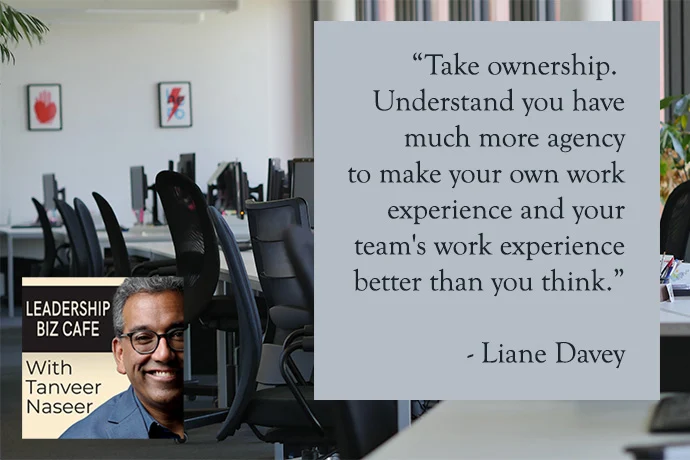
The persistent rise of workplace burnout has become a defining characteristic of the modern professional landscape, prompting a re-evaluation of traditional management strategies and the psychological frameworks used to understand employee well-being. Despite a proliferation of corporate wellness programs, mental health days, and flexible working arrangements, recent data suggests that the crisis of exhaustion and disengagement is not only persisting but accelerating. This paradox suggests a fundamental disconnect between the interventions being deployed and the actual root causes of psychological strain in the workplace. Organizational psychologist and author Liane Davey, in a recent analysis of these trends, posits that the failure to curb burnout stems from a misidentification of the problem. While "workload"—the volume of tasks assigned—is frequently blamed, the more insidious culprit is often "thoughtload," an invisible tax on performance that encompasses the mental and emotional energy required to navigate modern organizational complexities.
The Chronology of a Growing Crisis: From Individual Failure to Systemic Phenomenon
The understanding of burnout has undergone a significant transformation over the last five decades. In the 1970s, when the term was first coined by psychologist Herbert Freudenberger, it was largely viewed as an individual’s failure to cope with stress, often localized to "helping professions" like healthcare and social work. However, the timeline of the 21st-century workplace reveals a steady expansion of the phenomenon across all sectors.
In 2019, a pivotal shift occurred when the World Health Organization (WHO) officially classified burnout in its International Classification of Diseases (ICD-11) as an "occupational phenomenon." This was a landmark moment, as it moved the diagnostic focus away from the individual’s psyche and toward the "chronic workplace stress that has not been successfully managed." Shortly after this classification, the COVID-19 pandemic acted as a global catalyst, blurring the boundaries between domestic and professional life and introducing a period of prolonged ambiguity.
By 2021, the "Great Resignation" highlighted the degree to which employees were no longer willing to sacrifice mental health for career stability. In 2022 and 2023, the discourse shifted toward "Quiet Quitting," a symptom of employees mentally checking out as a defense mechanism against overwhelming demands. As of 2024, the focus has moved toward sustainable productivity, with experts like Liane Davey arguing that the next phase of leadership must involve managing the cognitive and emotional "thoughtload" that traditional workload metrics fail to capture.
Defining Thoughtload: The Invisible Tax on Performance
In her latest work, Thoughtload: Manage the Madness and Free Your Team to Do Great Work, Davey defines thoughtload as the cognitive and emotional burden that accompanies the execution of tasks. While workload can be measured in hours or output units, thoughtload is qualitative and often invisible. It includes the energy spent navigating office politics, the anxiety of making high-stakes decisions under uncertainty, the emotional labor of managing difficult interpersonal dynamics, and the "context switching" required by the constant influx of digital communications.
Davey suggests that thoughtload acts as a tax on human capital. Just as a financial tax reduces the net income available for investment, thoughtload reduces the net cognitive capacity available for high-value, creative work. When an employee is forced to spend 40% of their mental energy navigating poorly defined roles or conflicting instructions from leadership, their "great work" inevitably suffers. This "madness," as Davey describes it, is frequently the result of organizational inefficiencies that leaders have come to accept as normal.
Supporting Data: The Quantitative Reality of Burnout
The scale of the burnout crisis is reflected in numerous global studies. According to the 2023 Gallup State of the Global Workplace report, approximately 44% of employees reported experiencing "a lot of stress" during the previous workday, a record high that has remained elevated since the pandemic. Furthermore, a study by Deloitte found that nearly 70% of C-suite executives have considered quitting their jobs due to stress, indicating that thoughtload is a challenge that permeates every level of the corporate hierarchy.
The economic implications are equally staggering. The World Economic Forum estimates that the global cost of mental health problems, including lost productivity due to burnout, is approximately $1 trillion per year. In the United States alone, work-related stress is estimated to contribute to more than 120,000 deaths annually and results in approximately $190 billion in healthcare costs. These figures underscore the fact that burnout is not merely a human resources issue but a significant macroeconomic burden.
Research from the American Psychological Association (APA) further supports the concept of thoughtload, noting that "cognitive interference"—the presence of distracting or intrusive thoughts related to work—is a primary predictor of job dissatisfaction. When employees are unable to "shut off" their work-related thoughts, the recovery period necessary to prevent burnout is compromised, leading to a cycle of chronic exhaustion.
Leadership Implications: Moving Beyond One-and-Done Solutions
One of the central arguments presented by Davey is that the resolution of workplace anxiety and burnout is not a "one-and-done" solution. Traditional corporate responses, such as a single seminar on mindfulness or the installation of a ping-pong table, fail to address the systemic nature of thoughtload. Instead, Davey advocates for an "evolving practice" that integrates mental clarity and intentionality into the daily operations of a team.
Leadership, in this context, requires a shift from being a "task-master" to being a "capacity-manager." This involves:
- Clarifying Priorities: Reducing thoughtload by eliminating the ambiguity of what truly matters. When everything is a priority, nothing is, and the resulting cognitive dissonance is a major driver of stress.
- Managing Interpersonal Friction: Davey, a team effectiveness expert, emphasizes that unresolved conflict is a massive contributor to thoughtload. Leaders must facilitate healthy disagreement rather than allowing passive-aggressive tensions to drain the team’s energy.
- Intentional Communication: Limiting the "noise" of constant Slack messages and emails that force employees into a state of perpetual hyper-vigilance.
Official Responses and Industry Reactions
The corporate world has begun to react to these insights with varying degrees of urgency. Human Resources departments in major tech and finance firms have started to implement "Deep Work" blocks and "No-Meeting Wednesdays" as a direct response to the realization that cognitive overload is killing innovation.
Industry analysts suggest that the next decade of management will be defined by "Psychological Safety 2.0," where the focus is not just on the freedom to speak up, but on the structural protection of an employee’s cognitive bandwidth. Reactions from organizational psychologists globally mirror Davey’s sentiments, suggesting that the "human" in Human Resources must be prioritized over the "resource."
Dr. Christina Maslach, a pioneer in burnout research and creator of the Maslach Burnout Inventory (MBI), has long argued that the "mismatch" between the person and the job is the root cause. Davey’s concept of thoughtload provides a modern vocabulary for this mismatch, specifically highlighting how the mental demands of the 21st-century workplace have outpaced human cognitive evolution.
Analysis of Implications: The Future of Work and Productivity
The implications of misidentifying the root cause of burnout are profound. If organizations continue to treat burnout as a time-management issue rather than a thoughtload issue, they will continue to see high turnover rates and declining engagement. The shift toward identifying "thoughtload" suggests that the future of competitive advantage lies in "cognitive sustainability."
Companies that successfully manage the thoughtload of their employees will likely see higher rates of retention and innovation. By removing the "invisible tax," leaders free up their teams to engage in the "great work" that drives organizational growth. However, this requires a radical transparency from leadership regarding the limitations of human capacity. It requires saying "no" to certain initiatives to protect the mental integrity of the collective.
Furthermore, the integration of Artificial Intelligence (AI) into the workplace presents a dual-edged sword for thoughtload. While AI has the potential to automate mundane tasks (reducing workload), it may also increase the complexity and speed of decision-making required by humans (increasing thoughtload). The ability of leaders to navigate this technological transition while protecting their team’s mental bandwidth will be a critical skill set in the coming years.
Conclusion: A Call for Strategic Care
The conversation between Tanveer Naseer and Liane Davey serves as a timely reminder that the tools of the industrial age are insufficient for the challenges of the information age. Burnout is not an inevitability of hard work; it is a symptom of a system that has failed to account for the cognitive and emotional limits of its participants.
As workplace dynamics continue to evolve, the distinction between workload and thoughtload will become increasingly vital. Addressing the "madness" of modern work requires more than just empathy; it requires a strategic overhaul of how tasks are assigned, how communication is managed, and how success is defined. By recognizing thoughtload as a tangible factor in performance, organizations can begin to foster environments that are not only productive but also sustainable, ensuring that their greatest asset—the human mind—is treated with the care and intentionality it deserves. This shift from reactive crisis management to proactive cognitive stewardship marks the next frontier in leadership excellence.