Pentagon Pushes for AI-Powered Lie Detectors in $30M Overhaul Amid Leak Investigations

The United States Department of Defense is seeking to invest $30.3 million over the next five years to develop and deploy an advanced iteration of the traditional polygraph test. According to a recent Department of Defense budget justification request, this modern credibility assessment initiative—dubbed Polygraph+ or Polygraph Next—aims to revolutionize federal screening procedures by integrating artificial intelligence, machine learning scoring algorithms, and "standoff sensing" technology. This latter capability theoretically permits the collection of physiological metrics without requiring any physical device to be attached to a subject’s body.
The funding initiative arrives at a volatile juncture for the Pentagon. Under the leadership of Defense Secretary Pete Hegseth, the Department of Defense has leaned heavily on polygraph examinations as an investigative tool to trace and plug unauthorized disclosures to the press. In September, high-profile reports emerged detailing how approximately 50 officers serving on the Joint Staff were subjected to polygraph testing. This extraordinary measure was reportedly triggered by media coverage exposing the critical depletion of U.S. weapons stockpiles resulting from ongoing military engagements and the broader conflict environment involving Iran.
A Century-Old Technology Faces Modern Upgrades
The foundational mechanisms of lie detection have remained largely stagnant since the invention of the polygraph in the 1920s. Traditional examinations measure physiological indicators such as blood pressure, pulse, respiration, and galvanic skin response. Examiners evaluate veracity by contrasting a subject’s involuntary physical reactions during baseline queries—such as benign inquiries about the color of the sky—against target questions designed to probe for hidden wrongdoing or past misconduct.
Federal agencies conduct tens of thousands of these assessments annually for personnel screening, security clearances, and counterintelligence purposes. However, the scientific validity of the polygraph has faced continuous scrutiny for nearly as long as it has been utilized. Results obtained via polygraphs are rarely admissible in criminal courts due to widespread skepticism regarding their reliability.
Historical critiques of the technology are well-documented. In 1983, the Office of Technology Assessment (OTA) released a landmark report for Congress concluding that there was very limited scientific evidence supporting the utility of polygraphs in personnel screening. Two decades later, a 2003 report by the U.S. National Research Council (NRC) echoed these concerns, declaring that the scientific evidence regarding the polygraph’s efficacy was "weak at best."
Statistical evaluations further complicate the deployment of these tools on a mass scale. While the American Polygraph Association asserts that traditional polygraphs boast an accuracy rate between 80% and 94%, independent experts emphasize the mathematical dangers of false positives. Given that the Department of Defense employs approximately 2.8 million individuals, the implementation of an imperfect screening mechanism across such a vast workforce could result in the wrongful accusation or suspicion of tens of thousands of loyal personnel.
Chronology of Pentagon Deception Detection Efforts
The pursuit of next-generation lie detection is not an isolated initiative, but rather the latest phase in a multi-year defense technology strategy:
- 1920s: The modern polygraph is invented, establishing a baseline methodology centered on measuring autonomic nervous system responses.
- 1983: The Congressional Office of Technology Assessment publishes a comprehensive study questioning the scientific validity of polygraphs in employee screening environments.
- 2003: The U.S. National Research Council publishes a report assessing polygraph efficacy as "weak at best," warning of high error rates when applied to large populations.
- 2000s–2010s: Academic and government projects—including the UK’s Silent Talker, the European Union’s iBorderCtrl pilot, and the U.S. border-crossing tool AVATAR—explore multi-modal deception detection using thermal imaging, eye-tracking, and vocal analysis. Most of these initiatives eventually stall or quietly conclude without wide adoption.
- 2023: The Defense Innovation Unit (DIU) initiates an open call for commercial deception-detection prototypes, selecting firms such as Presage Technologies and Altec Research to develop non-contact sensing systems.
- September 2026: Media reports reveal that approximately 50 Joint Staff officers undergo polygraph testing amid internal investigations into leaked intelligence regarding U.S. weapons inventory depletions.
- Fiscal Year 2027 Budget Request: The Department of Defense formally requests $30.3 million over a five-year period to fund the Polygraph+ / Polygraph Next program via the Defense Counterintelligence and Security Agency (DCSA).
Technological Aspirations and Methodological Hurdles
The newly proposed Polygraph+ project will be managed by the Defense Counterintelligence and Security Agency (DCSA), the division responsible for conducting federal background investigations. Budget documents indicate that the technology will be deployed for vetting prospective employees and bolstering "insider threat detection."
Although the DCSA has not publicly disclosed the exact commercial partnerships or proprietary systems that will power Polygraph+, previous initiatives by the Pentagon provide notable insights. In 2023, the Defense Innovation Unit (DIU) solicited proposals from private sector innovators specializing in deception detection. The DIU ultimately selected two commercial entities to build functional prototypes: Presage Technologies, which asserts an ability to monitor heart and breathing rates through standard optical cameras, and Altec Research, a medical sensor firm expanding into non-contact biometric tracking.
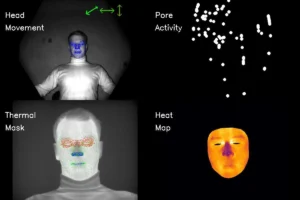
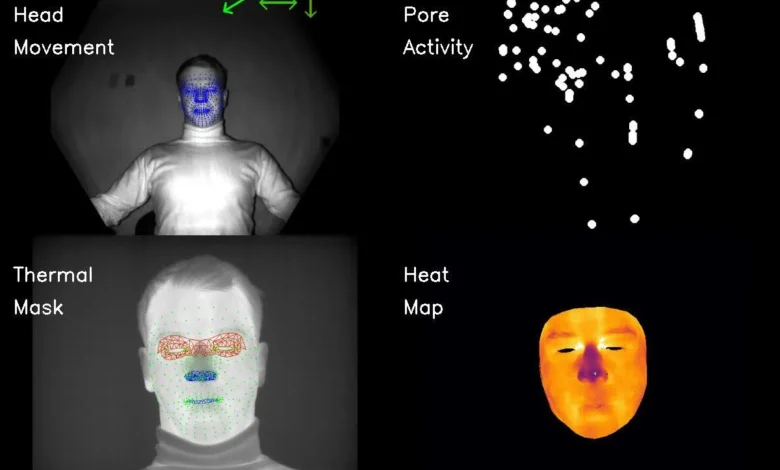
Promotional material and technical screenshots released by the DIU regarding Altec Research’s prototype demonstrate a system capable of tracking minute physiological data points, including head movement, facial skin temperature fluctuations, and pore perspiration activity.

Proponents of artificial intelligence argue that machine learning models could theoretically enhance lie detection by identifying complex, multi-variable data patterns that human examiners fail to perceive. Researchers note that human deception involves three distinct psychological and physiological dimensions: autonomic stress, cognitive load, and the conscious effort required to conceal a falsehood. Traditional polygraphs primarily measure physiological stress alone.
By employing "multi-modal" detection systems that aggregate thermal imaging, facial micro-expressions, vocal modulation, and ocular tracking into a singular computational score, developers hope to create a more comprehensive assessment tool.
Expert Skepticism and Legal Criticisms
Despite the allure of technological modernization, legal scholars, psychologists, and security experts remain deeply skeptical of the Pentagon’s investment. Critics argue that layering artificial intelligence over a fundamentally flawed premise simply compounds systemic errors.
"It’s a misguided effort to reduce the complex to something that is tangible," says Kyri Kotsoglou, a legal scholar at Northumbria University in the United Kingdom who specializes in the application of polygraph technology within judicial systems. Kotsoglou characterizes the integration of AI and polygraphy as "the worst of both worlds," noting that it injects computational opacity on top of underlying scientific invalidity.
Other researchers emphasize the subjective nature of current evaluations. Different examiners frequently arrive at divergent conclusions from the exact same physiological datasets. Furthermore, statistical studies indicate that individuals from specific demographic minority groups may experience higher rates of false-positive determinations due to baseline physiological variations.
Moreover, the vulnerability of these systems to deliberate countermeasures remains a persistent weakness. "If you know how it works, you can beat it," notes Sophie van der Zee, an associate professor studying deception at Erasmus University in Rotterdam. Interviewees can employ physical or psychological countermeasures—such as artificially elevating baseline physiological arousal through concealed physical stimuli—to manipulate the test outcomes.
Van der Zee points out that the primary utility of the polygraph has historically been psychological deterrence rather than empirical precision. Subjects frequently offer confessions prior to the examination simply out of fear of the machine. "That only works if people think a polygraph works," she adds, noting that science has yet to discover a universal, infallible indicator of deception—often colloquially described as a "Pinocchio’s nose."
Policy Implications and Institutional Culture
Legal and policy analysts suggest that the push for Polygraph+ reflects internal anxieties within the current defense administration regarding institutional loyalty and information security, rather than a breakthrough in forensic science.
"It seems very much a response to the concern of the current administration to leaks and perceived lack of loyalty," observes Marion Oswald, a law professor who has collaborated with Kotsoglou on research examining polygraph usage in legal and investigative frameworks. Oswald fears that advanced lie-detection technologies will continue to function primarily as psychological instruments of intimidation rather than objective fact-finding mechanisms.
"[Lie detection is] being used as a threat, to intimidate and force people to confess to things, as opposed to anything that’s actually getting valid information," Oswald concludes.
As the Congressional committees review the fiscal budget request, the debate over Polygraph+ highlights a broader tension within modern governance: the growing temptation to deploy advanced, data-driven surveillance tools to solve complex institutional vulnerabilities, even when the foundational science underpinning those tools remains heavily contested by the academic and scientific communities.