The Product-Led Growth Lab Series: ChartMogul Deep Dive into the Evolving Landscape of SaaS Expansion and AI Integration

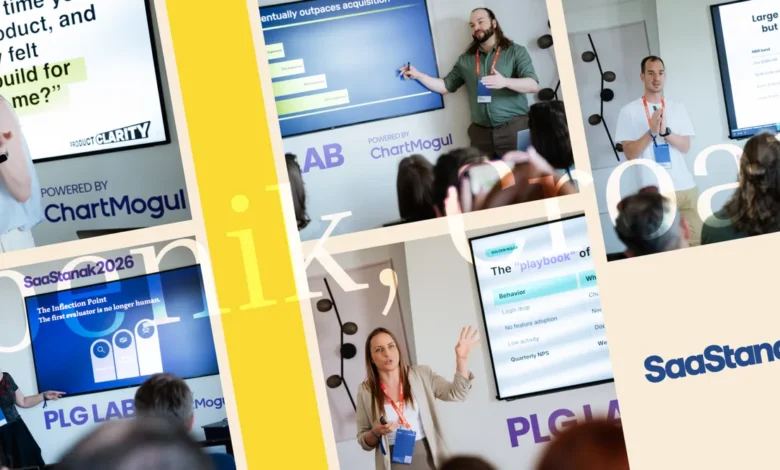
ChartMogul, a leading revenue intelligence platform for subscription businesses, has concluded its inaugural Product-Led Growth (PLG) Lab series, a curated collection of intimate, city-based meetups designed to tackle the intricate challenges faced by modern SaaS founders and operators. Spearheaded by Sara Archer, Chief Revenue Officer at ChartMogul, the series aimed to move beyond superficial discussions and delve into the "messy, important stuff" that defines successful PLG strategies. The initiative underscores a growing recognition within the SaaS community that while PLG was initially about streamlining the customer journey by reducing reliance on traditional sales teams, its current evolution demands a sophisticated understanding of data architecture, feedback loops, onboarding psychology, hybrid go-to-market models, and the increasing integration of artificial intelligence.
The genesis of the PLG Lab series stems from Archer’s extensive conversations with ChartMogul’s customer base, which largely comprises ambitious SaaS businesses built on smart, opinionated products rather than vast capital reserves, extensive enterprise sales teams, or six-figure contracts. A common thread emerging from these discussions is the complexity inherent in Product-Led Growth strategies, often manifesting in broken workflows, misaligned activation paths, and challenging compensation structures for hybrid go-to-market motions. Recognizing a gap in accessible, actionable insights for these specific pain points, ChartMogul conceived the PLG Lab as a platform for candid exchange and practical knowledge sharing.
A Global Journey of PLG Exploration
The series commenced in San Francisco during the week of Stripe Sessions, a prominent event for online businesses. The inaugural meetup featured a candid discussion with Brenna Loury, CRO of Doist, who shared insights into the challenges of moving upmarket within a PLG framework. The engagement level was notably high, with attendees extending discussions well into the networking portion of the event, highlighting the immediate value and resonance of the topics addressed. This positive reception set a strong precedent for subsequent gatherings.
Following the San Francisco event, the series journeyed to the picturesque Croatian coast, where ChartMogul partnered with SaaStanak, a European SaaS conference, to host two afternoons of PLG-focused content. Against the backdrop of the Mediterranean Sea, these sessions consistently drew standing-room-only crowds, even amidst a heatwave. The sustained engagement, characterized by incisive questions and the sharing of real-world company experiences, underscored the critical need for such specialized discussions within the global SaaS ecosystem.
Dissecting Key PLG Pillars: A Recap of the Sessions
ChartMogul has made the content from these highly attended sessions available to a wider audience, providing valuable resources for those unable to attend in person. Each presentation delves into specific, operational aspects of PLG, offering practical takeaways and strategic frameworks.
The Expansion Engine: Architecting a Scalable PLG Stack for Automated Upsells
This session, presented by Tom [Surname not provided in source], tackled the often-misunderstood concept of expansion revenue. Traditionally viewed as a sales execution challenge—identifying the right moment, crafting the right offer—the presentation argued that for many SaaS businesses, expansion is fundamentally an infrastructure problem. The core takeaway is that when data flows seamlessly into appropriate workflows, expansion becomes more timely, relevant, and scalable. The underlying principle is that a robust technical foundation enables proactive and efficient revenue growth through upselling and cross-selling. This resonates with the industry trend of increasing Average Revenue Per Account (ARPA) as a key driver of sustainable SaaS growth, with data suggesting that companies with strong expansion revenue streams exhibit higher overall LTV and more predictable revenue forecasts.
When Automations Guess Wrong: Behavior Shows What Happened. Users Tell You Why
Aleksandra [Surname not provided in source] addressed the common scenario where automated customer lifecycle communications, while technically functional, feel generic and fail to drive desired outcomes. The session emphasized a critical distinction: while user behavior data reveals what has happened, direct user feedback is essential for understanding why. This highlights the importance of integrating qualitative insights with quantitative metrics to refine automated outreach. For businesses investing heavily in marketing automation, understanding this nuance is crucial for moving beyond transactional messaging to genuinely resonant and effective engagement, ultimately improving customer retention and product adoption rates.
From Traditional SaaS to AI-Native in 5 Days: 3 Companies That Did It
This presentation offered a pragmatic approach to adopting AI within SaaS products. It reframed "AI-native" from a broad strategic goal into a concrete product development exercise. The framework focuses on identifying a primary, valuable outcome, minimizing the surrounding manual work, preserving moments that build trust, and then architecting the user experience backward from that point. The session provided actionable prompts for teams, such as identifying opportunities for AI to make default decisions and determining which small user actions are still necessary to maintain a sense of ownership. This timely discussion reflects the accelerating pace of AI integration in the software industry, with many companies exploring ways to leverage AI to enhance user experience, personalize offerings, and drive efficiency. The implications are significant for competitive differentiation and long-term product viability.
LTV Has a Blind Spot: Findings from 3,700 SaaS Businesses Over 6 Years
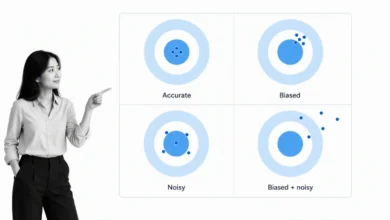
Leveraging proprietary data from ChartMogul’s insights team, this presentation unveiled new findings regarding the limitations of traditional Lifetime Value (LTV) calculations. While LTV remains a valuable metric for informing decisions on Customer Acquisition Cost (CAC), payback periods, and investment segmentation, the research underscores the necessity of understanding where the formula breaks down and cross-referencing it with actual customer behavior. This data-driven approach is vital for SaaS companies seeking to optimize their growth strategies and avoid making investment decisions based on incomplete or potentially misleading metrics. The analysis is particularly relevant as the SaaS market matures and companies increasingly focus on sustainable, profitable growth.
People-Led Growth: Fixing Your Product’s First Impression and Path to Activation
Paulina [Surname not provided in source] challenged the notion of onboarding as a "set and forget" process. The session introduced a framework for continuous onboarding improvement, encouraging teams to regularly re-evaluate the user experience from the user’s perspective. The core idea is to identify moments where trust erodes or momentum is lost, and then systematically address these friction points to guide users toward their first significant win. This emphasis on human-centered design in the initial stages of the customer journey is critical for reducing churn and fostering long-term engagement. In a competitive SaaS landscape, a seamless and intuitive onboarding experience can be a significant differentiator.
Invisible PLG
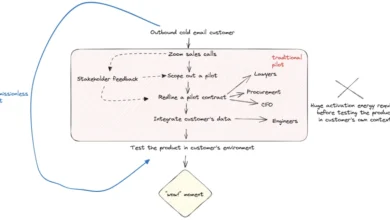
This session explored the evolving concept of "Invisible PLG," posing a provocative question: could an AI agent independently discover, evaluate, test, price, and integrate with your product? If the answer is no, the presentation suggests, the product may be becoming "invisible" to the systems that are increasingly shaping software discovery and evaluation. This forward-looking discussion signals a potential shift in how software will be consumed and integrated in the future, driven by AI-powered agents. Companies that fail to adapt to this trend risk becoming less discoverable and accessible in an increasingly automated digital ecosystem. The implications for product design and marketing are profound, requiring a strategic pivot towards systems-level integration and discoverability.
[Workshop] From $1M–$20M ARR: Growth Levers and New Signals for Success
This workshop addressed the critical growth phase for SaaS companies scaling from $1 million to $20 million in Annual Recurring Revenue (ARR). It reframed the question of achieving this growth not as seeking a single silver bullet, but as a process of compounding improvements across key metrics such as Average Revenue Per Account (ARPA), retention, expansion, strategic focus, and operational execution. The workshop also highlighted the importance of leadership standards in sustaining these improvements. This practical guidance is invaluable for companies navigating the complexities of scaling, where the challenges shift from initial product-market fit to sustainable, predictable growth. Industry benchmarks indicate that this ARR range is a crucial inflection point, requiring a sophisticated understanding of growth dynamics.
Where PLG Meets Sales: Building a Hybrid Growth Engine in Practice
This session debunked the notion that hybrid go-to-market (GTM) strategies simply involve appending a self-serve funnel to a traditional sales process. Instead, it presented hybrid GTM as a sophisticated approach to resolving systemic and process challenges that arise when different buyer personas require distinct engagement paths. Key areas of focus included account routing, ownership definition, incentive design, product segmentation, and meeting customers where they are. As many SaaS companies mature, adopting a hybrid model is becoming increasingly common to cater to a wider spectrum of customer needs and buying behaviors, optimizing both efficiency and customer satisfaction.
The Launch to Adoption Gap: Why Fast Shipping Doesn’t Equal Product Growth
Natalija [Surname not provided in source] offered a fresh perspective on SaaS product marketing by identifying the "launch to adoption gap"—the phenomenon where products are shipped faster than users can absorb them. The session reframed product marketing from mere announcement of new features to the strategic design for adoption. In an environment of constant product releases, companies that excel at identifying what deserves attention, targeting the right users at the optimal moment, and translating releases into tangible behavior change will gain a significant competitive advantage. This focus on driving actual user engagement and value realization is critical for sustainable product growth and customer success.
The Evolving Face of Product-Led Growth
In conclusion, the ChartMogul Product-Led Growth Lab series has powerfully illustrated that PLG is no longer solely about disintermediating sales. It has evolved into a multi-faceted discipline that demands technical prowess in data architecture, a deep understanding of user psychology for effective feedback loops and onboarding, strategic acumen in designing hybrid GTM models, operational excellence in launch and adoption systems, and an embrace of emerging technologies like AI. As Archer aptly summarized, PLG is becoming "more technical, more operational, and more human all at once." This comprehensive approach is essential for SaaS businesses aiming to thrive in the increasingly complex and dynamic software landscape. The insights shared during the series provide a roadmap for companies looking to navigate this evolution and build enduring, scalable growth engines.