The Product-Led Growth Lab Series: ChartMogul Deepens Insights into the Evolving SaaS Landscape

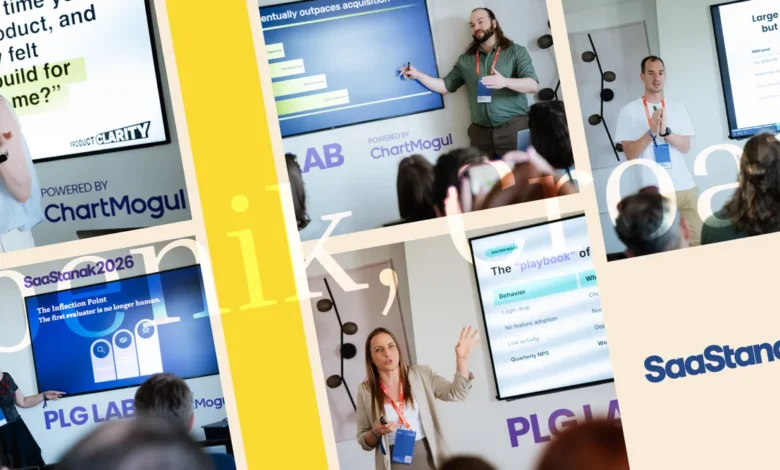
ChartMogul, a leading revenue intelligence platform for SaaS businesses, has concluded its inaugural Product-Led Growth (PLG) Lab series, a collection of intimate, city-based meetups designed to tackle the complex operational and strategic challenges faced by PLG founders and operators. The series, which began in San Francisco and culminated with significant sessions on the Croatian coast, aimed to foster candid discussions and share practical, operator-level knowledge on optimizing product-led growth strategies in an increasingly sophisticated market.
Sara Archer, Chief Revenue Officer at ChartMogul, spearheaded the initiative, recognizing a persistent need among their customer base for in-depth, actionable insights beyond the theoretical. "The vast majority of our customers are building ambitious SaaS businesses by way of smart, opinionated products," Archer stated in a release. "They don’t have massive amounts of capital, rooms full of Enterprise AEs, or six-figure contracts. My conversations with founders and operators often revolve around the same thing: the weeds of PLG complexity." This sentiment underscored the motivation behind the PLG Lab series – to create an event that "didn’t shy away from the messy, important stuff."
The series addressed critical pain points such as optimizing n8n workflows, refining activation paths that often falter in real-world application, and designing effective compensation plans for hybrid go-to-market (GTM) motions. The intimate nature of the meetups, held in cities and often coinciding with larger industry events, facilitated deeper engagement and more personalized problem-solving.
Chronology of Insights: From San Francisco to the Adriatic Coast
The PLG Lab series kicked off in San Francisco during the week of Stripe Sessions. A notable session featured Brenna Loury, CRO of Doist, who shared candid insights into the challenges of moving upmarket within a product-led growth model. The discussions were so engaging that attendees continued their conversations on the rooftop over refreshments, a testament to the immediate value and relevance of the topics discussed. This early success set a precedent for the subsequent events, highlighting the demand for direct, peer-to-peer knowledge sharing.
Following the San Francisco engagement, ChartMogul partnered with SaaStanak to host two afternoons of PLG content on the Croatian coast. These sessions, held overlooking the Mediterranean Sea, drew standing-room-only crowds despite a significant heatwave. The high level of engagement, characterized by sharp questions and active sharing of company-specific experiences, underscored the global appeal and critical importance of mastering PLG strategies. The success of these events led ChartMogul to make the valuable operator-level knowledge shared widely accessible.
Key Takeaways from the PLG Lab Series
ChartMogul has since released recaps, practical takeaways, and presentation decks from each session, enabling those who couldn’t attend to benefit from the collective wisdom. The insights shared span a broad spectrum of PLG challenges and opportunities, offering actionable frameworks for businesses at various stages of growth.
The Expansion Engine: Architecting a Scalable PLG Stack for Automated Upsells
This session emphasized that expansion, often viewed as a sales execution issue, is fundamentally an infrastructure problem for many SaaS businesses. When the right data flows into the right workflows, expansion becomes more timely, relevant, and scalable. The presentation, accessible via a provided Google Drive link, likely detailed how to build the underlying architecture that facilitates automated upsells and cross-sells, moving beyond manual outreach.
When Automations Guess Wrong: Behavior Shows What Happened. Users Tell You Why
Highlighting a common pitfall in lifecycle automation, this presentation argued that while technical functionality might be present, automations can still feel generic. The key takeaway is that user behavior data reveals what happened, but direct user feedback is crucial for understanding why. This session likely provided frameworks for bridging the gap between observed user actions and their underlying motivations, leading to more effective and personalized automated communications.
From Traditional SaaS to AI-Native in 5 Days: 3 Companies That Did It
This session transformed the abstract concept of "AI-native" into a tangible product exercise. It presented a framework for picking the first valuable AI-driven outcome, removing surrounding work, preserving trust-building moments, and building the user experience backward from there. The presentation offers concrete prompts and frameworks for teams to consider: What could the product do before the user needs to learn it? Which decisions should AI make by default? And what small user action is still necessary to maintain a sense of ownership? This signals a move towards practical AI integration in SaaS product development.
LTV Has a Blind Spot: Findings from 3,700 SaaS Businesses Over 6 Years
Drawing on newly released data from ChartMogul’s insights team, this presentation addressed a critical blind spot in how Customer Lifetime Value (LTV) is often calculated. While LTV remains a valuable metric for decisions related to Customer Acquisition Cost (CAC), payback periods, and segment investment, its utility is diminished if its inherent limitations are not understood and checked against actual customer behavior. This implies a need for a more nuanced approach to LTV analysis, incorporating real-world customer actions.
People-Led Growth: Fixing Your Product’s First Impression and Path to Activation
This content serves as a crucial reminder for teams that treat onboarding as a "set and forget" process. The session likely offered a simple, monthly framework for revisiting onboarding by stepping into the user’s shoes. The goal is to identify where trust breaks or momentum disappears and to fix specific moments that guide users toward their first significant win. This underscores the ongoing importance of user experience and human-centered design in PLG.
Invisible PLG
This session introduces a diagnostic for the evolving PLG landscape, posing a critical question: Could an AI agent autonomously discover, evaluate, test, price, and integrate with your product? If the answer is no, the implication is that while the product might be visible to humans, it is becoming increasingly invisible to the AI systems that are beginning to shape software discovery and evaluation. This points to the growing need for products to be discoverable and navigable by intelligent agents.
[Workshop] From $1M–$20M ARR: Growth Levers and New Signals for Success
This workshop reframes the ambitious goal of reaching $20 million in Annual Recurring Revenue (ARR) into a sharper operational question: "What has to get better as we scale?" The answer, it suggests, is rarely a single solution but rather a combination of compounding improvements across Average Revenue Per Account (ARPA), retention, expansion, focus, and execution, supported by leadership standards that ensure these improvements endure. This provides a practical roadmap for scaling SaaS businesses.
Where PLG Meets Sales: Building a Hybrid Growth Engine in Practice
Challenging the notion that hybrid GTM is merely a self-serve funnel appended to a sales team, this session highlights it as a solution to systemic and process problems arising from diverse buyer needs. It likely explores how to effectively route accounts, define ownership, design incentives, establish product boundaries, and meet customers where they are, creating a more integrated and effective growth engine.
The Launch to Adoption Gap: Why Fast Shipping Doesn’t Equal Product Growth
This presentation offers a fresh perspective on SaaS product marketing by identifying a common problem: products are being shipped faster than users can absorb them. The session reframes product marketing from merely announcing new features to actively "designing for adoption." In a competitive environment with constant launches, companies that can prioritize what deserves attention, target the right users at the right moment, and translate releases into actual behavior change will gain a significant advantage.
Broader Implications for the SaaS Ecosystem
The PLG Lab series, as articulated by Archer, reveals a significant evolution in the philosophy and practice of product-led growth. PLG is no longer solely about removing sales from the buying journey. Instead, it has become a sophisticated discipline encompassing data architecture, feedback loops, onboarding psychology, hybrid GTM design, launch systems, agent-readable infrastructure, and the fundamental human element of conveying product value.
The trend towards greater technical sophistication and operational depth in PLG suggests a maturing market where companies are seeking more robust and scalable strategies. The emphasis on AI-native approaches and agent-discoverable products indicates a forward-looking perspective, anticipating the impact of artificial intelligence on software consumption and distribution.
Furthermore, the continued focus on the human aspect of PLG—understanding user psychology, optimizing onboarding, and clearly communicating value—reinforces that even as technology advances, the core principles of understanding and serving the customer remain paramount. The PLG Lab series effectively captured this multifaceted evolution, providing valuable resources for SaaS leaders navigating the complexities of modern growth. ChartMogul’s commitment to sharing these insights underscores their role as a key facilitator in the ongoing development of product-led growth strategies.